If you like this analysis, you might appreciate Cover Story: Power Trip podcast by @NYMag and @psymposia. It’s a 9 part series on abuses in under- and above-ground psychedelic therapy. @D__Nickles and I created, produced, reported and host.
https://t.co/nv6vxHVBUd
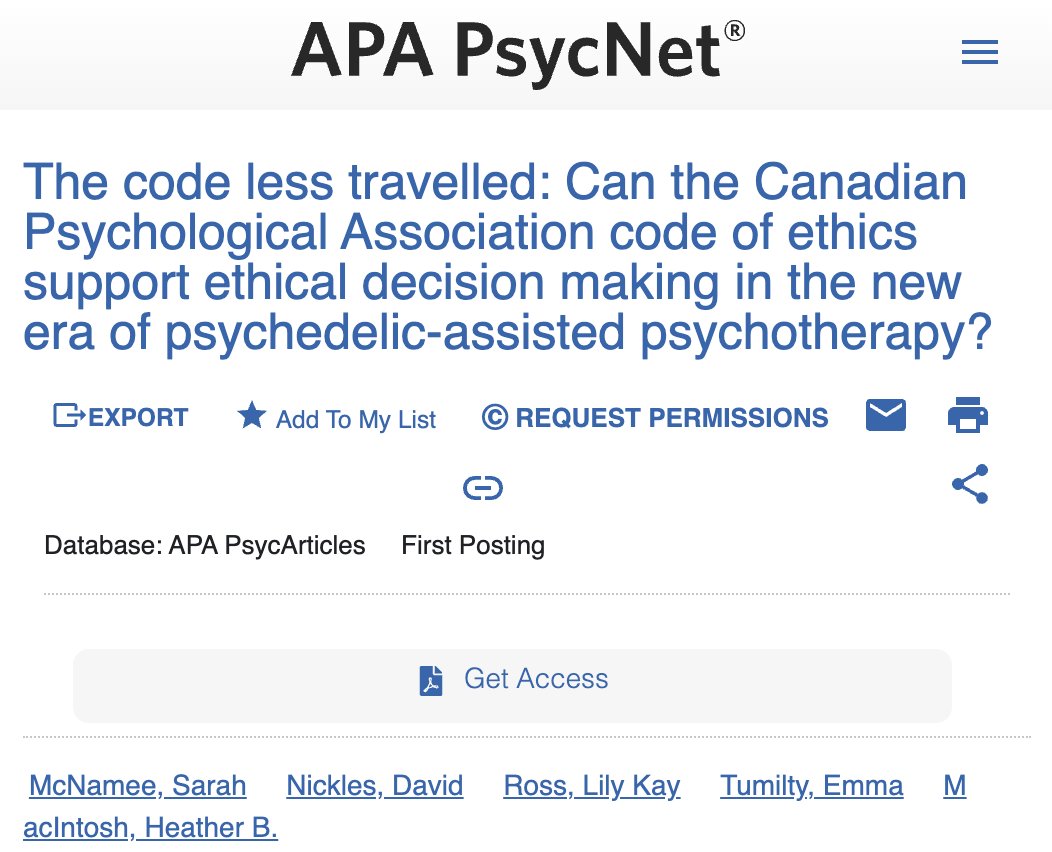
I'm delighted to share the publication of an article I co-authored with Sarah McNamee, Emma Tumilty, Dave Nickles & Heather MacIntosh. I hope it offers some useful discourse for careful thinking at the intersection of psychedelics and ethical practice.
https://t.co/Slvokt4a5P
I suppose now's as good a time as any to announce that I resigned from Psymposia in April, 2023, 7 months before @D__Nickles.
I appreciate that he stuck around to try and get accountability. I had to get out.
Check out our new website:
https://t.co/nNbwbEgzOY
I suppose now's as good a time as any to announce that I resigned from Psymposia in April, 2023, 7 months before @D__Nickles.
I appreciate that he stuck around to try and get accountability. I had to get out.
Check out our new website:
https://t.co/nNbwbEgzOY
Former Psymposia Managing Editor David Nickles explains why he resigned from the organisation.
"I was concerned by a former colleague's conduct and the trajectory of the institution as a whole."
https://t.co/kEJknELmVe
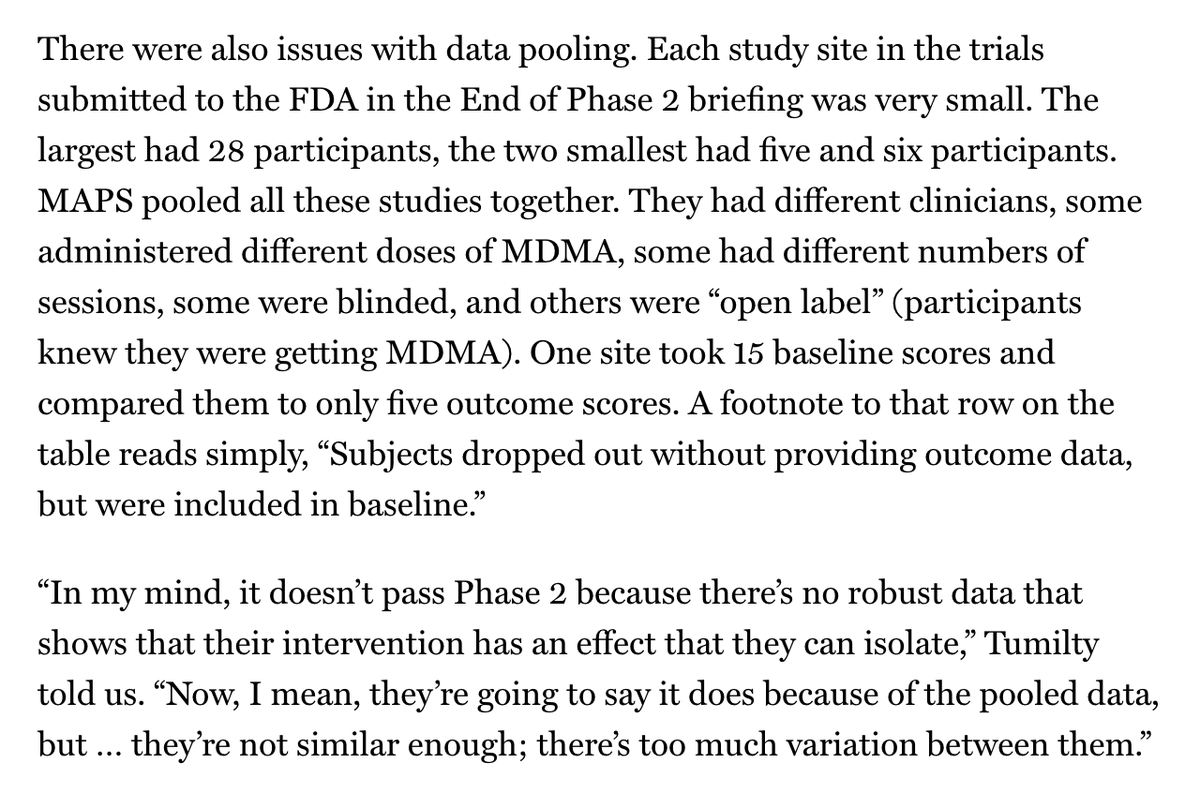
For anyone wanting to get into the specifics of MAPS's flawed methodologies, we covered a lot of ground back in 2022 with @NewYorkMag. @D__Nickles.
https://t.co/e0eacZavaX
@IanLotsanumbers@TomMostlyZen@sanilrege@MAPS Just Cover Story Power Trip details 3 people in episodes 6 and 7. More have since come forward. In fairness to you, many tussle with whether to identify themselves or now, given the backlash. Many opt for anonymity, so it's not possible for members of the public to keep count.
@IanLotsanumbers@TomMostlyZen@sanilrege@MAPS had an obligation to collect data on adverse experiences, which they failed to do. MAPS didn't do the research to understand why things went horribly wrong for so multiple people.
The MDMA saga - Comments from Sarah McNamee - one of the participants in the MDMA arm of the MAPP1 trial. 🚨
Though my clinical training and research experience absolutely inform my perspective, I think it’s important to note that other trial participants without this professional background have come to similar conclusions as I have about the quality of Lykos’ research and of Lykos’ psychotherapy protocols.
Over the years, I’ve met at least a dozen other MAPS trial participants. Their stories aren’t mine to tell, but what is certain beyond any doubt given the number of people I’ve met and the things they’ve told me, is that the MDMA-Assisted Therapy (MDMA-AT) stories we hear in the media and the published data are, at best, woefully incomplete. In some cases, the published data omits or distorts information that is found in participant research files, in emails with study teams, and on session video tapes.
Of note, three MAPP1 trial participants from the MDMA arm have reported significant worsening of suicidality in the weeks following the trial, which they have attributed to the trial, and one MAPP1 participant reported the emergence of psychotic symptoms within 1-2 days of one of their dosing sessions (McNamee, et al., 2022; Nickels & Ross, 2021). These very serious adverse effects are neither in the published journal article for MAPP1, nor is the JAMA Psychiatry article in which we reported them cited in the MAPP2 journal article.
Psychotherapy is regulated because psychotherapy can do harm. Mixed with drugs that increase suggestibility and amplify experience, I cannot stress enough the possibility that the drugs can also amplify psychotherapy’s potential for harm.
While I was in the study, there were many things my trial therapists did - things I accepted because I thought they were experts and I wanted to heal — and because they said this was a “paradigm shifting treatment” (i.e., a cue to release previously held beliefs about what therapy or medicine “should” look like)
But, it includes things like encouraging me to view my worsening symptoms as evidence of healing and “spiritual awakening;” seeding mistrust in mainstream psychiatry; talking to me about past life traumas; encouraging and, one time, pressuring me to cuddle with them; repeatedly telling me I was “helping make history” and that I was “part of a movement;” and letting me know how my responses and behaviours during and after the trial could jeopardize legalization.
When I tried to tell my therapists about my emerging and worsening mental health symptoms at the end of the trial, one of them responded that he predicted that I would be feeling better in six months time. I later found out that another participant, at a different site, was given a similar “prediction,” using the same vocabulary, in the face of their mounting distress.
These very sudden changes in my beliefs, values, and behaviours, even in some aspects of my personality, are mystifying to me because these kinds of changes, and the direction those changes went in, are wildly out of character for me. They are even more mystifying because at the same time that I was turning into a firm advocate of MDMA therapy, I was also relentlessly suicidal and was clinically decompensating in a, frankly, spectacular way.
Letter here: https://t.co/Tkw7gaXNPt
Somehow it's gotten lost in the mix that plenty of people critiquing MDMA-AT are concerned that (among other things) approval and scaling up would result in veterans and other patients getting hurt, possibly getting worse, and that suicide rates could rise.
This failure belongs to MAPS alone.
Watch for those doing victory laps today, they have lost sight of who they should be fighting for.
Watch for those casting aspersions or centering themselves, they too have lost sight of what matters.
FDA rejected MDMA.
FDA heard participants who told the truth about their experience & identified methodological failings— they shaped the discourse before experts entered the room.
I hope this leads to the quality research & care people w PTSD deserve.
https://t.co/tLdzL0u0b4
🧵 THREAD 🧵
https://t.co/ZOQaZaSpYt
@WSJ: Ecstasy Drug Trials Miss Crucial Data on Suicidal Thoughts. As the FDA nears a decision on MDMA for PTSD, troubling revelations emerge.
@michaelmhughes @RickDoblin@MAPS My point is that the evidence is still out with regard to it being literal, FDA approved medicine. But I agree that it would be good decriminalising all drugs so people can take the drugs they want, where and when they want, with whom they want, without shame or stigma.
True believers everywhere, and by no accident. It's been part of @RickDoblin and @MAPS's "political science" strategy for years.
Independent experts gave a psychedelic treatment for PTSD a scathing review. Some in Congress want it approved anyway.
https://t.co/H3b9aZzmQp
“An important thing to remember is that this is a very sick population of people that we’re taking care of” Dr. Alia Lilienstein, Lykos senior medical director.
Dehumanizing framing aside, Lykos is testing a drug, not "taking care" of people.
https://t.co/qMmpMSXGWg
“An important thing to remember is that this is a very sick population of people that we’re taking care of”
Dr. Alia Lilienstein, Lykos senior medical director.
Dehumanizing framing aside, Lykos is testing a drug, not "taking care" of people.
https://t.co/wnGFc9i5mO