Our lab is expanding and hiring both a postdoc and staff scientist! We study how metabolism and cell cycle states drive tumor progression, therapy response, and immune interactions. Philly is a great place to live and do research! See more at: https://t.co/Qptg5QHh66.
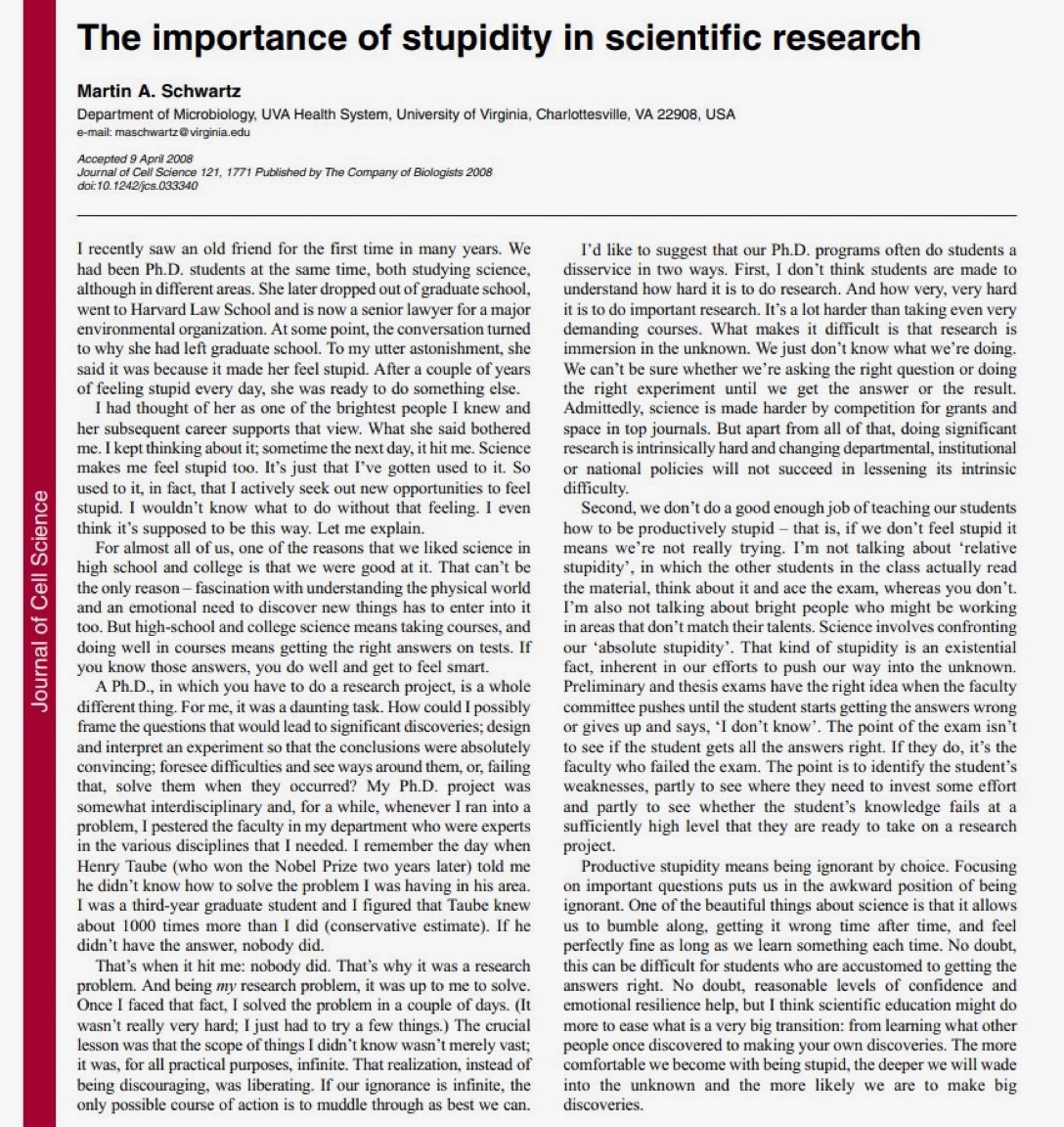
This article should be mandatory reading for every medical student, PhD candidate, researcher—and honestly, for anyone who mistakes expertise for certainty.
“The importance of stupidity in scientific research” sounds provocative, almost offensive. But Martin Schwartz is not glorifying incompetence. He is describing the real operating system of discovery.
Science is not built on knowing.
Science is built on tolerating not knowing.
That distinction matters.
Most of education rewards correctness.
School teaches us to answer.
Exams reward speed, certainty, and precision.
You feel intelligent when you get things right.
Research is the opposite.
Real research begins exactly where competence ends—at the frontier where nobody knows the answer, including the people you thought must know.
That moment is psychologically brutal.
You ask the expert.
The expert shrugs.
You assume you’re missing something.
Then you realize: no—this is the work.
You are not failing.
You are standing at the actual boundary of knowledge.
That feeling—“I must be stupid”—is often not a sign of inadequacy.
It is often the first sign that you are finally asking an important question.
Medicine struggles with this.
We train doctors to avoid uncertainty, to fear being wrong, to perform confidence.
But the best clinicians and the best scientists know how to sit inside ambiguity without collapsing into fake certainty.
This is why AI in medicine also deserves caution.
Systems trained only to reproduce established answers may become extraordinarily good at passing exams while being terrible at discovering what matters next.
Guideline intelligence is not the same as scientific intelligence.
Discovery requires productive stupidity:
the willingness to stay with the uncomfortable,
to look ignorant,
to ask naïve questions,
to be wrong repeatedly without protecting your ego.
Most people want the authority of expertise.
Very few want the humiliation required to earn it.
But progress lives there.
Not in certainty.
Not in performance.
Not in sounding smart.
In the quiet discipline of saying:
“I don’t know… yet.”
And continuing anyway.
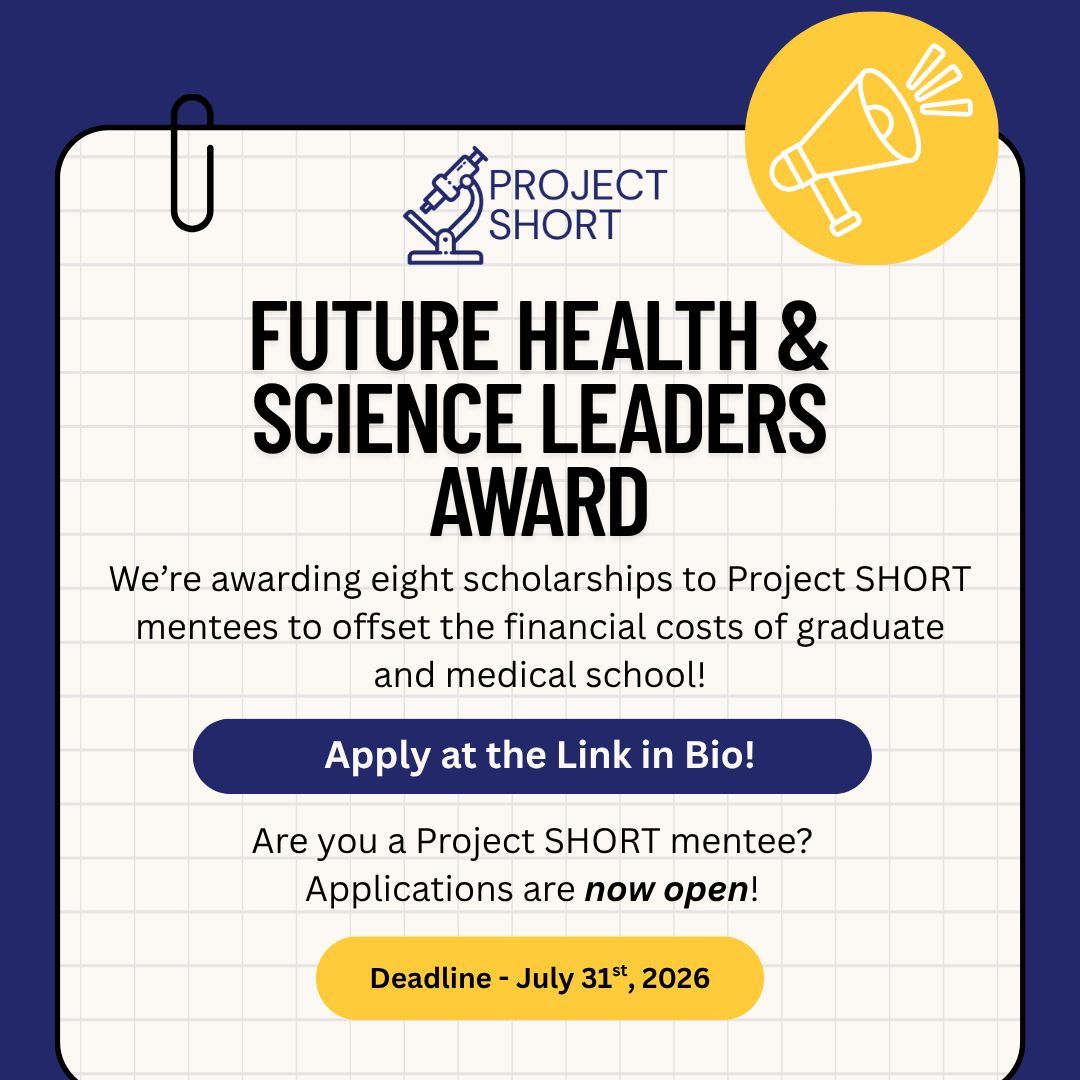
We are thrilled to announce the launch of the Future Health & Science Leaders Award for Project SHORT mentees, a scholarship to alleviate the costs of graduate/medical schools! For more information and application details, check the link in our bio! Apps are due on July 31, 2026
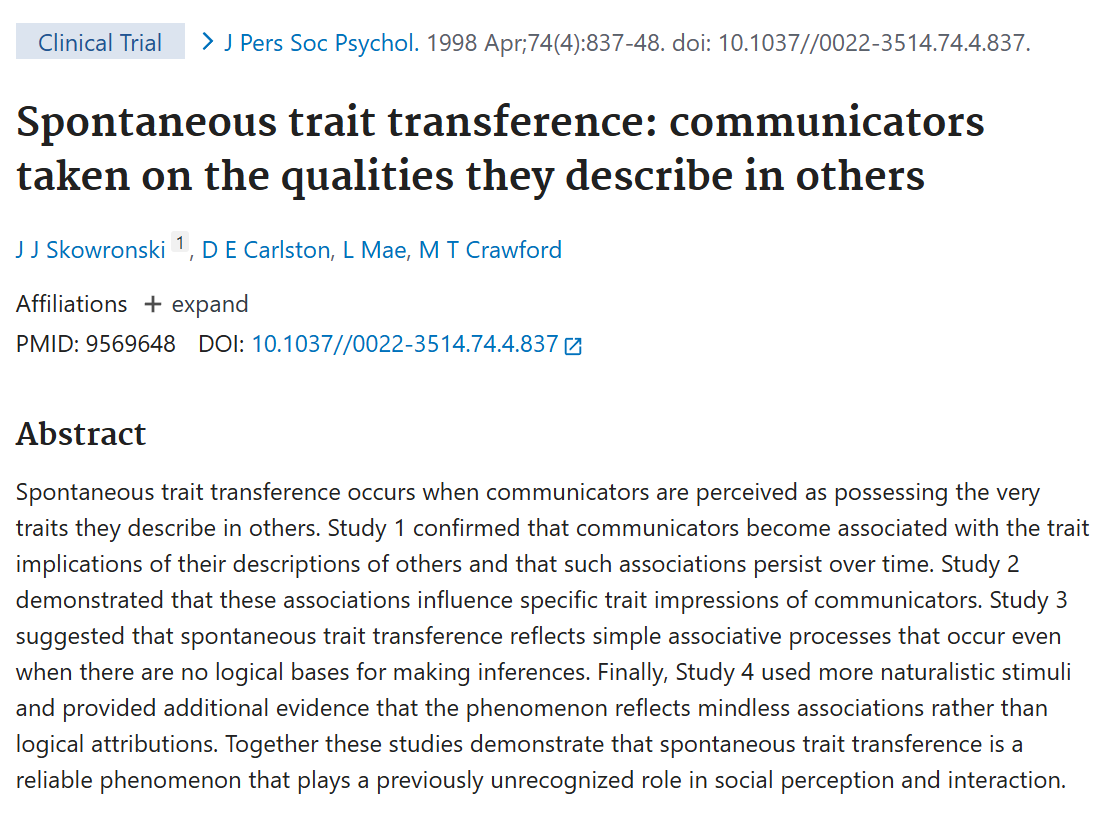
Mocking unconsciously repeats negativity and inadvertently shapes your identity.
You become what you repeat.
Neuroplasticity can't decipher between good and bad.
This is something I genuinely struggle with every day.
As doctors, we need to counsel on side effects, but telling a patient “this could cause X” makes it more likely.
Learning to inform in a balanced way is one of the hardest skills in medicine. No textbook teaches you this.
There is more robust data on placebo/nocebo responses than anything in the history medicine...yet somehow, we are barely taught about it🧐
Very grateful to lead this new two-part Lancet Psychiatry Collection "Reconceptualizing Placebo and Nocebo Effects"🧵https://t.co/vnTyXwLelN
The problem is not people being uneducated.
The problem is that people are educated just enough to believe what they have been taught, and not educated enough to question anything from what they have been taught.
—Professor Richard Feynman
A recent survey of 376 healthcare professionals revealed that 63% DID NOT understand the concept of a p-value.
Do you think you can pass the P-value explanation test❓
Are you part of the 63%?
Let's break it down in simpler terms…