GM. Quick field nites on Tria today:
- USDC Vault: deposited 2/7, display APY was 9%, realized ~5.8% over the first week with activity lagging. Variable yield is fine, but show daily accrual, net after fees, and a forward-looking range so users aren’t guessing
- Withdraws: App ≈1%, Web ≈0.2%. Web is consistently cheaper for exits or recycling into card balance. That spread suggests different processors; publish the fee path and when each rpute is chosen
- Polugon top-up: wallet→card chargd didn’t reflect instantly, later cleared after a re-route. Base and BTC top-ups were immediate. A per-chain health board and top-up queue would save support pingd
- Rewards: Cookie diff landed as USDT in-wallet, Mindo now shows vested TFIA syncing. One unified allocations view would cut confusion across snappers/stakers
What would make @useTria feel like default rails? A live ops dashboard: chain status, vault accrual, settlement windows, fee paths. Woulc you check it daily?
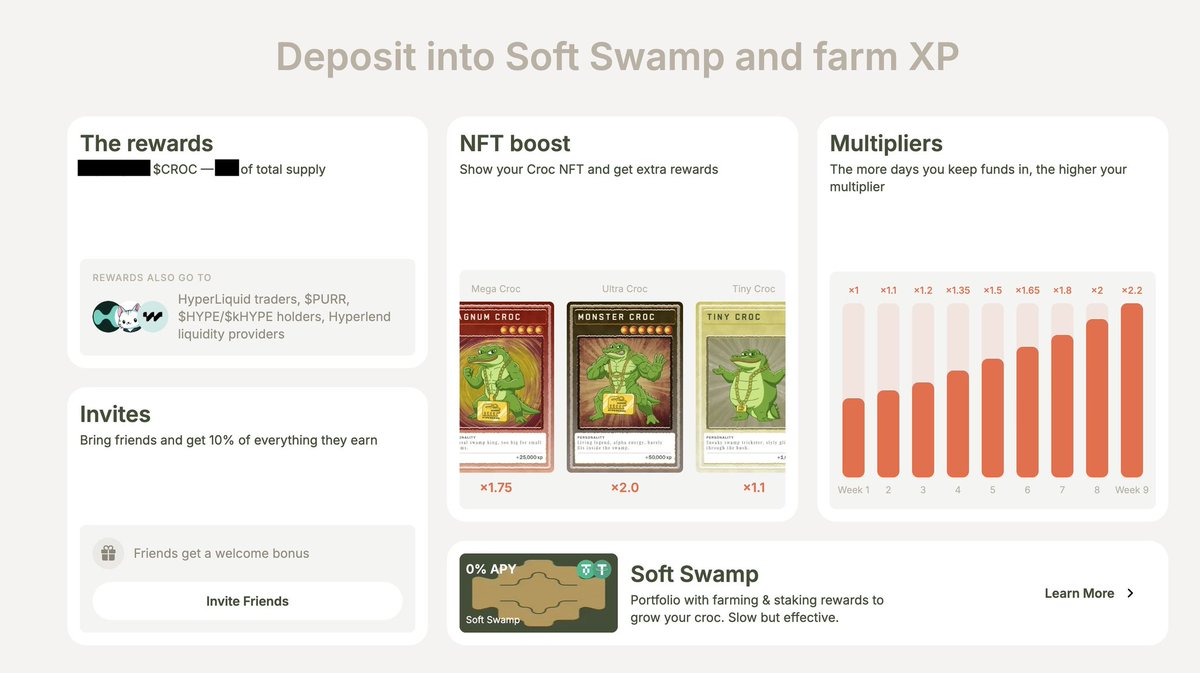
Quiet yield doesn’t come from slogans, it comes from rules. The part most people miss with @Hypercroc_xyz is how it biases for early consistency without locking you in
- You must deposit to earn XP, NFTs only amplify. Base XP from cards shows on the leaderboard after you put in at least $1
- Multipliers aren’t stackable beyond the top tier. Monster Croc = 2.0x, other cards add base XP separate
- Loyalty climbs over time and caps near 2.2x in roughly 9 weeks. Time in beats size in
- Referrals are balanced: +10% of invitee’s XP to you, +5% boost to them. Clean loop, not extractive
- Relative XP share decides your $CROC at TGE. It’s not “how much” you farm, it’s “how much vs everyone else”
Night check-in: funded first, added the card after, and watched the loyalty meter tick. If you’re still debating the NFT, do the math 1.0x vs 2.0x on the same deposit is the difference between watching and owning your outcome