I'm a cardiologist.
Back against the kitchen wall, knees bent, two minutes. Rest. Four times.
In a 100-person randomized trial, doing that 3 days a week for 4 weeks lowered systolic pressure about 9 points more than in people who didn't.
Save this one.
Prolonged fasting is something that has become rather popular in recent years. People see it as a metabolic reset or way to boost autophagy or increase cellular clean-up. And I’m not going to talk about any of that.
What I am going to talk about is muscle during fasting. Roughly 85% of the essential amino acids (EAAs) your body requires to stay alive during fasting come from skeletal muscle tissue, with muscle protein breakdown exceeding synthesis by about 37% (PMID: 7943227).
Over time, without adequate breaks to rebuild the lost muscle, this can lead to substantial amounts of muscle loss. In classic research by Oliver Owen, 21 days of fasting in obese adults resulted in about half of their weight loss coming from lean mass (13 lbs), of which 60% was structural proteins (8 lbs) (PMID: 9665093).
So, this wasn’t just losses due to water, glycogen, or organ shrinkage. It was an actual reduction in skeletal muscle contractile protein content.
I much prefer that people use protein-sparring modified fasts (PSMFs) over traditional fasts. They involve eating sufficient protein and very little of anything else, resulting in extreme calorie deficits that mimic fasting while still supplying the EAAs your body requires.
In one study, obese adults following a PSMF had only 16% of their weight loss come from lean mass, even without any resistance training (PMID: 14618457). Compare that to the 50% in Owen’s complete fasting study, and it’s a no-brainer option.
Anyway, eat your protein or, at the very least, take some EAAs if you are going to fast because I think we can all agree dad bods are not “in.”
🚨 $OPEN: LET'S BE SERIOUS ABOUT OPENDOOR IN ONE OF THE WORST HOUSING MARKETS POSSIBLE.
For months, I've been seeing folks on X trying to pump this stock but eventually, its almost at its 52-week low today.
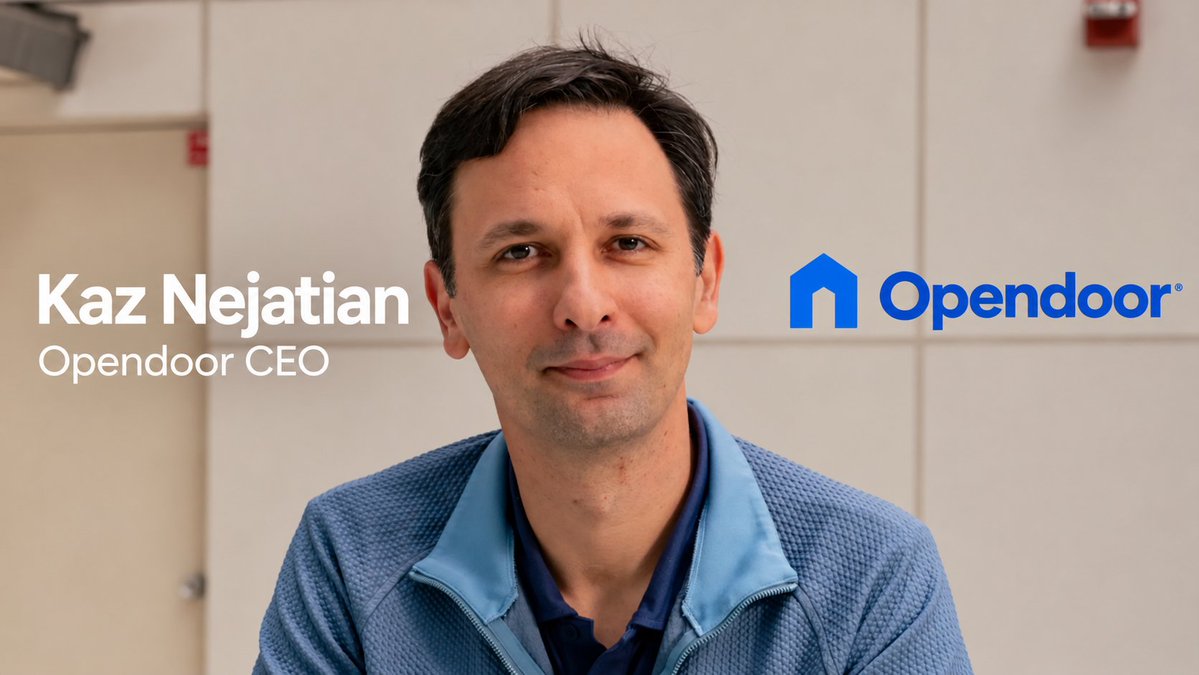
All eyes on NOVEMBER 5. I really like the CEO, his approach, the strategy but but but...
See, there are two very different stories happening here.
One is the housing market which is absolutely brutal right now. The other is what the CEO is trying to change inside the business.
Having said that, I don't think we should judge $OPEN on its stock price and at the same time, I also wouldn't call this a successful turnaround just because management is reporting better operating metrics.
Let's go through what's happening and what we should be watching over the next 6–12 months.
1. THE BIGGEST PROBLEM IS STILL THE HOUSING MARKET.
30-year mortgage rates are back around 7.4%. Existing home sales remain historically weak and homeowners sitting on 3–4% mortgages have very little incentive to sell.
When transactions slow down, homes take longer to sell. Financing costs continue accumulating and even a small pricing mistake can wipe out the margin.
Unlike a traditional marketplace, $OPEN has substantial capital tied up in housing inventory. That's why interest rates are such a big deal for this company.
2. THE FINANCIALS STILL SHOW A BUSINESS UNDER PRESSURE.
Look at Q2 2026.
- Revenue: $883M versus $1.57B a year earlier.
- Net loss: $162M.
- Gross margin: 9.7%.
- Homes sold: 2,339 versus 4,299 a year earlier.
Now, revenue actually improved sequentially from $720M in Q1 and gross margins improved year over year.
So it's not like every metric is deteriorating but $162M in quarterly losses while operating in a capital intensive industry is still a serious problem.
The company needs more than better revenue. It needs to demonstrate that acquiring and selling homes can generate sustainable cash flow.
3. KAZ IS TRYING TO CHANGE THE ECONOMICS OF THE ENTIRE BUSINESS.
See, I like the CEO. @nejatian
The old Opendoor model relied heavily on buying homes, estimating their future value, and making enough on resale to cover all the associated costs.
The newer strategy puts much more emphasis on inventory velocity.
You buy at a disciplined price, sell faster, keep contribution margins healthy and reduce the cost of processing each transaction.
The management has pointed to stronger acquisition cohorts, faster resale velocity and lower operating costs. I actually like this.
But we all need to remember this that a better acquisition cohort doesn't immediately make the entire company profitable. Older inventory still needs to be sold and corporate expenses won't disappear overnight.
4. OPENDOOR NEEDS TO BECOME MORE THAN A COMPANY THAT FLIPS HOUSES.
This is where I see the longer term opportunity.
$OPEN is expanding into mortgages through Opendoor Home Loans, introducing new homeownership products and exploring ways to facilitate transactions without deploying as much of its own capital.
I would love to see Opendoor making money from multiple parts of a home transaction instead of depending almost entirely on the difference between its purchase and resale prices.
It would eventually create a more capital efficient business. But right now, I am going to treat this as an opportunity. Just an opportunity. Nothing more, nothing less.
The company still needs to show meaningful product adoption and actual contribution to profitability.
5. THE BALANCE SHEET CANNOT BE IGNORED.
In August, Opendoor announced $440M of growth capital at a 0% coupon and a transaction that reduced shares outstanding by approximately 5%.
It is helpful for near term financing flexibility but zero coupon debt doesn't mean free capital.
Convertible securities can create future dilution and Opendoor still needs inventory financing to operate its core business.
If housing will stay weak, investors will definately care about liquidity, debt maturities, inventory exposure and cash burn.
6. NOVEMBER 5 COULD BE THE FIRST MAJOR TEST OF THE RESET.
Opendoor is scheduled to report Q3 results.
5 questions that are very important:
- Are newer homes selling faster without sacrificing margins?
- Is aged inventory continuing to decline?
- Are acquisition volumes recovering?
- Is adjusted EBITDA improving alongside operating cash flow?
- Can the management maintain its profitability ambitions without assuming mortgage rates fall significantly?
If revenue will improve while cash burn and inventory risk will remain elevated, the market will not reward it.
7. OUTLOOK FOR THE NEXT 6–12 MONTHS.
I see three possible outcomes.
Atm I am seeing housing to remain difficult but also the management to continues improving unit economics. Revenue recovery is gradual, losses narrow and the stock will remain volatile while we wait for proof of sustainable profitability.
NOTE: Not taking anything away from them, I feel @ericjackson and @mikealfred are also not as vocal as they were before and these are the only possible reasons.
🚨 OMG. Mike Rogers (R) just MIC DROPPED the CRAP Abdul El Sayed (D) in front of Michigan voters
"He LIED about being a physician. He LIED now about being an EGYPTIAN CITIZEN. I can't figure out WHAT he is!" 🔥🔥
"He's taken money from groups associated and support the Muslim Brotherhood. He has taken money from individuals on his campaign who openly support Hamas, Hezbollah, Al Qaeda. From the GEORGE SOROS family."
"That's a BILLIONAIRE, last I checked!"
ABDUL: As a doctor—
ROGERS: —you're NOT a physician.
"How does a guy with less than 4 years of work — by the way, he said on the campaign trail he has 10 — have a luxury property in the United Arab Emirates? He's worth a million bucks. Someone tell me how that math works?"
ABSOLUTE CLOBBERING.
Abdul is spinning his wheels, just attacking Trump and pretending to be a "moderate"
Except he's not. @MikeRogersForMI is the COMMON SENSE candidate in this race, and we know for FACT he has zero ties to Islamists!
Michigan is pivotal. If we win Michigan, the socialists will be locked out of the chamber!
We’re skating on thin ice here. We’ve got an entire generation that believes success is given; not earned. They want all the upside without any of the risk. They don’t want to pay their debts. Won’t answer an email after hours yet want to make the big bucks. We’re fucked.
Andrew Huberman teaches the eye movement routine to fall back asleep at night.
Bookmark this for the next time you wake up in the middle of the night!
Close your eyes
Move your eyes slowly to one side
To the other side
Up
Down
Move them counterclockwise in a circle
Clockwise in a circle
With your eyes closed, point them towards your nostrils
Do a long exhale
@hubermanlab “This is what I do if I wake up in the middle of the night.
I usually go to the bathroom, get back in bed, do long exhale breathing, and I do that, and I wake up the next morning.
It really works well.”
The Warsh speech, in spite of him wanting less in the way of news, is actually creating more news than a Powell speech. Why? Because Powell didn’t address anything that mattered. Money didn’t matter. He dodged questions about why inflation happened. Warsh is actually talking about real monetary policy.
The easiest way to beat the S&P 500:
Buy the world's greatest companies when they're on sale.
These are my 12 favourite opportunities right now:
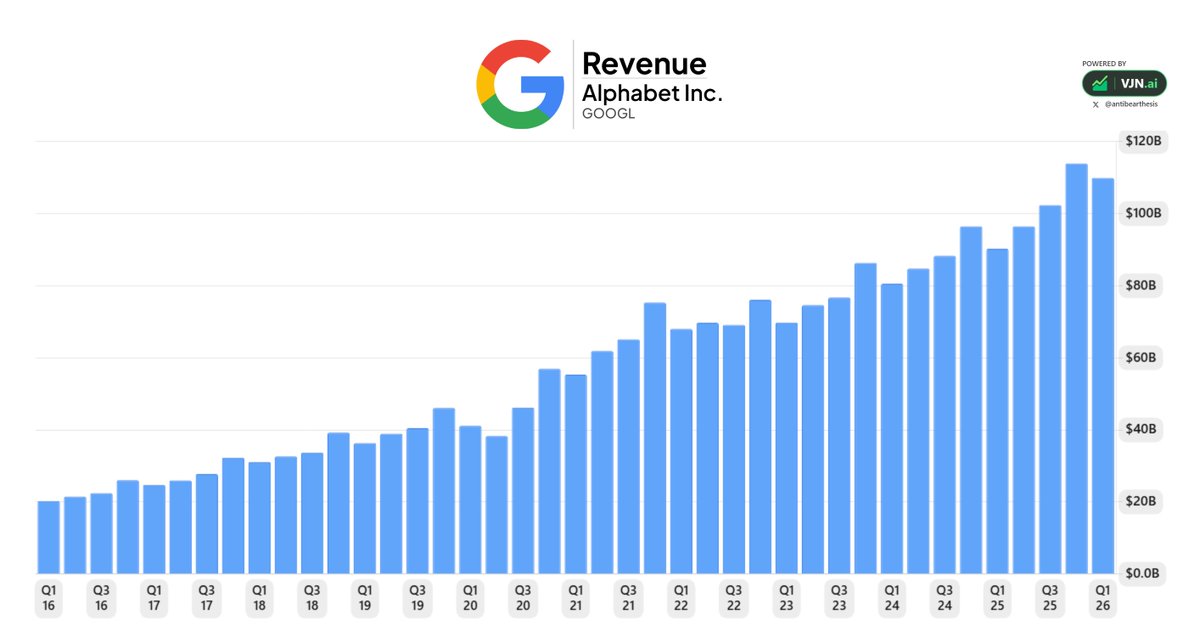
1/12: $GOOGL (-22%)
Justice Thomas (joined by Justice Gorsuch) slams birthright citizen decision, suggesting it is part of a long line of Supreme Court cases (most racist) abusing the Constitution and will not "stand the test of time":
"The Fourteenth Amendment was enacted in the wake of the Civil War, 'with the one pervading purpose' of securing equal citizenship for the freed slaves. Slaughter-House Cases, 16 Wall., at 71. It was enacted, as Justice Harlan wrote, 'to secure to a race recently emancipated' the 'civil rights' that other citizens enjoyed. Plessy, 163 U. S., at 555–556.
"This Court has time and again denied Americans that promise. Shortly after the Amendment was ratified, this Court deprived black citizens of the right to peaceably assemble and to keep and bear arms. See United States v. Cruikshank, 92 U. S. 542 (1876); see McDonald, 561 U. S., at 808–809 (THOMAS, J., concurring in part and concurring in judgment). A little later, in Plessy, the Court upheld the subjugation of black citizens in the form of state-coerced racial segregation. 163 U. S. 537. When it had an opportunity to correct that profound error, it did so narrowly. See Brown v. Bd. of Ed., 347 U. S. 483, 494, and n. 11 (1954). It then used that very decision to justify busing American children to different schools based on their race. See Swann v. Charlotte-Mecklenburg Bd. of Ed., 402 U. S. 1 (1971). Cite as: 609 U. S. ____ (2026) THOMAS, J., dissenting 91 And, until recently, this Court continued to selectively enforce our colorblind Constitution, including by allowing state-coerced racial discrimination in public education, e.g., Grutter v. Bollinger, 539 U. S. 306 (2003), and compelling States to draw political districts on the basis of race, e.g., Allen v. Milligan, 599 U. S. 1 (2023).
"Meanwhile, the Court has repurposed the Fourteenth Amendment to protect its own set of preferred rights that the Reconstruction Congress never contemplated and that cannot find support in its text. Today, the Court does so again by recognizing a constitutional right to citizenship for the children of all foreign birth tourists and illegal aliens.
--
"I am not sure that today’s opinion will stand the test of time. The Citizenship Clause 'added greatly to the dignity and glory of American citizenship.' Plessy, 163 U. S., at 555 (Harlan, J., dissenting). Today’s opinion devalues that citizenship. I respectfully dissent. "