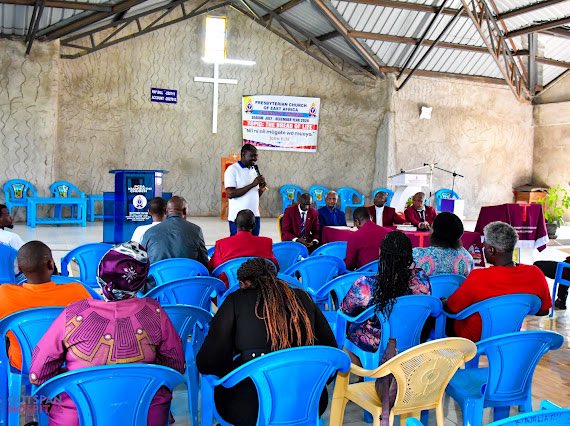
We kicked off our Rites of Passage programme at Outspan Hospital with a parents' meeting, bringing parents and the hospital team together to discuss the programme, share expectations and establish a common understanding of the journey ahead
#OutspanHospital#OutspanCares
With GDP rebasing , Ethiopia has become the biggest economy in Eastern Africa and the third largest in sub Sahara Africa after South Africa and Nigeria .
With GDP rebasing , Ethiopia has become the biggest economy in Eastern Africa and the third largest in sub Sahara Africa after South Africa and Nigeria .
@twarria The investment in Lamu was never solely focused on Turkana https://t.co/lveZLaUy2U will get oil from many places including Uganda and Middle East .
Kenya is a beneficially of location with all the attendant linkages backwards and forwards
Dangote investment is transformational and we all need to do our bit to facilitate it to completion and commissioning .Besides the direct jobs , it will help to exploit the Tana river basin for food for the new population and export through the port , other infrastructural developments , schools , hospitals ,other related industries plus doing a pipeline to Turkana and South Sudan will now be a sure bet .The northern corridor will come to live and see even
Isiolo becoming what was envisaged ..The entertainment capital of Kenya thanks to modern infrastructure from Lamu .It will benefit the country long after you , me and Ruto are long gone …..
Africa rising and about time too ! 👇
Zimbabwe bans export of its valuable raw mineral lithium, essential for making electric car batteries, and tells world: "You want to make electric car batteries to combat climate change, make them in Zim!"
Such policy is long overdue.
James Hall
**50yrs of China - longterm strategy**
CHINA
“The year is 1975.”
> You have 924 million people.
> Your entire economy is worth $164 billion.
> Barely $180 of GDP per person.
> More than 80% of your people live in villages.
> Life expectancy is just 61 years.
> Millions struggle to afford basic necessities.
> Much of the countryside lacks reliable electricity.
> You don't even have a modern expressway network.
> You have a problem.
> Nearly a billion people need a better life.
“1978 arrives.”
> Start reforming agriculture.
> Let farming families keep more of what they produce.
> Productivity improves.
> Open your doors to foreign investment.
> Turn a small border town called Shenzhen into an economic experiment.
> Start making clothes, shoes, toys and cheap household goods.
> Foreign companies bring orders, machinery and expertise.
> Millions begin leaving farms for factory jobs.
> Your economy crosses $300 billion in 1985.
> Growth reaches 15% in a single year.
“Strength, Weakness & Opportunities; followed by serious Execution”
There's another problem.
> Factories need electricity.
> Build coal mines and power stations.
> They need steel, cement and machinery.
> Start producing those too.
> Goods need to reach the rest of the world.
> Build ports, roads and container terminals.
> In 1988, you have just 147 km of expressways.
> By 2000, you have over 11,000 km.
> Join the World Trade Organization in 2001.
> Export orders pour in.
> Your economy crosses $2 trillion in 2005.
But assembling cheap products can only take you so far.
> Start manufacturing more components yourself.
> Move into electronics, automobiles and industrial machinery.
> Learn to make the equipment that makes other equipment.
> Keep the clothing factories running anyway.
> Keep the toy factories too.
> Why abandon industries you already know how to run?
> Your economy crosses $6 trillion in 2010.
> Become the world's largest manufacturing economy.
> Open your first modern dedicated high-speed railway in 2008.
> Then build another line.
> And another.
> Your cities keep growing.
> So do your electricity needs.
> Expand steelworks, power grids, highways and entire industrial districts.
> Move into batteries, solar panels, electric vehicles and advanced materials.
> Your industrial system now stretches from raw-material refining to finished products.
“The year is 2025.”
> Your population is 1.4 billion.
> Your economy is worth roughly $19.5 trillion.
> GDP per person has climbed to nearly $13,900.
> Life expectancy has reached around 78 years.
> Nearly 68% of your people now live in cities.
> You have almost 200,000 km of expressways.
> More than 50,000 km of high-speed railway.
> Your railways carry roughly 12.6 million passenger journeys a day.
> You produce more than half the world's steel.
> Build more than half its commercial ships.
> Manufacture nearly three-quarters of its electric cars.
> And remain a major producer of the clothes and toys you started exporting decades ago.
————————————————————
Remember 1975?
> Your entire economy was worth $164 billion.
> In 2024 alone, you invested $7.4 trillion in new fixed assets.
> Around 45 times your entire economy of fifty years earlier.
> Nothing about this happened by accident.
This is China, a civilizational nation that locked the F in for fifty years.
And the results speak for themselves.
#BorrowedWisdom
#Courtesy
Bikes outnumbered cars on Scottish rush hour route for the first time ever. This world, decades ago you would read about how Africa was so "poor" what most people could afford was bikes, and today bike dominance is a sign of progress and enlightnment!
https://t.co/VgMz6Viz5G
https://t.co/VgMz6Viz5G