In Afghanistan, an innocent 11-year-old girl was married off to a Muslim man over 50 years old.
Her mother was unable to repay a debt because, under Sharia law, women are not allowed to work. So, out of desperation, she was forced to sell her daughter.
This is the true face of Islamic Sharia.
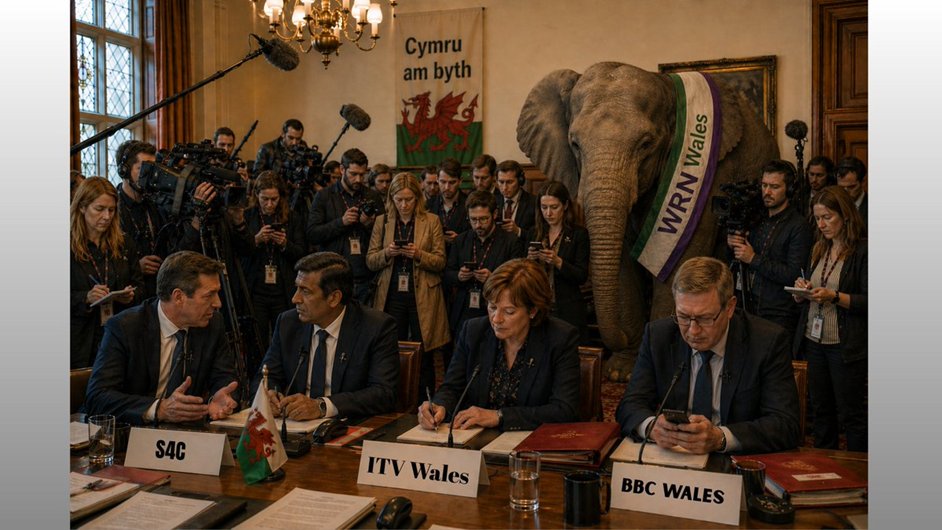
🐘The elephant is still in the room - and still being ignored.
Women are 51% of the Welsh electorate.
At every Senedd broadcast debate women have applied to be in the audience and submitted questions.
Single-sex spaces. The Supreme Court ruling. Men in women's sport. Mixed-sex toilets in schools.
Not one has been put to those seeking our votes.
We know many of the party representatives are scared to face these questions (not a surprise, given certain of their manifesto pledges) - but isn't that exactly WHY our broadcasters should be asking them?
We bet YOU can do better @MichelleDewbs@ThatAlexWoman@JuliaHB1 @DawnNeesomT
There has been a lot of discussion re ACPs recently, with some defending that ACPs are qualified to act at ST3 level, I thought it’d be helpful to sample ACP courses.
I chose two highly regarded unis (King’s, Edinburg) & then De Montfort to get a good breadth of representation
1/
There is no Woman of the Day today. Instead, I want to explain why I do what I do. No one really knows who first said, “History is written by the victors” but I’d bet you any odds it was a man.
Think of your schooldays and count the number of times you learned about the roles played by women in shaping history, other than regnant Queens and perhaps Marie Curie and Florence Nightingale. Yet women lived, worked, networked, debated, campaigned, organised, invented things and built them too - but you’d never know this if your lessons, like mine, were confined to history books.
For a practical example, just look around you. Fridge, washing machine, dishwasher, ironing board, home security system, call waiting system, car heater and windscreen wipers, even the very first computer algorithm: all invented by women.
Are you surprised? Confined to the house, denied access to higher education, barred from engineering, denied entry to all branches of science and the professions for centuries, those bright analytical minds turned their attention to their immediate surroundings and saw what was needed to free them from domestic drudgery.
In return, history ignored women’s achievements, glossed over them or consigned them to dusty footnotes. If all else failed, their work was credited to - or stolen by - men, the phenomenon known as the Matilda Effect, first identified by feminist Matilda Joslyn Gage in 1870.
In 1993, it was named for her by historian Margaret Rossiter who said, “It is important to note early that women’s historically subordinate ‘place’ in science was not a coincidence and was not due to any lack of merit on their part. It was due to the camouflage intentionally placed over their presence in science.”
Once you see it, you cannot unsee it - the Matilda Effect is everywhere - but now substitute ‘history’ for ‘science’. The proposition still stands. What I try to do is to pierce holes in that camouflage by writing about the almost-invisible women of history who overcame manmade barriers and changed the world.
As a Second Wave feminist, I thought we’d won all the big battles, that it was just a matter of mopping up the resisters and dragging them into the 20th century. I did my bit to redress the balance in an overwhelmingly male environment, but how had I managed to miss the barefaced theft of our words, our spaces and services, our sports? How had we suddenly been reduced to a walking collection of body parts?
It was a wake-up call.
Once I saw, I couldn’t unsee the terrible damage being done to girls and young women who did not conform to the offensive sexist stereotypes being imposed on them by men who mimic women and their inane female cheerleaders. It made me fearful for non-conforming girls: tomboys. They need to see strong women as role models, women who don’t care about performing femininity, women who defy convention and do things their way. If you can see it, you can be it.
So I went digging around in those dusty footnotes, found a little gold and started from there. I found thrilling tales of women who were inventive, resourceful and brave. Then I started sharing what I found more widely, tied to the calendar as Women of the Day.
How do I find them? Often by pure chance. I go looking for one woman, spot a couple more names along the way - women whose stories really resonate with me - and file them away for the right time. Women’s history had been right under my nose the whole time. I just hadn’t realised that you needed to dig a little. The rather unexpected bonus was that in giving them a voice, I found mine.
I am a conspicuously law-abiding woman, a former prison governor, and if you had told me when I retired that one day, I’d be standing outside a police station in protest at the hounding of gender critical women and singing “Go catch some rapists” to the tune of Guantanamera, I’d have advised you to seek immediate medical attention for the effects of the bump to your head.
But here I am, telling women’s stories, and behind the scenes, pursuing a second career as a women’s rights activist. I won’t ever fall asleep at the wheel again.
Tomorrow, I’m off to Cardiff with my Women of Wessex sisters, to protest about @bphillipsonmp’s inexplicable decision to delay laying the EHRC Code of Practice before Parliament — and make no mistake about it. It IS a decision; one that is causing real harm and damage to the rights of women and the protection of children.
Some of you come for the occasional stories of women in history hiding in plain sight, but I hope you stay because you care about fairness and safety for women. For now, I leave you with this thought from the 1949 memoirs of Somerset suffragette Nelly Crocker (1872-1962):
“Modern young women seem unaware of the price paid for their political and social emancipation, and modern historians have greatly ignored the struggle”.
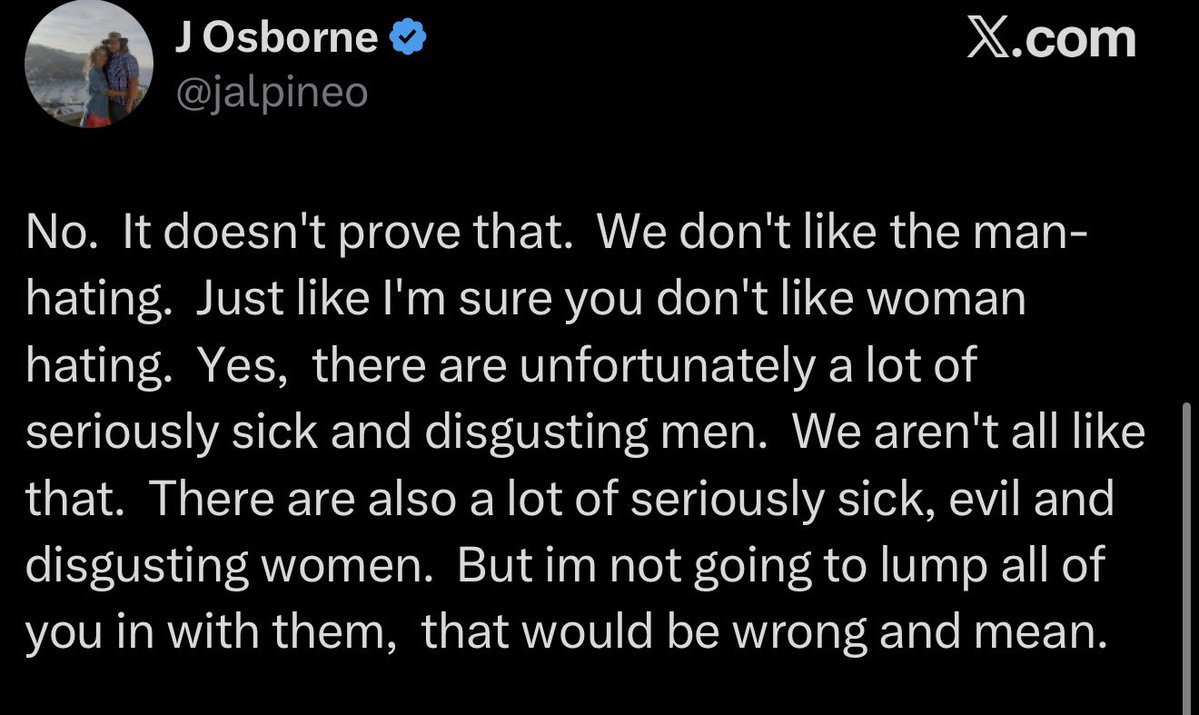
An independent review of 72 separate studies found that an average of 29% of men surveyed admitted to having committed sexual assault, and 6% admitted to having committed at least one rape. When they changed the wording from “have you committed rape” to “have you forced a woman to have sex with you,” that last number jumped up to 12%. And these were just the men who were willing to admit their crimes to total strangers.
Women and girls live with the threat of rape and sexual assault hanging over our heads like the sword of Damocles from the moment we draw our first breath until our bodies are so decomposed that sexual violation is no longer physically possible.
There is no such thing as a female human being who is so old, so young, so ugly, so fat, so dirty, so smelly, so physically or mentally disabled, so mentally ill, so comatose, or so dead that no man will rape her. Homeless women experience especially high levels of sexual violence — but no woman or girl is ever immune.
The youngest victim of sexual assault of whom I am aware was abused on video even before her umbilical cord was cut. The youngest rape victim - and I do mean rape - that I’m aware of was two hours old. The oldest was 93.
In my personal experience, I’ve worked with rape victims who were as young as 3 months old, and the oldest victim I’ve personally seen was 89. I didn’t work with her, though — she died of shock and blood loss on her own kitchen floor after her male assailant shoved two and a half feet of mop handle into her vagina three times, the last time so savagely that you could see the end of it protruding as a lump under her skin about two inches below her sternum.
25% of US women will report a rape at some point. 63% of rape goes unreported, and 90% of rape victims are women. You do the math.
And that’s in the US, where women and girls aren’t legally able to be sold into marriage against our will. A girl forced into marriage may be raped tens of thousands of times over the course of her life, and none of it is ever reported, or included in the already horrific statistics on the sexual abuse of women and girls — the latter of whom make up 82% of abused children, even though preferential pedophiles (men who are only interested in children) usually go for boys.
Girls are the favored target of opportunistic offenders, men who sexually abuse children simply because they can. In other words, the overwhelming majority of child predators are men who abuse little girls for no other reason than the fact that they are both female and vulnerable. They’re not abused specifically because they are children, but because they are girls.
Now imagine what it’s like to grow up with this knowledge: to have to be constantly on your guard around half the population from childhood on. To live side by side with the beings most likely to violate and murder you — and who, when you try to discuss the subject, get angry, accuse you of either not trusting good men or being too trusting of the bad ones, and do everything in their power to pin the blame for their behavior squarely on you.
Every woman knows multiple rape survivors, if she’s not one herself — and so does every man. More to the point, perhaps, is that every man also knows men who sexually assault women - whether or not he is aware of their behavior, or will admit to it if he is. Furthermore, I have never discussed sexual assault/male violence with a woman who didn’t turn out to have a story of her own. Not even once, not in 42 years.
And you know what’s really gross? The fact that I can tell you these things, and your first concern is automatically whether or not I prefaced my statement with a disclaimer that allows you to tell yourself that it’s not your problem.
She kept finding women in laboratory photographs from the 1800s. Then she read the published papers—and every single woman had vanished. Someone had erased them from history.
Yale University, 1969.
Margaret Rossiter was a graduate student studying the history of science. She was one of very few women in her program.
Every Friday afternoon, students and faculty gathered for beers and informal conversation. One week, Margaret asked a simple question: "Were there ever any women scientists?"
The faculty answered firmly: No.
Someone mentioned Marie Curie. The group dismissed it—her husband Pierre really deserved the credit.
Margaret didn't argue. But she also didn't believe them.
So she started looking.
She found a reference book called "American Men of Science"—essentially a Who's Who of scientific achievement. Despite the title, she was shocked to discover it contained entries about women. Botanists trained at Wellesley. Geologists from Vermont.
There were names. There were credentials. There were careers.
The professors had been wrong.
But Margaret's discovery was just the beginning. Because as she dug deeper into archives across the country, she found something far more disturbing.
Photograph after photograph showed women standing at laboratory benches, working with equipment, listed on research teams.
But when she read the published papers, the award citations, the official histories—those same women had disappeared. Their names were missing. Their contributions erased.
It wasn't random. It was systematic.
Women who designed experiments watched male colleagues publish results without giving them credit. Women whose discoveries were assigned to supervisors. Women listed in acknowledgments instead of as authors. Women passed over for awards that went to male collaborators who contributed far less.
Margaret realized she was witnessing a pattern that stretched across centuries.
Women had always been present in science. The record had simply pushed them aside.
She needed a name for what she was documenting.
In the early 1990s, she found it in the work of Matilda Joslyn Gage—a 19th-century suffragist who had written about this exact phenomenon in 1870.
In 1993, Margaret published a paper formally naming it: The Matilda Effect.
The term captured something that had been hidden in plain sight for generations. Once you knew the term, you saw it everywhere.
Her dissertation became a lifelong mission.
For more than 30 years, Margaret researched and wrote her landmark three-volume series: Women Scientists in America. She examined letters, institutional policies, individual careers. She gathered undeniable evidence that women in science had been consistently under-credited and structurally excluded.
Her work faced resistance. Many dismissed women's history as political rather than academic. Others insisted she was exaggerating.
Margaret didn't argue emotionally. She presented data. Documented cases. Patterns repeated across decades and institutions.
Eventually, the evidence became undeniable.
Her research helped restore recognition to scientists who had been erased:
Rosalind Franklin, whose X-ray work revealed DNA's structure—credit went to Watson and Crick.
Lise Meitner, who explained nuclear fission—omitted from the Nobel Prize.
Nettie Stevens, who discovered sex chromosomes—received little credit.
Cecilia Payne-Gaposchkin, who discovered stars are made of hydrogen—initially dismissed.
And countless others whose names had nearly vanished.
Margaret changed the narrative. Science was no longer just the story of solitary male geniuses. It became a story of collaboration that included women who had been written out.
The Matilda Effect became standard terminology. Scholars used it to examine how credit is assigned, how authors are listed, who receives awards, who gets left out.
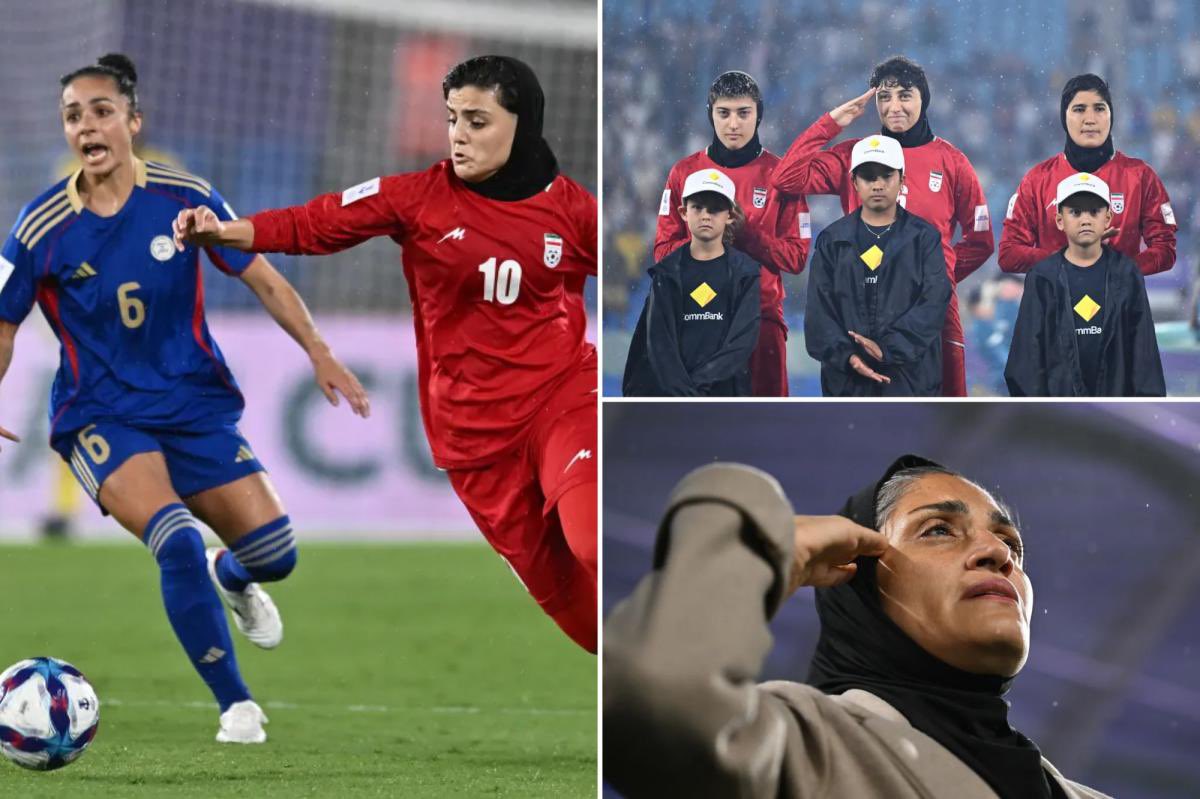
Hello Australia, this is your moment. We need your support.
Iran’s women’s football team refused to sing the regime’s anthem right after the killing of Ali Khamenei.
State TV called them “war-time traitors.”
Now they’re on a bus back to Iran, flashing the SOS hand signal through the window.
I call on Australian government to them. Don’t send them back to danger. Please give them protection.
A rapist doctor was NOT struck off, because MPTS believes “it was a one off”.
This is difficult, but I promised myself I’d post every time rape culture in medicine came up.
@gmcuk Here’s my testimony of what just one rape by a doctor does to a woman.
https://t.co/IRk6n5aff4
It costs £35-60 MILLION pounds every year to train 5000 ACPs
5000 nurses, physios , paramedics , radiographers removed from their base professions ( where there is a National shortage ) to substitute Drs
This money should be spent training DOCTORS @wesstreeting