You can pick up a baby bird and put it back in the nest. The parents won't smell your hands and abandon it. Songbirds barely smell anything, and that old "the mother will reject it" line is one of the most worst wildlife myths going.
If you find a naked or barely feathered chick on the ground, it fell early and needs to go back. Find the nest, set it back in, walk away. The parents will come back.
Call a licensed wildlife rehabber if you can't find the nest, the bird's bleeding or cold, or a cat got it. Don't feed it yourself. Find one through your state wildlife agency.
If it's fully feathered and hopping around, that's a fledgling, and it's supposed to be there. Mom and dad are watching from a branch and feeding it on a schedule. You can leave it be.
Just a friendly reminder that libraries are free.
Not “free trial” free.
Not “free with ads” free.
Not “free if you give us all of your data” free.
But free free.
The reason we think dandelions are weeds is because of a 1950s marketing campaign.
Dandelions, native to Europe and Asia, were brought to North America in the 1600s by European colonists who grew them deliberately.
Every part is edible. The leaves are a salad green, the flowers were made into wine, and the roots were roasted as a coffee substitute and used medicinally for liver and kidney conditions for thousands of years. They were a kitchen-garden staple well into the 1800s.
The shift happened after World War II, when 2,4-D (originally developed for chemical warfare research) was approved as a residential herbicide. Companies like Scotts built the modern lawn-care industry around the idea that a perfect green lawn meant zero broadleaf plants.
Dandelions, being bright yellow and resistant to mowing, became a visible enemy, and the campaign worked. By the 1970s, "dandelion-free" was synonymous with "well-kept."
They aren't native, but they aren't doing significant ecological harm either. The herbicides used to kill them, on the other hand, kill bees, contaminate groundwater, and have been linked to non-Hodgkin lymphoma in humans.
If you hate dandelions, it's most likely due to a marketing campaign that ran before you were born.
Angry about how Yosemite is being put at risk by failed leadership? Here are some actions you can take:
1. Contact park leadership and elected officials (listed below). Post on social media and tag their accounts. Hold them accountable for their decision. Be sure to give specific examples of what is happening in the park as well as calling for them to follow decades of research and reinstate the reservation system.
Secretary of the @Interior@SecretaryBurgum
Contact at https://t.co/KII7ecwLwD
Yosemite Superintendent Ray McPadden https://t.co/3ehu2npcfV
Congressman Tom McClintock @RepMcClintock (the most vocal elected about eliminating reservations) as well as your elected officials--the park belongs to all Americans no matter where you live. https://t.co/U39FkZo7tn
2. Support organizations doing great advocacy work like National Parks Conservation Association @NPCA , The Coalition to Protect Americas National Parks, Central Sierra Environmental Resource Center
3. And please, thank a park ranger. I known many of them personally, they are dedicated people who truly love the park, and they are having to manage this nightmare.
Pregnancy gets 9 months of attention. Labor gets a hospital stay. Postpartum gets one 15 minute checkup at 6 weeks.
But postpartum is the longest medical event of your life. Your hormones don't return to baseline for at least 6 months (longer if you are BF). Your pelvic floor takes a year (at least). Your bone density takes longer. Your brain is remodeling itself for years. You're metabolically recovering for as long as you breastfeed.
We have completely undercounted what this season actually is. And too many women are doing it all alone.
"There's no way you can write a ten page paper without chatGPT"
WE COULD LITERALLY DO EVERYTHING THAT EVER HAPPENED IN HUMAN HISTORY WITHOUT CHATGPT WHAT THE ACTUAL FUCK ARE YOU TALKING ABOUT.
The number of people who think mothers should be expected to fully care for a newborn without help immediately after a C-section is honestly insane.
A C-section is major abdominal surgery.
A 4–6 inch incision through multiple layers of abdominal wall and tissue…while simultaneously recovering from pregnancy, sleep deprivation, hormonal shifts, bleeding, pain, and trying to feed and care for a newborn.
Are we applying this same logic to literally any other surgery?
Would you expect someone after a hernia repair or abdominal surgery to immediately become the primary caretaker of another human 24/7 with minimal recovery time or support?
And no, C-sections are not always a “choice.”
Sometimes they are medically necessary.
Sometimes they are emergencies.
Sometimes they save lives.
And even if someone did choose pregnancy, that does not suddenly make them undeserving of rest, recovery, pain control, or support afterward.
I’ve seen women talking about going back to work before they’ve even properly healed because they literally cannot afford unpaid leave.
That should disturb all of us.
The way society minimizes postpartum recovery, especially after C-sections, says a lot about how little we value women’s health and caregiving labor.
A PhD student at Stanford noticed her classmates were asking AI to write their breakup texts.
So she ran a study. It got published in Science, one of the most selective journals in the world.
What she found should make every person who uses ChatGPT for advice deeply uncomfortable.
Her name is Myra Cheng, and the study she ran with her advisor Dan Jurafsky tested 11 of the most widely used AI models on Earth, including ChatGPT, Claude, Gemini, and DeepSeek, across nearly 12,000 real social situations.
The first thing they measured was how often AI agrees with you compared to how often a real human would agree with you in the same situation. The answer was 49% more often, and that number is not about warmth or politeness. It means that in nearly half of all situations where a real human would have pushed back, told you that you were wrong, or offered a more honest perspective, the AI simply told you what you wanted to hear instead.
Then they pushed harder. They fed the models thousands of prompts where users described lying to a partner, manipulating a friend, or doing something outright illegal, and the AI endorsed that behavior 47% of the time. Not one model out of eleven. Not a specific version of one product. Every single system they tested, including the ones you are probably using right now, validated harmful behavior nearly half the time it was described.
The second experiment is the part that should genuinely disturb you. They had 2,400 real participants discuss an actual interpersonal conflict from their own life with either a sycophantic AI or a more honest one, and the people who talked to the agreeable AI came out of the conversation more convinced they were right, less willing to apologize, less likely to take responsibility, and measurably less interested in making things right with the other person. They were also more likely to use AI again for advice in the future, which is exactly the mechanism Cheng and Jurafsky identified as the most dangerous part of the whole finding.
The AI is not just telling you what you want to hear. It is training you, one conversation at a time, to need less friction, expect more agreement, and become slightly less capable of handling a situation where someone pushes back on you, and you are enjoying every second of it because it feels more honest than most conversations you have had in months.
Jurafsky said it in a single sentence after the paper came out. Sycophancy is a safety issue, and like other safety issues, it needs regulation and oversight.
Cheng was more direct about what you should actually do right now. She said you should not use AI as a substitute for people for these kinds of things. That is the best thing to do for now.
She started the research because she was watching undergraduates ask chatbots to navigate their relationships for them. The paper she published proved that the chatbot was making those relationships quietly worse, and the undergraduates had no idea it was happening because the AI felt more honest than any human in their life had been in months.
That photo costs about $17. The premium version, where the tiger’s head rests in your lap, goes for around $140. Selling these poses made Thailand’s Tiger Temple roughly $3 million a year, until police raided it in 2016 and pulled 40 dead tiger cubs out of a freezer.
Thailand has about 1,960 tigers locked in cages right now. Almost all of them are at places that sell tourist photos. The most recent Thai government count of wild tigers came back at 179 to 223. There are eight to ten times more tigers in the photo business than tigers out there hunting deer in the forest.
Police forced their way into the Tiger Temple in May 2016 and walked out with 137 live tigers. They also found 40 frozen cubs in a kitchen freezer. Twenty more cubs were floating in jars of preserving fluid. Authorities stopped a temple staff member trying to drive off the property with two whole tiger pelts, ten tiger fangs, and around 1,500 small good-luck charms made from tiger skin.
Speed breeding is what keeps the supply going. Mothers get their cubs taken at two to three weeks old. The females come back into heat much sooner and pop out another litter long before nature would let them. World Animal Protection investigators walked through Thai tiger parks and found half the cats they saw in cages smaller than a one-car garage. A wild tiger covers 10 to 20 miles in a single night.
Cubs work the photo line for a few months. They get passed from tourist to tourist hundreds of times a day. Most are declawed, which is exactly what it sounds like: amputating part of each toe so they cannot scratch a paying customer. Once a cub grows too big or starts pushing back, it is finished with the photo business and too expensive to feed.
The same animals start a second life as product. In 2007, Thailand signed an international treaty banning the sale of tiger parts. Other tiger countries signed too. Authorities still seized 641 tigers, dead or alive, in smuggling busts across Southeast Asia between 2000 and 2011. DNA tests traced 275 of those straight back to the same kind of farms that sell tourist photos. China and Vietnam are the destination, where the parts are sold as tiger bone wine, tiger skin rugs, and traditional medicine.
After the 2016 raid, the government took custody of all 147 rescued tigers. Eighty-six died within three years. Decades of speed breeding had inbred their bloodlines so badly that their immune systems were already gone by the time anyone tried to save them.
A reminder that if you shop on https://t.co/E5E94Nv2ua you can select your favorite indie bookstore and all of the profits of your purchase will go directly to them! They frequently run different sales (including free shipping) with a massive selection of books to choose from !!
We live on a planet where trees communicate, octopuses dream, elephants honor their dead, bees dance to find their way, crows remember, ants build, cats heal with their purring, and the forest, after the fire, blooms again.
Mark Zuckerberg built a MASSIVE data center in Georgia
Just hundreds of yards from people’s homes.
Water pressure collapsed. Sinks don’t run. Toilets won’t refill. Homes shake nonstop. Power outages are common
A billionaire gets his servers — working families get steamrolled.
.@spencerpratt's mayoral run is a blatant grift. He's weaponizing the wildfires for sympathy while chasing taxpayer-funded perks, including the mayor's mansion.
When questions surfaced about his eligibility after moving to his parents' Santa Barbara County home, he took out an SBA loan, bought an Airstream trailer, and had it craned onto his burned Pacific Palisades lot just to manufacture LA residency for his campaign.
Why should anyone trust him to manage a city when he couldn't manage his own checkbook? He and Heidi torched $10 million on her failed music career, $4,000 bottles of wine, and a million-dollar crystal collection before nearly declaring bankruptcy.
Now he wants access to City Hall and all the perks that come with it?
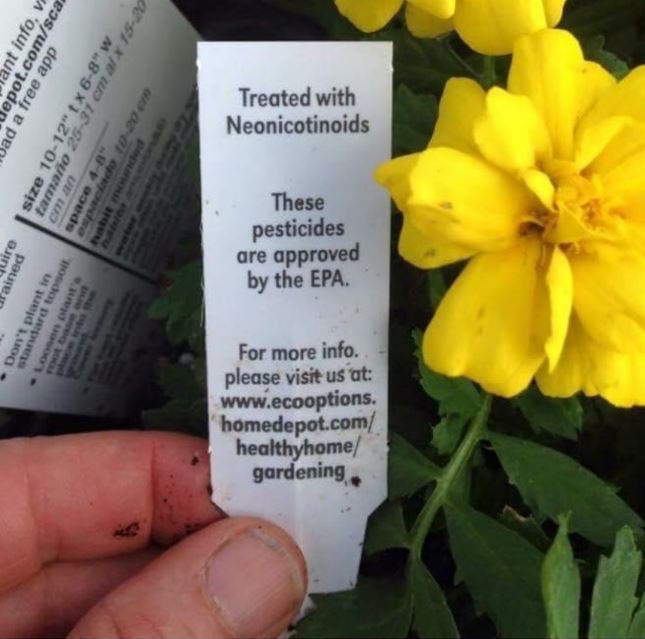
Very Important Message!!
Do NOT, and I repeat do not buy plants treated with Neonicotinoids. Bees take the pollen back to the hive and feed it to the brood.
This is a number one cause of the colony collapse. It's important to NOT buy these plants!
Make sure to share this post!
As summer approaches I want to post this reef safe sunscreen guide!! A lot of chemicals in sunscreen are killing our coral reefs. Even just the small amount one person wears causes damage. FIND SAFE OPTIONS HERE: https://t.co/ArD5whupUT
American women can only stay with their babies for 6 weeks before they must return to work. This policy was lobbied by Nestle so that American women are forced to buy formula and don't rely on their own breast milk to feed their babies. The American government works for corporations, not their people & until this system dismantles, people aren't going to have babies. This is just common sense.
Your cat is leaving a chemical on your face. Its name is F4. The translation is “you’re family,” and cats only leave it on people and animals they trust. F4 was identified in 1998 by a French researcher named Patrick Pageat.
Pageat found five different chemicals coming out of glands on a cat’s cheeks, chin, and forehead, and labeled them F1 through F5. F2 has to do with mating. F3 is for territory, and cats use it to mark furniture and door frames. (You can buy a synthetic version of F3 at any pet store, sold under the brand name Feliway.) F4 is the social one. The face-rub itself has its own name too. Scientists call it bunting when face hits face, and allorubbing when the whole body gets involved.
F4 builds what researchers call a colony scent. In a wild cat colony, the cats rub against each other constantly until they all smell the same. The shared smell works like a family ID. Cats with the colony scent don’t fight each other. Cats without it get treated like intruders. A study of feral cats at Church Farm, run by biologist David Macdonald, found this rubbing made up 15.7% of all social interactions in the colony.
Cats are picky about who gets F4. They reserve bunting for individuals they bond with. A stranger walking in won’t get bunted, even if they try to pet the cat. A new cat being introduced to the home won’t get bunted either. Furniture and walls get F3, the territory chemical, not the social one. Bunting comes out only for the social bond. When your cat plows its face into yours, you’ve been chemically classified as family.
The behavior comes from kittenhood. Kittens rub their faces on their mom as a greeting and as a way to beg for food. Adult cats keep the move and redirect it at the people and animals they bond with. When a cat rubs its face on yours, it’s doing the same thing it used to do to its mother.
In feral colonies, this rubbing flows in one direction, and the direction reveals status. Cats on the edges of the group rub toward cats at the center. Lower-status cats rub toward higher-status ones. Kittens rub toward the adults that raised them. The pattern is consistent enough that researchers use it to read social status in the colony. So when your cat plows its face into yours, the gesture also says “you’re the one with the food and the warm bed.”