Honouring the highest calling ► Authentic development & meaningful success aligned with the true Self ► More joy, better lives, better leaders, better world!
Worth reading:
The Ancient Blueprint: Building a Culture of Connection in a Broken World --- How a New Operating System Can Heal Division and Renew Society
https://t.co/z6LHRWLlOo (@Richard_Flyer)
The quickest way to build trust is to tell the truth.
When I'm willing to say what's actually happening, what's actually hard, what I actually I want, I give everyone else permission to do the same.
When I come from this place, I feel more relaxed and others tend to as well
A PhD student at Stanford noticed her classmates were asking AI to write their breakup texts.
So she ran a study. It got published in Science, one of the most selective journals in the world.
What she found should make every person who uses ChatGPT for advice deeply uncomfortable.
Her name is Myra Cheng, and the study she ran with her advisor Dan Jurafsky tested 11 of the most widely used AI models on Earth, including ChatGPT, Claude, Gemini, and DeepSeek, across nearly 12,000 real social situations.
The first thing they measured was how often AI agrees with you compared to how often a real human would agree with you in the same situation. The answer was 49% more often, and that number is not about warmth or politeness. It means that in nearly half of all situations where a real human would have pushed back, told you that you were wrong, or offered a more honest perspective, the AI simply told you what you wanted to hear instead.
Then they pushed harder. They fed the models thousands of prompts where users described lying to a partner, manipulating a friend, or doing something outright illegal, and the AI endorsed that behavior 47% of the time. Not one model out of eleven. Not a specific version of one product. Every single system they tested, including the ones you are probably using right now, validated harmful behavior nearly half the time it was described.
The second experiment is the part that should genuinely disturb you. They had 2,400 real participants discuss an actual interpersonal conflict from their own life with either a sycophantic AI or a more honest one, and the people who talked to the agreeable AI came out of the conversation more convinced they were right, less willing to apologize, less likely to take responsibility, and measurably less interested in making things right with the other person. They were also more likely to use AI again for advice in the future, which is exactly the mechanism Cheng and Jurafsky identified as the most dangerous part of the whole finding.
The AI is not just telling you what you want to hear. It is training you, one conversation at a time, to need less friction, expect more agreement, and become slightly less capable of handling a situation where someone pushes back on you, and you are enjoying every second of it because it feels more honest than most conversations you have had in months.
Jurafsky said it in a single sentence after the paper came out. Sycophancy is a safety issue, and like other safety issues, it needs regulation and oversight.
Cheng was more direct about what you should actually do right now. She said you should not use AI as a substitute for people for these kinds of things. That is the best thing to do for now.
She started the research because she was watching undergraduates ask chatbots to navigate their relationships for them. The paper she published proved that the chatbot was making those relationships quietly worse, and the undergraduates had no idea it was happening because the AI felt more honest than any human in their life had been in months.
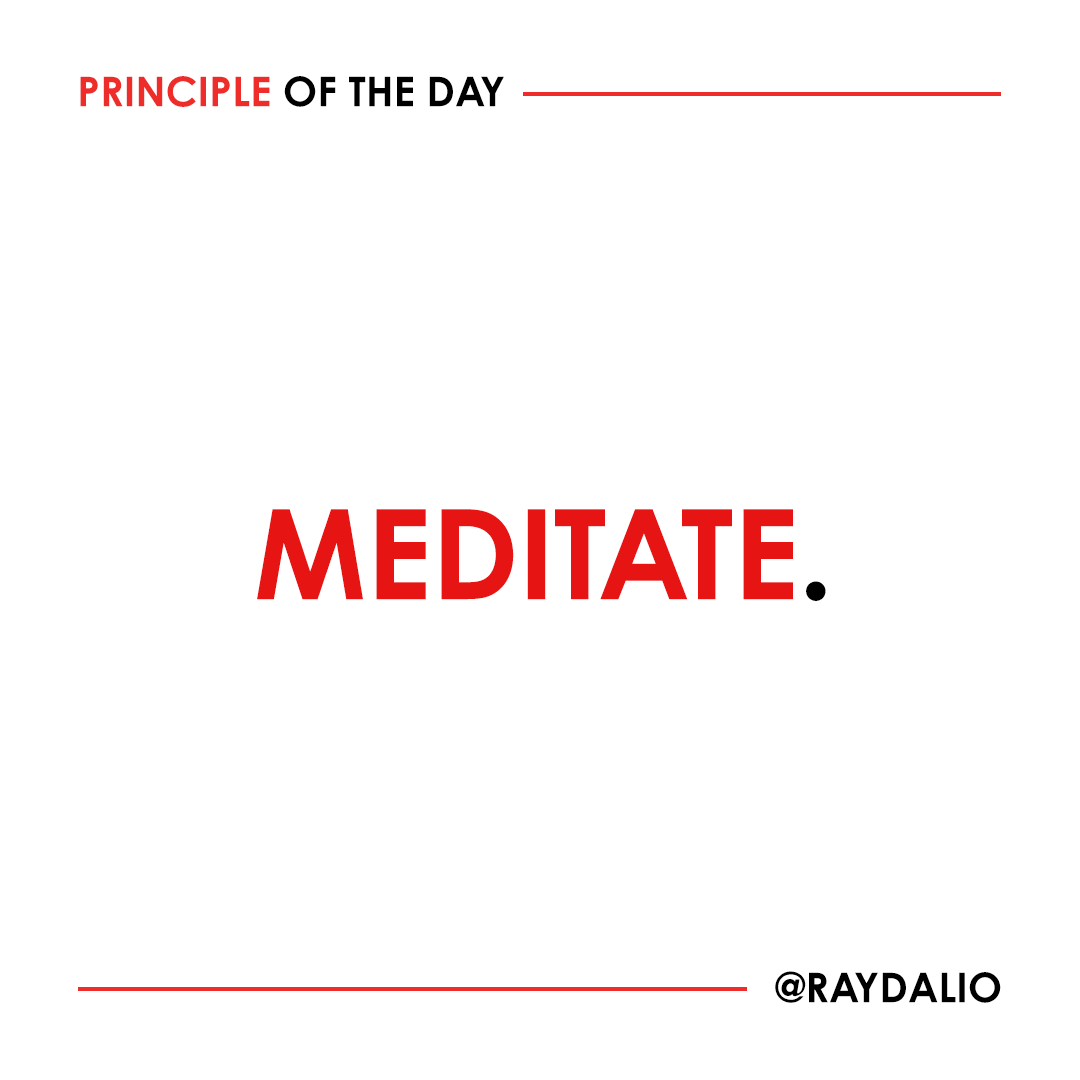
I practice Transcendental Meditation and believe that it has enhanced my open-mindedness, higher-level perspective, equanimity, and creativity. It helps slow things down so that I can act calmly even in the face of chaos, just like a ninja in a street fight. I'm not saying that you have to meditate in order to develop this perspective; I'm just passing along that it has helped me and many other people and I recommend that you seriously consider exploring it. #principleoftheday
We can't do 'good' in the economy without a new economic theory of what 'good' is. The Common Good Economy sets out the foundational shift: from reactive corrections to proactive objectives we design and work on together.
The how matters as much as the what: purpose, participation, reciprocity, shared learning and rewards, and accountability are not add-ons, they must go to the core of how we design the economy.
Out 4 June from @PenguinUKBooks. Launch events from @hayfestival to @howtoacademy to @novaramedia. Pre-order and registration links in replies.
Movement is one of the most powerful brain-supporting tools we have. Exercise supports mitochondrial function, reduces inflammation, and promotes neuroplasticity. Yes, your body benefits every time you move.
Reserve your place here: https://t.co/4pXmg8amoQ
After years in the data, this book is ready. And I think we need it now more than ever.
HBR has opened Design Love In for pre-order, and I’d love you to come into the Discovery Series with me.
Harvard Professor Arthur Brooks drops a happiness bombshell: Happiness isn’t a fleeting feeling—it's a skill you can build like muscle.
Most people chase pleasure and think that's happiness. Wrong.
Brooks breaks it down with science:
- Happiness = Enjoyment (pleasure + memory + people)
- Satisfaction (joy from hard-won struggle)
- Meaning (your life coheres, has purpose, matters)
Twin studies show ~50% of happiness is genetic (your mom literally influenced your baseline).
Circumstances add ~25% (money, job, etc.)—but it's temporary.
The game-changer? The remaining 25% is under your direct control through daily habits.
His four non-negotiable "happiness pension plan" deposits every day:
- Faith
- Family
- Friendship
- Work (meaningful effort)
Cultivate these four consistently—and you systematically raise your happiness setpoint.
In a world obsessed with quick dopamine hits, Brooks says real joy comes from investing in what lasts.
Which of these four do you already prioritize—and which one needs more daily deposits?
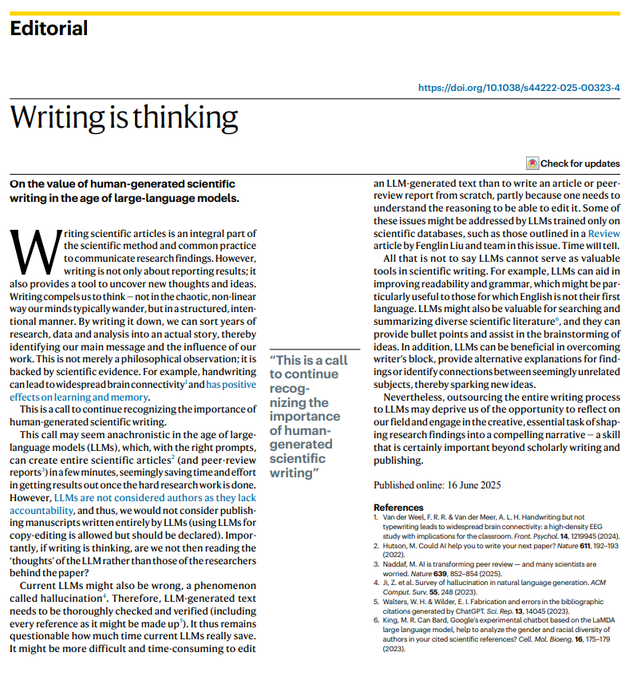
Writing forces your brain to coordinate memory, reasoning, and meaning-making simultaneously.
Every time you write, you rewire toward clearer thinking. Every time you let an LLM do it, you rewire toward consumption.
As we transition into 2026, I wish you and those you love a year filled with peace, joy, good health, good friendships, harmony in your family and community, fulfilment, and prosperity!
May we dream and create wonderful transformations in 2026!
#HappyNewYear!
Read the latest scientific paper published by our research partners from UC San Diego suggesting the impacts of intensive meditation – like Dr Joe’s Week Long Retreats – on the brain and body. https://t.co/L3MxEzUICr