No one will remember your programs.
They will remember the calls you made when nobody was watching.
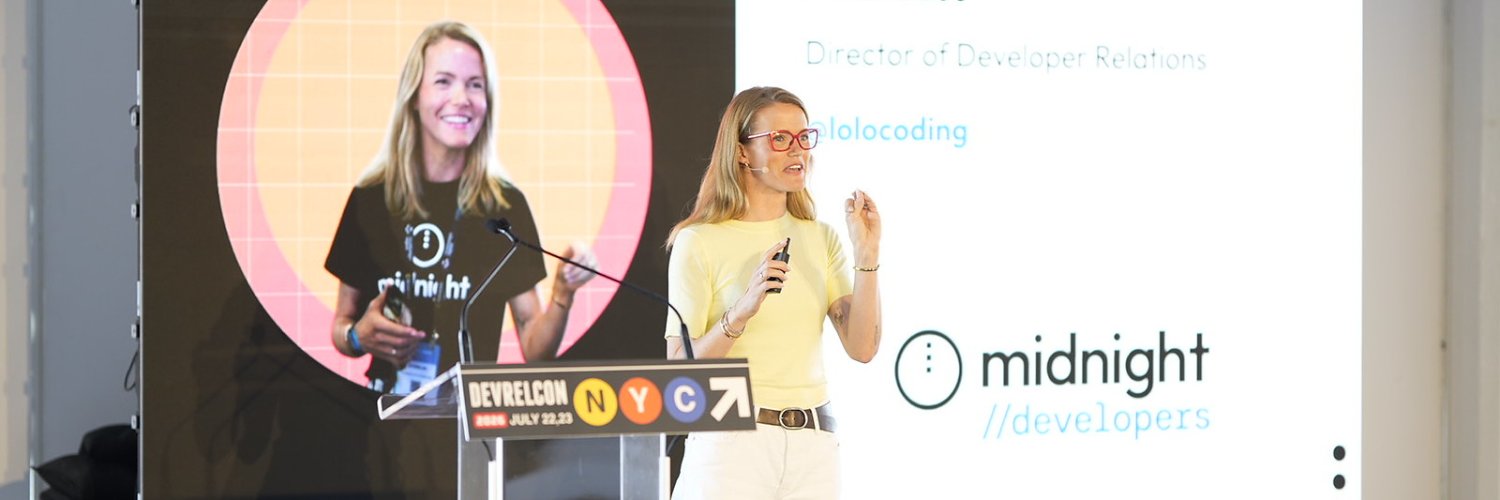
My @DevRelCon talk is up 👀
https://t.co/zYww8Q5Q8n
Here's one of mine. We got the judging wrong at our own Summit Hackathon in London. I published a post saying so, and we re-ran the whole evaluation at our expense.
No one made us. After all, judges' decisions are final in hackathons. We could have fixed the scoring sheet, sent some apology notes, and moved on without ever saying it out loud. That option was cheaper in every sense, and I thought about taking it.
Publishing that post was one of the hardest professional decisions I've ever made. I made it before I had any idea how our developers would react. I was prepared to lose the trust we had worked so hard to build over the past few years. I was prepared for them to walk away.
But integrity isn't measured in the response it gets. It's measured in the decision you make while the outcome is still unknown.
The post was just the public part everyone saw. The work that mattered more came after: working out how I failed to set the team up, what conditions let it happen, and what structural fix stops it from repeating.
I published it because of a developer named Sam. He showed up in 2023, before we had an incentive program or a product worth showing. He's now technical lead on the system handling 10 million criminal cases a year across 18 forensic labs.
2.5 years from a test network to a government's real one. The job was always to make that path shorter for the next developer.
Sam is why I made the call. The next Sam, whose name I don't know yet, is why I'd make it again.
I can tell you the exact night I first heard the words “developer advocate.”
I was a bootcamp student at RubyConf on an opportunity scholarship. A few advocates were incredibly kind to me. On the flight home, I wrote about whether that could be a job.
It could.
9 years later, I’ve built 4 of those teams. What pulled me in was their hospitality, and how willing they were to teach a newbie everything they knew.
That’s still the job.
https://t.co/C42m7g3awW
I almost made this video private. It’s the first technical talk I ever gave, and watching it again had me in tears.
It’s my 2018 capstone demo from @adaacademy: an iOS app that helped teenagers find community service projects, and I taught myself React Native in the 3.5 weeks I had to build it.
And watching it now, I can see the moment I figured out how I learn best: by building. I also remember spending a significant chunk of that project on encrypting student data. It’s no coincidence that data protection mattered to me then, and that it still shapes the work I choose today.
And though I didn’t know it at the time, my hiring manager from Amazon was in the audience that night. Something in that talk convinced him I was the person from our cohort he wanted on his team.
That night helped me clarify something I'd been struggling with throughout my time at Ada. Yes, I wanted to become a software engineer, and I knew I needed real hours writing production code to earn the respect of the developer communities I hoped to serve. But I also wanted to keep teaching.
Amazon gave me those engineering hours. Meanwhile, I kept speaking at meetups around Seattle to build my skills and confidence, and eventually I felt brave enough to apply for a developer relations job, where I could do both.
To me, teaching is the core of Developer Relations. Even as the discipline, the way we serve developers, and the audience itself continue to change. In 2020, we wrote tutorials for developers. Now we also teach the AI agents those developers build with.
It’s funny, I recognize a lot of the speaking habits I still have in this 2018 version of me. Today I use them on purpose. Back then, they just came out of me.
Full talk, nervous hand gestures and all: https://t.co/SX20eMaYRr
Developer funnels assume people arrive in the order you listed them.
I measured every tier. 1,203 were shipping. 689 had finished onboarding.
The strongest builders came in sideways and never saw the front door.
The funnel is a sales metaphor. Developers never agreed to it.
7 years ago, I sat on these letters under a banner I still believe: “We will change the direction of tech together.”
This week @AnitaB_org canceled @GHC 2026, citing sponsorship “significantly below” expectations.
Why sponsors should keep funding this work🧵
My two cents?
When budgets tighten, women-in-tech communities are usually the first line item cut and the last one anyone measures.
So measure them. Ours produced a hire and a steady stream of new developers for a fraction of a conference booth. That's an easy win.