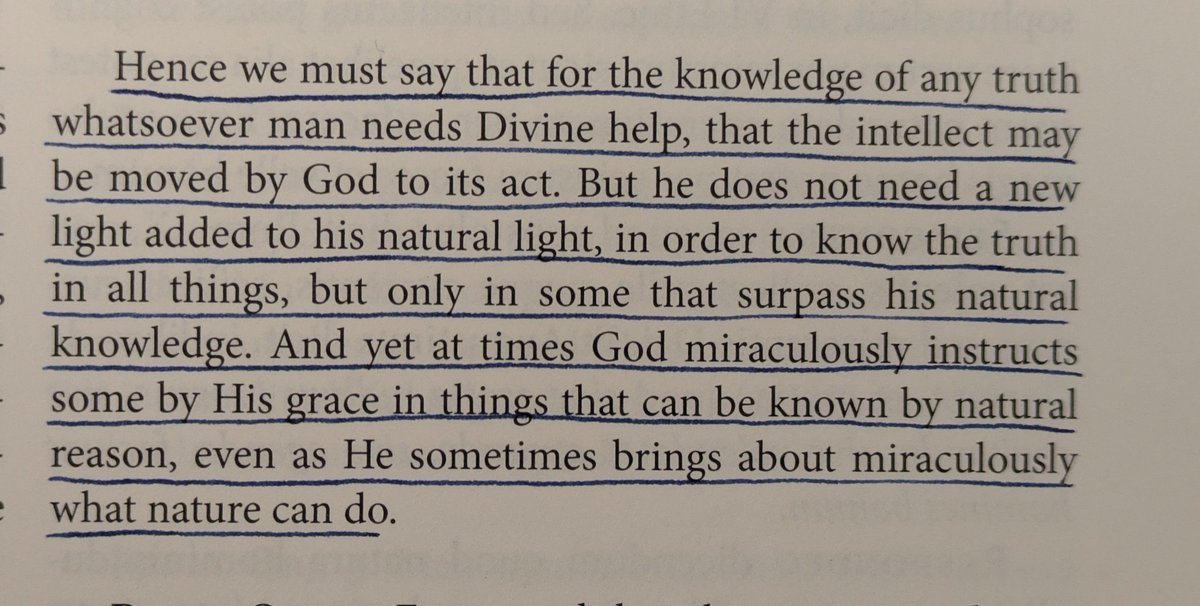
Gilson on Thomism.
"If we grant that a philosophy is not to be defined from the elements it borrows but from the spirit which quickens it, we shall see here neither Platonism nor Aristotelianism, but, above all, Christianity."
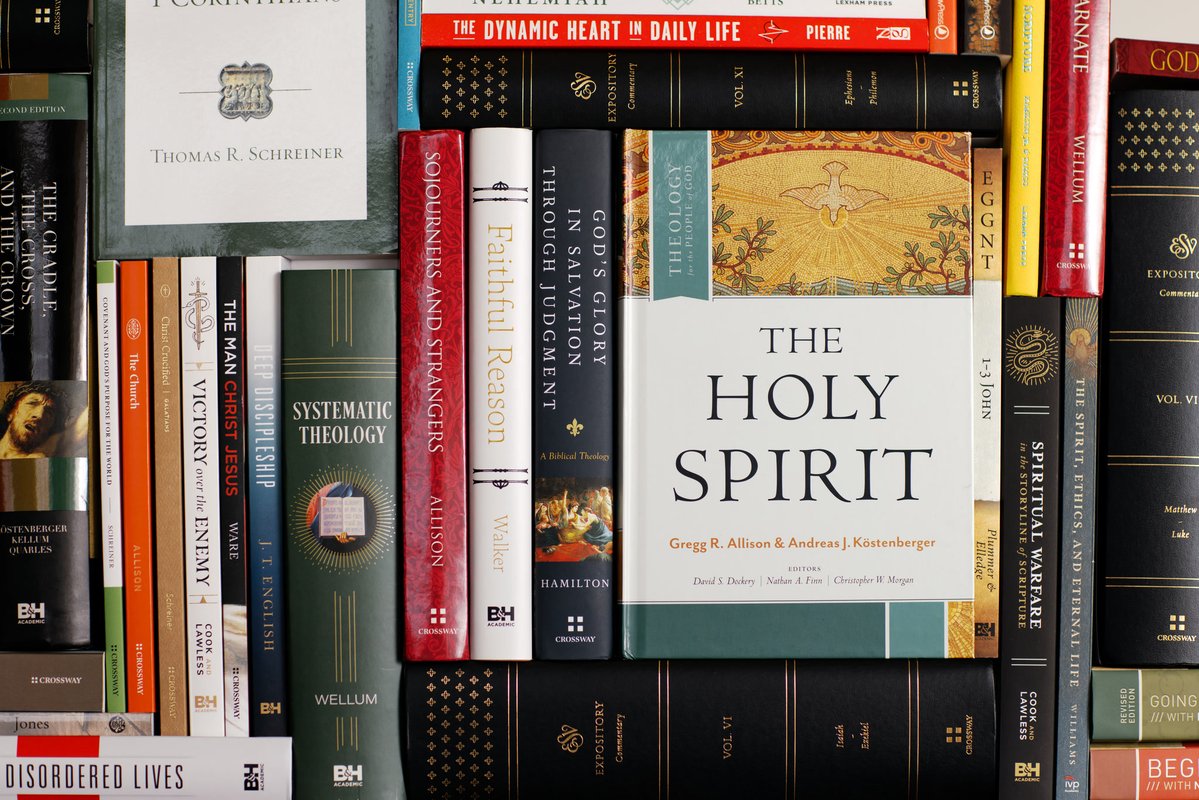
102 books. One winner. Over $2,000 worth of theology written by Southern Seminary faculty.
Commentaries. Theology. Biblical studies. Ministry. Church history. Counseling. Preaching. Ethics. Christian living.
This is the kind of library pastors spend years building. Now we’re giving it away to one person. Learn from the faculty shaping churches, classrooms, and pulpits around the world.
In partnership with @Logos , we’re giving away a theological library filled with trusted resources for ministry and Christian scholarship.
To enter:
• Mark sure you are following @SBTS
• Repost this post
• Fill out this form: https://t.co/9rNiNcv5eE
Open to U.S. residents only. Winner will be chosen and contacted Friday, June 5.
"The illusion . . . is that one can extract an ontology from an epistemology. . . . If one cannot get outside oneself to arrive at things when one makes thought the starting point, that proves that thought is not the point one should have started from"
Étienne Gilson
These books comprise what I think of as a Basic Reality Quartet, a systematic defense of what perennial philosophy (Platonic/Aristotelian/Scholastic) takes to be the metaphysical structure of the world, deeper than and implicitly presupposed by whatever natural science tells us
"Essence and existence together yield a composition *with* two principles. Matter and form together, on the other hand, yield a composition *from* two principles."
Brennan
Every time I read some contemporary theologian speak about the way some theological concept or doctrine doesn’t connect anymore or isn’t intelligible anymore, it reads mostly like autobiography or a confession that they’re not very good at explaining things.
I'm thankful for what Piper wants to say here, but it would be helped by better distinctions. In 2LCF 4.2, we confess we were created "male and female, with *reasonable* and immortal souls, rendering them fit unto that life to God for which they were created; being made after the image of God, in *knowledge*, righteousness, and true holiness" (2LCF 4.2).
AI does not possess that understanding and will of the human soul. It (quickly) simulates patterns of associating. So not only is the machine not enjoying, it's also not reasoning, as Piper suggests. (And animals have passions. My dog is regularly impassioned by the arrival of the Amazon guy).
So we need to distinguish genuine humanity from AI, but not at the expense of surrendering our reasoning to the machine. Compare Westminster divine, George Walker:
"As God loveth goodnesse and delighteth in it, so man loved and desired all good things, which his upright *reason and will did lead him unto*. In all this did the Image of God primarily consist" (cited in Renihan, Confessing the Faith, vol. 2, on 2LCF 4.2 - see this section of Renihan's commentary).
And it is our renewed reason and will that will lead us into that endless enjoyment of God.
It's frustrating to read modern theologians who write with a strong rhetorical piety, yet the substance of their words is unclear, uncareful, and/or incorrect. Reminds me of Richard Dawkins. All the persuasiveness comes from the tone; the arguments are terrible.