To debunk some fallacies raised by irredentists..
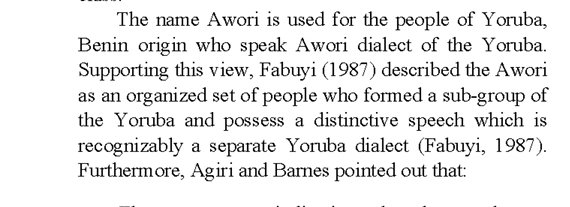
That the Aworis are an Edo-Yoruba group is of no argument. Yoruba and lagos historians all agree to this fact! In a research by the infamous R.O. Ajetunmobi,he stated that the name Awori is used for people of Edo yoruba origin
🧵
Trying to be slick aren't you?
Uneme Aiyegunle was named as a result of the nearby aiyegunle town in akoko ondo more or less a reference point to the neighboring community samd with ayetoro, they have their own èdó names which the people still call them till date.
What you call uneme aiyegunle is actually uneme osu...
Ikiran Ile and oke aren't their name it's Ebune, ikiran was newly adopted and from all indications a reference to them by the Ondo traders...
And both uneme aiyegunle, aiyetoro, ikiran oke and Ile 'Ebune' all speak èdó language not yoruba....
--- uneme dialect is even 70% edo spoken in Benin.
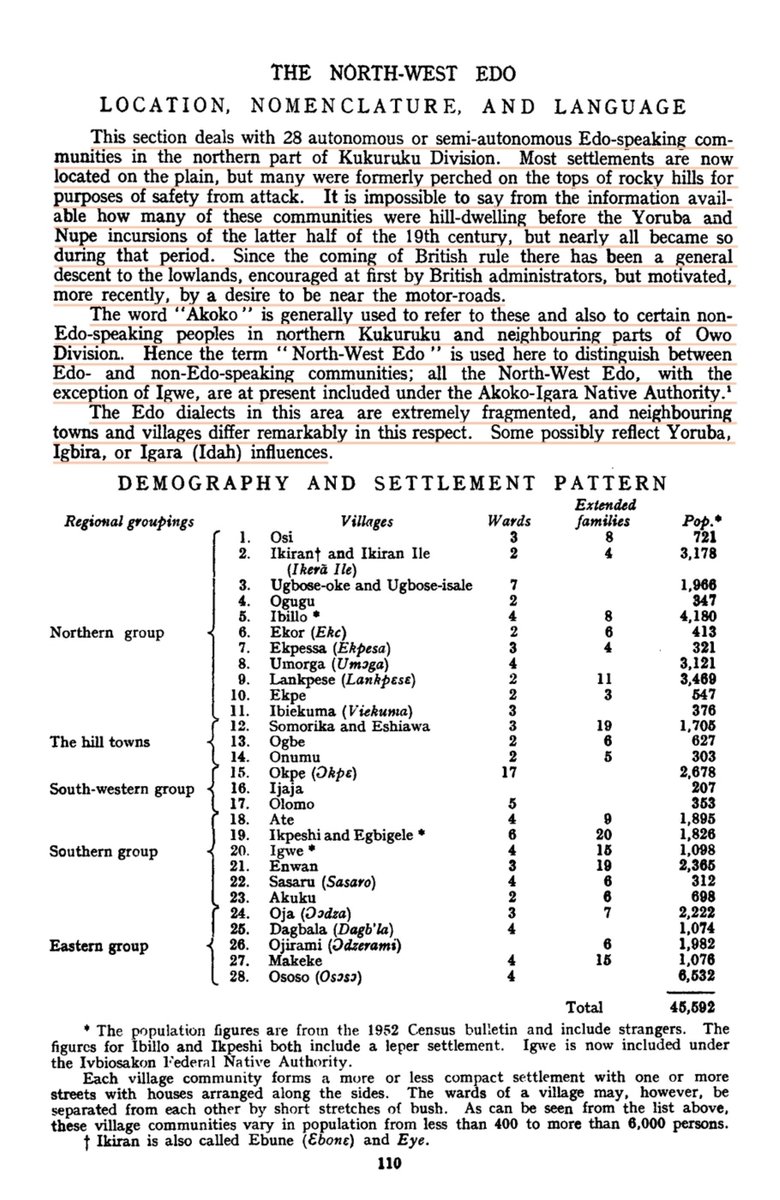
Akoko èdó a unitary term used in referring to a group of segmented edoid group in the north western èdó region. This part remains one of the most dialectical segment territory occupied mainly by èdó speakers.
Are Akoko ɛdo yorubiod or part of the larger yoruba ethnic group ?
- Based on the willink parliamentary report,c.1958 it's noted that the akoko edo people are collection of tribes that though they might speak yoruba as an influencing language are not yorubas or yoruba speaking people, each tribe or group within the akoko èdó territory have their own dialect which is under the èdóid language... 'frame1'
The term Akoko Èdó is however derived from two èdó words → Akókó èdó →
akókó (rt) - kó ~ to gather.
A double kókó acting as an intensifying factor, before it eventually turns into a noun → Akókó - the act of gathering segmented part together
Èdó - the èdó tribe..
-→ Akókó èdó - a gathering of clusters of èdó speaking people.
There are also Igarra people in the territory who speak an Ethnographic dialect, the only none èdó group in the region.
`,Thomas Northcote Anthropology Research 1909-1913 also shed more lights on the èdó speakers and their reach, based on his map entirely on the èdó groups.
Areas like Isua, Epinmi, Ipele in akoko Ondo were once part of the larger edo areas in the region, hence this areas were and still entered as èdó speaking group in Ondo state.
',In R.E Bradbury Benin Kingdom and the Edo speaking people,c.1957
The following fact was stated, Akókó èdó people are an èdó speaking group, very different from the akoko ondo, to further tell them apart he opted to use the term 'North western edo' instead of just akoko edo.
- he also noted 28 autonomous edo group makes up the èdó speaking group in akoko èdó with igarra being the only exclusion.
Every documents that ever left Akókó Èdó recorded as èdó speaking group, it's high time we left gnorance and learn, Akókó Èdó are not yoruba or a yorubiod speaking group.
If the proposed regions mean Yoruba claims over Akoko Edo, Okun, Itsekiri areas and all of Kwara, then we need to ask whether we are decentralising Nigeria or simply expanding the territories of the major ethnic groups?
Ethno-linguistic regions will shrink the political and economic space of minority groups while leaving the major three with disproportionate control.
I support regions created through negotiation between states, based on economic viability and mutual interests not ethnic claims. I also suggest that Lagos, Abuja and Port Harcourt should remain autonomous national economic territories.
Let regions compete, develop independently and remain within one Nigeria. Regionalisation should decentralise power, not facilitate ethnic expansion.
Yaribas are quick to share the pic Of Oba siting behind because of Omuada behind. for agenda But will not share the other picture of the clown behind 😂see how King Charles is following Oba like a fan boy😂he knows greatness.not that chief priests Cubana sorry chief priest horny
As an Edo man I’m concerned Only about The Edoid people and those affiliated with it Ancestrally. Akoko edo is different from Akoko people, like I have duly noted there is no tribe as Akoko in Edo state what you have in Akoko edo is a combination of mixed Edo speakers, speaking variant of the Edoid language, Except from the Igarra people who are Etuno speakers the majority in Akoko Edo are purely Edoid
According to Thomas Northcote map of Edo land in 1915
All this area you are trying to convert into Yoruba land are all Edo land and people, even isua in Akoko ondo was in his map, which till date the Isua people still maintain their Edo speaking language although it has being fluxed with Yoruba language
In Uneme for example they have Uneme Ekpedo - Uneme a pillage of Edo people
Uneme - Nekhua - the big Uneme’s
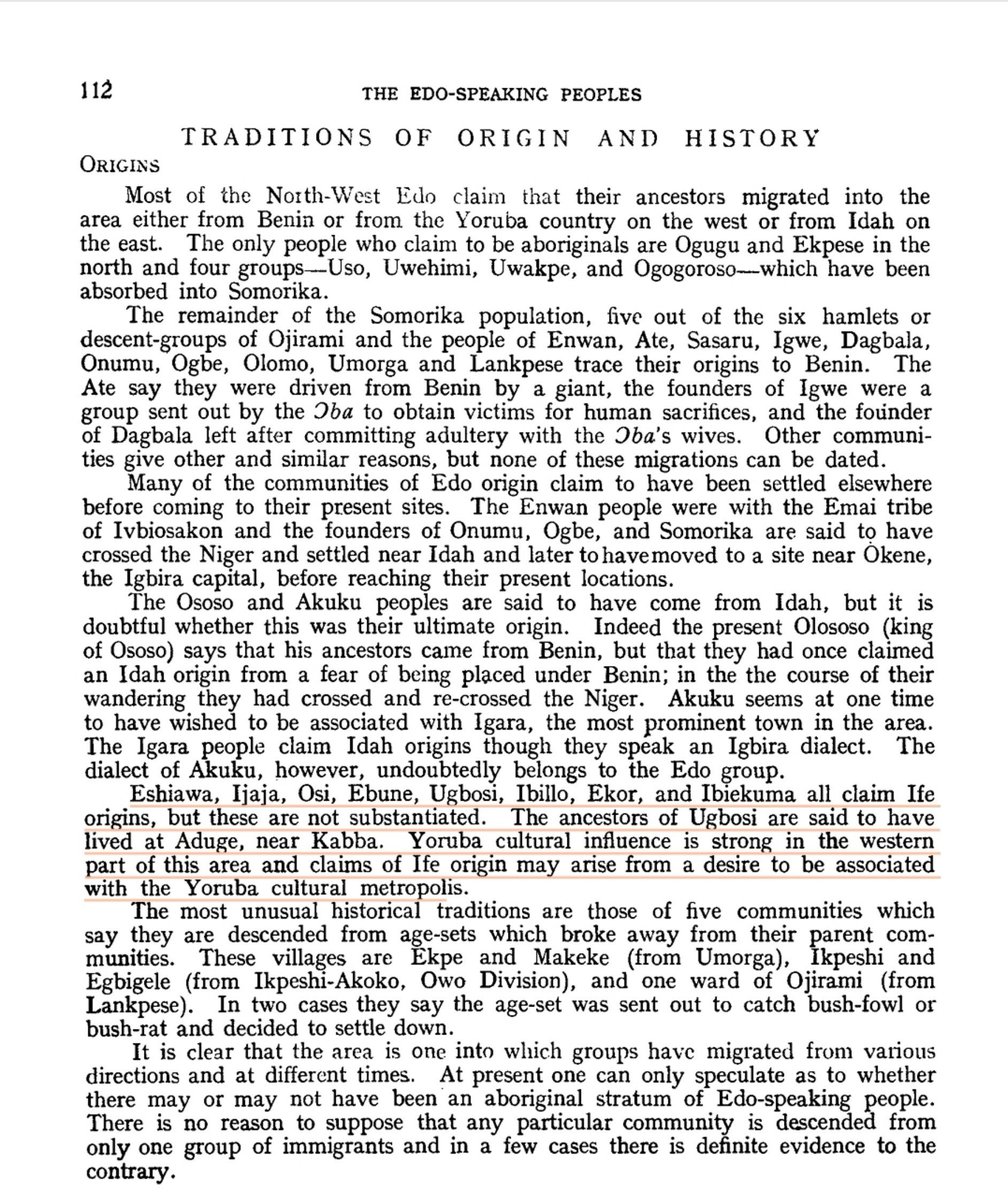
The Ososo and somorika people in the other hand have maintained their oral history with verifiable fact that they came from Benin, the Ososo people coming from OGBE in Benin city through unuamen before getting to their current Abode
AKOKO in Edo means Segment or fragment -Akoko edo “ Fragment of the Edo people”
There was an area called Akoko edo in 1960 when we were in Midwest, why was it not called akoko Midwest or akoko-Kukuruku ?
When the census for the creation of edo state was done in the 1950s the personnel that carried this census wrote they are surprise the Akoko Edo people were regarded yoruba whereas they were not “Awolowo Assimilation Scheme”{AAS}
The itsekiri people have huge population with Edo ancestry than you can ever imagine and I can list towns founded by Itsekiri people with Edo ancestry if you want but for now SHALOM