A message from Allergy London’s Prof. @DrAdamFox
🗣️So proud to see my colleague and friend Prof. Gideon Lack receiving the global recognition he so richly deserves. Time Magazine are recognising the incredible contribution he has made to global health through his groundbreaking research in to allergy prevention.
A recent research paper from the US suggested that the introduction of public health guidance based on his research has prevented hundreds of thousands of cases of peanut allergy.
#time100health
@hawkins_carole@itvnews Started 2-4 months before the tree pollen season it is highly effective. Immunotherapy is given for 3 years not because that is how long it takes for real effects but because 3 years is needed to sustain longer term benefit once it is stopped
Are you finding LTP allergy tricky to diagnose and manage? Listen to Hannah Hunter (@AllergicToDiets ) deciphering LTP sensitisation versus clinically relevant LTP allergy. #BSACI2025@ClinExpAllergy
Open access: Oral Immunotherapy in Peanut‐Allergic Adults Using Real‐World Materials. First author: Hannah Hunter; corresponding author: Stephen Jill
Read the article here: https://t.co/Kisys65Jun
In 21 adults initiated on peanut oral #immunotherapy (OIT), 67% tolerated at least 1000 mg on exit double-blind, placebo-controlled food challenge (DBPCF). Decreases in skin prick test (SPT) size and increases in peanut- and Ara h 2-specific IgG occurred in OIT participants but not in mechanistic controls (n = 9). Improvements were seen in Food Allergy Quality of Life Questionnaire—Adult Form (FAQLQ-AF) and food neophobia scores. Epinephrine was used infrequently; the majority (94.5%) of adverse reactions were mild (grade 1).
Read more articles published in #Allergy on #foodallergy here: https://t.co/3zmbAv02of
#Allergy_journal
🗞️#InThePress: Following Allergy London's Prof. @DrAdamFox recent discussion on 'Home food sensitivity' tests on Sliced Bread (https://t.co/H3axSsq4L5), he was featured in the @guardiannews this weekend, offering additional insights on the topic.
Prof. Fox shared:
🗣️I was pleased to have the chance to discuss ‘Home food sensitivity tests’ further with journalist Linda Geddes for a feature in Saturday’s @guardiannews
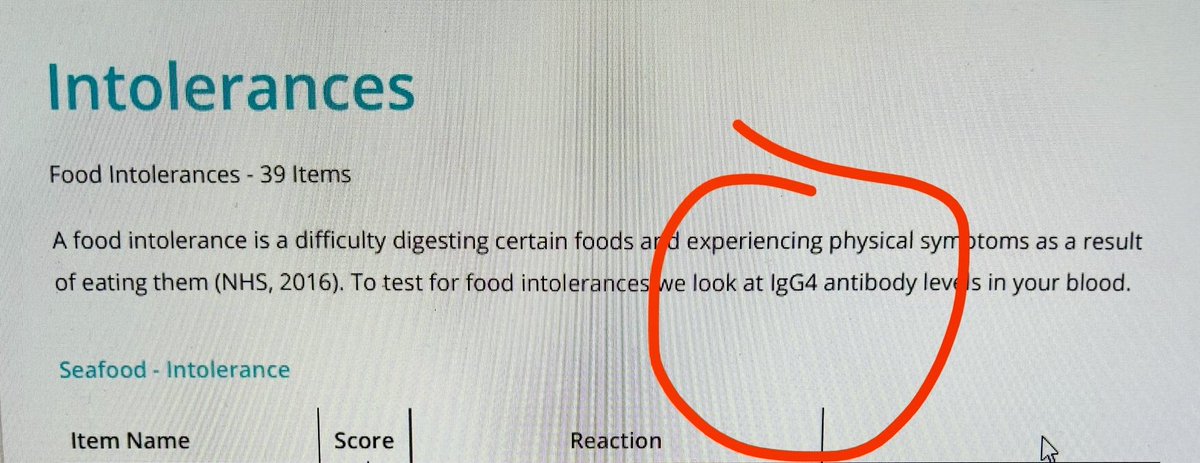
She found, like others, that scientifically unvalidated tests for food sensitivity such as bioresonance and IgG testing came back with lots of positives to foods which she was consuming without any problems.
👉For me, testing can be hugely important in getting a proper diagnosis but it needs to be done with validated tests such as IgE or skin prick tests and critically, only interpreted int he context of a proper clinical history.
However, these are tests for immediate allergies and not for food intolerance. For this, except lactose intolerance (for which there are breath tests and gene tests) diagnosis requires exclusion to see if the symptoms improve and then re-introduction to see if they return. It's harder work than a simple test but will give better results and is best done with the support and guidance of a registered dietician.
IgG4 is considered a non-inflammatory antibody. It is probably involved in suppressing allergic reactions to allergens in some situations. It is not a diagnostic marker of food intolerance. Don’t waste your money on this! #allergy
@Londonallergist@GoAllergy I explain that IgG4 and IgA2 are really cool molecules that migrate to mucosal surfaces and act as protective molecular sponges .. they don’t have complement binding tails .. so they absorb antigen & protect from allergic reactions. You stop eating the food, you may loose them.
Adults who have a peanut allergy can reduce their sensitivity to peanuts so they no longer become life threatening.
In the first study on adults with life-long allergies @kingsmedicine, 2/3 of participants could eat the equivalent of 5 peanuts by the end. 1/2
Scientists say the first clinical trial to test whether adults - with a severe allergy to peanuts - can safely tolerate them, has had positive results.
@CiaraDurkan has more details.
Two thirds of adults were able to eat peanuts without an allergic reaction after taking part in ‘groundbreaking research’ at @kingsmedicine@GSTTnhs
The study used daily doses of peanuts to desensitise patients with life-long allergy.
https://t.co/El8jmLWJYF
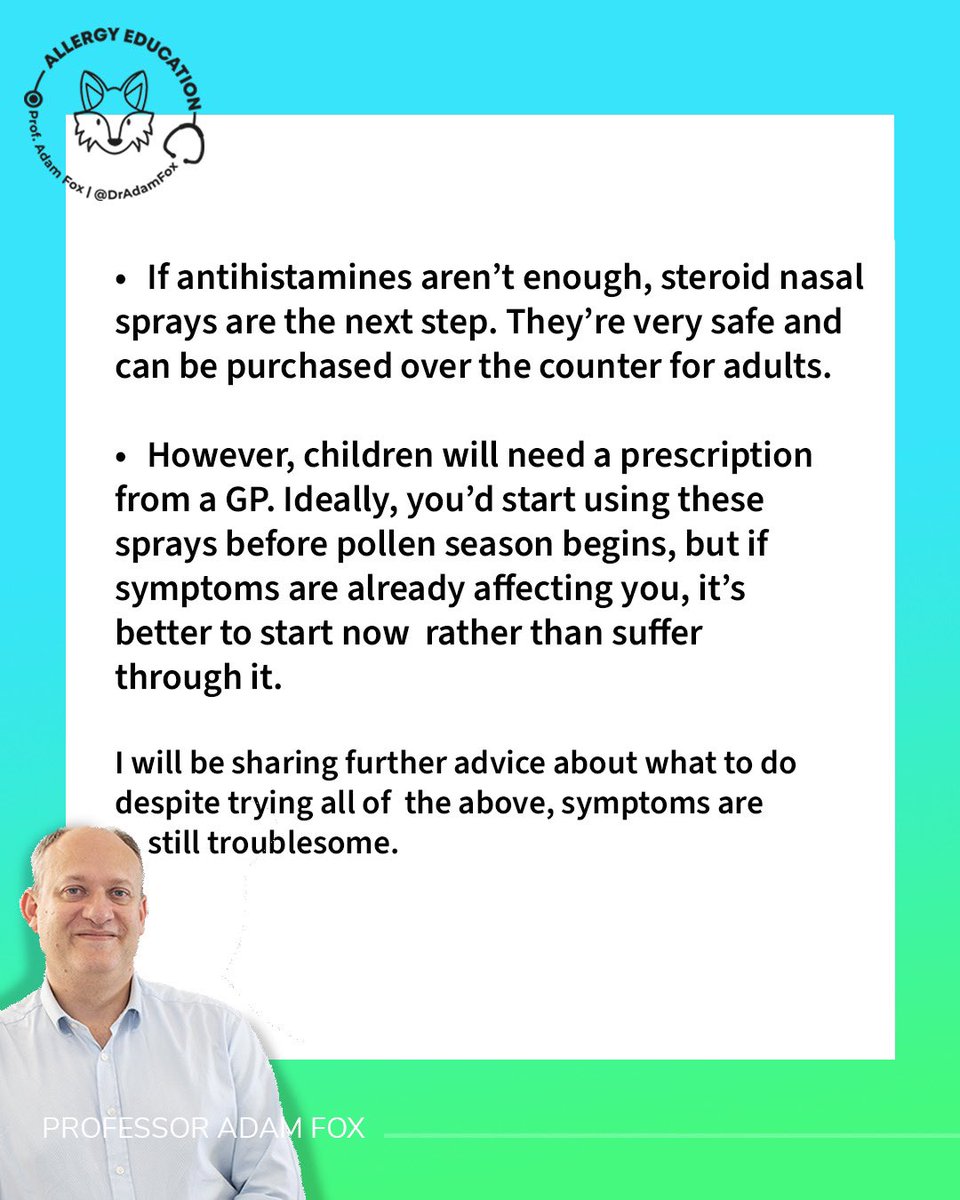
Let’s talk Hay fever🤧: From what Allergy London’s Prof. @DrAdamFox has noticed in his clinics, #hayfever season will soon to be full swing—with many already sniffling and sneezing.
Swipe 👉 for tips to manage and ease symptoms and understand what to do first - over the counter (OTC) focused.
Follow Prof. Fox on Instagram (DrAdamFox) for accurate information and helpful guidance on the topic of children’s allergies.
One month until the deadline to submit your applications for the 2025 Fellowships.
If you're a post-doc scientist looking to take a medical degree, we may be able to help.
Have a look at our website for more info:
https://t.co/sPKtxNbfPh
#science#medicine#Research#Funding
On behalf of all of the team at Allergy London, Professor @DrAdamFox shares:
🗣️We wish you all a Merry Christmas and a Happy New Year, filled with health, happiness, and prosperity.✨