2/2
If Claude stays, please upgrade it to Opus 4.8. I think users will get more value from newer models which people actually use.
Also please stop cooking Gemini 3.5 Pro 😅 and introduce it already. A lot of users are waiting for it.
@OfficialLoganK
1/2
Please @Antigravity: maybe its time to remove Claude Opus 4.6 and GPT-OSS 120B. Opus 4.6 is getting old and honestly I dont see many people using GPT-OSS 120B in 2026.
Would be better if those token benefits go to Gemini models instead.
#AI#LLM#Gemini#Antigravity
🚨 THE ENTIRE AI BOOM MIGHT BE BUILT ON FAKE REVENUE.
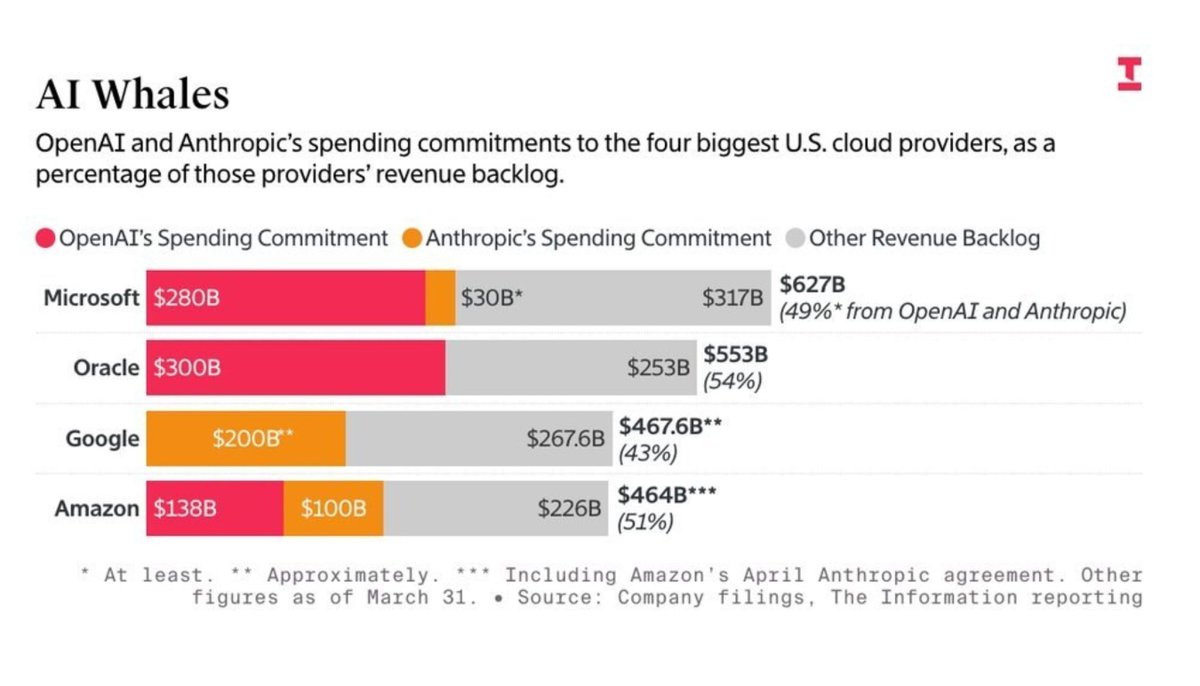
Latest corporate filings show that OpenAI and Anthropic alone make up over half of the entire $2 trillion future cloud backlog held by Microsoft, Oracle, Google, and Amazon.
This massive pipeline is actually being created through a circular accounting trick called a round trip revenue loop.
But how it works ?
A tech giant gives billions of dollars to an AI startup as an "investment". But hidden in the contract is a strict rule forcing the startup to hand that exact same money straight back to the tech giant to rent their computer servers.
Look at the documented case of Microsoft and OpenAI.
When Microsoft invested $13 billion into OpenAI, it didn't just give them cash; it gave them "cloud credits" to use Microsoft servers. OpenAI used those exact credits to train its AI models, and Microsoft then turned around and recorded that server usage as brand new "cloud revenue" from a customer.
The tech giant is literally paying itself with its own money and calling it a sale.
This is why OpenAI’s annual cloud bill has ballooned to over $60 billion, double its actual revenue of $25 billion, kept alive solely by this recycled funding loop.
Anthropic runs the exact same play, spending $2.66 billion on Amazon Web Services in just nine months, which was basically 100% of all the money it earned at the time.
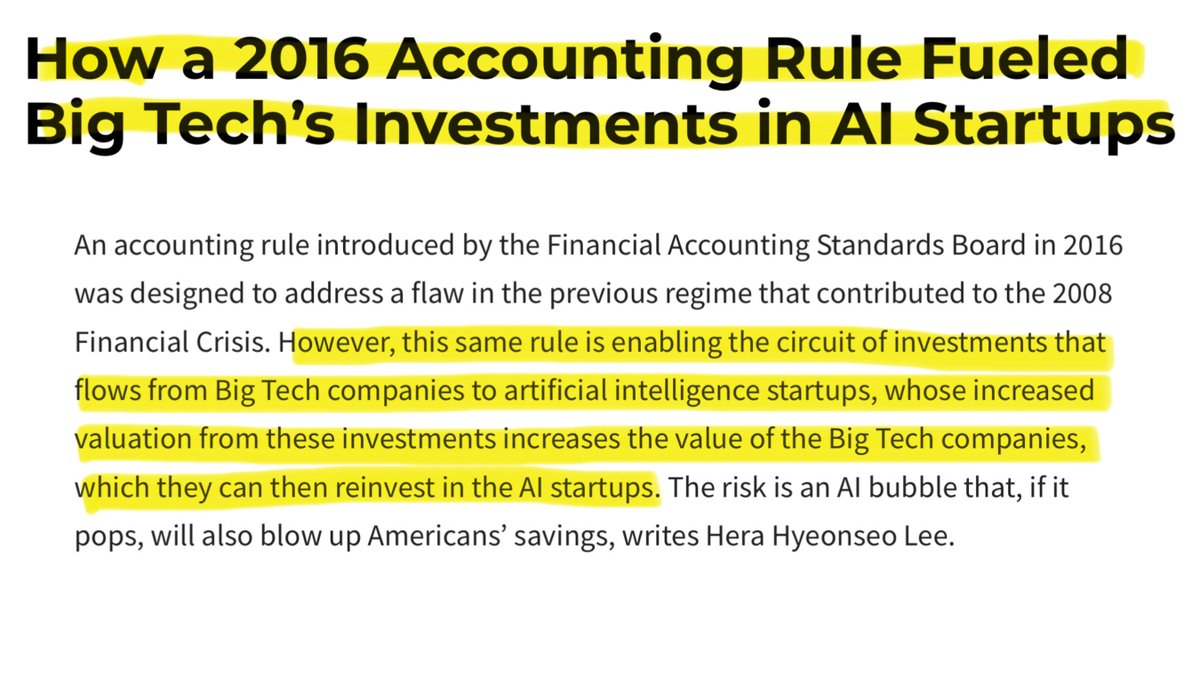
This manufactured demand triggers a second accounting trick where tech giants book massive paper profits. Every time a startup gets a higher value from a new funding round, the tech giant updates the value of its investment on its books and counts that unearned paper gain as direct profit.
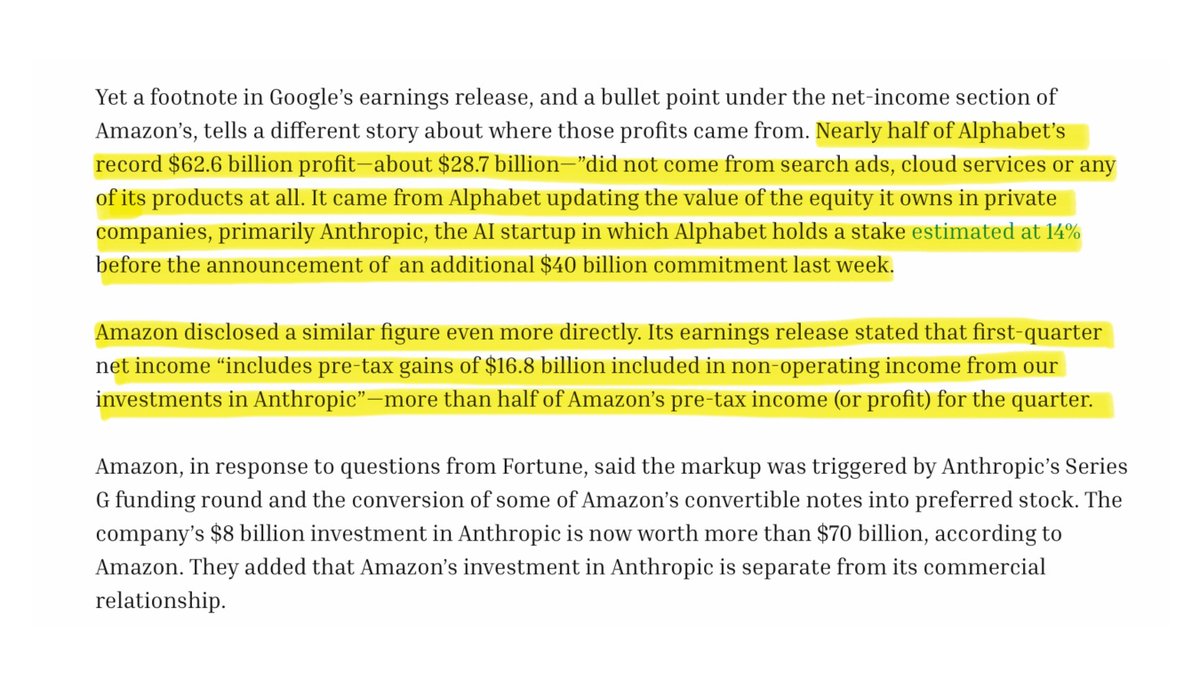
In Q1 2026, Alphabet reported a record $62.6 billion profit, but $28.7 billion nearly half, was just a paper markup on its Anthropic investment. In the same quarter, Amazon reported $30.3 billion in profit, but $16.8 billion of it was just an Anthropic paper gain.
While Amazon reported record profits, its actual free cash flow collapsed 95% to just $1.2 billion because it had to spend $44.2 billion in real cash to build physical data centers.
This has created a massive danger where these giant companies rely heavily on just one or two unstable startups. Microsoft has 49% of its $627 billion future backlog tied to OpenAI, while Oracle has an incredible 54% of its entire $553 billion pipeline relying on OpenAI alone.
This perfectly mirrors the 2001 dot-com crash when Global Crossing and Qwest Communications swapped identical fiber-optic network capacity with each other just to book fake sales.
Qwest had to erase $1.4 billion in fake income, and Global Crossing went completely bankrupt.
The only difference is that the dot-com swaps were illegal, but today's AI loop is fully legal under current accounting rules.
This legal loop inflates tech company stock prices, forcing automatic retirement accounts and index funds to buy even more of these tech stocks. It is a self feeding loop where investments, sales, and stock prices all go up on paper without the AI technology ever making real cash profits.
software engineering in 2026:
- your package manager is compromised
- your cloud provider blocks your account
- github itself is hacked
software is solved
Small PR, Big UX win. Just spotted this got merged into Laravel 13.x. (https://t.co/1K1nrOy5v2) and I can't wait for it to be released.
You know that moment when a user signs up, their password manager generates something, and it fails your validation? Then they try again. And again. Quietly frustrated, probably blaming your app.
This PR from @LiamHammett fixes that silently.
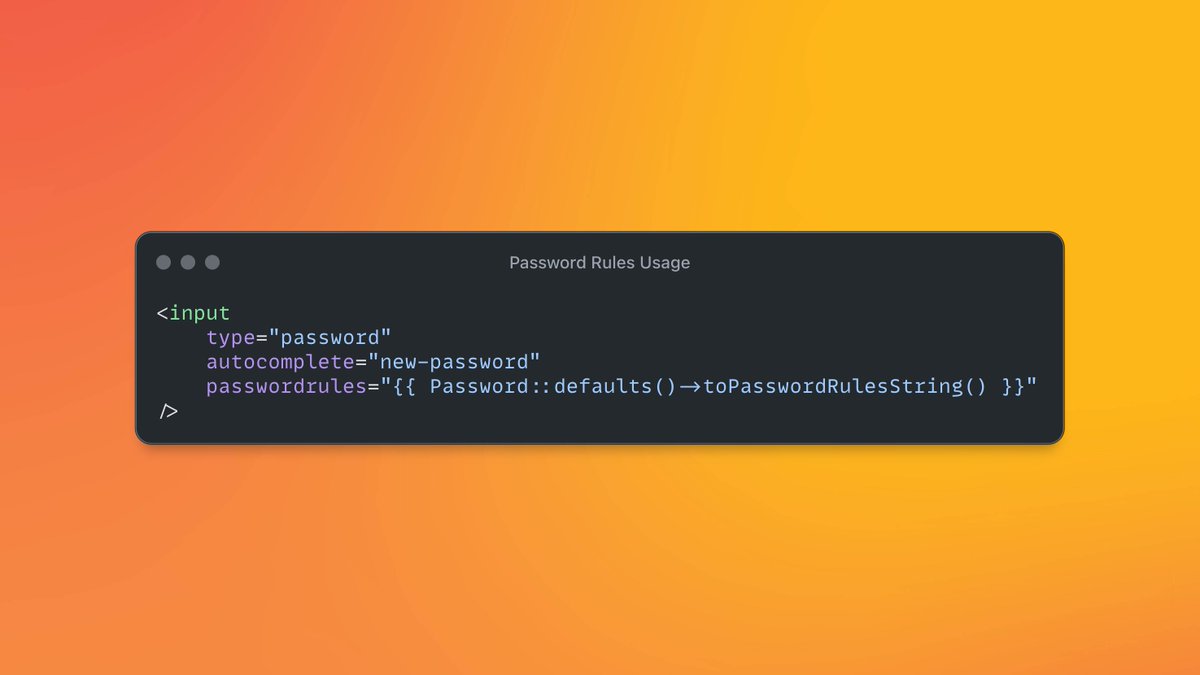
toPasswordRulesString() converts your existing Laravel Password rule instance into the HTML passwordrules attribute - the one that tells password managers like 1Password exactly what a valid password looks like before the user submits anything.
So instead of trial and error, the password manager just... suggests something valid first time, you have to give credit where it's due it's these kind of improvements that make me enjoy using @Laravel and keep me coming back time and time again.