Media outlets such as @thetimes, @Independent and @Independent_ie have covered this story, helping bring the knowledge generated by our scientific teams closer to the public.
(4/4)
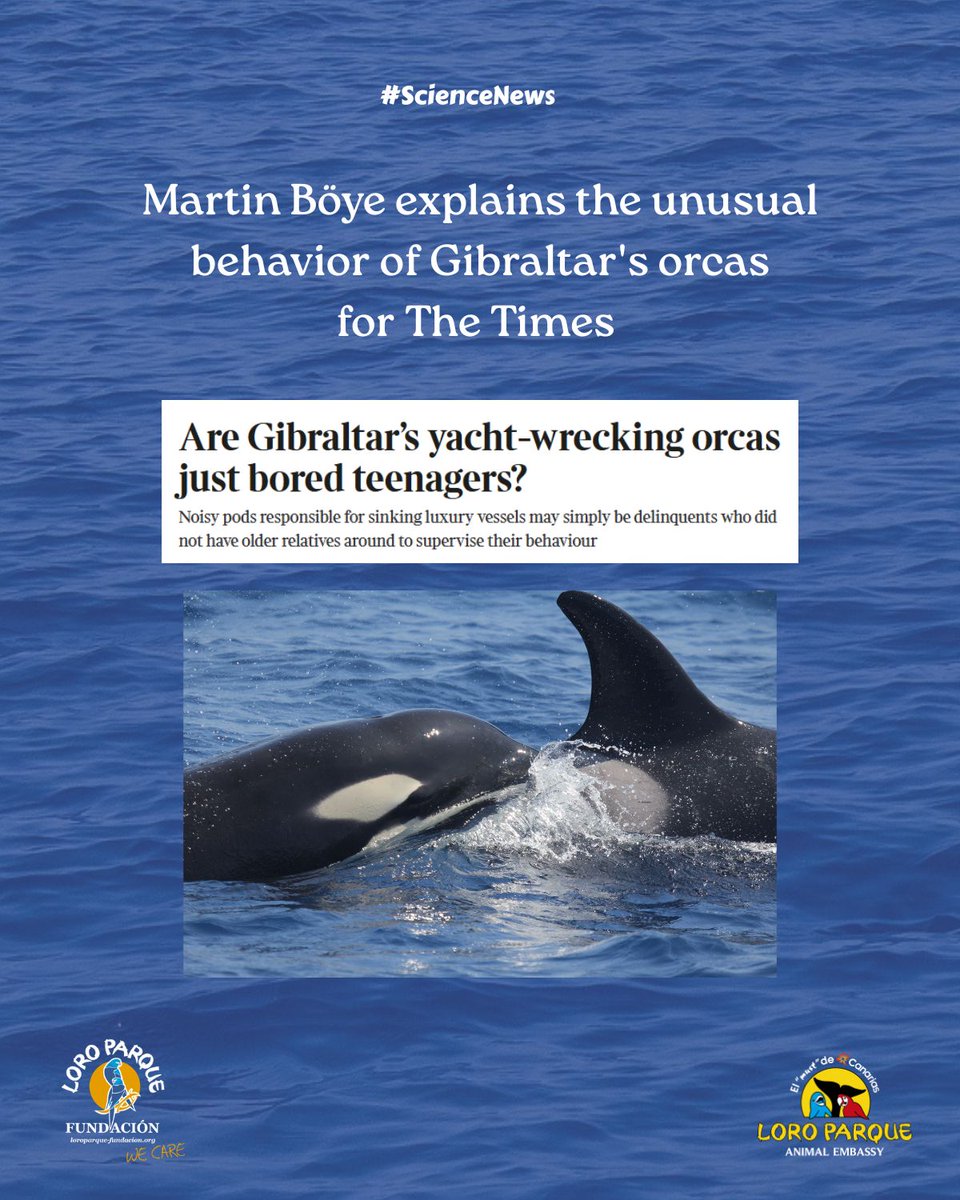
#ScienceNews 📰 This week, several international media outlets like @thetimes have echoed the statements made by Martin Boye, Scientific Director of Loro Parque Fundación, regarding the unusual behaviour of orcas in the Strait of Gibraltar.
In recent years, some individuals have been observed approaching boats and interacting with their rudders.
(1/4)
👉 Acoustics could help the team go further in supporting this explanation. Thanks to millions of vocalisations recorded in different social contexts with the killer whales hosted at Loro Parque, and to an AI model specifically trained by SEGAI ULL Universidad de la Laguna to classify these sounds, the team aims to better understand the interactions between the endangered Iberian orca population and the growing number of boats sailing nearby.
(3/4)
Presented by Global Humane Society, the award is named after our Founder and President Wolfgang Kiessling, in recognition of his lifelong commitment to conservation and animal welfare.
At a time when up to one million species face extinction, the award aims to highlight and support projects that create real conservation impact.Last year’s award was presented to Dr. Kathleen Dudzinski, founder of the @dolphincommu and a leading expert in cetacean research and conservation.
🗓️ Nominations close on June 1, 2026: https://t.co/kMFMWmwqt1
(2/2)
🏆 Nominations are now open for the #WolfgangKiesslingAward!
The call for nominations is now open for the 5th International Wolfgang Kiessling Species Conservation Award, recognising scientists and leaders whose work is making a tangible impact in protecting global biodiversity.
(1/2)
https://t.co/PC7XOrLaYR
Thanks to Bodega Stratvs Stratus for helping us celebrate at the event with your incredible wines.
We will continue working to demonstrate that tourism, excellence and conservation can move forward together. 🌿
(4/4)
🌍 A remarkable week for Loro Parque at #ITBBerlin.
Just one week ago we concluded our participation in this leading international tourism fair, reinforcing our position as an international reference while generating wide media coverage.
(1/4)
#ITBBerlin#SustainableTourism #Biodiversity #CanaryIslands
For Loro Parque, taking part in this global forum also means sharing our vision of a more sustainable tourism model, based on the protection of biodiversity and the conservation of species.
This approach is also reflected in our own practices: in addition to operating with a low-emission energy model, we strongly support local products, with our own fruit and vegetable production and close collaboration with nearby producers who supply the different companies within the companies.
(3/4)
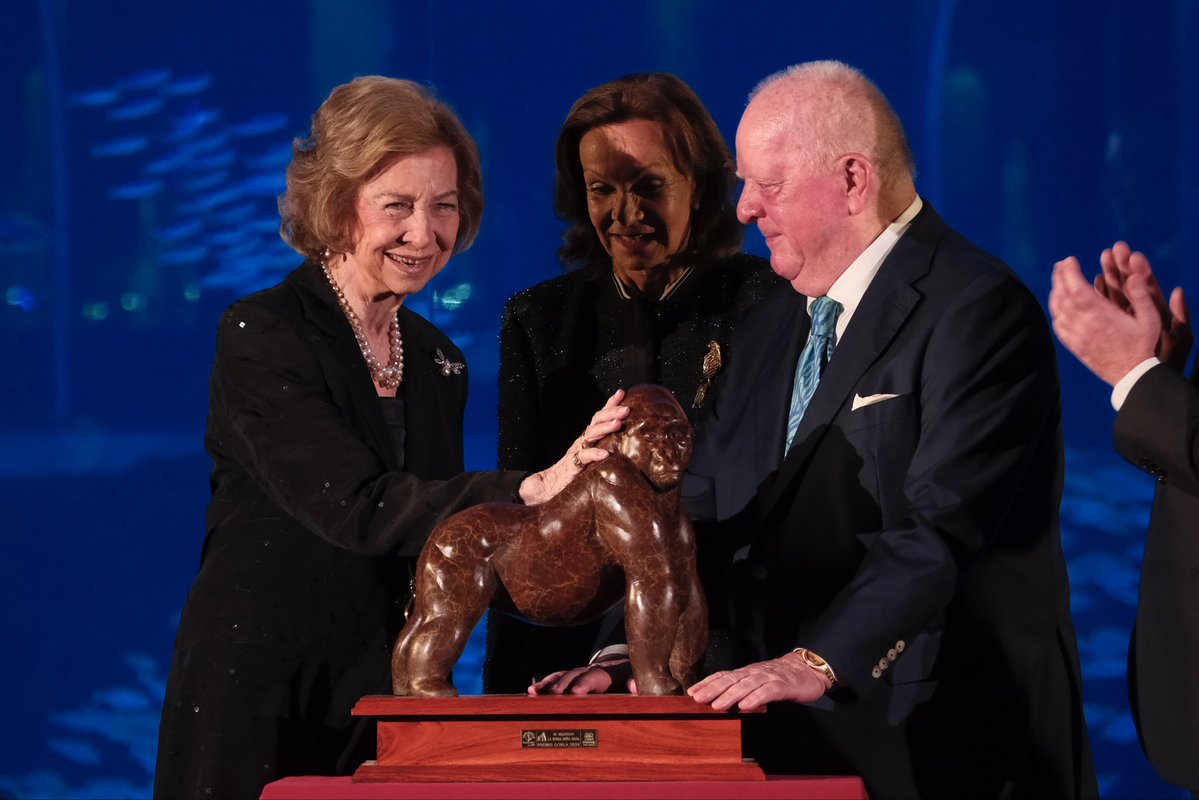
La Reina Sofía ha recibido el “Premio Gorila 2024”, concedido por Loro Parque y Loro Parque Fundación, “por su compromiso ejemplar y sostenido con la conservación de la biodiversidad, el bienestar animal y la protección del patrimonio natural”.
➡️https://t.co/cpCKFR3kLq
🇩🇪 Was passiert, wenn ein Wildtier dringend Hilfe benötigt? 🌊🦭
In dieser Folge sprechen wir mit Pascual Calabuig, Tierarzt für Wildtiere im Wildtierrettungszentrum Tafira (Gran Canaria).
Er spielte eine entscheidende Rolle bei der Rettung von zwei Mittelmeer-Mönchsrobben, die auf Fuerteventura gefunden und zur Erholung in den Loro Parque gebracht wurden, bevor sie in die Natur zurückkehrten.
Wissenschaft, Zusammenarbeit und Entscheidungen, die den Unterschied machen.
▶️ Höre die vollständige Folge auf unserem YouTube- und Spotify-Kanal.
¿Qué ocurre cuando una vida silvestre necesita ayuda urgente? 🌊🦭
En este episodio hablamos con Pascual Calabuig, veterinario de fauna silvestre en el Centro de Recuperación de Fauna Silvestre de Tafira (Gran Canaria).
Fue una de las personas clave en el rescate de dos focas monje aparecidas en Fuerteventura, que fueron trasladadas a Loro Parque para su recuperación antes de regresar a la naturaleza.
Ciencia, cooperación y decisiones que marcan la diferencia.
▶️ Escucha el episodio completo en nuestro canal de YouTube y Spotify.
🇬🇧 What happens when a wild animal urgently needs help? 🌊🦭
In this episode, we speak with Pascual Calabuig, a wildlife veterinarian at the Tafira Wildlife Recovery Centre (Gran Canaria).
He played a key role in the rescue of two monk seals found in Fuerteventura, which were transferred to Loro Parque for recovery before returning to the wild.
Science, cooperation, and decisions that truly make a difference.
▶️ Listen to the full episode on our YouTube and Spotify channels.
🇩🇪 🦜✨ Die andinen Kulturen schätzten Papageienfedern als rituelle Ressourcen und Prestigezeichen.
Der Fund mumifizierter Papageien in der Atacama-Wüste zeigt, dass diese Vögel lebend über weite Entfernungen transportiert wurden, um Federn für Zeremonien und zeremonielle Objekte zu gewinnen.
🎙️ In Wild Voices analysieren wir, was diese Entdeckungen über den vorkolumbischen Handel und die Beziehung zwischen Menschen und Psittaziden verraten.
👉 Erfahre mehr in der neuen Folge auf Spotify oder YouTube.
🦜✨ Las culturas andinas valoraban las plumas de los loros como recursos rituales y símbolos de prestigio.
El hallazgo de loros momificados en el Atacama muestra que estas aves fueron transportadas vivas durante largas distancias para obtener plumas utilizadas en ceremonias y objetos ceremoniales.
🎙️ En Wild Voices analizamos qué revelan estos descubrimientos sobre el comercio prehispánico y la relación entre humanos y psitácidos.
👉 Descúbrelo en el nuevo episodio en Spotify o YouTube.
🇬🇧 🦜✨ Andean cultures valued parrot feathers as ritual resources and symbols of prestige.
The discovery of mummified parrots in the Atacama shows that these birds were transported alive over long distances to obtain feathers used in ceremonies and ceremonial objects.
🎙️ In Wild Voices we analyse what these findings reveal about pre-Hispanic trade and the relationship between humans and psittacids.
👉 Find out more in the new episode on Spotify or YouTube.
🇩🇪 🦜✨ Die andinen Kulturen schätzten Papageienfedern als rituelle Ressourcen und Prestigezeichen.
Der Fund mumifizierter Papageien in der Atacama-Wüste zeigt, dass diese Vögel lebend über weite Entfernungen transportiert wurden, um Federn für Zeremonien und zeremonielle Objekte zu gewinnen.
🎙️ In Wild Voices analysieren wir, was diese Entdeckungen über den vorkolumbischen Handel und die Beziehung zwischen Menschen und Psittaziden verraten.
👉 Erfahre mehr in der neuen Folge auf Spotify oder YouTube.
🇬🇧 🦜✨ Andean cultures valued parrot feathers as ritual resources and symbols of prestige.
The discovery of mummified parrots in the Atacama shows that these birds were transported alive over long distances to obtain feathers used in ceremonies and ceremonial objects.
🎙️ In Wild Voices we analyse what these findings reveal about pre-Hispanic trade and the relationship between humans and psittacids.
👉 Find out more in the new episode on Spotify or YouTube.