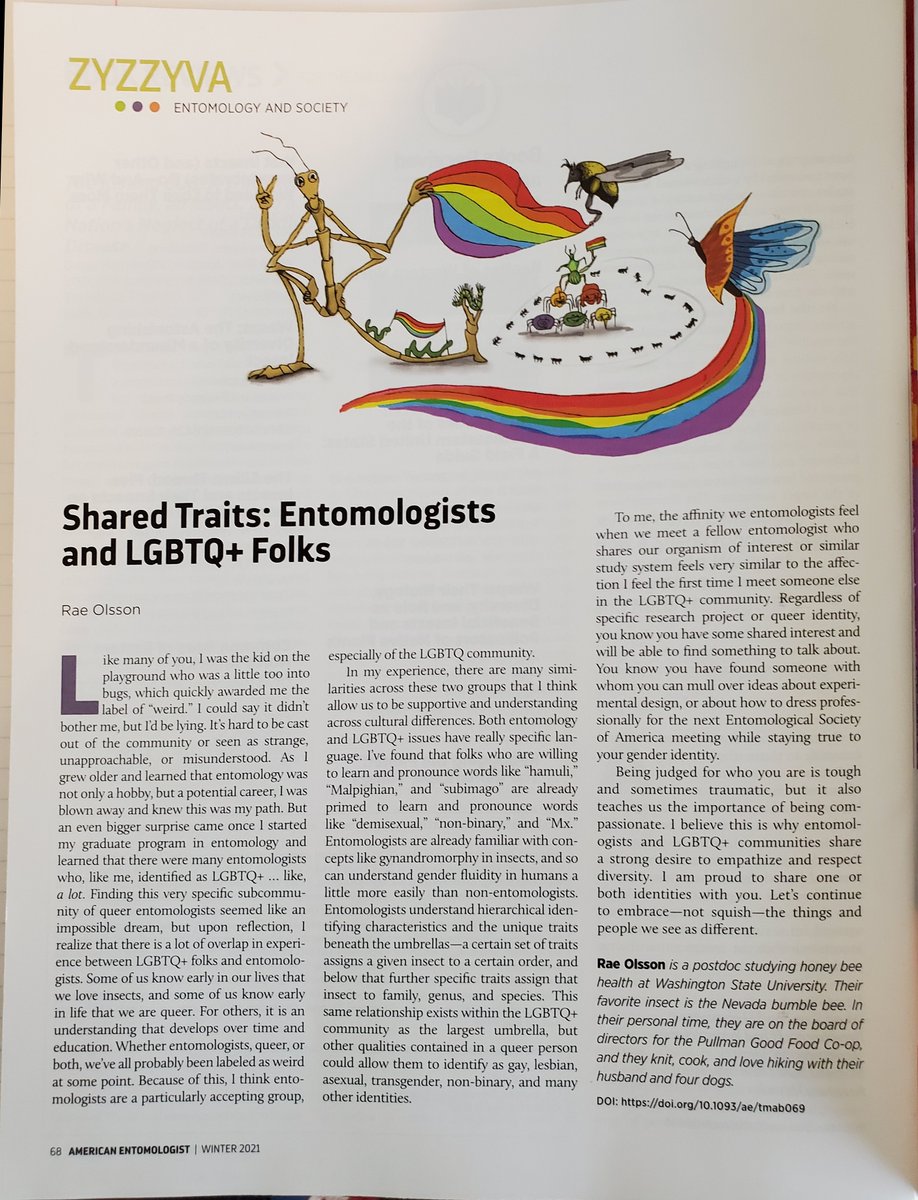
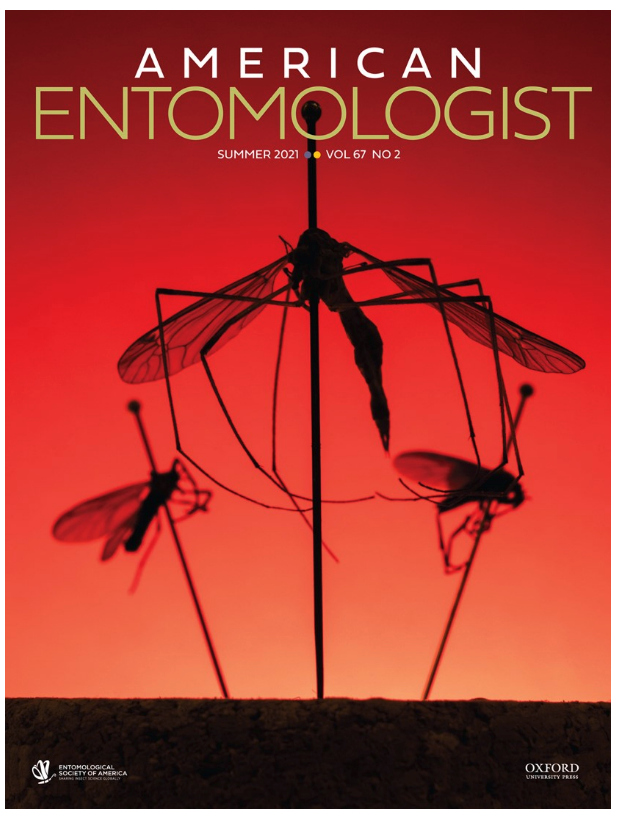
It's Friday, stop what you're doing, pick up your latest American Entomologist, turn to the back page, and read @RLOlsson's Zyzzyva article "Shared Traits: Entomologists and LGBTQ+ Folks". @ECP_Entsoc@AmericanEntoSoc@WSUEntomology
https://t.co/HydKWCxGWz
@PriyadarshiniCB wrote a great article on the intersection of wildfires and insects for the @ECP_Entsoc column, Zyzzyva, of American Entomologist. Check it out!
Our lab's pear IPM research and Extension efforts made the centerpiece article in @goodfruitgrower this month. Change is upon us. https://t.co/djD1GHDJmC
@WSUEntomology@TfrecWsu @
@drdavecoyle and I have been working with @AudubonSc to tackle the thorny issue of controlling Elaeagnus spp. in a forest setting. This video, filmed in collaboration with @UntamedScience, reviews some great identification and management strategies!
https://t.co/wZpNeLyNvH
Did you get your copy of the American Entomologist yet?! 👀 FYI: ECPs have their own column called "Zyzzyva" and ANY ECP is welcome to submit an article for the column! Contact us if you would like to contribute an article! 📖
This month's feature is from @LouisNottingham! 👏🏼👏🏼
Pear bloom is rollin'. I've always heard honey bees don't "like" pear flowers. So growers use sprayable products like Bee Scent to encourage honeybee pollination. There are also ongoing studies testing augmentation of a native pollinator, O. lignaria, the blue orchard bee.
Pear psylla nymphs on bradford pear in Wenatchee, WA. Pear psylla is the #1 insect pest pear growers battle each year. I've been wondering what effects (if any) do all the urban bradford pears have on the psylla population in major pear growing regions.
https://t.co/sXiJRhbwr5