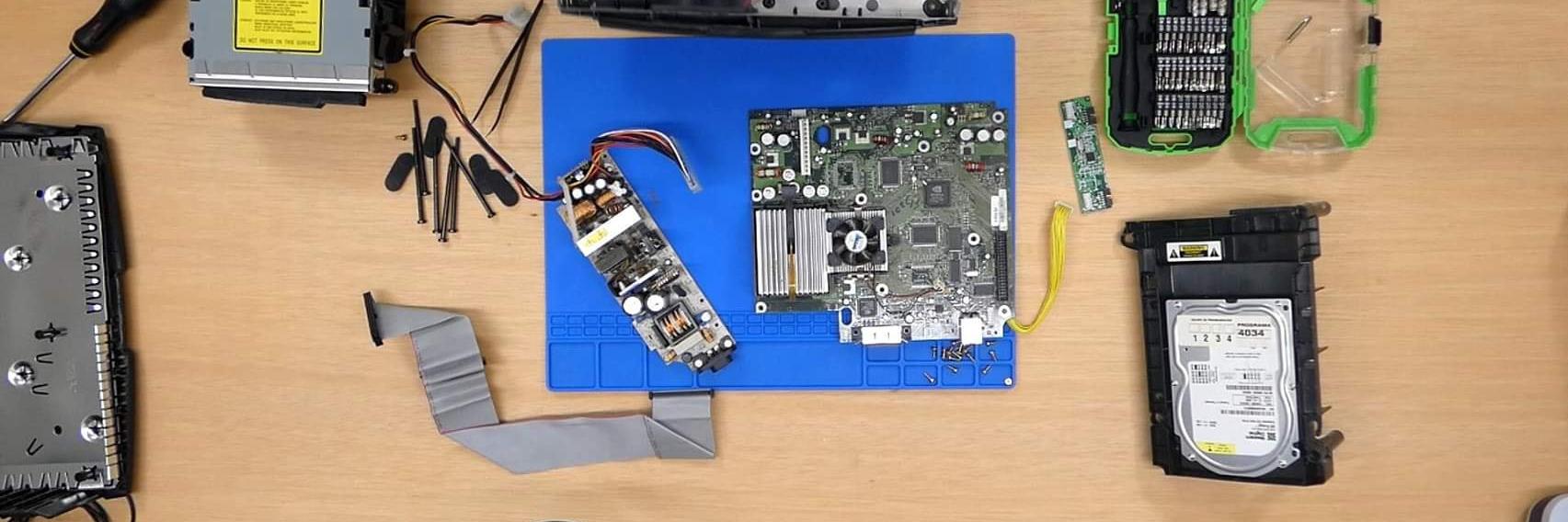
Come hang out in our Discord server if you're not already, where we have all the super crispy screenshots captured with the XboxHDMI! #xboxhdmi
https://t.co/kkm8KIJwp1
Morph 2K pre-orders open tomorrow! Launch details in the newsletter.
Also included: a new Analog Bridge revision and major Morph 4K/2K feature updates.
https://t.co/byFKasw0SL
@AucardThe3rd@MakeMHz Tracking for the antennas was received last week, so hopefully they will arrive this coming week.
All orders are ready to go. So once they arrive, all I have to do is drop the antenna in and ship.
New blog post on reverse engineering and modifying HDD firmware. In this part I cover obtaining, analyzing, and modifying firmware, using backdoor commands to hot patch code in RAM, and using JTAG to debug a live HDD https://t.co/9vVt26JHxO
@NimaZeighami@MakeMHz That's something I wanted from the start of Plus development.
It's possible, but I'm hesitant to even say it's on the roadmap because it could be tricky to get it working perfectly.
@DoppaMint@HBiangardi@Adam_GTUK@MakeMHz No worries. Twitter is such a terrible platform for trying to have a conversation without something getting lost. 😅
I do agree on the ~3 months. Though I do have some product ideas that would require a Kickstarter level of funding and development.
MakeMHz is run like any other business. We’ve taken on loans (over $100k to date), debt, and investments to support these projects. Even in the beginning, MakeMHz started with a decently sized investment from my own savings to begin XboxHDMI production before preorders opened.
For us, preorders are not about avoiding risk or shifting it onto customers. They help us plan production around demand, which matters in a niche market where custom hardware has long lead times and large MOQs, and small-batch manufacturing is expensive.
The goal is to keep products available and as affordable as possible long term. Without preorders, the safer business move would be smaller batches, higher prices, and more time out of stock.
With every new launch, we push ourselves further. In this case, that meant sourcing and manufacturing a new custom component: the WiFi antenna. That comes with its own challenges, and this delay is one of them.
I understand where you’re coming from. These were preorder/backorder items, and the funds were used to manufacture the products in volume.
There are a lot of moving parts behind projects like this, especially in a niche market where custom components and MOQ requirements are involved.
Refunds and cancellations can be requested at any time. That said, the wait has been longer than expected, and I’m sorry for the frustration that’s caused.
I’ve been keeping a secret for 5 years…
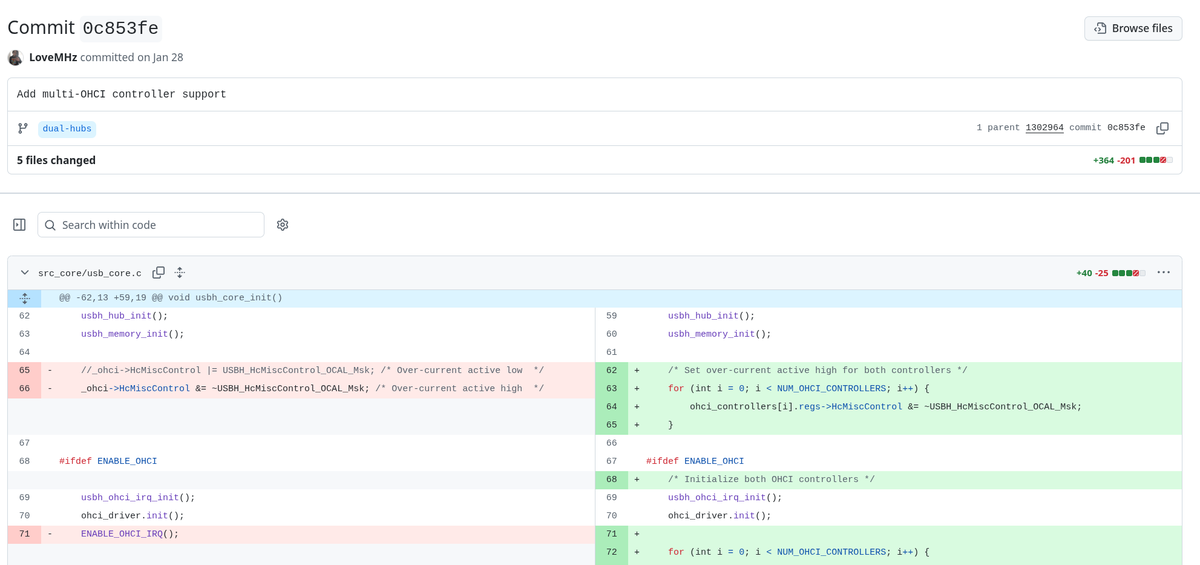
For the first time, I’ll reveal the hidden 5th USB port on the original Xbox and how @MakeMHz spent the last year making the impossible possible with over 250,000 software patches. 🧵
That would have been the fallback plan, but it would have made the hardware and software side a lot more complex.
Emulating a USB hub is possible on a RP2040/PR2350, but only at Low Speed (1.5 Megabits) instead of Full Speed (12 Megabits). There are practically no microcontrollers that "allow" acting as a hub; so a FPGA would have to be used.
And that would create a lot of edge cases, like do controllers still work on that port without disabling the wireless controllers (if not, then you need a more complex "virtual" hub), etc. Plus, different length cables (the Xbox USB ports are in different places on the motherboard), along with some kind of interface board.
Or a simple flex PCB that works for all revisions and gives Stellar access to its own USB host controller (at Full Speed with no bus sharing).
Originally, wireless controller support for Stellar was planned as the fallback, which is why it was going to be an add-on (cost).
But thankfully, I was able to get this method working and incorporate it into Stellar Plus without increasing the price.
The +250k fuzzy figure is the total number of patch set variations checked and validated during the validation stage. After validation, that's greatly reduced by the solver, which generates runtime data for the patching and re-implementation engine to do its job dynamically at runtime.
The total number of permutations is so high because Stellar has always required using less system RAM than retail, by principle.
That means observing linker ordering, USB stack version, USB stack features (certain functions and behavior changes based on what features were enabled for that build), etc for every single executable (retail software and homebrew) to pack as much in as possible.
The number blows up quickly. I included it as an illustration of how much work and validation were required to get here.
It's over 250k different permutations (final patches) across a wide set of patches being applied.
It's all driven by static analysis to ensure that every edge case is handled correctly and that the necessary metadata is assembled for it to be applied at runtime.
My Ghidra project for the Xbox is over 200GBs of research just for the sake of being able to verify everything related to Project Stellar. 😅
The USB stack and all of its logic are embedded into every piece of software that runs on the Xbox.
The 250k figure is a fuzzy number, encompassing all permutations of patches required to fix the USB stack, targeting every piece of software on the Xbox across all versions of the USB stack.