A group of Ukrainian border guards were stationed on Snake Island, in the Black Sea south of Odessa, when a Russian warship ordered them to surrender under threat of attack.
Their response: "Russian warship, go fuck yourself."
They held their ground. All 13 were killed.
American foreign policy under Trump is not isolationist. On the contrary, MAGA ideologues want to build an international empire run by far-right political movements who serve the interests of American crypto, mineral and tech companies, especially if they have links to the president. They think of themselves as "the vanguard of a movement that will alter not just America, but the world."
Read more here:
https://t.co/I1lNTvIPgn
The contours of Venezuela's oil deal with the US are now increasingly clear.
Venezuela gets to send oil at less than half its market value to the United States.
In return, Venezuelans get no elections.
Macklemore is speaking out after being dropped from Ed Sheeran's Loop Tour, seemingly placing blame on New England Patriots owner Robert Kraft, saying that the billionaire rallied other stadium owners to ban him from performing at their venues:
“Ed is my friend. I've known him for 13 years.... I told Ed multiple times on the phone, our friendship can't change my responsibility to tell the truth about what happened [in Gaza]... Ed told me that Robert Kraft called him. We were scheduled to play Gillette Stadium later this month, which is owned by the Kraft Group. Ed told me that Kraft said I would not be allowed to perform in his stadium. Ed also told me that Kraft had rallied some of the other stadium owners and collectively they gave him an ultimatum: if Macklemore stays on the tour, you will not be allowed to play in our venues....
Ed was in a fucked up position. He knew it. His typical apolitical stance was being challenged in a way it never had been before. He told me that the words 'Free Palestine' and the image of the Palestinian flag were hurtful to a lot of people he spoke with. I told him that if those words were more offensive than tens of thousands of Palestinian children being killed by Israel, then there was a fundamental disconnect between where those people stood and where I stood. But he couldn't get past his public facing, 'I don't take sides'....
I hope this isn't the end of my relationship with Ed. Thirteen years of friendship doesn't disappear because of one painful disagreement. I hope we both continue listening, studying what is happening in Palestine and wrestling with what neutrality means in a moment like this. My door will always be open to continuing that conversation....
I didn't need 10 shows from Ed. I needed 2. Two chances to stand in front of 90,000 people and say the words that somehow became too dangerous to say. Free Palestine. But if those words cost me the stage, while turning the conversation back to Palestine, then it was the most successful tour I've ever been on.”
https://t.co/ff6jdXCfa1
*BRILLIANT*
The French made a short film about what could happen after all immigrants would follow the ‘_white, angry old man’s_’ advice to go back where they came from.*
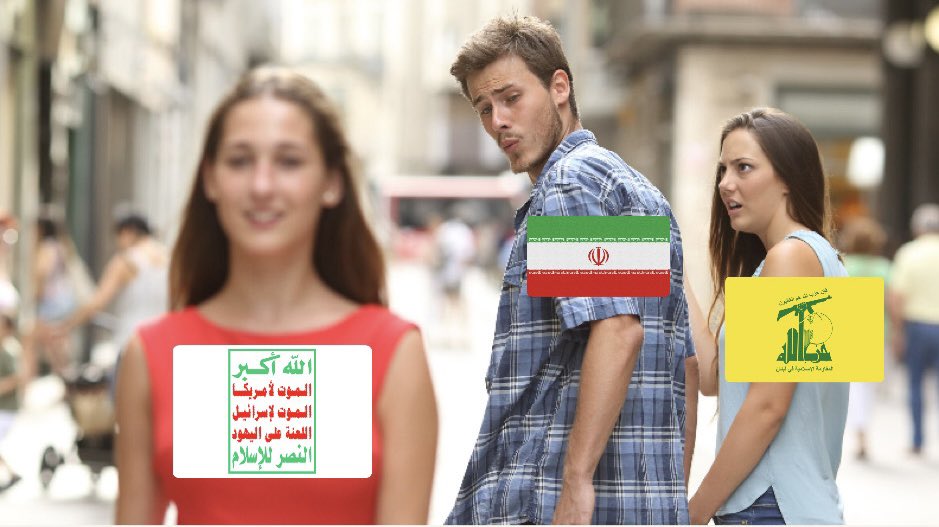
We should be under no illusions about Iranian ambitions. They may be seriously overreaching But . these guys are looking to create a new economic/political/security reality shaped by Tehran and its proxies. Trump opened box; and look what's coming out.
Exclusive: Who in Iran was behind attacking the three ships in July that reignited the war? The inside story of how the hardliners & a spymaster sabotaged peace deal with the U.S. and the internal fight that followed among Iran's leaders:
https://t.co/KZzTGuYIV0
Cutting Through the Noise: Where the Iran–U.S.–Gulf Confrontation Stands
Against the backdrop of the escalating crises in the Strait of Hormuz and Yemen, it is worth cutting through the tactical noise and asking a more important question: Where do the United States, Iran and the “Axis of Resistance,” and the Gulf states actually stand?
1. Tactical U.S. gains in Hormuz have not translated into strategic success.
The United States has managed to move several tankers through the Omani channel, an operational achievement but a strategically limited one. Persistently high oil prices, elevated maritime insurance premiums, and rising fuel prices in the United States demonstrate that moving individual tankers does not by itself restore confidence in the international energy market. The strategic problem is not simply whether a tanker can physically transit the area, but whether global markets believe that freedom of navigation has been sustainably restored.
2. Washington and Tehran remain trapped in an action–reaction cycle.
Iran has not abandoned its effort to control access through the Strait of Hormuz and continues to target tankers attempting to use the Omani route. At the same time, Tehran’s actions have not deterred the Trump administration, which appears committed to a “tanker-for-tanker” approach. Neither side is backing down, and neither has yet established a stable deterrence equation.
3. The escalation ladder is moving upward, not sideways.
Iran has already crossed important thresholds, including attacks involving U.S. vessels and the launches toward Jordan last week. Yet these steps, and other increasingly aggressive actions encouraged by the IRGC, have failed to stop continued U.S. operations. This is critical: the confrontation is dynamic. Each side is testing increasingly dangerous measures because the previous ones failed to deter the other.
4. Iran’s strategic objective is relatively clear: break the maritime blockade to create a new strategic reality in which Tehran effectively controls the Strait of Hormuz.
Tehran wants the restrictions on its maritime access removed, either through escalation or diplomacy. The preferred diplomatic route appears to be an arrangement negotiated with Oman, potentially gaining broader Gulf support at tomorrow’s meeting in Salalah. For Tehran, diplomacy and escalation are therefore not contradictory strategies. They are two instruments designed to achieve the same objective.
5. Salalah could become a critical decision point.
If the Oman–Iran arrangement receives Gulf support but President Trump nevertheless insists on continuing the campaign, Tehran may conclude that diplomacy can no longer deliver the lifting of the blockade. This becomes particularly dangerous as the United States moves closer to the midterm elections. Iranian decision-makers may calculate, correctly or incorrectly, that Trump will become increasingly reluctant to undertake a major military escalation that could produce higher oil prices and additional American military commitments.
If that assessment takes hold in Tehran, the incentive for escalation will increase rather than decrease.
6. Yemen makes the equation significantly more complicated.
The Houthi attempt to break the Saudi blockade should not automatically be understood as an Iranian-directed operation. The relationship between Tehran and the Houthis is not a traditional patron-client relationship, and the Houthis retain considerable independent decision-making authority.
But their decision cannot be separated from the broader regional confrontation. The war involving Iran changed the strategic environment. The Houthis appear to have identified greater Saudi vulnerability and may also have calculated that Washington, already preoccupied with Iran, would be reluctant to become deeply involved in another military campaign on Saudi Arabia’s behalf.
7. Iran is nevertheless a major beneficiary of Houthi escalation.
Even if Tehran did not order the Houthi move, it clearly benefits from it. Pressure around Bab al-Mandab contributes to higher energy and shipping costs while simultaneously increasing pressure on Saudi Arabia. Tehran therefore has a strong strategic interest in supporting the Houthis. even while its ability to dictate Houthi decisions remains limited. Iran does not need to control the Houthis in order to benefit strategically from their actions.
8. Solving Hormuz alone will not solve the regional crisis.
Even an agreement over the Strait of Hormuz would not necessarily end the Saudi-Houthi confrontation. The Houthis are unlikely to terminate their campaign simply because Iran reaches an arrangement with Washington or the Gulf states. Their objective concerns Yemen and the Saudi blockade, and the confrontation could therefore continue until Riyadh is prepared to fundamentally change that reality.
In other words, reopening both strategic waterways may ultimately require something broader than an Iran–Oman understanding: a regional arrangement addressing both Hormuz and the conditions for ending the Saudi-Houthi confrontation.
9. This is why tomorrow’s Salalah meeting matters far beyond Oman and Iran.
It could clarify three critical questions: whether the Oman–Iran arrangement has broader Gulf support; whether Saudi Arabia is prepared to explore a political solution with the Houthis; and, most importantly, whether the IRGC concludes that diplomacy still offers a credible pathway toward lifting the pressure on Iran.
If the answer to the last question is no, the danger of escalation will rise significantly. Iranian leaders may believe that the period before the U.S. midterms provides them with additional leverage because Trump’s political tolerance for a major new regional war, and the economic consequences associated with it, is limited.
10. Economic pressure on Iran is real but that does not necessarily make Tehran more cautious.
The maritime restrictions are placing substantial additional pressure on an already troubled Iranian economy. But this creates a dangerous paradox. The greater the economic pressure becomes, the stronger the IRGC’s conviction may become that the blockade must be broken almost regardless of the cost.
This is the central strategic problem confronting yhe administration: pressure without a credible off-ramp may produce escalation rather than capitulation.
The coming days therefore matter enormously. The central question is no longer whether the United States or Iran can inflict additional tactical costs, they clearly can. The question is whether Salalah can create a diplomatic mechanism that allows the parties to step away from an increasingly unstable escalation cycle.
Without such a mechanism, another round of escalation is not an unlikely scenario. It is increasingly becoming the default trajectory.
#IranWar
#yemen
#houthis
The United States needs to do better at fairly applying the standards of international law and behavior.
Being mad at a country like Iran, one that has largely NOT sought to commit atrocities beyond their border, whilst allowing a country like Israel, who very much HAS, to run rampant is ridiculous.
If you want to sanction Iran into oblivion, keep that same energy when other countries like Israel conduct FAR worse actions.






![Variety's tweet photo. Macklemore is speaking out after being dropped from Ed Sheeran's Loop Tour, seemingly placing blame on New England Patriots owner Robert Kraft, saying that the billionaire rallied other stadium owners to ban him from performing at their venues:
“Ed is my friend. I've known him for 13 years.... I told Ed multiple times on the phone, our friendship can't change my responsibility to tell the truth about what happened [in Gaza]... Ed told me that Robert Kraft called him. We were scheduled to play Gillette Stadium later this month, which is owned by the Kraft Group. Ed told me that Kraft said I would not be allowed to perform in his stadium. Ed also told me that Kraft had rallied some of the other stadium owners and collectively they gave him an ultimatum: if Macklemore stays on the tour, you will not be allowed to play in our venues....
Ed was in a fucked up position. He knew it. His typical apolitical stance was being challenged in a way it never had been before. He told me that the words 'Free Palestine' and the image of the Palestinian flag were hurtful to a lot of people he spoke with. I told him that if those words were more offensive than tens of thousands of Palestinian children being killed by Israel, then there was a fundamental disconnect between where those people stood and where I stood. But he couldn't get past his public facing, 'I don't take sides'....
I hope this isn't the end of my relationship with Ed. Thirteen years of friendship doesn't disappear because of one painful disagreement. I hope we both continue listening, studying what is happening in Palestine and wrestling with what neutrality means in a moment like this. My door will always be open to continuing that conversation....
I didn't need 10 shows from Ed. I needed 2. Two chances to stand in front of 90,000 people and say the words that somehow became too dangerous to say. Free Palestine. But if those words cost me the stage, while turning the conversation back to Palestine, then it was the most successful tour I've ever been on.”
https://t.co/ff6jdXCfa1](https://pbs.twimg.com/media/HSMG55VXkAAs7SO.jpg)