Best comment on the FT I’ve seen for a while.
Explains a lot of the last 14 years.
I would probably edit to
“ if reasonable people don’t address reasonable voters reasonable concerns then unreasonable people will , and unreasonably ”
Comentario del filosofo Michael Huemer sobre el caso Lindsay Clancy. Estoy muy de acuerdo con él en que lo más importante de este caso es lo que dice sobre nuestra sociedad y lo malitos que estamos. Esta es su opinión:
“3. Lo que el caso dice de nuestra cultura
La cantidad de apoyo que ha recibido Clancy es inquietante. No porque sea obviamente culpable; como he dicho, eso no salta a la vista. Pero doy por sentado que las reacciones públicas, en conjunto, reflejan la reacción emocional inicial ante un caso, porque poca gente lo examina a fondo. Incluyo a quienes acuden a una manifestación, donan a un GoFundMe o comentan en redes: si lo hace un número grande de personas, cabe asumir que la mayoría se apoya en esa primera impresión, sin investigación ni reflexión extensas.
Tu reacción inicial debería ser horror ante lo que hizo esta mujer, estupor de que alguien pueda hacer tal cosa y pena por los niños que perdieron la vida. Si esa no es tu reacción dominante e inmediata, hay algo mal en ti. Tu reacción dominante e inmediata no debería ser sentir lástima por Lindsay Clancy; en el mejor de los casos, debería costar un esfuerzo enorme ver más allá del horror de lo que hizo para alcanzar algo de misericordia hacia la asesina de sus hijos.
El horror ante el asesinato de un niño, sobre todo el de los propios hijos, es bastante básico. La evolución lo programó en nuestro cerebro a un nivel fundamental hace millones de años. Se remonta a nuestros antepasados no humanos. Si un número significativo de humanos ha superado ya esa reacción instintiva, la especie está en problemas. Si tienes una ideología que te lleva a anular esa reacción, tu ideología es una amenaza. Eso es lo primero que inquieta.
Lo segundo: aunque algunos sientan simpatía por Clancy, deberían temer decirlo en público. Deberían temer que grandes manifestaciones de apoyo a Lindsay Clancy se malinterpreten como condonar el asesinato de niños, o como transmitir que los impulsos homicidas hacia los hijos son normales. (Quizá los impulsos homicidas hacia quienes usan sopladores de hojas a primera hora de la mañana sí lo sean, pero no hacia tus hijos. A menos que tus hijos usen sopladores de hojas; entonces todo vale.)
Si tuviéramos una sociedad tan caritativa que nadie cometiera esos malentendidos, sería otra cosa. Pero no la tenemos, y no creo que los partidarios crean que la tenemos. Más bien, o no les importa o no se plantearon si se les vería como quien condona el filicidio. Eso puede indicar que condonar el asesinato de niños es hoy más aceptable socialmente de lo que ha sido nunca. Cuesta imaginar una forma más clara de que una cultura esté corrompida.
El tercer aspecto inquietante son quienes niegan que Lindsay lo hiciera y acusan a la ligera a Patrick Clancy de triple homicidio. ¿En qué se basan?
Creo que es ideología: la ideología de la izquierda es hoy odio y chivo expiatorio del “hombre blanco cis-hetero”. El hombre blanco cis-hetero más cercano es Patrick; ergo, debió de ser él. No dirán que ese es su razonamiento (aún no, en cualquier caso); en su lugar inventarán una racionalización, tipo “las mujeres no estrangulan” o “Patrick Clancy es Géminis”. Pero los partidarios de Lindsay buscan una razón para sospechar de Patrick y no de Lindsay. Hay que explicar por qué la buscan. En algún nivel, probablemente saben que lo hizo Lindsay, pero su religión no les permite admitirlo.
¿No hay nada que pueda hacer una mujer para que las woke desquiciadas de TikTok no la apoyen? ¿Es tan simple como “es mujer, luego es inocente”?
No exactamente. Para activar tu carta de “salir de la cárcel gratis” como miembro de un grupo identitario sagrado, tienes que invocar una defensa centrada en ese grupo. “La opresión de mi grupo identitario me hizo hacerlo.” Clancy lo hizo al alegar psicosis posparto, una condición que solo afecta a las mujeres. Si se hubiera limitado a alegar una psicosis ordinaria, del tipo que puede sufrir gente de cualquier grupo, no habría recibido semejante oleada de apoyo.”
https://t.co/DhVLE7mtTU
the next massive consumer ai opportunity is making personal agents feel as intuitive as an iphone.
this is deeply important because this is the new software layer for everyday life.
most ppl do not want to configure workflows, manage prompts, route models, or think about agents at all. they want software that just works & the winning products will hide almost all of the complexity with taste incl. context, memory, & orchestration.
e.g. there’ll be baseline personal agents that come alive out of the box which are already understanding your context, patterns, relationships, preferences, apps, devices, routines, etc. then there’ll be ephemeral agents that spawn dynamically from intent, ambient capture, conversation, location, screenshots, email, calendar, camera roll, whatever. this is the software that assembles itself around the moment just like weather updates based on your location but way more in depth.
today even the most state of the art agent products feel like giving normal people shell access to a distributed system.
apple won by turning computers from something you operated into something you experienced. personal agents require the same transition.
whoever solves this becomes the ambient operating system for human life. small category btw.
Use your phone less.
Use your phone less.
Use your phone less.
Use your phone less.
Because attention is not free.
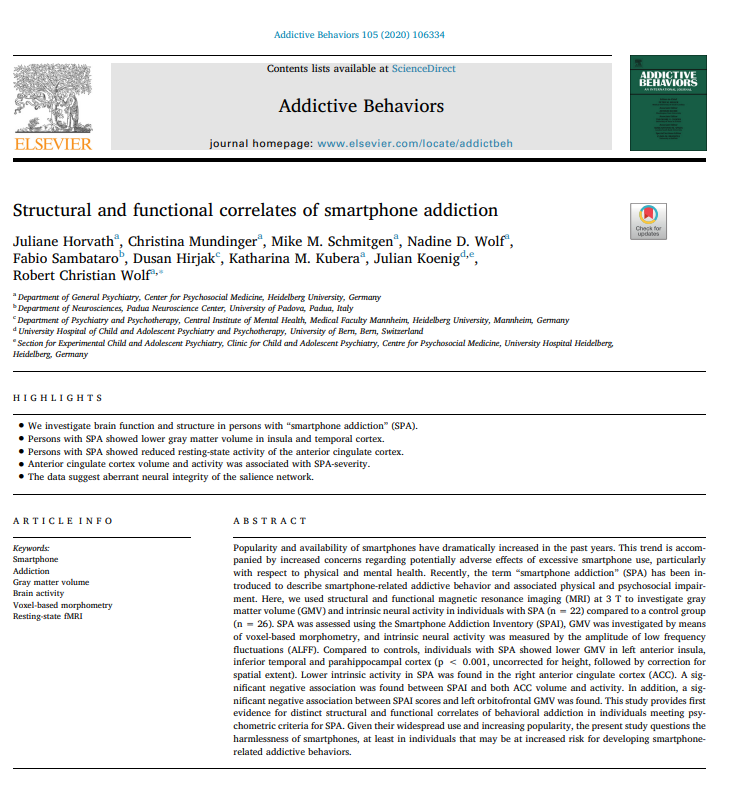
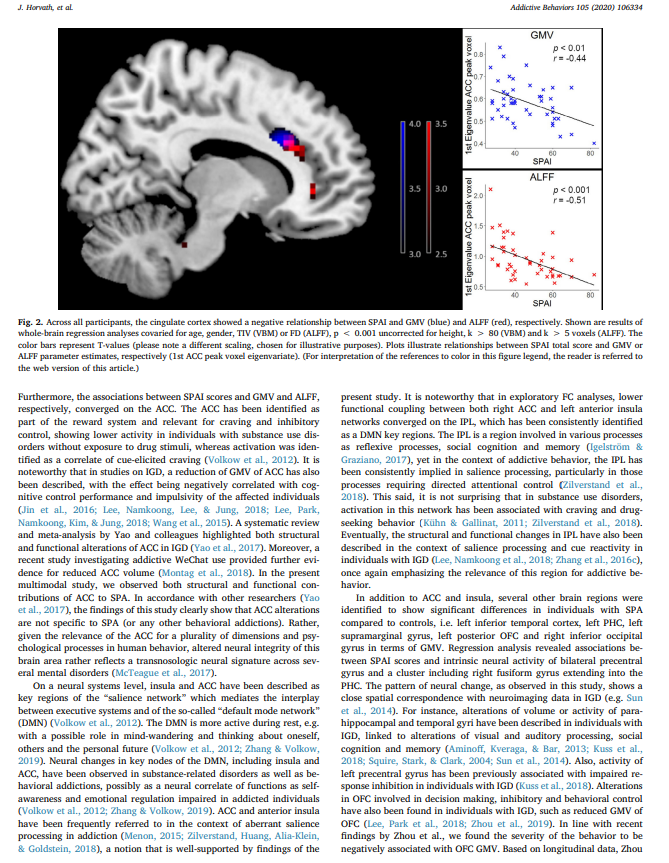
A brain imaging study found that smartphone addiction was associated with structural and functional differences in brain regions involved in attention, emotion, and self-control.
Esta cada vez más demostrado por la ciencia, ver “tiktoks” o “reels” durante mucho tiempo te daña el cerebro, te vuelve más estúpido.
Dicho de una forma más científica, “desactiva regiones clave del cerebro para el control cognitivo”.
Es muy importante advertir esto frente a los más jovenes. Se están quemando el cerebro.
“A Winston le molestaban casi todas las mujeres y especialmente las jóvenes y bonitas porque eran siempre las mujeres, y sobre todo las jóvenes, lo más fanático del Partido, las que se tragaban todos los slogans de propaganda y abundaban entre ellas las espías aficionadas”
1984, Orwell
🚨🇲🇽 | LOS BISONTES ESTÁN SALVANDO EL NORTE DE MÉXICO
Todo empezó en 2025, cuando 40 EJEMPLARES DE BISONTE AMERICANO llegaron a Cuatro Ciénegas, Coahuila, donde habían dejado de habitar desde hacía más de 200 AÑOS.
Estos animales desaparecieron después de generaciones en las que distintas prácticas ganaderas redujeron los pastos que les servían de alimento y favorecieron la expansión de cactus y matorrales.
Los bisontes son considerados INGENIEROS DEL ECOSISTEMA. Sus pisadas van ABLANDANDO LA TIERRA, lo que permite que el suelo absorba mejor el agua y favorece la regeneración de la vegetación.
Además, al alimentarse van controlando el crecimiento del pasto: comen en ciertas zonas y dejan descansar otras, permitiendo que los PASTIZALES SE REGENEREN.
En los últimos meses se ha reportado nuevamente la presencia de fauna como pumas, linces y pecaríes.
Después de generaciones ausentes, los bisontes están ayudando a DEVOLVERLE VIDA AL NORTE DE MÉXICO.🙌
Helen Andrews’s thesis on the feminisation of Western institutions helps explain something increasingly obvious about progressive politics in both the US and Europe.
Politics is becoming less a contest between competing ideas and more a system of social conformity: you are either with us or against us. Disagreement is no longer merely disagreement. It becomes evidence that there is something morally wrong with you.
That mechanism matters because it allows emotionally compelling narratives to substitute for intellectual coherence. Wind and solar are “green”, therefore questioning their economics, intermittency or system costs makes you a climate denier.
Mass migration from low-trust societies is framed as compassion, therefore questioning its fiscal, social or institutional consequences becomes evidence of moral deficiency.
The contradictions inside the policies matter less than the emotional legitimacy attached to supporting them. Emotions matter, not facts.
Once politics operates this way, social enforcement becomes more powerful than argument. People do not need to believe every proposition. They merely need to understand the reputational cost of challenging it. Nobody wants to be expelled from the respectable tribe.
This is where Timur Kuran’s concept of preference falsification becomes so powerful. People publicly endorse positions they privately doubt because dissent carries a social price.
The apparent consensus then intimidates the next person into silence, making the consensus look stronger still. Eventually you have preference falsification at scale: weak ideas protected by powerful social conformity.
The extraordinary feature of this system is that policy can remain emotionally successful long after it has become economically or socially destructive.
The moral narrative is immediate; the consequences arrive with a lag. By the time energy costs rise, institutions deteriorate, fiscal burdens compound or social trust erodes, years of policy have already been locked in.
It’s a fucking nightmare but it is how a society can keep voting for the Greens or Democrats or Labour etc, subsequently destroy the best nuclear plants, de-industrialise entire sectors, welcome barbarians at the gates etc until the state discovers that the constant false virtue signaling does not balance a budget.
I think it’s an unwritten rule in life that you should never lose the courage to keep trying. And I ask everyone to take this to heart. You’ll never lose in life if you keep trying again and again and again.
The best way to keep reminding yourself of this is to repeat to yourself every time you stand in front of the mirror: “I’ll try again, no matter what happens.” And reframe every situation; no matter how unpleasant, into something positive, even if it’s something as small as a 1% improvement.
Ideally don't plan your seasons in advance. Just keep enough liquidity to massively reallocate when life presents an asymmetric opportunity.
An great person asks you to start a company, a new technology creates a 2-year window, your closest friends all happen to live in the same city, a once-in-a-decade opportunity to travel with someone, etc.
Maintain enough “life liquidity” (savings, portable skills, low fixed costs, control over your time) so you can massively reallocate when sth unusually attractive appears. Not because optionality itself is the goal, but because it lets you go from 10% to 80% when you finally see something worth doing.
Also why I’m slightly skeptical of overly linear 5 or 10yr life plans. Feels weird to religiously stick to a decision made years ago with a completely different opportunity set just because that was “the plan”. If the opportunity set changes, the allocation probably should too.
When deciding what to chase now, I’d also ask not only “what has the highest return?” but “what has the highest cost of postponing?”
Cause yes, money, skills, reputation and audience can often be accumulated later. But other things are brutally time-sensitive: your kid being 4, your parents still being healthy enough to travel, your whole friend group living 15min away from each other, having no mortgage/kids and being able to disappear abroad for a year, some weird market window that might be gone in 18 months.
I think ambitious people should treat life in “seasons” rather than trying to balance everything every day.
A few years massively overallocated to work. A period getting seriously fit. A year or two nomading. Then family takes priority for a while. Then maybe at 35 you go completely insane again and spend four years building a new company, and so on.
The mistake is thinking every metric needs to stay green all the time. Most great outcomes (building a company, writing sth serious, training for an event) need uninterrupted runs, not daily moderation. Sometimes work should suffer cause you’re travelling, sometimes your social life should suffer cause you’re building, sometimes career progression should slow cause family matters more. That’s fine.
And tbh it probably makes life more fun too. You get actual chapters and completely different versions of yourself instead of spending 40 years maintaining the same perfectly optimised routine. A few intense years in one city, a weird nomad phase, an obsession that takes over your life, then something completely different. Probably much more memorable than one very long well-optimised Tuesday.
It's why I encourage everyone to think of balance in years, not days. A good life can look horribly unbalanced on some random Tuesday and still be very balanced over 10 years.