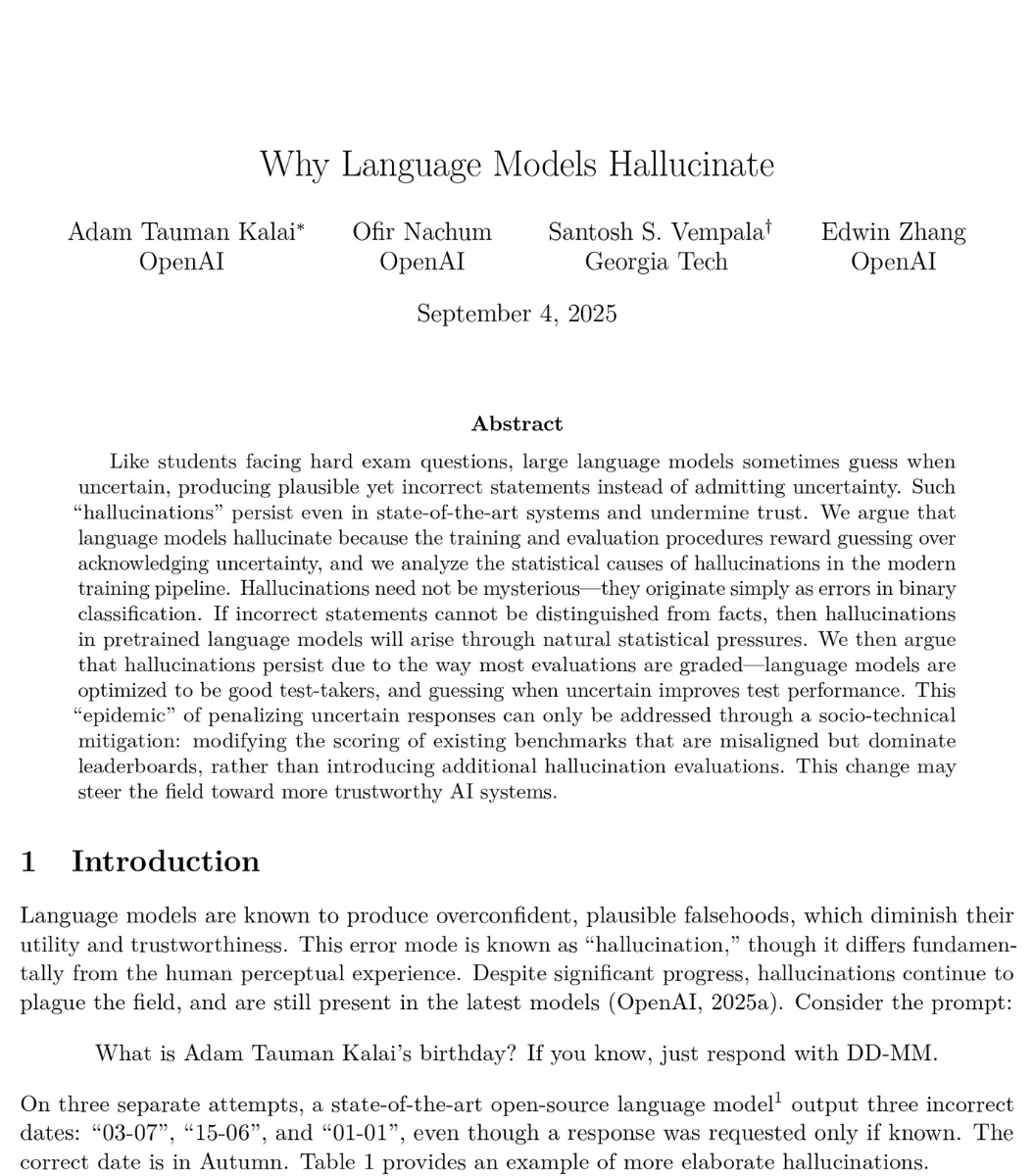
🚨BREAKING: OpenAI published a paper proving that ChatGPT will always make things up.
Not sometimes. Not until the next update. Always. They proved it with math.
Even with perfect training data and unlimited computing power, AI models will still confidently tell you things that are completely false. This isn't a bug they're working on. It's baked into how these systems work at a fundamental level.
And their own numbers are brutal. OpenAI's o1 reasoning model hallucinates 16% of the time. Their newer o3 model? 33%. Their newest o4-mini? 48%. Nearly half of what their most recent model tells you could be fabricated. The "smarter" models are actually getting worse at telling the truth.
Here's why it can't be fixed. Language models work by predicting the next word based on probability. When they hit something uncertain, they don't pause. They don't flag it. They guess. And they guess with complete confidence, because that's exactly what they were trained to do.
The researchers looked at the 10 biggest AI benchmarks used to measure how good these models are. 9 out of 10 give the same score for saying "I don't know" as for giving a completely wrong answer: zero points. The entire testing system literally punishes honesty and rewards guessing.
So the AI learned the optimal strategy: always guess. Never admit uncertainty. Sound confident even when you're making it up.
OpenAI's proposed fix? Have ChatGPT say "I don't know" when it's unsure. Their own math shows this would mean roughly 30% of your questions get no answer. Imagine asking ChatGPT something three times out of ten and getting "I'm not confident enough to respond." Users would leave overnight. So the fix exists, but it would kill the product.
This isn't just OpenAI's problem. DeepMind and Tsinghua University independently reached the same conclusion. Three of the world's top AI labs, working separately, all agree: this is permanent.
Every time ChatGPT gives you an answer, ask yourself: is this real, or is it just a confident guess?
People cannot be saved from themselves, no matter how intimate you become, no matter how vulnerable they might be rendered by their nature. To think otherwise is a very distressing, pernicious illusion. I guess the real question is: can you keep loving them after realizing this?
Vale a pena lembrar isso aqui pelo menos uma vez por mês. Melhor ainda em ambiente universitário.
"Em 1977, Michel Foucault, Jean-Paul Sartre, Jacques Derrida, Simone de Beauvoir e dezenas de outros intelectuais franceses pressionaram o governo francês para abolir as leis sobre a idade de consentimento e para descriminalizar o 'sexo consensual' entre adultos e menores."
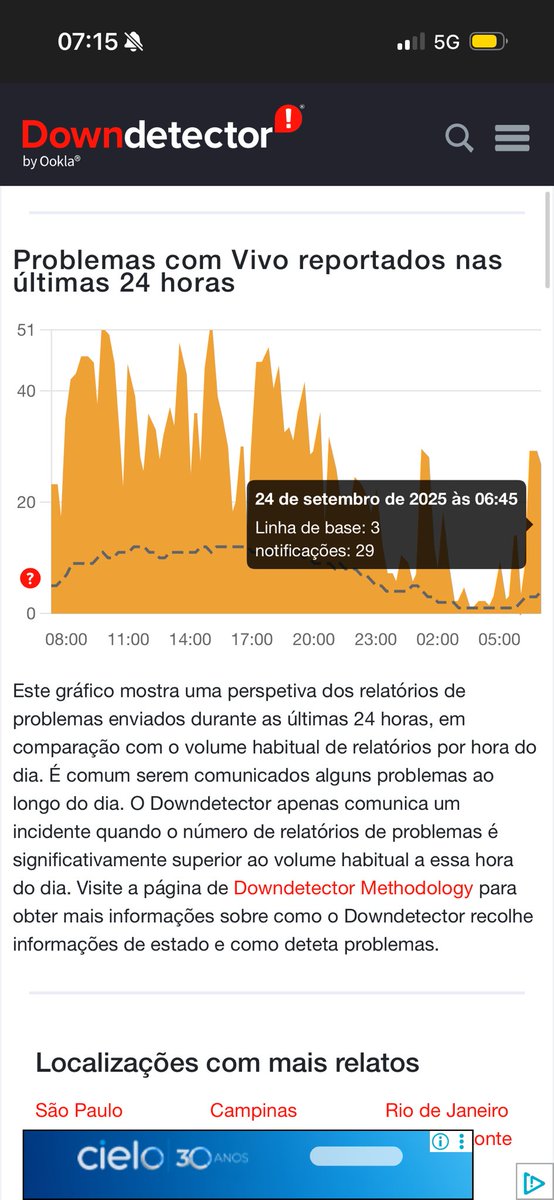
@vivobr Desde em torno das 6h, estou tendo dificuldade de acessar certos aplicativos com a internet móvel (Uber, BB, Santander etc.). Já liguei duas vezes para o suporte, mas o problema persiste. Não parece tratar-se de caso isolado, como se vê no portal Downdetector.
How not to get addicted to something as ecstatic as reciprocal affection and shared intimacy? It feels as though we are meant to never cease experiencing this (but even now I feel grounded). I feel great.
Elefantes têm nomes e usam na comunicação entre si, sugeriu um estudo que usou IA para analisar suas vocalizações.
O barulho mais famoso do elefante, em que ele usa a tromba como trompete, não é o mais significativo para comunicação. Aquilo é apenas um arroubo emocional, como um "eita" humano.
Os sons mais importantes na comunicação dos paquidermes são murmúrios de baixa frequência ou "roncos". São infrassons que geralmente escapam à audição humana.
No estudo foram utilizadas 469 vocalizações de grupos familiares de fêmeas adultas e seus filhotes no Quênia.
A inteligência artificial foi usada para diferenciar entre vocalizações, encontrar padrões que indiquem a individualização para o destinatário de cada murmúrio.
A partir disso, testaram a reprodução dos sons em campo. De fato, indivíduos levantavam as orelhas e respondiam com roncos próprios quando ouviam vocalizações contendo seus "nomes".
Já foi proposto antes que golfinhos e papagaios usam nomes próprios. Porém, a vocalização com o "nome" é uma repetição de algum som que o destinatário da mensagem repete muito, como um pokémon dizendo "Pikachu" demais. A analogia com nomes humanos, portanto, é menor do que a descoberta para os elefantes com esse estudo, se confirmada.
O método precisa ser reaplicado em golfinhos, papagaios, baleias, corvídeos, primatas etc. Eu vou apostar que há mais animais que têm nome e talvez sobrenome.
O estudo: https://t.co/BP27giRSP7
“In the end, rationality is not about intelligence but about character. Without the right personal qualities, education and IQ won’t make you master of your biases, they’ll only make you a better servant of them.” — @G_S_Bhogal
Several top AI safety researchers at @OpenAI recently quit, for reasons unknown.
If they learned OpenAI is developing tech that could endanger all 8 billion people on Earth, would they have a moral duty to blow the whistle, even if it violates their NDAs & hurts their careers?