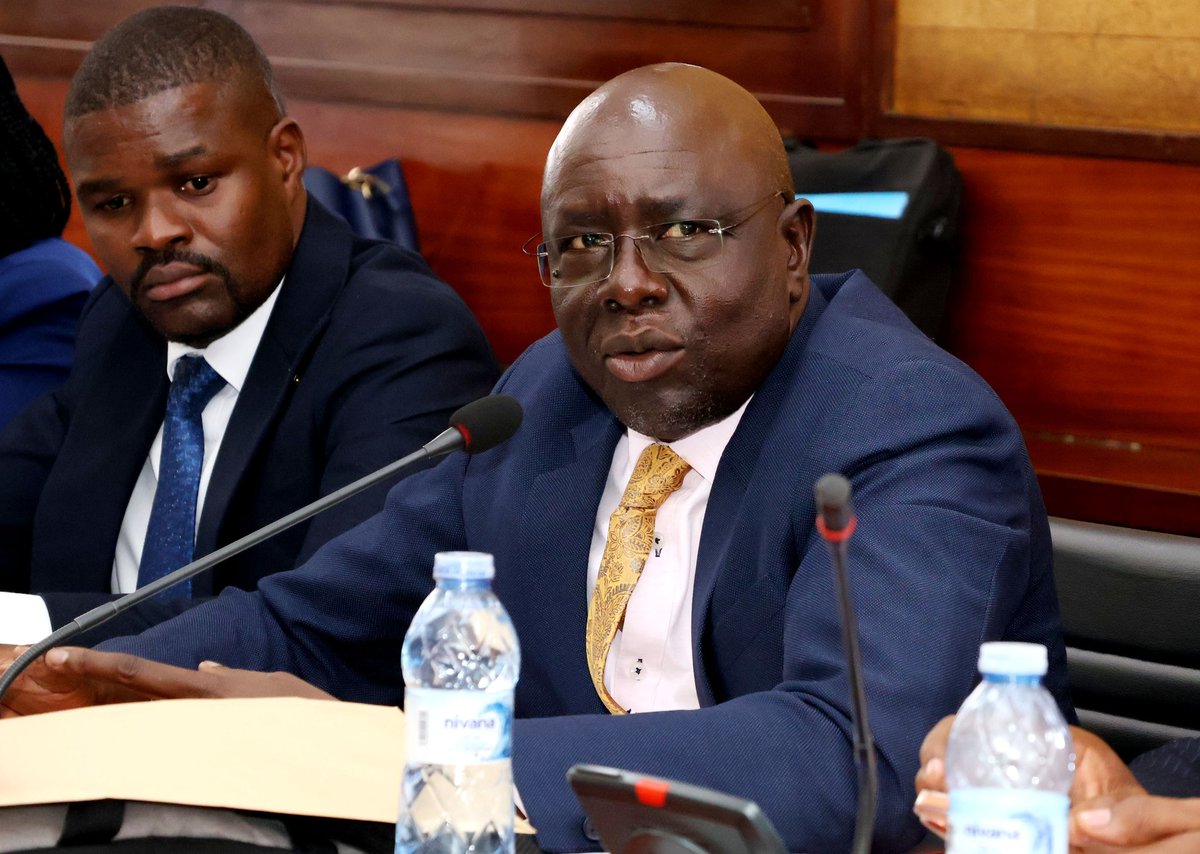
For the first time in our history, we are incredibly proud to see our Regional Managing Director, Mr. Solomon Osundwa, take the helm as Chairman of the Petroleum Institute of East Africa (PIEA). This outstanding appointment underscores our growing leadership and commitment to shaping the future of the region's energy sector.
#HassGroup @PIEA_official
Bro,the BILLIONAIRE you are;HIDING behind 'debts';forcing many months' UNPAID labour slaving to defend your STANDARD headlines 'BOLD' extortion GANGSTERISM driven by GREED;is HEARTLESS to loyal workers, INSULT to journalism and BETRAYAL to free media that STANDARD once belonged.
Breaking news: The United Arab Emirates has said it is leaving Opec, dealing a significant blow to the oil cartel and its de facto leader Saudi Arabia https://t.co/nQXvmiqhEo
Breaking news: Despite offering its own rival Gemini AI models, Google has committed to invest $10bn in Anthropic at its current valuation with a further $30bn to come in the future. https://t.co/PX25MWlbvg
JUST IN: Iran just pulled a thirty-year-old empty supertanker out of retirement and began towing it toward Kharg Island. She is moving so slowly that a voyage that should take a day and a half is taking four days.
Her name is NASHA. IMO 9079107. Built 1996. A two-million-barrel very large crude carrier that has been anchored empty off Kharg for years. TankerTrackers confirmed her reactivation yesterday. Gulf News, Iran International, and Fox News all picked it up within hours.
The reason she is moving at all is that Iran is running out of places to put the oil.
Kharg Island handles roughly ninety percent of Iran’s crude exports. Its onshore tanks had about thirteen million barrels of spare capacity when the US blockade began on April 13. Net inflow since has been running at one million to one point one million barrels per day because exports have collapsed to single digits of vessels while upstream production continues. The math is mechanical. Roughly twelve days of spare capacity. The calendar says that window closes this week.
NASHA is not a strategy. NASHA is what you do when you have run out of strategy.
A two-million-barrel floating storage vessel buys Iran approximately forty-eight hours of continued upstream production. After that, either the wells get shut in or the crude goes somewhere else. The parallel options being pursued, ship-to-ship transfers in the Riau Archipelago, AIS-dark transits, sanctioned VLCCs returning home through the blockade line, are not enough. Lloyd’s List Intelligence has tracked roughly twenty-six Iran-linked vessels evading since April 13. That cannot absorb a million barrels a day.
The wells will shut in. The question is which wells, for how long, and whether they come back.
The Asmari and Bangestan carbonate formations that sit under most of Iran’s giant southern fields are high-permeability, strong-water-drive systems. The Society of Petroleum Engineers literature on this specific reservoir class is unambiguous. Remove continuous pressure support for a prolonged shut-in and four damage mechanisms activate simultaneously: water coning upward through the fracture network, fines migration into pore throats, formation compaction under increased effective stress, and clay swelling under altered salinity and pH. The damage is not theoretical. It is documented. And it is measured in months to years of recoverable production capacity, not days.
Maleki and Gordon estimate three hundred to five hundred thousand barrels per day of permanent capacity loss if the current shut-in trajectory completes. That is a directional estimate, not a lab measurement, but the direction is not in dispute.
NASHA is the archaeological signature of the clock.
When a country with the world’s third-largest oil reserves reactivates a thirty-year-old retired tanker to float on top of its main export terminal and buy forty-eight hours of time, the institutional systems designed to absorb shocks have already failed. The insurance market, the shadow fleet, the diplomatic channels, and the reservoir physics are all converging on the same conclusion at different speeds, and NASHA is the one that shows up on satellite.
The market is pricing a ceasefire.
The Pentagon is pricing six months of mine clearance.
Iran just pulled a corpse out of the Persian Gulf and asked it to buy two days.
That is not how a reversible crisis looks. That is how a regime tells you, operationally, that it has run out of options between the blockade and the shut-in. The reservoir does not negotiate.
https://t.co/vLQh7ydMdk
Aliko Dangote commits to building a refinery in East Africa:
"I can give commitment to the two presidents that were here. If they will support the refinery, we'll build the identical one that we have in Nigeria 650,000 barrels here"
[Video Source: UBC Uganda[
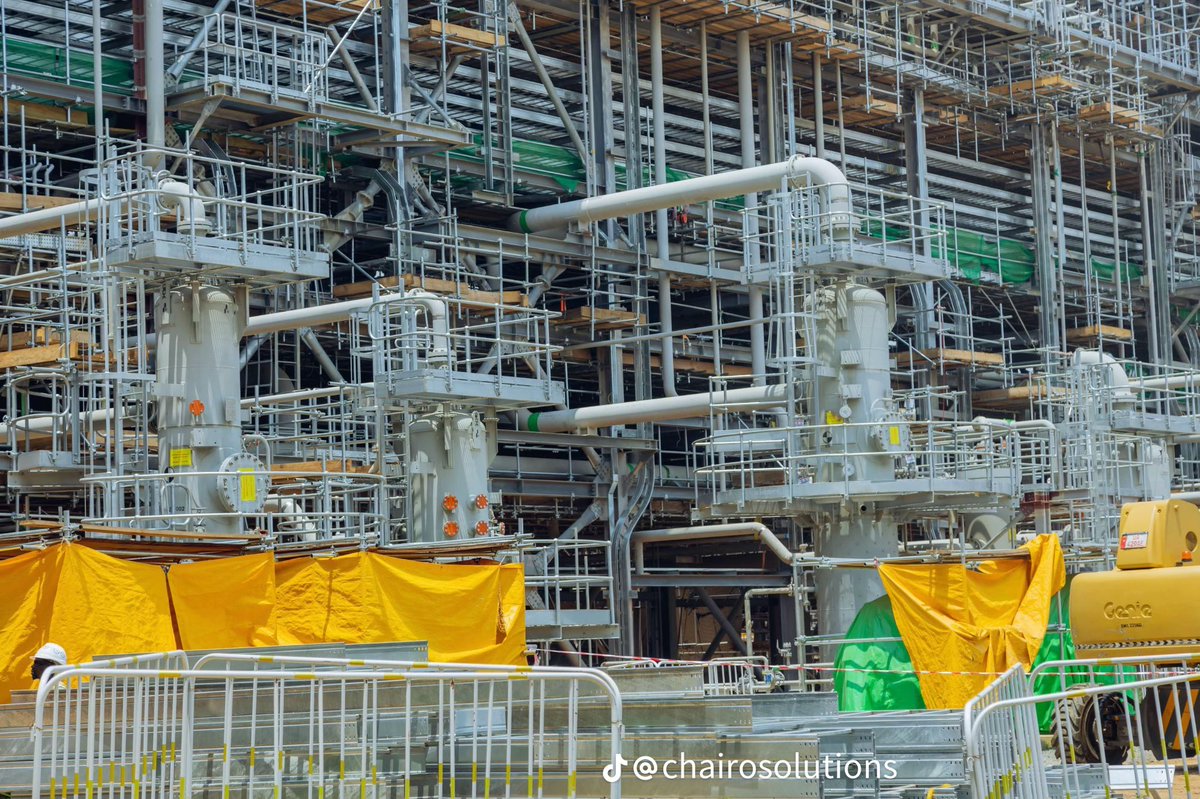
The East African Crude Oil Pipeline (EACOP) is a massive engineering undertaking with several specialized components designed to handle the unique properties of Ugandan crude oil.
Take A look!👀
⚙️ Pump and Pressure Stations
Pumping Stations (PS): There are six pumping stations in total—PS1 and PS2 in Uganda, and PS3 through PS6 in Tanzania. These stations provide the necessary pressure to keep the oil moving across the 1,443 km distance.
Pressure Reduction Stations (PRS): Located in Tanzania, these two stations (PRS1 and PRS2) are essential for managing hydrostatic pressure as the pipeline descends toward the coast, ensuring the flow remains safe and controlled before reaching the terminal. 
East African Crude Oil Pipeline (EACOP) +4
🔥 The World's Longest Heated Pipeline
Ugandan crude oil is "waxy," meaning it solidifies at room temperature. To keep it fluid, the pipeline uses a Long Line Heat Tracing (LLHT)system:

East African Crude Oil Pipeline (EACOP)
+1
Insulation: The 24-inch carbon steel pipe is wrapped in polyurethane foam (PUF) insulation, acting like a giant thermos.
•Heating: Electrical cables run the entire length of the pipe, maintaining a minimum temperature of 50°C.
•Power: In Uganda, power is primarily sourced from the national hydro-power grid. In Tanzania, the project uses a mix of the national grid, its own generators, and a 4MW solar farm. 
East African Crude Oil Pipeline (EACOP) +5
🌐 Smart Monitoring & Leak Detection
A buried fibre-optic cable runs parallel to the pipeline, acting as a continuous sensor:

East African Crude Oil Pipeline (EACOP)
+1
Real-Time Data: It monitors temperature, vibration, and strain. Any sudden change can pinpoint a potential leak or "third-party intrusion" (like unauthorized digging) to within a few meters.
Isolation: If a leak is detected, operators can remotely close any of the 76 block valves to isolate that specific section of the pipe and minimize environmental impact. 
East African Crude Oil Pipeline (EACOP) +3
🚢 Tanga Marine Terminal
Located on the Chongoleani Peninsula, this facility is the final export point:

Petroleum Authority of Uganda
+1
Storage: It features four insulated storage tanks, each capable of holding 500,000 barrels of oil (2 million total).
Loading Facility: A 2.7 km jetty extends into Tanga Bay to reach water depths of 23 meters, allowing large Suezmax tankers to dock and load the oil for global export. 
East African Crude Oil Pipeline (EACOP) +2
The project is currently over 80% complete as of April 2026, with technical commissioning expected later this year.
TAX BILLS 2026/27:
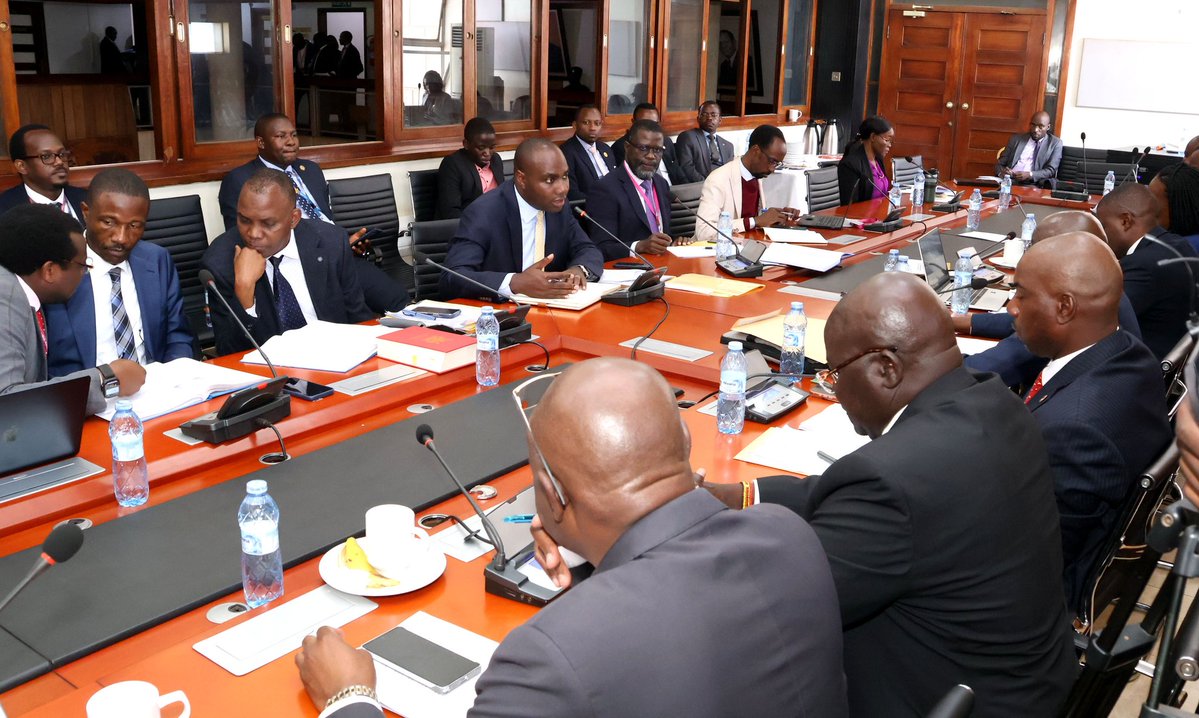
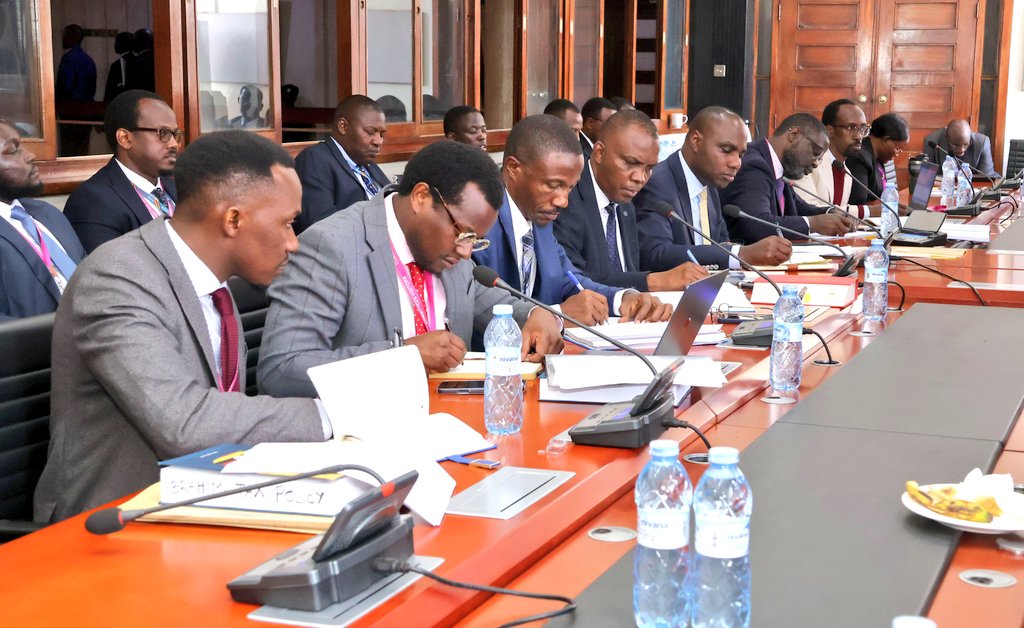
State Minister for General Duties @henrymusasizi1 has said @GovUganda projects to generate UGX 1,741 billion in FY 2026/27 from the tax policy proposals contained in the bills and UGX 3,164 billion from URA administration measures, which contributes to the projected revenue effort of 15.5% of GDP, representing a growth of 0.6 percentage points .
The Minister made the remarks while presenting the
the Tax Bills for FY 2026/27 to the Finance Committee of @Parliament_Ug
TAX BILLS:
✅️The Income Tax (Amendment) Bill, 2026;
✅️The Excise Duty (Amendment) Bill, 2026;
✅️The Value Added Tax (Amendment) Bill, 2026;
✅️The Tax Procedures Code (Amendment) Bill, 2026;
✅️The Stamp Duty (Amendment) Bill, 2026;
✅️The External Trade (Amendment) Bill, 2026;
✅️The Lotteries and Gaming (Amendment) Bill, 2026; and
✅️The Traffic and Road Safety (Amendment) Bill, 2026.
"The Bills are meant to raise revenue, foster compliance and assist @URAuganda in its work," said the Minister adding that revenue mobilization plays a critical role in financing Government priorities for socio-economic transformation.
@henrymusasizi1 also said the proposed amendments are complemented by the improvements in tax compliance,adding that the compliance strategies are designed to expand the tax base by bringing on board persons currently outside the tax net.
TAX POLICY PROPOSALS:
INCOME TAX:
➡️An option for taxpayers to pay rental income tax monthly.
➡️Introduce a withholding tax of 10% on commissions paid to data and voice bundle distribution agents.
➡️Introduce an Alternative Minimum Tax of 0.5% for businesses which carry forward losses beyond 7 consecutive years.
➡️Introduce 6% final witholding tax on non business assets.
➡️Introduce a withholding tax of 6% on public entertainers.
VAT:
➡️Increase the VAT Threshold from UGX. 150 million to UGX 250 million.
➡️Clarification of the taxation of imported software.
STAMP DUTY:
➡️Increase the stamp duty on land transfers from 1.5% to 3%.
➡️Introduce Stamp duty on motor vehicle and Motorcycle registration both at first registration and on transfer as follows: Motor vehicle registration at UGX. 100,000 for regular vehicles and UGX. 200,000 for commercial motor vehicles and motorcycles at UGX. 50,000.
EXCISE DUTY:
➡️Increase excise duty on diesel and petrol by UGX. 200 per litre.
➡️Increase the specific excise duty rate on any other un-denatured spirits of alcoholic strength by volume of less than 80% from UGX 1700/litre to UGX 3500/litre.
➡️Increase excise duty at first registration on motorcycles from UGX. 200,000 to UGX. 500,000.
➡️Extend excise duty to apply on all single use plastics and increase the rate from 2.5% or USD 70 per ton whichever is higher to 25% or USD 1,500 per ton whichever is higher.
➡️Increase excise duty on cement from UGX. 500 to UGX. 1,000 per 50 kg.
➡️Increase excise duty rate for sugar from Shs. 100 per Kg to Shs. 300 per Kg.
➡️Introduce excise on cooking fat and fatty acids at UGX. 500 per liter/ Kg.
➡️Increase excise duty on cooking oil from UGX. 200 to UGX. 400 per litre.
TRAFFIC AND ROAD SAFETY ACT:
➡️Reduce the age of acceptable cars from 15 years to 13 years from the date of manufacturing. Introduce a graduated scale of environmental levy on imported used motor vehicles.
Comrades, there is a clear difference between fuel availability and fuel price. Globally, most countries are facing fuel price increases. Many at astronomical rates. However very few like Uganda have continued to maintain stable prices and have enough stock in country with more stock on the way.
At @UNOC_UG we are committed to sharing more details as we monitor the situation.
Honda joins the billion-dollar EV regret club with up to $15.7B down the drain. Add in Stellantis ($26B), Ford ($19.5B), and GM ($6B), and we're talking ~$67B collectively torched because no one wants glorified golf carts.
Reality is undefeated.
Saudi Aramco says it expect to reach full capacity at its East-West pipeline to the Red Seat in next couple of days as oil tankers arrive to load.
That’s ~7m b/d (or ~6m b/d above pre-war levels already exported via Red Sea). Let’s see, but if confirmed, absolutely critical.
BREAKING: Bahrain’s state oil company declares force majeure for its shipments after an Iranian attack set its only refinery ablaze. Follow our live updates. https://t.co/eRtIogHwEZ
The changes at BAT Kenya:
—31st March 2026: Finance Director Philemon Kipkemoi exits
—1st April 2026: Catherine Chepkonga takes over as Finance Director
—5th June 2026: MD Crispin Achola steps down.
—16th June 2026: Sidney Wafula takes over as MD
Breaking: Morgan Stanley is laying off 2,500 people across its major divisions, including investment banking and wealth management https://t.co/AlL6wsr02q
QatarEnergy declares Force Majeure
Further to the announcement by QatarEnergy to stop production of liquefied natural gas (LNG) and associated products, QatarEnergy has declared Force Majeure to its affected buyers.
QatarEnergy values its relationships with all of its stakeholders and will continue to communicate the latest available information.
#QatarEnergy #Qatar