Today the COP30 climate conference in Brazil witnessed large-scale protests organized by Indigenous peoples both inside and outside the conference venue. The protesters voiced their opposition to international climate policies that marginalize their rights and lands. They argue that their representation in these conferences is often merely symbolic, with little real influence over environmental and climate decision-making, despite being the traditional guardians of the rainforest and among the most affected by climate change.
The Indigenous population in Brazil is estimated at around 900,000 people, spread across more than 300 ethnic and linguistic groups, most of whom live in the Amazon region. This region accounts for over half of Brazil's rainforest and is one of the most important ecosystems in the world. These communities play a crucial role in preserving biodiversity and protecting forests from deforestation, which is often driven by mining projects, commercial agriculture, and logging companies.
The protesters demand that Indigenous peoples be granted genuine legal and political rights in environmental decision-making, emphasizing that their lands are not commodities to be sold or financial instruments like carbon credits. They strongly criticize so-called carbon markets and environmental governance funds, which are often used as a cover by multinational corporations to continue exploiting natural resources under the guise of environmental protection, without respecting local communities and their rights.
At the same time, several African countries, including the Democratic Republic of Congo, Uganda, Mozambique, Angola, Kenya, and South Africa, have seen widespread protests against carbon markets. These markets grant enormous privileges to multinational corporations to take control of local lands and increase demand for natural resources such as cobalt used in electric car batteries, a sector that often relies on child labor and resource exploitation in conflict zones.
The protesters also criticize greenwashing, the practice by which companies use tools such as carbon offsets, green investments, and environmental and social governance funds to market themselves as sustainable and ethical, while continuing to exploit cheap labor and pollute the environment without accountability.
Protests in Brazil and Africa represent a single face of green capitalism, a system that reproduces the logic of old colonialism: the Global South bears the greatest burden of climate change and the responsibility to protect the planet, while the wealthy Global North continues to pollute and profit.
Sowing stories, Harvesting change🌾
My first ever substack is out!! I write about the incredible @Innamodja documentary 'The Great Green Wall' whilst delving into the theme of knowledge production in #internationaldevelopment ✍️
https://t.co/qylGP1PMdO
I would like to express my gratitude to all the peace-loving, freedom-loving patriots and pan-Africanists who rallied around the world on Wednesday April 30, 2025 to support our commitment and our vision for a new Burkina Faso and a new Africa, free from imperialism and neo-colonialism.
Your active solidarity and this demonstration of sympathy strenghtens our conviction that the fight we are waging for a fairer and more equitable world is justified.
We will never bend our backs in the face of adversity; we will stand firm until our peoples are truly emancipated. With you, we are certain that victory over the forces of evil is at hand.
Together, in solidarity, we will defeat imperialism and neo-colonialism for a free, dignified and sovereign Africa.
The blues music genre is derived from Sahelian West Africa, not Europe... The new world instruments were adaptations for African instruments such as the akonting, Xalam/Hoddu, Kora etc. Additionally, very early blues singers (1860's) were not using European notation systems.
hours before his passing, Souleymane Cissé pleaded: "The authorities must help make our films accessible. Cinema gave Nigeria & Ghana prominence—it can do the same for Mali. Support us by building cinemas. This is my appeal before my death."
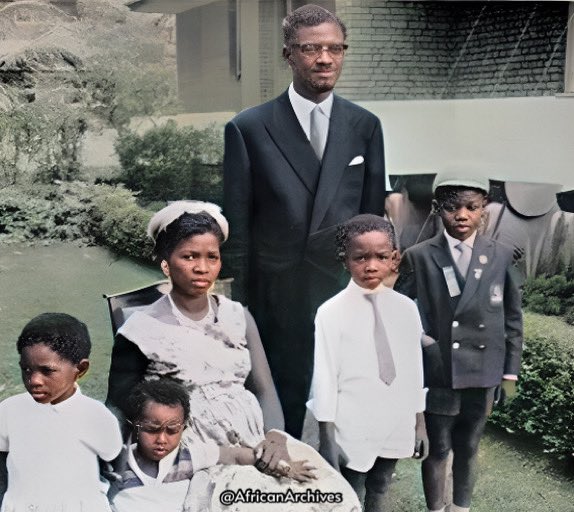
Patrice Lumumba Last Letter.
He was the first legally elected prime minister of D.R Congo and was assassinated in 1961 following a military coup supported by U.S.A & Belgian imperialism which was admitted by the State Dept in 2013.
My dear wife,
I am writing these words to you, not knowing whether they will ever reach you, or whether I shall be alive when you read them.
Throughout my struggle for the independence of our country I have never doubted the victory of our sacred cause, to which I and my comrades have dedicated all our lives.
But the only thing which we wanted for our country is the right to a worthy life, to dignity without pretence, to independence without restrictions.
This was never the desire of the Belgian colonialists and their Western allies, who received, direct or indirect, open or concealed, support from some highly placed officials of the United Nations, the body upon which we placed all our hope when we appealed to it for help.
They seduced some of our compatriots, bought others and did everything to distort the truth and smear our independence.
What I can say is this—alive or dead, free or in jail—it is not a question of me personally.
The main thing is the Congo, our unhappy people, whose independence is being trampled upon.
That is why they have shut us away in prison and why they keep us far away from the people. But my faith remains indestructible.
I know and feel deep in my heart that sooner or later my people will rid themselves of their internal and external enemies, that they will rise up as one in order to say 'No' to colonialism, to brazen, dying colonialism, in order to win their dignity in a clean land.
We are not alone. Africa, Asia, the free peoples and the peoples fighting for their freedom in all corners of the world will always be side by side with the millions of Congolese who will not give up the struggle while there is even one colonialist or colonialist mercenary in our country.
To my sons, whom I am leaving and whom, perhaps, I shall not see again, I want to say that the future of the Congo is splendid and that I expect from them, as from every Congolese, the fulfilment of the sacred task of restoring our independence and our sovereignty.
Without dignity there is no freedom, without justice there is no dignity and without independence there are no free men.
Cruelty, insults and torture can never force me to ask for mercy, because I prefer to die with head high, with indestructible faith and profound belief in the destiny of our country than to live in humility and renounce the principles which are sacred to me.
The day will come when history will speak. But it will not be the history which will be taught in Brussels, Paris, Washington or the United Nations.
It will be the history which will be taught in the countries which have won freedom from colonialism and its puppets.
Africa will write its own history and in both north and south it will be a history of glory and dignity.
Do not weep for me. I know that my tormented country will be able to defend its freedom and its independence.
Long live the Congo!
Long live Africa!
Thysville prison
Patrice LUMUMBA
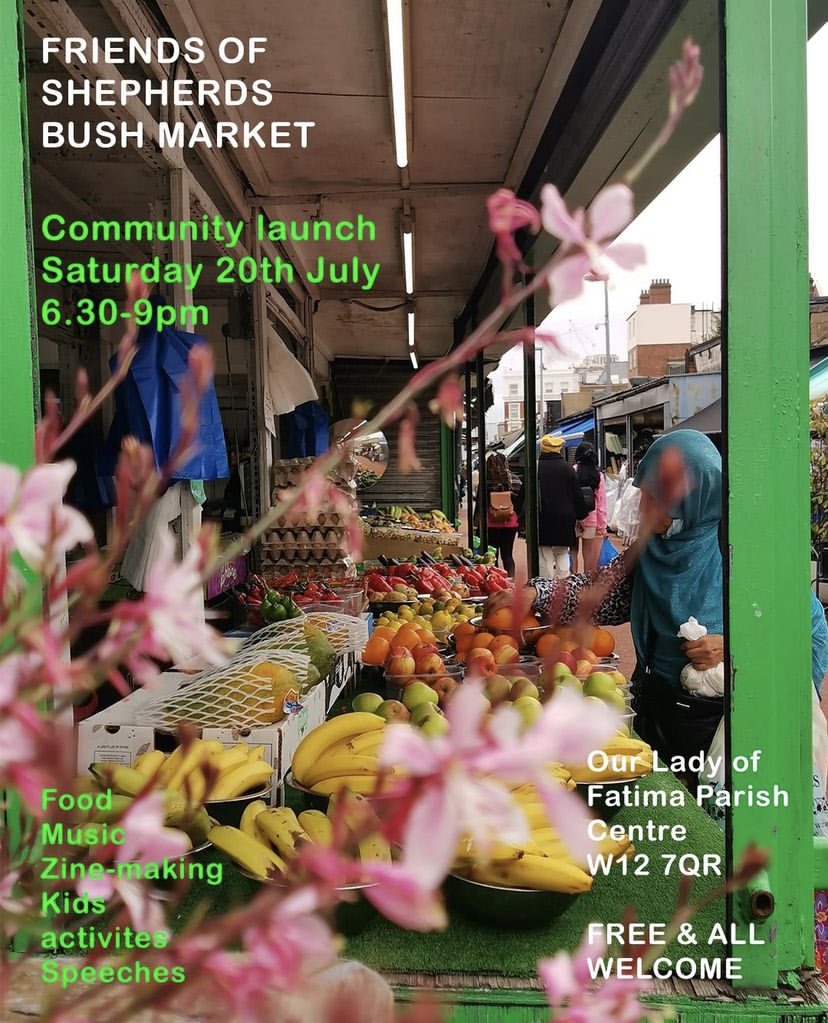
A community event launching the ‘Friends Of Shepherd’s Bush Market’ campaign. It will be an intergenerational space to learn, organise and resist gentrification!
Date: 20th of July 2024
Time: 6:30pm - 9:00pm
Location: Our Lady Of Fatima Parish Centre
@savebushmarket
She's right. 9 months of non disruptive protesting has achieved nothing. Every single day babies in Gaza are burnt alive, hospitals are bombed and Palestinian men are raped to their deaths in Israeli concentration camps. We are failing Palestinians.
When Muslim fishermen from Gulf of Kutch took on World Bank's private lending arm,the IFC, funders of a destructive #Tata powerplant
If you r in London DONT MISS this inspiring & beautiful film about an iconic struggle
https://t.co/RQi5XxMQHL
trailer: https://t.co/5K6eLV5OLl…
Anyone who missed my inaugural lecture on volunteerism in Tanzania in the 1960s: good news, it's now on YouTube. And I finish with a tribute to my Dad who believed in the power of people over institutions & our collective capacity to make change happen https://t.co/1L5hxoEDRr
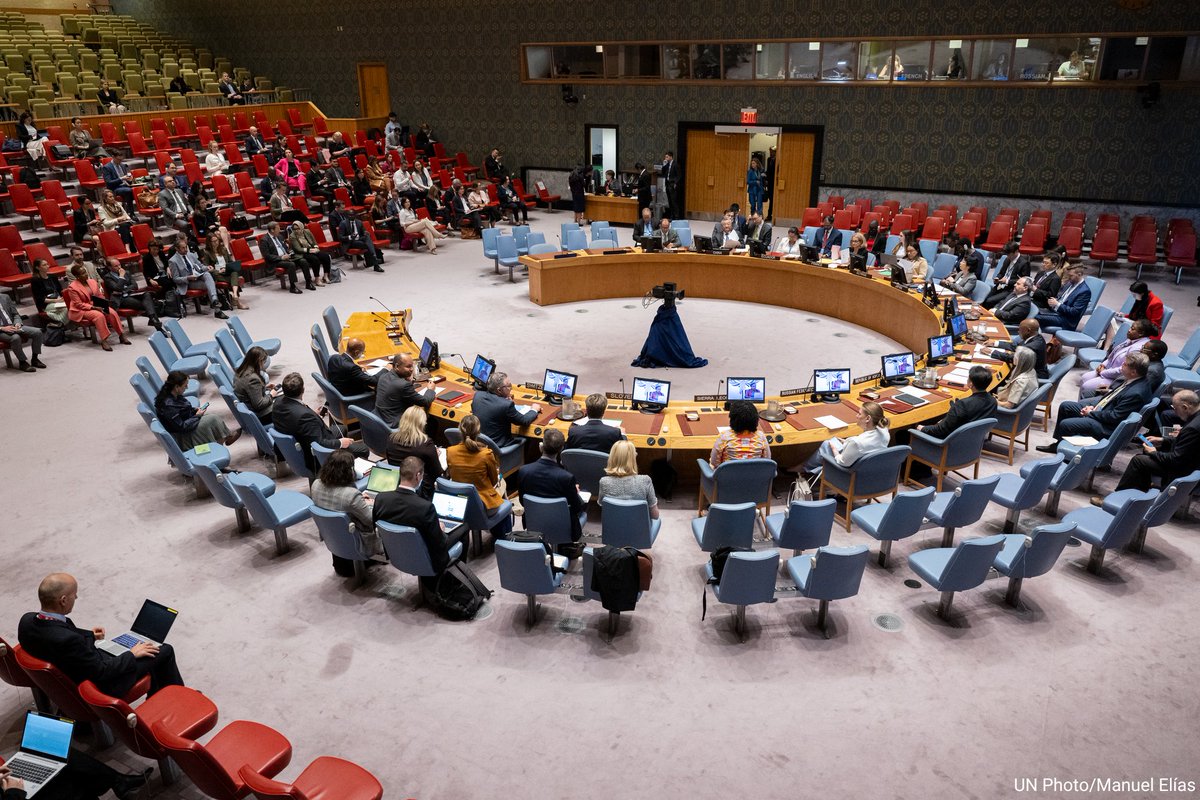
The number of civilians killed in armed conflict increased by 72% last year.
An alarming lack of compliance with international humanitarian law is ramping up danger for civilians across multiple conflict areas, Security Council hears.
https://t.co/E6cOlpA26b
Those who have chained humanity for centuries cannot teach humanity anything ~ Fred M’membe
In photo 📸 Patrice Lumumba In the hands of Belgium security agents and CIA
"Africa and the Black world are yet to recover from Sankara’s assassination. Just as we have yet to recover from the loss of Patrice Lumumba, Kwame Nkrumah, Malcolm X, Eduardo Mondlane, Amilcar Cabral, Steve Biko, Samora Machel, and John Garang, to name only a few.The White-Supremacist/Racist and its Dumb-Negro/ Brainwashed Afropean cronies used the same methods to eliminate each of these great pan-Africanists.
Every Leaders Who Has Stood Up For Africa's Right To Economic Self-determination Has Been Eliminated .
Almost every single leader who has stood up for Africa's right to economic self-determination has been eliminated -- either physically or politically!
The question still being asked by Africans, decades after they gained a nominal political independence, is: 'How long shall they kill our prophets while we stand aside and look?'
This question was memorably put forward by the iconic Bob Marley so many years ago, but our prophets continue to be killed.
One by one, our most steadfast leaders have been eliminated, to the point where Africa is hard-pressed to point out more than three people who are advancing the continental agenda for economic freedom.
Almost every single leader who has stood up for Africa's right to economic self-determination has been eliminated – either physically or politically.
It started with the very first successful anti-colonial movement in Ghana where Kwame Nkrumah was the victim of a concerted propaganda campaign that saw him pushed out of power through a coup.
Today, the average Ghanaian admits that an error was made in not recognizing Nkrumah's value, and elections in that country are now premised on being pro-Nkrumah or not. Patrice Lumumba's story is one of the saddest in Africa's quest for economic freedom, and his brutal murder still rankles today.
The same happened to Thomas Isdore Sankara, Steve Biko and many others who stood up for African dignity.
And it was not just in Africa.
Malcolm X died young because of what he believed was the rightful place of the black person in the United States of America – 'the land of the free'.
Fortunately, while these icons may have been physically and/or politically eliminated, their ideas live on.
The problem is: how many in Africa and the African Diaspora have the courage to stand up and take these ideas forward? Perhaps a little relook at some of these icons will re-energize the struggle to reclaim our dignity as a people.
Patrice Lumumba
In October of 1960 Lumumba said, 'Dead, living, free, or in prison on the orders of the colonialists, it is not I who counts.'
'It is the Congo, it is our people for whom independence has been transformed into a cage where we are regarded from the outside.'
'History will one day have its say, but it will not be the history that Brussels, Paris, Washington, or the United Nations will teach, but that which they will teach in the countries emancipated from colonialism and its puppets... a history of glory and dignity.'
His faithfulness to the idea of a united Congo was as real a threat then as it is today.
A solid Congo state, with its great natural and human resources, would be a global economic power that the West would not take as lightly as they do the fractured state that exists at present.
Perhaps Lumumba's biggest mistake was a lack of tact in exposing his grand plans for his country.
It was probably in that memorable Independence Day speech in which he challenged the core of imperialism that he sealed his fate and the decision was made to murder him.
After all, the former colonial powers have always been content to let Africa hold political power at home but will not brook any interference in how the economy is run and resources are allocated.