Hermes just had one of its biggest weeks yet.
Not because of one release.
Because in the span of a few days, Hermes added new ways for agents to run continuously, work together, manage other agents, operate across machines, use tools, and now even organize themselves into actual teams of bots.
Here are the changes I think matter most from Aug 10-16:
1. Bot Mode is coming
This is much bigger than another Desktop feature.
Hermes profiles can become a roster of named bots, each with its own chat, avatar, personality, memory, skills, tools and routines.
Bots can message each other, use @mentions, show when they are active, and even work together inside group chats.
And the creation flow is getting surprisingly deep.
When creating a new bot, Advanced Mode can open the actual Hermes Skills Hub and let you browse and add any skill directly to that bot.
So you are not just creating another profile.
You are assembling a specialized agent with its own identity and capabilities.
Word is Bot Mode is expected to become official any moment. @Teknium is packaging up the finishing touches this very moment.
CANT WAIT to see that land, and what else Bot Mode brings with it.
2. `/loop` gives Hermes a real recurring work cycle
`/loop`
Instead of giving Hermes a task once and hoping one pass is enough, you can now tell it to keep coming back.
Build something. Audit it. Fix it. Check again.
Monitor something. Diagnose a problem. Recover. Keep watching.
Loops can run on a fixed interval or self-pace, and you can control them with completion conditions, run limits, pause, resume and stop commands.
This is a major step toward agents that can stay responsible for a job instead of only responding to prompts.
3. Running subagents can now be controlled
Delegation got a major upgrade.
A parent agent can now inspect the subagents it has running and actively:
• list them
• steer them
• stop them
Hermes also increased the amount of work delegated agents can handle and how many can run concurrently.
That changes delegation from “launch some workers and wait” into actual supervision.
4. Multiple models can now deliberate together
`/council`
Hermes can send the same problem to multiple models independently and then have a chair bring the results together.
Instead of simply merging answers, Council Mode can surface:
• where the models agree
• where they disagree
• assumptions they made
• unique ideas from individual models
• a final recommendation
That makes `/council` much more interesting for decisions where one model’s answer is not enough.
5. Hermes Desktop can now control agents across multiple Hermes instances
Desktop is becoming much more than a chat interface.
You can register multiple Hermes connections and work with agents across local machines, remote gateways, SSH hosts and other Hermes instances.
Desktop can build one combined roster across those sources and route you to the right agent on the right machine.
That also gives features like Bot Mode a much bigger playground.
6. MCP setup got dramatically easier
Hermes shipped a large MCP usability overhaul.
Servers and the Catalog now live together.
Desktop can understand common MCP setup formats you paste into it, including configs, commands and URLs.
There are also `hermes://` MCP install links with confirmation, background health checks, re-auth warnings, and visibility into server usage.
MCP is starting to feel much less like something you configure manually and much more like something Hermes can actually help you operate.
7. Plugins became much more powerful
The plugin system took a major step forward this week.
Hermes added things like plugin packs, inter-plugin events, streaming hooks, controlled MCP access, tool-call modification, platform events and richer approval support.
The bigger story is what this enables.
More advanced Hermes capabilities can now be built as plugins instead of every idea needing to become part of Hermes core.
Bot Mode itself is a pretty good example of where this can go.
8. Hermes can watch a website once, then use its API directly
Hermes added a new `har-derived-api-client` skill that can watch what happens behind the scenes while it uses a website in a real browser.
It records the site’s network traffic, identifies the API calls powering the interaction, and works out the endpoint, parameters, request structure and response.
Then Hermes can recreate that request directly.
So instead of opening the browser and clicking through the same workflow every time:
Browser once → learn the API → call it directly after that.
That can turn a repetitive browser workflow into a much faster direct HTTP request without needing to operate the webpage every time.
It works across Hermes’ browser paths, including local browsers and CDP-connected cloud browsers such as Browserbase, Browser Use and Firecrawl.
9. Long-running sessions got an interesting new memory strategy
Hermes added an experimental opt-in lean compaction mode.
Instead of keeping a huge amount of old conversation sitting directly in the active context, Hermes can preserve important anchors while pushing more history out and recovering it through `session_search` when needed.
It is not the new default.
But for agents expected to work for a long time, this is one of the more interesting architectural changes from the week.
And those are only the headliners.
Also shipped:
• Browser Use becoming the preferred browser path when available
• opt-in agent-managed cron scheduling
• Claude Code and Codex session importing
• `/save` session export to JSON, Markdown and HTML
• faster CLI startup and Desktop session loading
• a huge amount of updater, cron, session, routing and tool reliability work
There were hundreds of changes underneath all of this.
But the direction is getting hard to miss.
Hermes is moving from an agent you give work to...
toward a system of agents that can keep working, supervise each other, coordinate across machines, manage their own capabilities, and stay responsible for what happens next.
A Chinese developer just explained the shift from Loop Engineering to Graph Engineering better than anyone.
most people are still building agents the way that's about to be obsolete.
> why single-agent loops break and go "goal blind"
> the 4 parts of a graph: nodes, edges, state, policy
> 3 topologies that run everything: diamond, supervisor, pipeline
> Anthropic's 5 official workflow patterns
the punchline: it's not how many agents you run. it's the determinism you build with verifiers, code fallbacks, and reality anchors.
I broke the same architecture down with Kimi K3. Full A-Z guide below.
Testing a slightly evil idea with Hermes Bot Mode
I split one task across 3 intentionally incomplete agents:
one can research but can’t build
one can build but can’t approve its own work
one can test and challenge the result but can’t fix it
The test: can they recognize their own limits and hand the task to the right agent without me coordinating them?
PASS = they reach a verified result with zero manual routing from me
That’s way more interesting to me than just making agents talk to each other :)
Bob Woodward y Carl Bernstein, los reporteros que airearon el Watergate, recibieron Pulitzer y George Polk Award.
En España, por airear la corrupción del Sanchismo, algunos te meterían en una checa.
Imaginad por un momento que, con estas cifras de fallecidos, son Feijoo o Abascal los que ayer publican un vídeo recomendando su playlist del verano.
La que estaría montando en las rrss y en las calles la izquierda
Sobre los homicidios de pareja en EEUU:
En el homicidio de pareja íntima se reconoce de forma bastante generalizada que hay más víctimas mujeres que hombres. Fuentes internacionales como UNODC muestran de manera consistente que, a nivel mundial, las mujeres representan la gran mayoría de las personas asesinadas por su pareja (en una proporción 80/20: 80 mujeres asesinadas frente a 20 hombres por cada 100 casos) o por un familiar cercano, mientras que los hombres son la mayoría de las víctimas de homicidio en general. Esa asimetría es uno de los datos más citados cuando se habla de violencia letal de género.
El demógrafo Lyman Stone plantea aquí, sin embargo, que en el caso concreto de Estados Unidos la proporción podría ser más equilibrada de lo que suele creerse (él sólo se refiere a EEUU). Para ello se basa en dos bases de datos estadounidenses: el NIBRS (sistema policial del Departamento de Justicia) y el NVDRS (sistema del CDC). Ambas tienen una cobertura incompleta: no todos los estados o condados reportan de la misma manera, y en muchos casos no se indica la relación entre la víctima y el agresor. Stone observa además que los homicidios de hombres aparecen con más lagunas de información que los de mujeres.
En los datos “crudos” (solo los casos en los que sí se conoce la relación) la ratio es claramente desfavorable a las mujeres: en una de las bases llega a ser de tres mujeres por cada hombre, y en la otra de aproximadamente 1,6. Stone realiza entonces unos ajustes para intentar corregir la información faltante. Sus supuestos son deliberadamente conservadores, es decir, asume que en los casos en los que no se conoce al agresor la proporción de homicidios de pareja es la mitad de la observada cuando sí se conoce, y que en los homicidios que ni siquiera figuran en esas bases la proporción es todavía más baja (una cuarta parte). Es decir, no está inflando artificialmente las muertes de hombres; al contrario, supone que en los datos ausentes hay menos homicidios de pareja de lo habitual.
Después de aplicar esos ajustes, la ratio desciende hasta aproximadamente 1,3 mujeres por cada hombre (en números redondos, alrededor de 1.900 mujeres frente a 1.400 hombres en 2021 según la base más completa). Stone añade que, si además existe un sesgo de subregistro de víctimas masculinas -algo plausible porque la sociedad tiende a creer menos que una mujer pueda matar a su pareja-, la cifra real podría acercarse todavía más a la paridad.
Los puntos fuertes del análisis son que pone el foco en un problema real de los datos (la cobertura incompleta y el posible sesgo de reporte) y que hace explícitos sus supuestos, lo que permite debatirlos. También es cierto que las encuestas sobre violencia de pareja no letal en Estados Unidos muestran proporciones mucho más cercanas entre hombres y mujeres, lo que da cierta plausibilidad a la idea de que el subregistro de víctimas masculinas existe.
Los puntos débiles son importantes. Las imputaciones, aunque conservadoras, siguen siendo supuestos y no datos observados. Stone no es un especialista en criminología ni en violencia de pareja, sino un demógrafo acostumbrado a trabajar con estadísticas incompletas. Los datos globales de UNODC y de muchos otros países siguen mostrando una asimetría mucho más marcada a favor de las víctimas femeninas, por lo que el patrón estadounidense, de ser cierto, podría ser particular y no generalizable. Además, incluso aceptando su ratio ajustada de 1,3, sigue habiendo más mujeres asesinadas por su pareja que hombres.
En cuanto a la razón que Lyman sugiere para esa mayor paridad en los homicidios de pareja en EE.UU. respecto a otros países, apunta al amplio acceso a las armas de fuego. El 70% de los homicidios de pareja ser realizan con armas de fuego y el resto principalmente por arma blanca. Las armas de fuego igualarían la capacidad letal entre hombres y mujeres al reducir el peso de la diferencia de fuerza física.
Las conclusiones más sensatas que se pueden sacar del estudio son modestas pero interesantes. El artículo no demuestra que el homicidio de pareja sea realmente igualitario, pero sí sugiere que en Estados Unidos la diferencia podría ser menor de lo que indican las cifras sin ajustar y que conviene tratar con cautela las ratios muy extremas que a veces se citan. Al mismo tiempo, no anula el hecho de que las mujeres siguen siendo más vulnerables a morir a manos de su pareja. Se trata de un análisis interesante sobre problemas de medición, no de una refutación sólida del patrón general observado en la literatura.
Uno de los motivos por los que las adaptaciones de los clásicos fracasan obedece a la soberbia con la que la mente posmoderna construye una dialéctica con los grandes creadores del pasado.
Cuando el adaptador cae en la hybris y es incapaz de comprender el universo homérico.
Lo que una propuesta legislativa de la UE nos enseña sobre la igualdad de género y los derechos individuales.
Esta propuesta legislativa de la UE que se comenta aquí tiene dos aspectos que me interesa comentar. Es una propuesta que busca extender la protección temporal a los ucranianos hasta 2028, pero la bloquea para los hombres en edad militar que lleguen nuevos. Las mujeres sí pueden acceder. Hombres y mujeres no son tratados igual y veremos si el feminismo protesta por ello.
Es el típico caso de "hombres y mujeres somos iguales… hasta que dejamos de serlo". Mientras se trata de cuotas, oportunidades o retórica, la igualdad es sagrada. Cuando aparece una guerra real y hace falta mano de obra de combate -donde las diferencias biológicas promedio en fuerza, resistencia y psicología importan-, de repente las distinciones por sexo se aceptan sin drama. La biología y la supervivencia del grupo pasan por encima de la narrativa feminista.
Pero lo más revelador para mí va más allá de este tema de la discriminación sexual. En mi opinión, este proyecto muestra cómo funcionan realmente los derechos individuales: son contingentes. Existen en la medida en que un grupo (el Estado ucraniano primero, y la UE después) decide reconocerlos y hacerlos cumplir. No hay una ética individual pura, flotando por encima de todo, que te proteja cuando el grupo entra en modo supervivencia. La moral, vista desde la cooperación evolutiva, surge precisamente para resolver eso: subordinar los intereses personales al bien colectivo cuando es necesario (lealtad, valentía, sacrificio).
En la práctica, si Ucrania necesita hombres en el frente, tu "derecho" a huir o a negarte se evapora, y ,como estamos viendo, te trincan y te llevan a la trinchera. La UE no te da refugio automático precisamente para no debilitar esa lógica. Los derechos humanos universales suenan muy bien en los documentos, pero en las crisis reales dependen del poder y de los intereses de los grupos que los defienden. Sin ese respaldo grupal, se convierten en aspiraciones.
Al final, esto desnuda una verdad incómoda: entre el individuo y el colectivo, la moral grupal suele ganar cuando la supervivencia está en juego. Y las ideologías que lo niegan acaban chocando contra la realidad.
Charlie Munger spent 50 years studying why intelligent people make catastrophically stupid decisions.
It is the most useful thing I have ever watched:
1. Incentives are more powerful than anyone thinks. Munger says he has been in the top 5% of his age cohort his entire life in understanding the power of incentives and he has still underestimated it every single year. Federal Express could not get their night shift to work efficiently until someone realized they were paying by the hour. They switched to paying by the shift. The problem disappeared immediately.
2. People rationalise terrible behavior when their incentives point that way, and they do not even know they are doing it. A doctor in Nebraska was removing perfectly healthy gallbladders for years. When Munger asked an old colleague whether the doctor knew he was harming patients, the answer was no. he genuinely believed the gallbladder was the source of all medical evil and that removing it was an act of love. That is incentive-caused bias at its most extreme.
3. Psychological denial is real, and it is not just for weak people. A family friend's son flew off a carrier in the North Atlantic and never came back. His mother, a completely sane woman, simply never believed he was dead. Reality was too painful, so she distorted it until it was bearable. Munger says we all do this to some extent, and it causes terrible problems.
4. Consistency and commitment tendency are one of the most powerful forces in the human mind. Once you have stated a position publicly, you are psychologically locked into it. Max Planck said the really important new physics was never accepted by the old guard. A new guard came along that was less brain blocked by its previous conclusions. If this happened to the deans of physics, Munger says, imagine what it does to ordinary people.
5. The Chinese brainwashing system used on prisoners of war worked better than torture. They did not start with big demands. They maneuvered people into making tiny little commitments and declarations and slowly built from there. The same mechanism operates in every cult, every sales system, and every ideology that gets deeply embedded in people's heads.
6. Pavlovian association shapes buying behavior at a level most people never consciously process. Munger estimates three quarters of all advertising works on pure Pavlov. Coca-Cola does not want to be associated with funerals. They want to be associated with the Olympics, wonderful music, heroics. The association itself changes how people feel about the product at a subconscious level. Raising the price of a product can actually increase its market share because price and quality are associated in the human mind, and people use price as a signal of value.
7. Persian messenger syndrome is alive and running every major organization. The Persians killed the messenger who brought bad news. Bill Paley in his last 20 years, did not hear one thing he did not want to hear. everyone around him knew bringing bad news was dangerous. The result was that one of the most powerful men in media made terrible decisions for two decades because reality never reached him.
8. Social proof causes otherwise intelligent people to follow each other off cliffs. When one oil company bought a fertilizer company in the 1970s, practically every other major oil company rushed out and did the same. There was no rational reason for oil companies to own fertilizer companies. But if Exxon was doing it, it was good enough for Mobil. Every single acquisition was a disaster.
9. The efficient market theory persisted in academia for decades despite Berkshire Hathaway existing as a living contradiction. One economist kept adding sigmas to explain away the anomaly. two sigma, then three, then four, eventually six sigma. Munger's observation: It is better to add a sigma than change a theory just because the evidence comes in differently. That economist later went into money management himself and sank like a stone.
10. Contrast bias warps perception constantly and invisibly. Put your hand in hot water, then room temperature water. It feels cold. Put your hand in cold water, then room temperature water. It feels hot. same bucket. The human sensory apparatus has no absolute scale, only a contrast scale. Real estate agents exploit this deliberately. They show you two overpriced, awful houses first, then take you to a merely overpriced house, and it feels like a bargain.
11. The frog in slowly heating water is the business version of contrast bias. If something bad comes to you in small pieces, you are likely to miss it entirely. Munger says he has known many high-powered brilliant businessmen who were destroyed this way. not because they were stupid but because each incremental change was too small to trigger alarm. The contrast was never large enough to notice.
12. Authority bias is so powerful it can make trained professionals watch a plane crash. In flight simulator experiments, when the pilot, the authority figure, does something that any trained co-pilot knows will crash the plane, 25% of the time, the co-pilot sits there and lets it crash anyway. They have been trained to know better. The authority relationship overrides the training.
13. Deprivation super reaction syndrome explains why people go insane over small losses. Munger's neighbor had a 180 degree view of the harbor. the neighbor put in a pine tree about 3 feet high that turned it into a 179 and three-quarter degree view. They had a blood feud that went on for years. The New Coke disaster is the corporate version. Coca-Cola told customers they were changing a flavor and triggered a deprival super reaction so powerful that Pepsi was weeks away from releasing old Coke in a Pepsi bottle. smart engineers. brilliant lawyers. armies of psychologists. All missed it.
14. Envy and jealousy are far more powerful than greed and almost entirely absent from psychology textbooks. Munger says Warren Buffett has said half a dozen times that it is not greed that drives the world but envy. In a thousand-page psychology textbook, the index entry for envy and jealousy is blank. One of the most powerful forces in human behavior and academia essentially ignores it.
15. Gambling addiction is not explained by variable reinforcement alone. Skinner thought he had fully explained gambling by showing that variable reward schedules pound in behavior more powerfully than fixed ones. But the people who design modern slot machines know things Skinner did not. Lotteries where you pick your own number get far more play than lotteries where the number is assigned to you. People who commit to a number believe it has more validity because they chose it. Near misses on slot machines trigger deprival super reaction syndrome. It is four or five psychological tendencies working together, not one.
16. The most dangerous situations are when multiple psychological tendencies combine toward the same end at once. Munger calls this the lollapalooza effect. Tupperware parties use four or five tendencies simultaneously. Moonie conversion methods combine multiple tendencies and work extraordinarily well. alcoholics anonymous achieves a 50% no drinking rate when everything else fails because it also combines multiple tendencies toward a constructive end. The Milgram experiment is not just about obedience. it involves authority bias, consistency and commitment tendency, and contrast effects all working together. That combination turns human brains into mush.
17. Boards of directors are structurally designed to fail as corrective mechanisms. The top executive is the authority figure. He is doing something questionable. You look around, and nobody else is objecting, which is social proof that it is fine. He flies you around in the corporate jet and raises your director fees every year, which triggers reciprocation tendency. Munger's rule: boards only act when the behavior gets so bad it starts making them look foolish or threatens legal liability. That is the only forcing function that reliably works.
18. John Goodfriend of Salomon Brothers destroyed his career and reputation because he did not fire a trusted employee who had lied to the government. Every psychological tendency pointed toward keeping the man. He was a close colleague. His wife was known. He was part of a group that had made over a billion dollars for the firm. He said he had never done it before and would never do it again. Goodfriend looked into his eyes and believed him. The man did it again. The lesson: everyone who gets caught embezzling says they have never done it before and will never do it again. That is what they all say.
19. Darwin avoided confirmation bias by deliberately seeking out disconfirming evidence. Munger says Darwin was not especially smart by ordinary standards of human acuity. Yet he is buried in Westminster Abbey. Munger studied how Darwin worked and realized he had psychological tricks worth learning. Darwin always paid extra attention to evidence that contradicted his theories. Munger started doing the same and credits it as one of the most important intellectual habits of his life.
20. Why is the most important word in communication? Carl Braun designed oil refineries with spectacular skill, and you got fired in his company if you wrote a communication without explaining why. not just who, what, where, and when, but why. Braun knew that in a complex system where things can blow up, a communication system that always explains the reason behind an instruction works dramatically better than one that does not. Forstein, the general counsel of Salomon, told Goodfriend on multiple occasions that he had to report the employee's misconduct. He explained it was the right thing to do. He never explained what would happen to Goodfriend personally if he did not. he failed to use the most powerful tool of persuasion. Goodfriend ignored him. When Goodfriend went down, Forstein went with him.
Nuevo extracto brillante de este articulo: Los grupos son mezquinos y santurrones
Pinsof continúa explicando dos características más de los grupos: son mezquinos y santurrones.
-Mezquinos: Los grupos no buscan maximizar el bien general, sino mejorar su posición relativa frente a otros grupos. Les importa más que el otro grupo pierda que el hecho de que todos ganen. Esto genera una política muy de suma cero: guerras culturales, odio al enemigo y disposición a perjudicarse a sí mismos si con eso dañan más al contrario.
-Santurrones: Dentro de cada grupo existe competencia por estatus. La forma más efectiva de subir de posición es mediante virtue signaling (señalar virtud): hacer cosas que demuestren lealtad extrema al grupo, aunque sean ineficientes o incluso contraproducentes. Cuanto más costosa e inútil sea la acción (huelgas de hambre, protestas absurdas, leer libros larguísimos, votar aunque no sirva de nada), más fuerte es la señal de “soy un verdadero creyente”.
Esto explica por qué tantas políticas políticas son ineficaces o directamente dañinas: no están diseñadas para resolver problemas, sino para mostrar devoción al grupo.
«Las personas son maravillosas. Me encantan los individuos. Odio a los grupos de personas. Odio a un grupo de personas con un “propósito común”. Porque muy pronto tienen gorritos, brazaletes, canciones de guerra… y una lista de gente a la que van a visitar a las 3 de la mañana.»
-George Carlin
En en la sentencia en la que se condena al futbolista Rafa MIR por un delito de agresión sexual la Audiencia Provincial pide que se deduzca testimonio contra dos policías porque consideran que mintieron en su declaración.
La sentencia desde un plano jurídico pero también formal esa aberrante.
Pero aquí nadie ha dicho nada, ni ningún sindicato policial ha hiperventilado porque contra la sentencia cabe recurso y puede ser revocada.
Todo este teatro que estamos viendo de reacciones del CGPJ, de los sindicatos policiales y de los medios de comunicación no es porque les preocupe la justicia formal y material en la resoluciones judiciales, es porque a quien afecta esta resolución concreta es a Begoña Gómez, a la sazón mujer del presidente del Gobierno.
No somos iguales
¿Tú con quién estás? ¿Con Harari o con Henrich?
Joseph Heath critica en este artículo el relato de la evolución humana que presenta Yuval Noah Harari en Sapiens por ser anticientífico y obsoleto. Lo contrasta con la teoría mucho más sólida y actual, según él, de Joseph Henrich (The Secret of Our Success), que invierte completamente el orden explicativo.
Heath identifica cuatro capacidades únicas que diferencian a los humanos:
-Inteligencia superior (incluyendo razonamiento abstracto y matemático).
-Lenguaje complejo y gramatical.
-Cooperación ultrasocial (con no parientes).
-Cultura acumulativa (transmisión y mejora continua de conocimiento y artefactos).
Cualquier teoría seria debe explicar cómo evolucionaron estos rasgos en un tiempo evolutivo muy corto (Homo erectus apareció hace unos 2 millones de años o así).
La secuencia de Harari sigue el orden clásico: Inteligencia → Lenguaje → Cooperación → Cultura. Pero Heath le ve muchos problemas:
-El cerebro grande es muy costoso (energía y mortalidad en el parto). No está claro qué beneficio compensatorio habría tenido en la sabana.
-El lenguaje como “mutación casual” (Tree of Knowledge) tiene problemas graves: el primer mutante no tendría con quién hablar (problema de arranque).
-Sin cooperación previa, el lenguaje sería “cheap talk” (habla barata) y poco creíble.
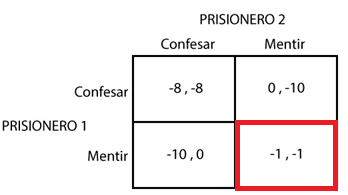
-La cooperación no surge fácilmente de la inteligencia (teoría de juegos y dilema del prisionero lo demuestran).
-La cultura no es solo “más gente trabajando junta”; es evolución cultural acumulativa.
Así que Heath prefiere la secuencia que propone Henrich (siguiendo a Boyd y Richerson): Cultura → Cooperación → Lenguaje → Inteligencia. La historia sería más o menos lo siguiente. El ajuste inicial que lo arranca todo fue una mayor capacidad de imitación fiel: los humanos copian comportamientos complejos con gran precisión, incluso sin entenderlos del todo, a diferencia de los chimpancés. Esta capacidad permitió el surgimiento de la evolución cultural acumulativa, es decir, que las herramientas, técnicas y conocimientos mejoren y se transmitan de generación en generación. La imitación conformista (“haz lo que hace la mayoría”) y la tendencia a imitar a los más exitosos aumentaron la homogeneidad cultural dentro de los grupos, lo que potenció la selección entre grupos: aquellos más cooperativos culturalmente dominaron a los demás, favoreciendo el surgimiento de normas prosociales. Esto, a su vez, desencadenó un proceso de auto-domesticación, en el que los individuos más agresivos eran marginados reproductivamente, haciendo a los humanos más prosociales por naturaleza. Con mayor cooperación, el lenguaje se volvió útil y creíble. Finalmente, la inteligencia (incluido el cerebro grande) fue impulsada por la explosión cultural: valía la pena invertir en mejor memoria y cognición porque permitía absorber y aprovechar una cultura cada vez más compleja.
En resumen, el artículo es una defensa clara de la co-evolución gen-cultura.