🥃El último balance contable publicado por Dominio De la Espriella, empresa que se encarga de la producción y comercialización de la marca de licores de @ABDELAESPRIELLA, revela que ese negocio sigue dando pérdidas y cerró operación en Estados Unidos.
https://t.co/iXgSt6vn5M
Se hizo una convocatoria pública para que todos los trombonistas de Nueva York llevaran su instrumento y despidieran a Willie Colón hoy, a la salida de su féretro de la Catedral de San Patricio, donde se celebró una misa en su honor. Mira el resultado:
Conferences are pricey, so not everyone can attend.
@ConfCompSys will offer an #OpenArms grant for researchers working on low- & middle-income countries, covering registration, travel, and extras.
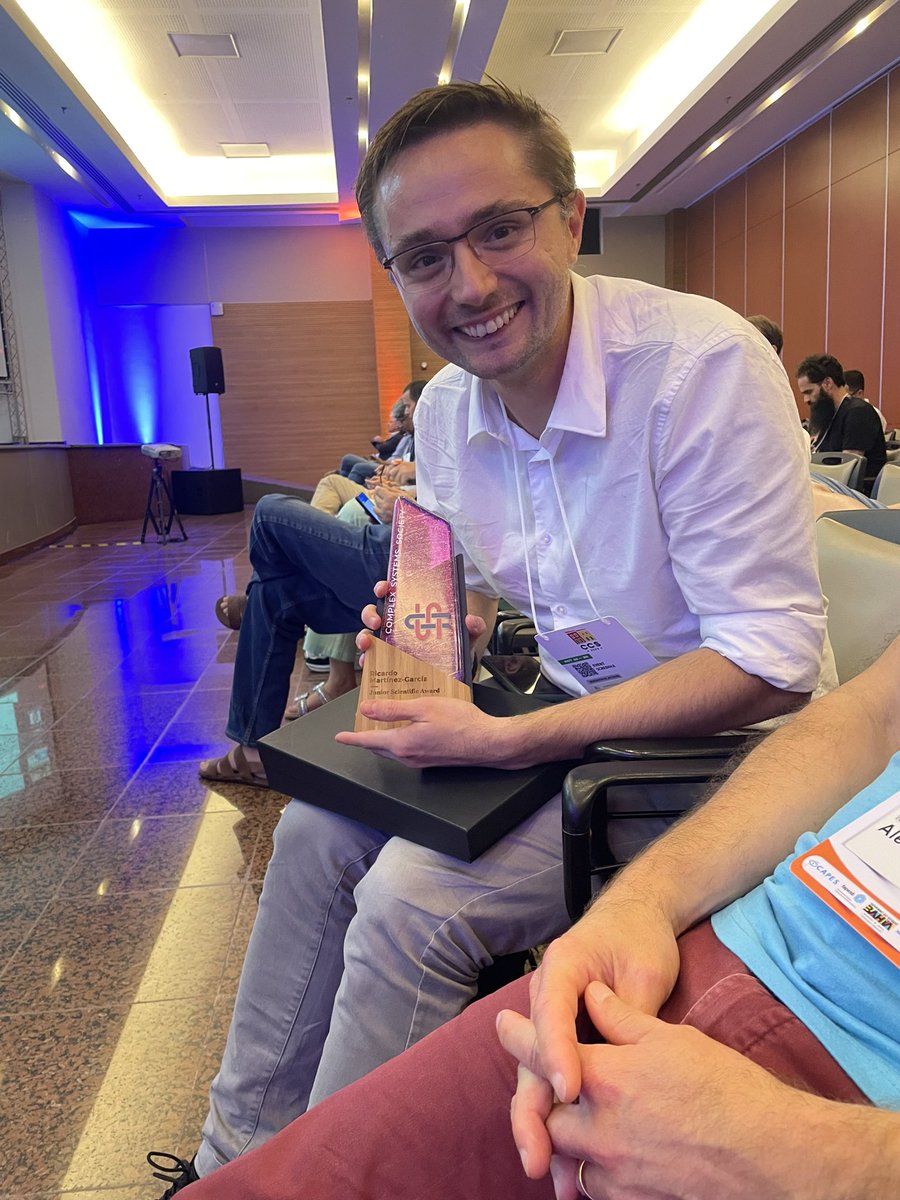
I am happy to be part of this community!
Details:
https://t.co/2m99i12Hg8
A really dangerous situation. Too many submissions. Too many generated papers. Little responsibility.
1. In 2026, more than 24,000 submissions were made to the International Conference on Machine Learning (ICML). It’s TWO times more than in 2025. To fight it, the organizers now require researchers to pay $100 for every subsequent paper.
2. LLM adoption has increased researcher productivity by 90% (there’s a recent paper in Science).
3. The number of papers is becoming far too high. Submissions to arXiv have risen by 50% since 2022.
4. There are simply not enough reviewers. Plus, many scientists no longer want to invest precious time in it for free.
5. We can’t easily identify AI-made papers from the genuine ones.
__
Important words from Paul Ginsparg, a co-founder of arXiv:
“AI slop frequently can’t be discriminated just by looking at abstract, or even by just skimming full text. This makes it an “existential threat” to the system.”
Basically, we’re getting closer to the tipping point.
📍 Many professors blame the AI.
But the problem is likely elsewhere:
1. Without a sufficient number of papers, many PIs can’t get funded. They have to prove their credibility to reviewers. Their proposals have to rely on prior publications. In many countries, there are some informal (or even formal) expectations for how many papers a group with a certain size has to publish to survive (funding-wise).
2. Our students / postdocs need papers if they want to be hired in faculty roles. Yes, some departments hire people with few publications. But the majority still want to ensure their faculty can get funded. If funding is partly a function of papers, this is used in decision-making.
3. The number of papers is important if you want to get high-level awards. Many of them are not given because you published one paper (even if it’s great). They are given because you made a meaningful CONTRIBUTION to the field. How do you make it? Publish more papers.
4. Tenure promotions in many places take the number of your papers into account (often indirectly). Your tenure may get delayed if you don’t publish enough. Not everywhere, but for many mid- to low-ranked universities this story is more or less the same.
+ There are many more to mention.
📍My opinion:
Much of this is rooted in how funding is distributed.
There is a strong correlation between the requirements at a university and the funding acquisition criteria.
If funding were based ONLY on the quality of published papers, universities would hire people for the quality of their science. If funding agencies strongly discouraged publishing too many papers, universities wouldn’t expect numbers from faculty during promotions. And some supervisors wouldn’t pressure students and postdocs to publish unfinished studies and low-quality data.
Yes, we need good detectors of fake papers.
But we also need the right policies and better funding allocation criteria.
Excited to share my new @biorxivpreprint with @NeuroFishh and T Euler.
If you want to know more about cones and behaviour 🐟...
👇🏻
https://t.co/LS8laB926Q
I am looking for a PhD student to join our work at @CASUSscience and work on ecological pattern formation. The project is not tied to a specific system, and options range from microbes to vegetation in water-limited ecosystems. Starting date is Feb 2025 and app. deadline Nov 22.
Check out our manuscript on luminance gain, where we computationally explored the strategies to process natural scenes, delved into the single neuron types of the visual circuitry and even the biophysical mechanisms within them: https://t.co/mNP2jVKdur
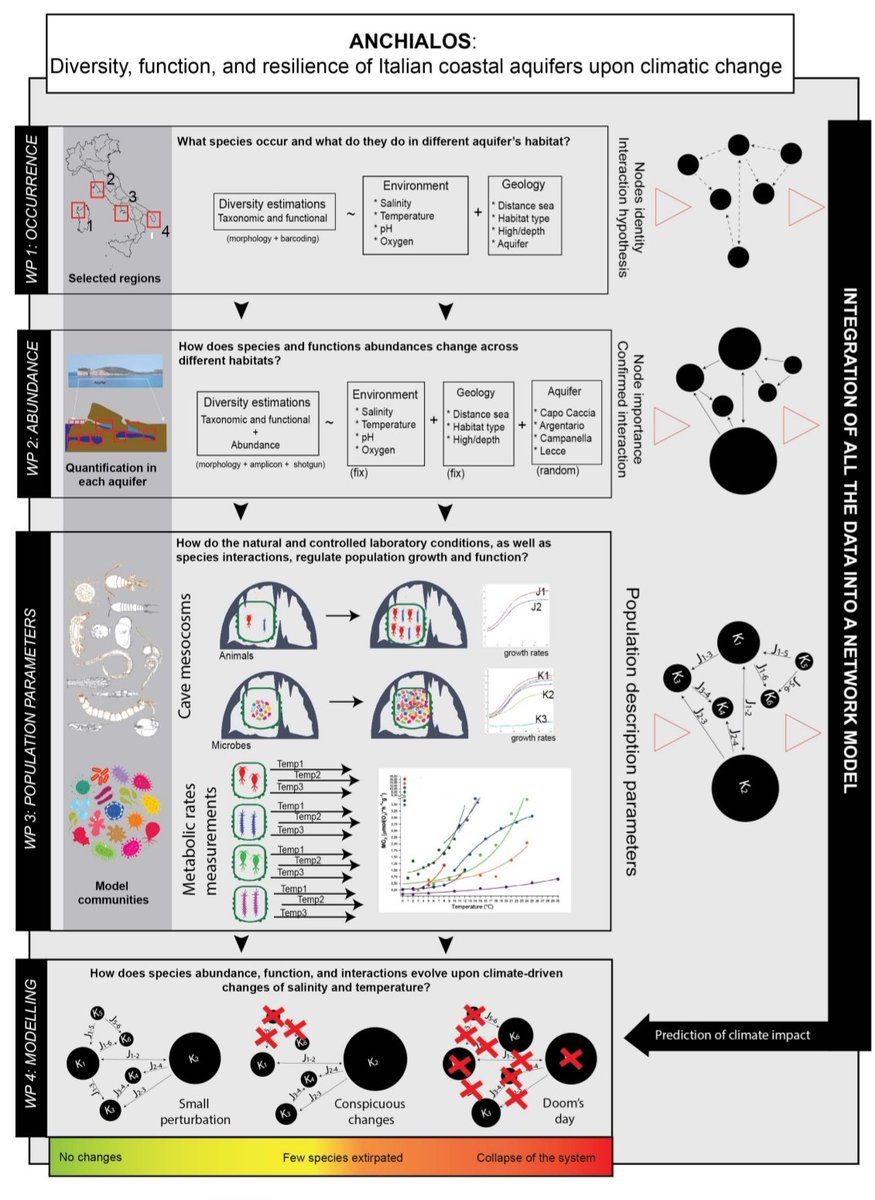
Interested in theoretical ecology, (meiofauna) biodiversity, field experiments, and coastal aquifer's functioning? Just opened a 1.5 years #prin postdoc position at #cnr@MEG_Verbania contact me for further information
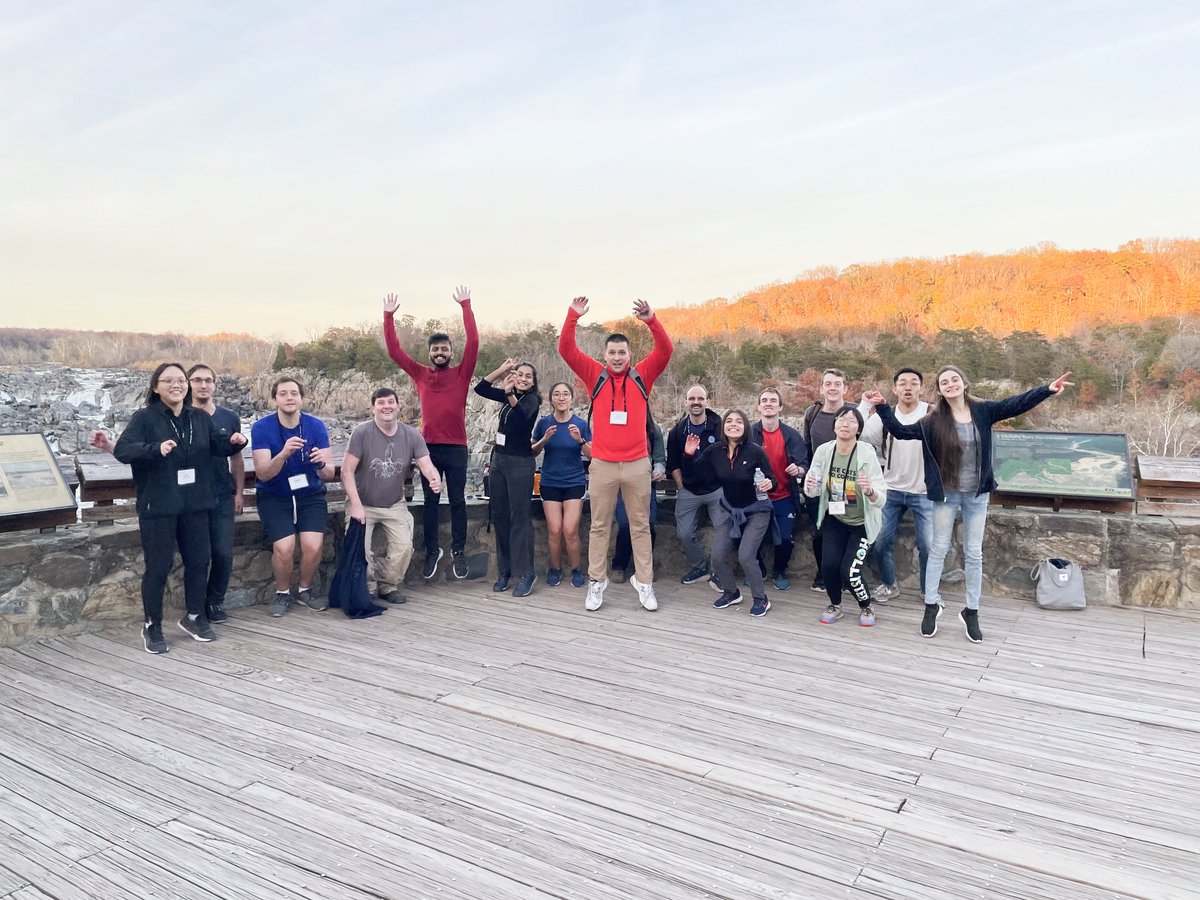
Attended the Junior Scientist Workshop on Theoretical Neuroscience and had a fantastic time!
The captured moment of the group's stylish jump (attempt) says it all :D
@HHMIJanelia@janeliaconf@cnl_mbu_iisc :)
Ultimas semanas para aplicar ao mini-curso sobre “lattice models” e aplicações em biologia e ecologia que @LuisaFRamirez4 e eu estamos organizando no @ictpSA. Inscrições até 06/10 https://t.co/WML4l2HeLC
You thought that visual systems are highly homogeneous structures? We thought so, too, before exploring connectivity across the fly optic lobes in a large group effort, using the Flywire connectome.
@FlyWireNews
Check out our recent preprint here: https://t.co/QDWRyg4pwm
#MedioAmbiente La información de 1.616 especies de peces de agua dulce y 2.181 marinas se podrá conocer en el primer Catálogo de Peces de Colombia, un esfuerzo que desde 2017 adelanta el Instituto de Ciencias Naturales (@ICNUNAL) ➡️ https://t.co/OdddIaX2zX Vía @PrensaUNAL
I have an opening for a Theoretical Biophysics PhD position :) The position has a focus on understanding virus gene regulation and packaging, w/ experimental collaborations. But it's a theoretical position and so there is flexibility.
I was told during the call that I was being recorded and, I would like to request you to check my case. First, because you provided useless support and no solutions. Second, because I had to stay on the phone while one of your employees was repeatedly trying to humiliate me.
@AppleSupport@Apple Today I had an awful experience with your costumer service due to an unacceptable lack of respect and education from the person that, at that moment, was representing your company.
I have been an Apple costumer for several years now, mostly because of the quality of your products. However, I am upset by this interaction and by the fact that one of your certified technicians literally broke my laptop and you are now asking me to pay to get it fixed.