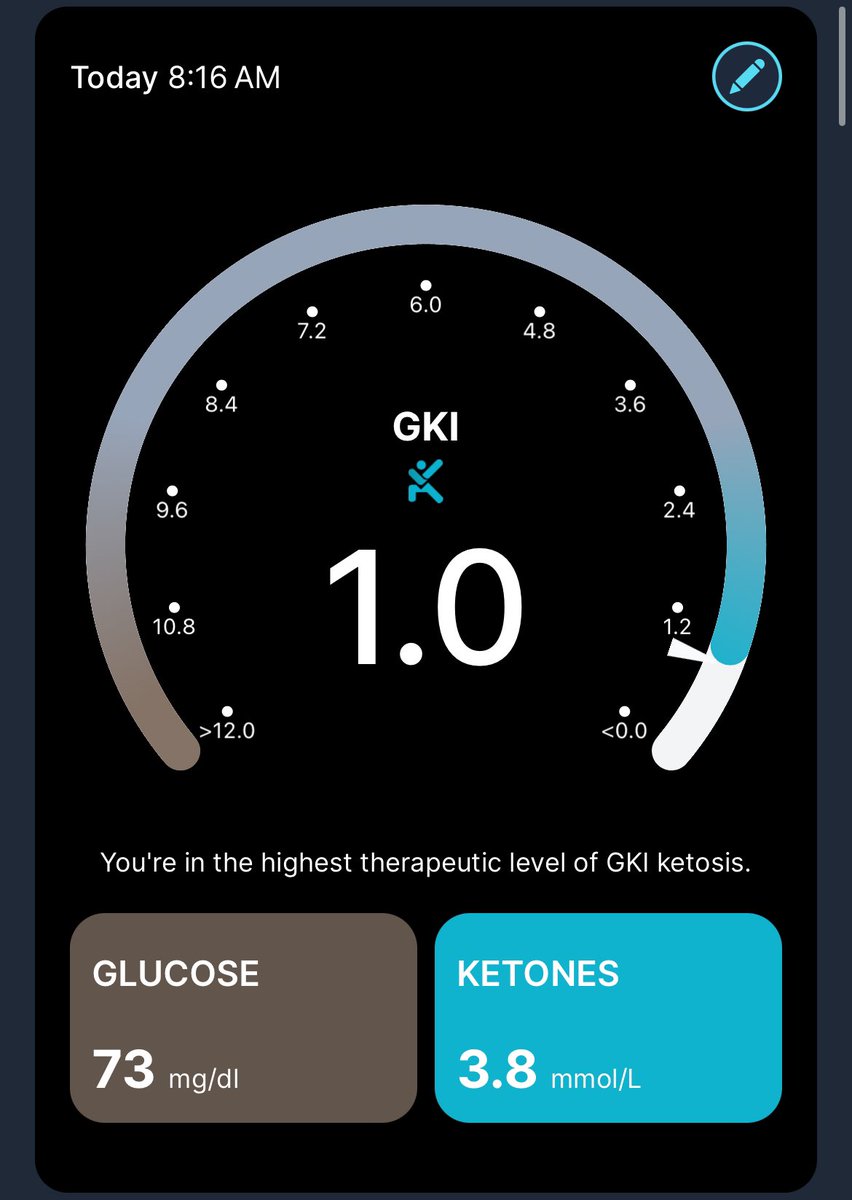
I started testing my blood sugar with a blood ginger prick at least once a day about 4 months ago. Before I started testing, I had no quick feedback mechanism to tell me how my food was affecting my blood glucose levels.
Thanks for reading!
If you learned something and want more on taking control of your health, follow me @chrisboettcher9.
Comment below and RT if you found value in this thread so others can see it as well. https://t.co/vPVOksIV1v
Just a friendly reminder, your body doesn’t need to eat carbs or sugar. All can be made from protein through gluconeogenesis. We all need to eat fat and protein.
@AmDiabetesAssn has some explaining to do…
After 2.6M views, the @AmDiabetesAssn defends itself, claiming carbs are essential. Incorrect. A v. small amount is needed for brain/eye function, but this glucose can be made from protein via gluconeogenesis. The human requirement for carb consumption is zero.
ADA, your own 2019 consensus report stated that carb reduction had the "most evidence" for controlling blood sugar-->key for combatting diabetes.
You know the science. Please act on it. https://t.co/YM3M3Rzn9S
After a week of eating at least 200 g of saturated fat (tallow) everyday, I made it finally to the highest therapeutic level of ketosis
Previously, when I was eating what I thought was a high fat keto diet, I couldn’t even get into ketosis.
The secret? more fat, less protein.
I leaned today that hyperglycemia (high blood sugar levels) can cause poor circulation and by getting blood sugar levels in check you can increase blood circulation. It’s fascinating stuff.
Interesting article. Insulin resistance starts when blood sugar levels are too high for too long and can often lead to type 2 diabetes. Many doctors now think Alzheimer’s is insulin resistance in the brain. https://t.co/4K3w2qYrCu
Cholesterol is vitally important for nerves, brain, the immune system, cell membranes, vitamin D, and all steroid hormones. It’s inconceivable that blocking its synthesis would be anything other than harmful.
The “diet-cholesterol-heart” hypothesis is utter nonsense. Saturated fats are healthy, veg seed oils are toxic. Medicine has been corrupted by Big Pharma and Big Food.
Run away!!
As much as they want you to believe that weight control is a simple math formula of CICO (calorie in - calorie out), there is complete disregard to all the hormonal factors that affect CI and CO.
Several hormones are intricately involved in the regulation of metabolism and have significant effects on body weight. These hormones influence various aspects of metabolic processes, including appetite, energy expenditure, fat storage, and glucose regulation. Key hormones (there are more) that impact metabolism and body weight include:
1. Insulin: Produced by the pancreas, insulin regulates glucose levels in the blood by facilitating the uptake of glucose into cells for use as energy or storage as fat. High levels of insulin can cause increased fat storage and can lead to weight gain, especially if insulin sensitivity is reduced, as seen in type 2 diabetes and obesity.
2. Glucagon: Also produced by the pancreas, glucagon works in opposition to insulin by stimulating the liver to release stored glucose into the bloodstream when blood glucose levels are low, promoting energy utilization and fat breakdown.
3. Leptin: Secreted by fat cells, leptin is involved in regulating energy balance by inhibiting hunger, which in turn reduces food intake and promotes weight loss. Leptin resistance, where the body does not respond properly to leptin signals, is a common feature in obesity.
4. Ghrelin: Often called the "hunger hormone," ghrelin is produced in the stomach and stimulates appetite, leading to increased food intake. Levels of ghrelin increase before meals and decrease after eating.
5. Cortisol: Produced by the adrenal glands, cortisol is known as the "stress hormone." It has a complex role in metabolism, where chronic high levels can lead to increased appetite, cravings for sugar or fatty foods, and accumulation of abdominal fat.
6. Thyroid Hormones: These hormones are crucial for regulating metabolism. High levels of thyroid hormones can lead to weight loss, while low levels can cause weight gain.
7. Adiponectin: Another hormone released by fat cells, adiponectin enhances the muscles' ability to utilize carbohydrates for energy, boosts metabolism, increases the rate at which the body breaks down fat, and curbs appetite. Low levels of adiponectin are associated with obesity and insulin resistance.
8. Peptide YY (PYY):Produced in the intestines in response to eating, PYY helps reduce appetite and limit food intake. Levels of PYY increase after eating and are lower in individuals who are obese.
9. Cholecystokinin (CCK): Secreted by cells in the gastrointestinal tract, CCK is released after eating and works by slowing down food movement through the digestive system, helping to promote feelings of fullness and reducing food intake.
These hormones collectively play a significant role in regulating metabolism, influencing how the body uses energy, and determining body weight. Dysregulation of these hormones can lead to metabolic disorders, including obesity, diabetes, and other related conditions.
Your food choices (source of calories, not the calories themselves) have the biggest effect on the balance of these hormones. So anyone who tells you that you just need to eat less and move more to lose weight lacks understanding of human physiology.
One thing I’ve learned eating mostly fatty meat the last 18 months is that your body absolutely needs much larger amounts of saturated animal fat than I ever knew for your hormones.
Testosterone is a fat-soluble hormone. So your low fat diet could be killing your T-levels.
American Heart Association Was Paid Off By Procter & Gamble To Say Heart Disease Was Caused By Saturated Fat, Not Seed Oils
Makes the most sense to me that we all think critically about every health recommendation and do what we think makes sense. https://t.co/9o9xmG10He