Deciding your life is over at age 38 is exactly how many people end up spending the last 40-60 years of their life doing absolutely nothing, miserable.
@chalmermagne I've never understood why the govt wants to take stakes in firms. They have a 20% stake in literally every company's profits through corporation tax!
Hinkley Point C might be delayed again.
Why? Because Natural England say the £700 million spent on fish protection at Britain's next nuclear power station is not enough.
We can't go on like this.
This kid is book smart but not street smart because street smarts in school entails understanding what answer will please the 92 IQ education major who is gonna grade the test.
If there was ever a case which demonstrates the need for greater transparency in the courts this is it. The key reason the details weren’t reported or reflected in coverage is because the sentencing remarks were not published for 2 WEEKS. It’s an issue the judiciary must address.
This is what drives people up the wall with Labour:
a) Every Minister, from Starmer down, mouths the platitude "our priority must be Epstein's victims".
b) Mandelson is forced to resign because of his friendship with Epstein
c) Darren Jones sends Mandelson a sycophantic, fawning message AFTER his relationship with Epstein is fully exposed.
d) Darren Jones literally goes on national television and lies about sending that message.
e) Darren Jones lies are finally exposed themselves.
f) Jones "allies" then start roaming around, briefing the media HE is the victim.
g) Jones carries on in post as if nothing has happened
UK tax has gone up significantly over the last 25 years
But the tax paid by the average UK worker has not
This apparent miracle was achieved by taxing “other people”: higher earners, capital, property, banks, etc
The strategy has run out of road
A 🧵 on what happens next.
The UK has twice as many taxes as it had in 1993.
Not twice as much tax. Twice as many taxes.
Yes, we pay a bit more tax, but tax has got a whole lot more complicated. Time to reverse that.
Thank you, Loz, this is a significant find.
The original oath required officers to serve without favour or affection, malice or ill will. That is the Peelian principle in legal form. Every person the same. No exceptions. No community sensitivity. No historic grievances. Without favour or affection. Full stop.
Blair's 2002 Police Reform Bill replaced it with upholding fundamental human rights and according equal respect to all people. On its face that sounds like equal treatment. George Osborne objected in the debate. Boris Johnson objected. They were told it was modernisation.
The critical word is respect not treatment. Without favour or affection is a standard of behaviour toward the law. It demands the officer applies the law equally regardless of who is in front of them. According equal respect to all people sounds similar but opened a very different door. Once respect for communities became embedded in the oath's framework progressive institutions used it to argue that equal respect requires awareness of historic grievances, cultural sensitivity and community specific policing. You cannot accord equal respect to a community that has historically been mistreated by police, the argument runs, without adjusting how you police them.
That adjustment is the Hampshire Race Action Plan. That adjustment is the NPCC guidance telling officers that racial equity does not mean being colour blind. That adjustment is the Metropolitan Police document declaring neutrality a myth. That adjustment is the Inclusion Matters course that made nearly twenty percent of Hampshire officers afraid to say the wrong thing.
Without favour or affection left no room for interpretation. According equal respect left a great deal of room. And the progressive institutional infrastructure spent twenty years filling it.
The officers who handcuffed Henry Nowak swore the Blair oath not the Peel oath. Blair changed the words. The words changed the culture. The culture changed the training. The training produced those officers.
US vs UK drinking culture is fascinating IMO. Main difference is that in the puritanical US, drinking is a thing drinkers do. In the UK, it's a thing everyone does.
Like, bars in the US are full of bar people. You see the same regulars there. They're all drinkers.
Pubs in the UK are full of regular people. You see your friends there. They're the third spaces Americans desire so much.
Most of the country is a net taker, and almost nobody in Westminster will say it out loud.
A single person stops being a net cost to the British state at around £43.5k.
A couple, £65k.
A family of four, £105k (likely higher).
The median household only earns £35k.
Everything I've written since the autumn back to back, is really all one argument — culminating in this: Britain spends more every year to stand still, on a base that can pay less every year, and borrows the gap from a market now billing by the week.
£9 trillion of housing wealth that is really forty years of cheap credit, repricing so quietly nobody feels poorer.
A migration bill of £40 billion a year, every year, to import labour for the jobs the machines take first.
A few thousand people who staff the state, the boardroom, the regulator AND the pension fund, and bill you three times over.
An AI dividend that lands in California while the redundancies land in Surrey.
A bond market that no longer gives you decades.
None of it new. A book from 1973 named it the fiscal crisis of the state: two bills no government can put down, keep the economy profitable and keep the people quiet, on revenue that was never going to cover both.
“Gradually, then suddenly.”
The whole thing, seventeen pieces joined up: https://t.co/6LhJ3HCXdg
If almost the whole HoC is united about something they are probably making a huge mistake. Even at the absolute nadir of British involvement in the Second World War, in mid-1941, the Commons were holding the government's feet to the fire. That's what it is for.
Recent algorithm changes on X may be unfairly hammering Brave users. And there's a larger issue here about bad interactions between robots and privacy measures.
@nikitabier@brave
My friend Jay Maynard, who some of you may know as Tron Guy, just got permabanned off X for "inauthentic behavior". His appeal was swiftly denied.
Jay is not a spammer, scammer or engagement farmer; he is, in fact, exactly the kind of good citizen X says it wants. Jay asked Gemini for analysis, and now thinks he knows what happened.
Brave, as a privacy measure, randomly changes the identity presented to sites in order to avoid tracking by the ad vampires. Gemini suggested that some code at X interpreted this as spammy behavior using multiple browsers. If so - and this does seem plausible - everybody trying to protect their privacy with Brave is at risk.
This is a general problem, not just an X glitch or a Brave issue. Social media sites are increasingly relying for security on forms of heuristic AI that are prone to unacceptably high false-positive rates.
More specifically, platforms are increasingly treating a user's refusal to be tracked, fingerprinted, and categorized as a hostile act. When a site makes it impossible to connect via a privacy-focused user agent without getting flagged as a malicious bot, it stops being "security" and effectively becomes a retaliatory lockout for protecting oneself.
Worse yet, such system architecture provides no circuit breaker - humans are only rarely and exceptionally asked review for errors. Jay's appeal denial came back so fast that it was obvious no meat-brain ever saw it. He has filed complaints within the Minnesota Attorney General and the Better Business Bureau, because what else can he do? The robots have locked him out.
Badly designed robots and zeal to squeeze human oversight out of the system forces regular citizens to rely on state law enforcement or consumer protection bureaus.
Allow me to gently suggest to the people running X that unless you want politicians poking their noses into your business and imposing constraints on you that you are not going to like, you need to fix your security and appeal processes so running to the law isn't necessary.
I know it's a bit of a rightwing cliche to want to #retvrn to Peel's nine principles for policing, but they are just very good. 3,5,7 and 9 seem to me of particular importance for the modern filth to read, mark, learn and inwardly digest. https://t.co/nl9Tdvy0VG
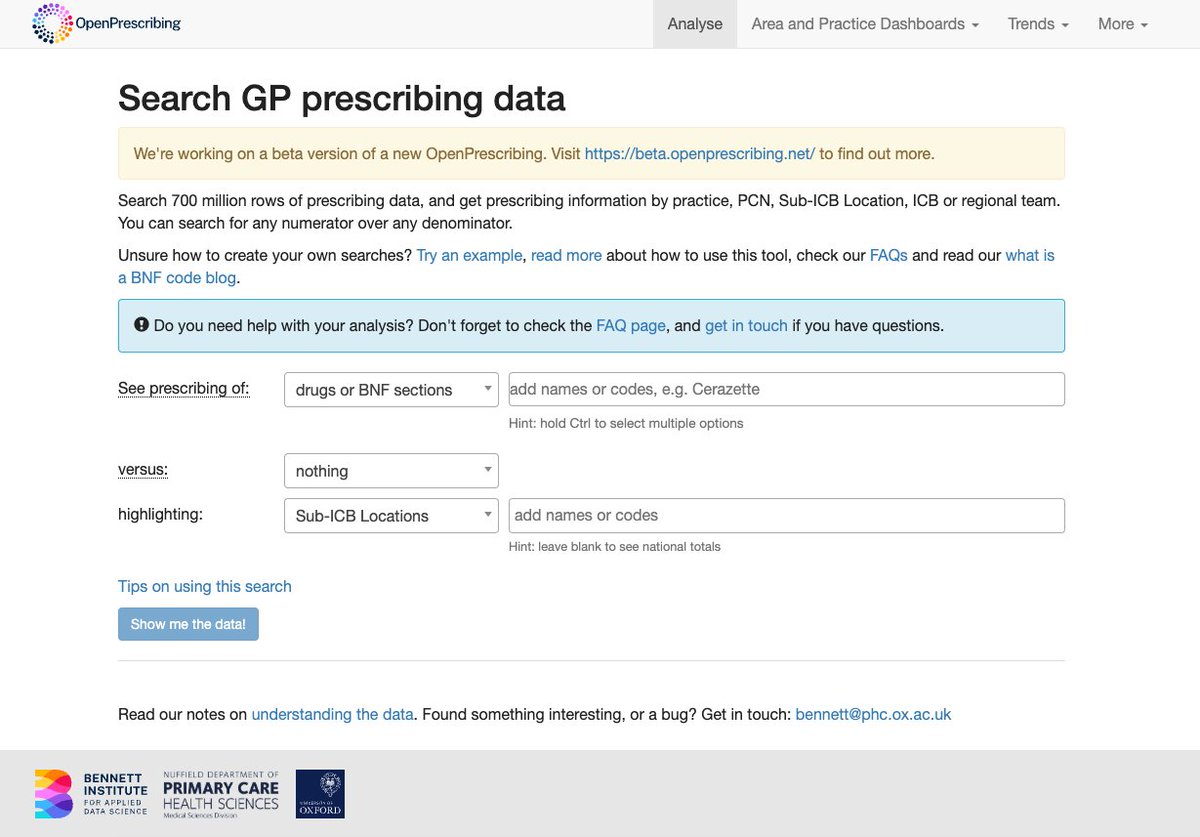
A team at Oxford built a search engine for every drug the NHS prescribes, and it has quietly saved the health service millions.
It's called OpenPrescribing.
The NHS publishes its full prescribing dataset every month. It's 700 million rows of raw numbers nobody could actually read. So Oxford built a tool that turns it into live charts in seconds.
You type a drug name. It shows you which practices over-prescribe it, which regions are slow to follow new guidelines, and where the money is being wasted.
→ Search any drug across any GP practice in England
→ Find safety and cost outliers instantly
→ 70+ ready-made quality measures
→ Updates monthly, automatically
→ Free, open source, MIT licensed
20,000 people use it every month. Doctors. Researchers. Journalists.
Public data that sat unreadable for years is now one search away.
https://t.co/U9KI0mUCAp
In an effort to respect the family of Henry Nowak, Keir Starmer has bravely hidden behind them, saying that the last thing they would want is for him to have to answer any questions about the two tier nature of policing in this country.