Oh look! Anthropic's entire "we are delaying Mythos" narrative was marketing hogwash.
Kudos to FT for confirming what was obvious. Anthropic simply doesn't have the compute.
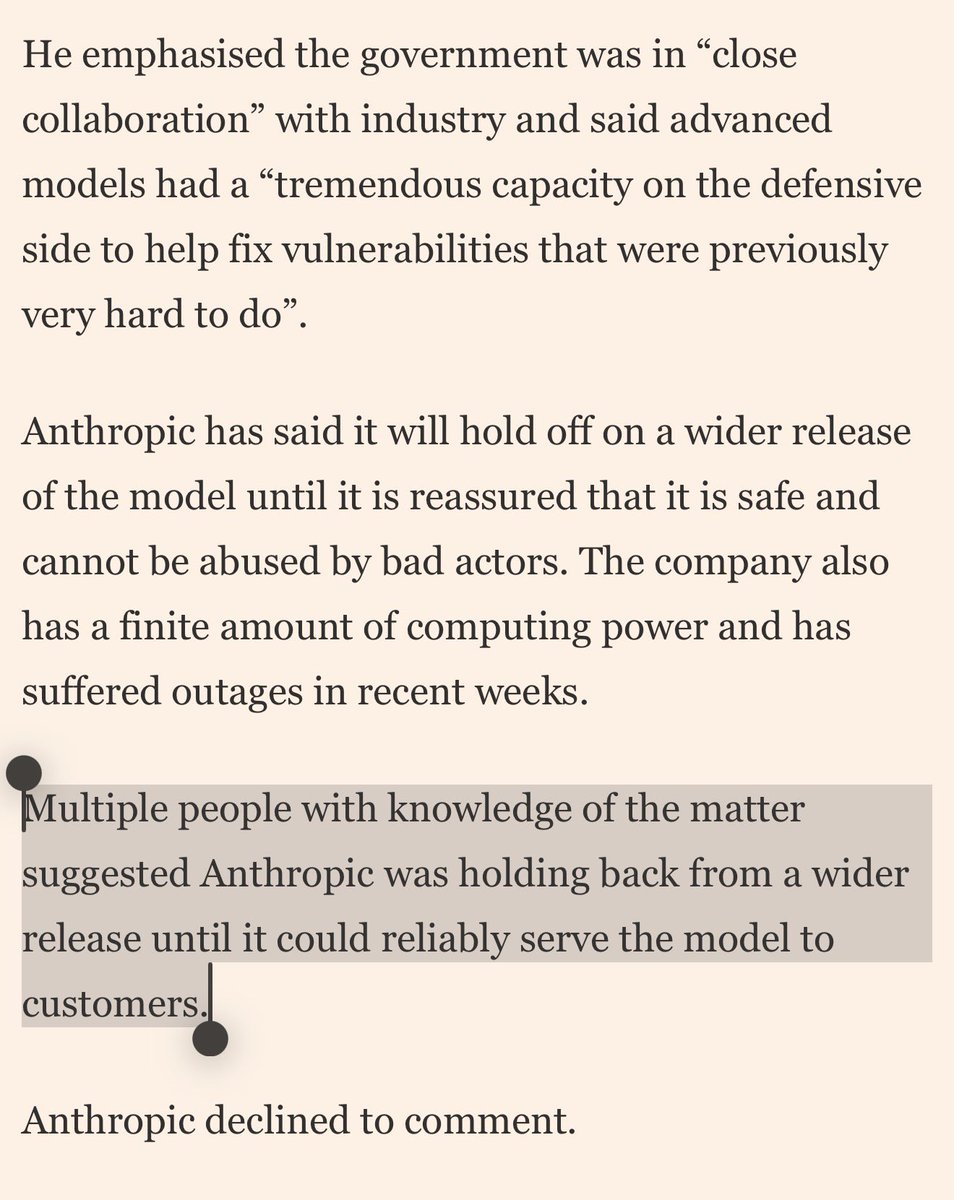
FT: "Multiple people with knowledge of the matter suggested Anthropic was holding back from a wider release until it could reliably serve the model to customers."
Thanks to a tip from my son (https://t.co/HmN91JPJzL) I finally have my Sports Standings Bot up and running. I'd appreciate a follow and an occasional RT.
I'm mentioned very briefly in this article, but even better this is a great writeup of a cool program. Talking to students energizes me every time.
https://t.co/jDmGVqEXhZ
And now for something completely different.
In lieu of writing up a longpost on X regarding my predictions for AI progress in 2026, I wrote a fairly short blog post instead. (This allowed me to easily link to the various sources I used, plus the formatting is slightly better.)
Link in the post below.
The core tension in IT is that apps & technology become cheaper to support over time, and so by the time you want to replace one of them, it's very hard to build a hard dollar ROI case in IT terms
Companies that hire consulting firms see large increases in labor productivity and also large increases of wages, with no decline in labor share or value added.
It seems like a lot of the more nihilist theories of why companies hire consultants are not true on average!
If you don't mind being wrong on the way to being right you'll learn a lot--and increase your effectiveness. But if you can't tolerate being wrong, you won't grow, you'll make yourself and everyone around you miserable, and your work environment will be marked by petty backbiting and malevolent barbs rather than by a healthy, honest search for truth.
You must not let your need to be right be more important than your need to find out what's true. Jeff Bezos described it well when he said, "You have to have a willingness to repeatedly fail. If you don't have a willingness to fail, you're going to have to be very careful not to invent. #principleoftheday
I think this is the only logical conclusion. What I never hear anyone talk about is figuring out how society functions when we're not allocating resources based on labor. That principle is at the core of human life in the 21st century.
No offense to all my friends in the enterprise software industry, but the smartest thing an IT leader can do is take the SaaS company's estimate of the data integration timeline and triple it.
#DayoftheBadger is here! Join the party to pay it forward and help make the School of Computer, Data & Information Sciences stronger today for the Badgers of tomorrow🎊
https://t.co/881ZAE8seK
#uwmadison#uwcdis#onwisconsin
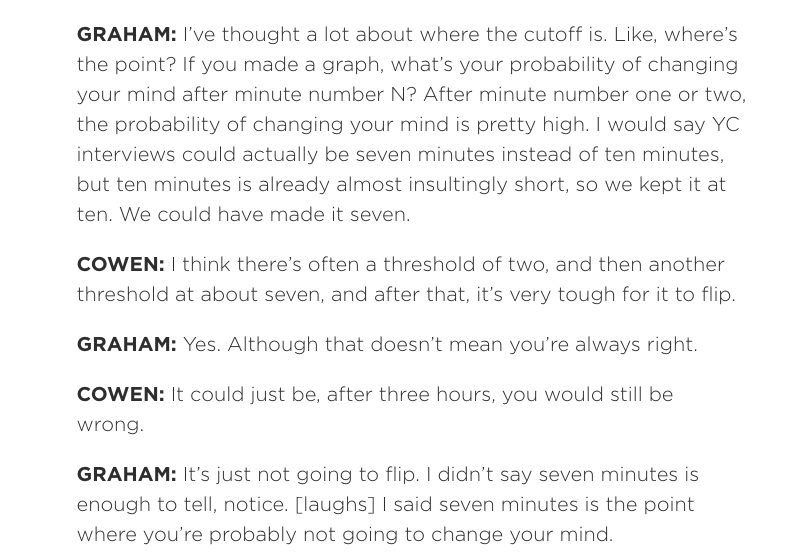
I've thought about this a lot over years of interviewing. At the end of the day, interviewing is always a gamble and it's really hard to be sure. So, how much time to spend?
Paul Graham on Y Combinator's 10-minute interview process and why the length makes sense: interviewer has likely made decision by the 7-minute mark and more time won't change the person's mind.
The time from "peak of inflated expectations" to "trough of disillusionment" may have been faster for generative AI than for any technology the world has ever seen.
The pace of change really *is* increasing
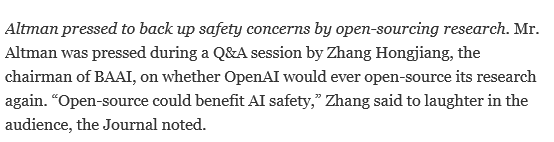
Not sure if this is what caused the laughter here, but the irony is that the *original* mission of OpenAI *was* to have all of this be open source.
https://t.co/z1TUIiE21D