HANDS OFF ERITREA! Our independence is here to stay! Respect our borders, respect our land, and respect our sovereignty. Eritrea’s freedom was hard-won and will never be surrendered.
#HandsOffEritrea#Eritrea#Sovereignty#RedSea 🇪🇷✊
መኸተ (Mekhäte) is more than struggle. It is the collective resolve to confront challenges, defend dignity, overcome adversity, and advance a shared purpose.
🇪🇷 Eritrea’s liberation spirit lives on when memory becomes responsibility, solidarity becomes action, and sacrifice becomes a commitment to the future.
🇪🇹 Ethiopian historical revisionism and irredentism continue to underestimate Eritrean resolve. Rather than learning from history and the failures of past regimes, those pursuing confrontation with Eritrea risk repeating its devastating costs—not least for Ethiopian lives and the Horn of Africa’s yearning for peace.
Respect Eritrea’s sovereignty. Choose peace over aggression.
#Eritrea #መኸተ #StandWithEritrea #EritreaPrevails #RespectEritreasSovereignty #UAEStopWarFinancing #UAEBloodOnYourHands
Debunking the myth: #Ethiopia did not lose access to the #RedSea simply because #Eritrea became independent in 1993. Ethiopia chose to use Djibouti ports instead.
In 1997, Ethiopia warned Assab authorities in writing that it would stop using the port over unfavorable business conditions. It then shifted trade towards Djibouti. It should be noted here that the accusation of "unfavorable business conditions" was tied to Eritrea delinking its fiscal and monetary policies from Ethiopia by issuing its own currency, the Eritrean Nakfa.
There is a fundamental difference between being landlocked, having access to maritime trade, and possessing sovereign ownership of a coastline. The history of Eritrea and Ethiopia illustrates why this distinction matters.
Access is not ownership. Choosing to stop using a port does not confer a right to own another country's coastline.
🇪🇷 Eritrean sovereignty is not negotiable.
Source: https://t.co/Rttr13hKHx
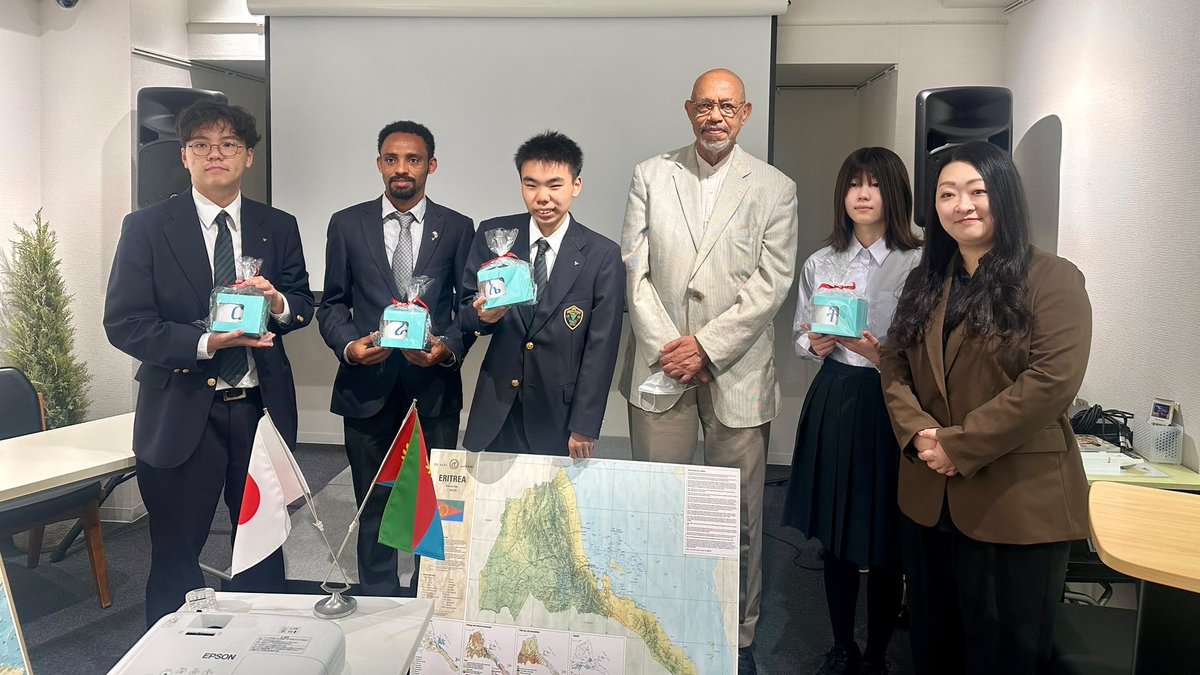
Just as a note of human history of cultural exchanges and in appreciation of the efforts being made by the young students, I happily shared with them a model to emulate for building a bridge of communication between people-to-people implemented by a young musician (soldier) from Eritrea, I.e. (Major) Ghirmay Hadgu, who served in the Korean War as a soldier (1951 - 1953.) He brought back home with him, i.e. to #Eritrea and #Ethiopia, the popular Japanese musical genre which is characterized by sentimental, melodramatic ballads that blend traditional Japanese music called Enka and harmoniously blended it with the local modern music of both countries in his life-long carrier through various cultural means.
Ghirmay built a very successful living, bridge between #Eritrea #Ethiopia #Japan through music.
Today, I was happy to attend and learn from the presentation made by the young students of SEISA International high school on a similar efforts of building a bridge for various cultural exchanges between Japan and Eritrea. Wish them all good luck and Ganbate! エチオピア エリトリア
@AbiyAhmedAli Red Sea Ambitions Will Shatter: 2018 promised peace. Since 2023 calls the Red Sea existential & puts Assab at the center of his politics. Somaliland deal, Sudan chaos same pattern. Assab is #Eritrea|n. Independence is not negotiable.
👇👉
https://t.co/AAArP6Jce2
2 May, 1889
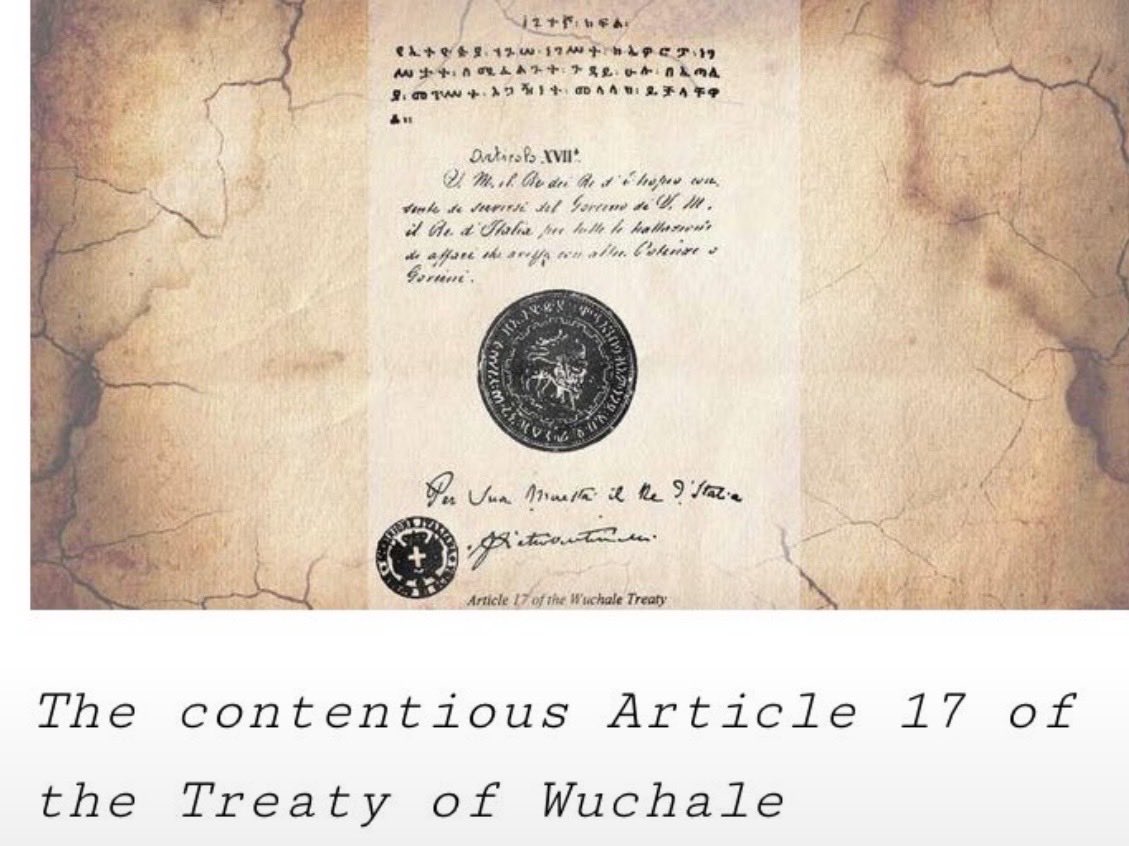
The Treaty of Wuchale, between Emperor Menelik II of #Ethiopia and Italy, deciding the territories of #Eritrea and Northern Ethiopia was signed
Treaty of Wuchale (or, Treaty of Ucciale; in Italian, Trattato di Uccialli) was a treaty signed by King Menelik II of Shewa, later the Emperor of Ethiopia with Count Pietro Antonelli of Italy in the town of Wuchale, Ethiopia, on 2 May 1889. The treaty ceded territories that had previously been a part of the empire, namely parts of the provinces of Bogos, Hamasien, Akkele Guzay, and Serae. This set forth the origins of the Italian colony of Eritrea and ending up a century later with modern state of Eritrea. In return, Italy promised financial assistance and military supplies that included 30,000 muskets and 28 cannons.
Disputes over Article 17 regarding the conduct of foreign affairs led to the First Italo–Ethiopian War culminating in the Battle of Adwa . The Italian version stated that Ethiopia was obliged to conduct all foreign affairs through Italian authorities, in effect making Ethiopia an Italian protectorate, while the Amharic version gave Ethiopia considerable autonomy, with the option of communicating with third powers through the Italians. The misunderstanding was due to the mistranslation of a verb, which formed a permissive clause in Amharic and a mandatory one in Italian. #ERITREA #Ethiopia #Histrorymatters
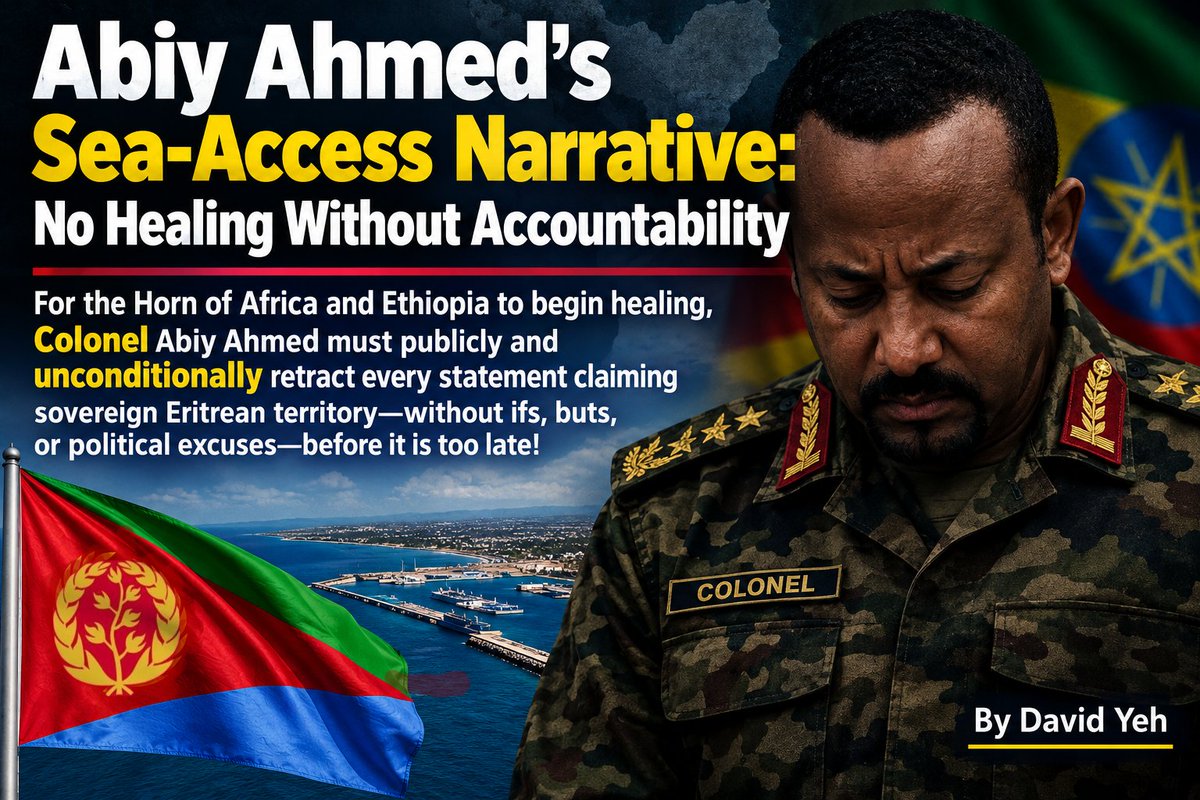
@AbiyAhmedAli must unconditionally retract all claims to sovereign #Eritrea|n territory.While #Ethiopia can negotiate commercial sea access, geography confers no right to a neighbor’s coastline;genuine peace demands retraction,respect for sovereignty.
👇👉
https://t.co/hN4b6VHtQa
Eritrea’s sovereignty, independence and territorial integrity is non-negotiable, inviolable, and sacrosanct.
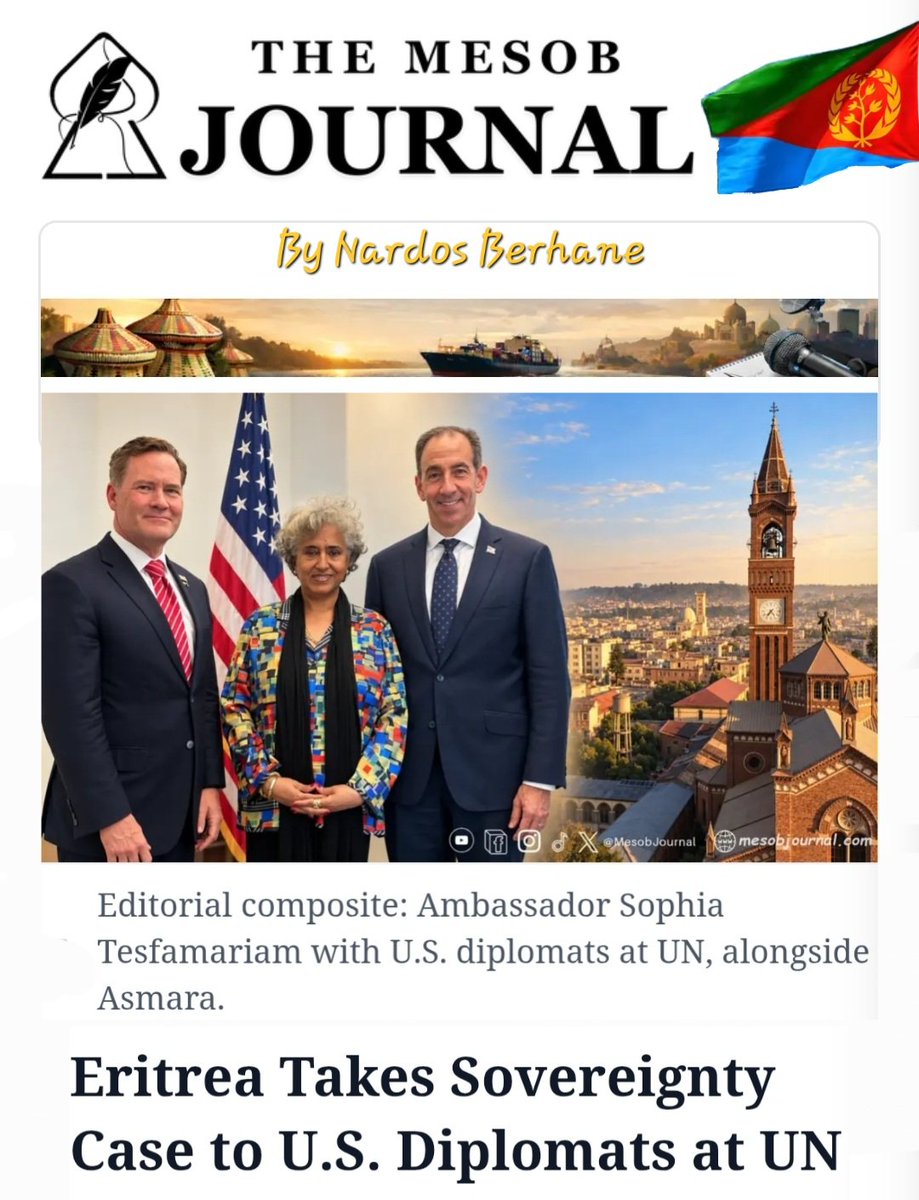
Eritrea Takes Sovereignty Case to U.S. Diplomats at UN https://t.co/sHzgzqwwLh #News#Eritrea#HornofAfrica#Ethiopia#USA#UN via @MesobJournal
Eritrea’s principled diplomacy continues to promote mutual respect, strengthen partnerships, and defend peace, stability, and sovereignty across the Horn of Africa and the Red Sea. 🇪🇷✊
#EritreaPrevails#Eritrea#RedSea#Sovereignty
Even Martin Plaut admits the facts: Eritrea is sovereign, and Assab is Eritrean! The 2002 border ruling is final and binding. Ethiopia’s landlocked status does not justify aggression or territorial claims. Eritrea is NOT a colony! 🇪🇷✊ #Eritrea#Assab#Sovereignty#RedSea
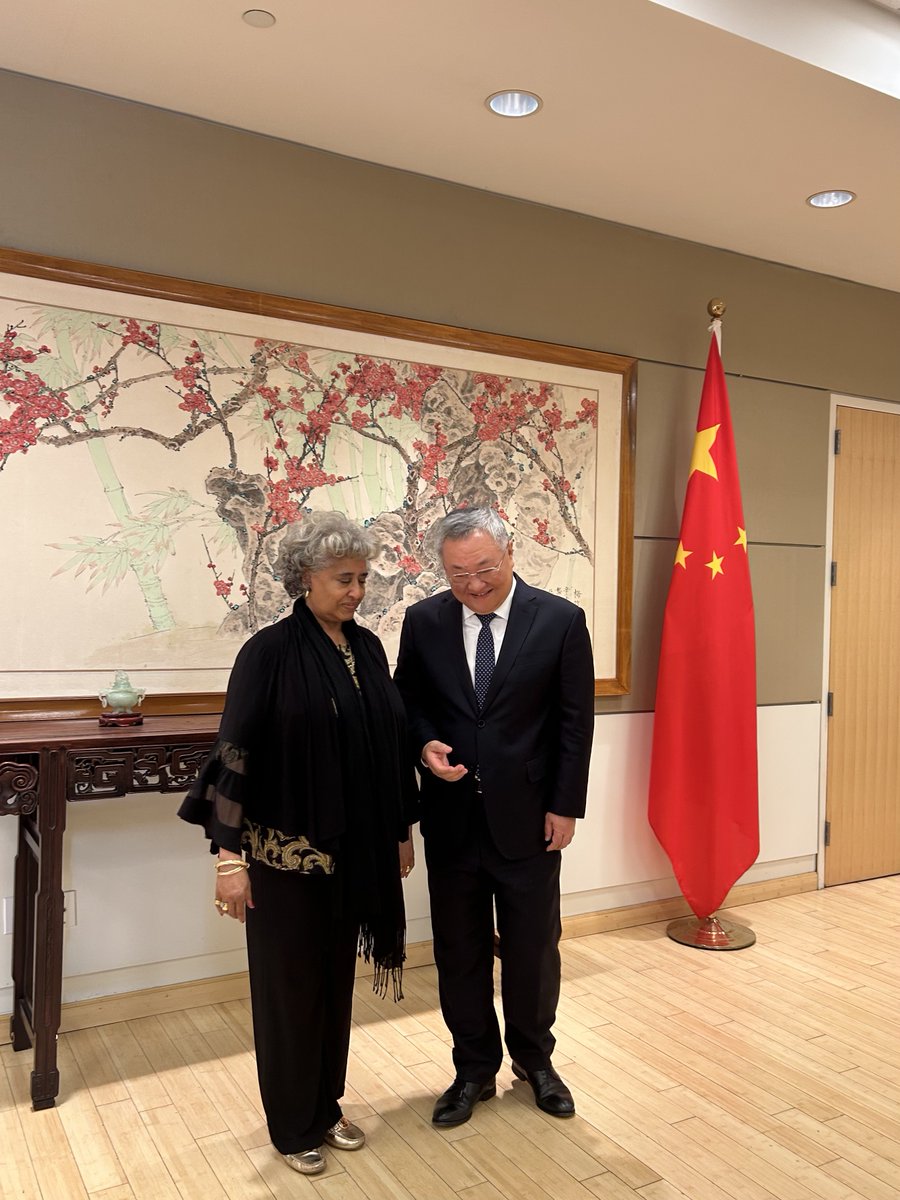
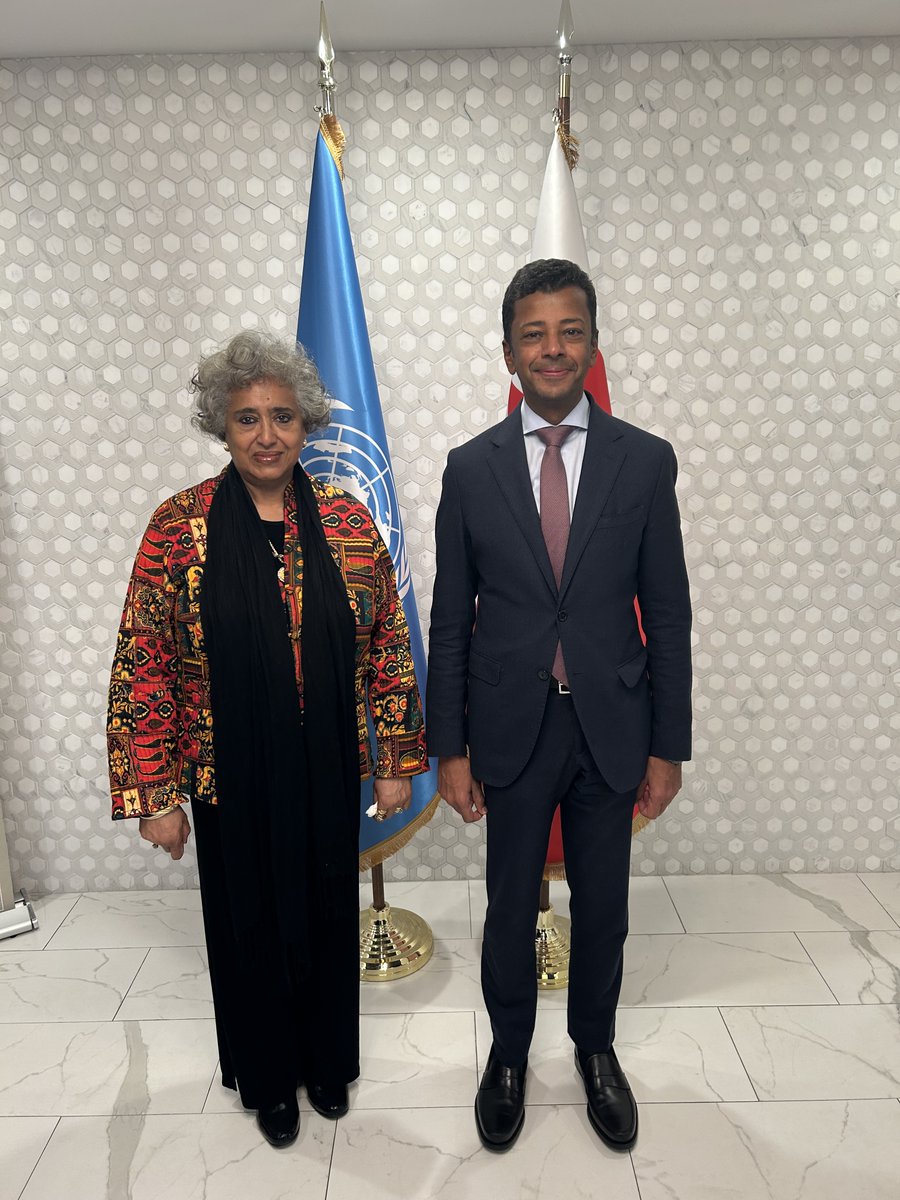
Held discussions with H.E. Mr. Fu Cong, Permanent Representative of the People’s Republic of #China to the @UN. In addition to UN80 processes, elections, we discussed recent developments in the #Horn of #Africa and the importance of sober, objective analysis grounded in facts and an appreciation of the region’s complex historical and political realities.
On #Eritrea–#Ethiopia relations, explained that the Government of Prime Minister Abiy Ahmed has pursued a three-year-long campaign targeting the State of #Eritrea, its Government and institutions. This has been accompanied by an increasingly aggressive campaign to claim and annex the #Eritrean port of #Assab, exploiting fabricated historical connections and disseminating misinformation and disinformation to inflame nationalist sentiment and galvanize public opinion in #Ethiopia.
Underscored that, despite persistent threats of force and explicit declarations of war by #Ethiopian leaders, #Eritrea has exercised maximum restraint and refused to be drawn into an escalation fuelled by provocative rhetoric and threats.
Further stressed the responsibility of an international community that has extended diplomatic, financial and political support to the #Ethiopian Government, often shielding it from meaningful scrutiny and accountability.
I also highlighted #Ethiopia’s decision to sever diplomatic relations with #Eritrea and expel #Eritrea|n diplomats, including those accredited to the @_AfricanUnion and the @UN Economic Commission for Africa (ECA).
Such support must not embolden the dangerous illusion that political objectives can be pursued through force, whether against neighbouring states or #Ethiopia|s own people. Such an approach is neither sustainable nor conducive to peace. It rewards brinkmanship, emboldens further provocations and weakens the deterrent effect of the @UN Charter's prohibition on the threat or use of force.
It also sends a deeply troubling message to other states: that compliance with international law is expected of some, while others may enjoy exceptional treatment because of their strategic value or political relationships...
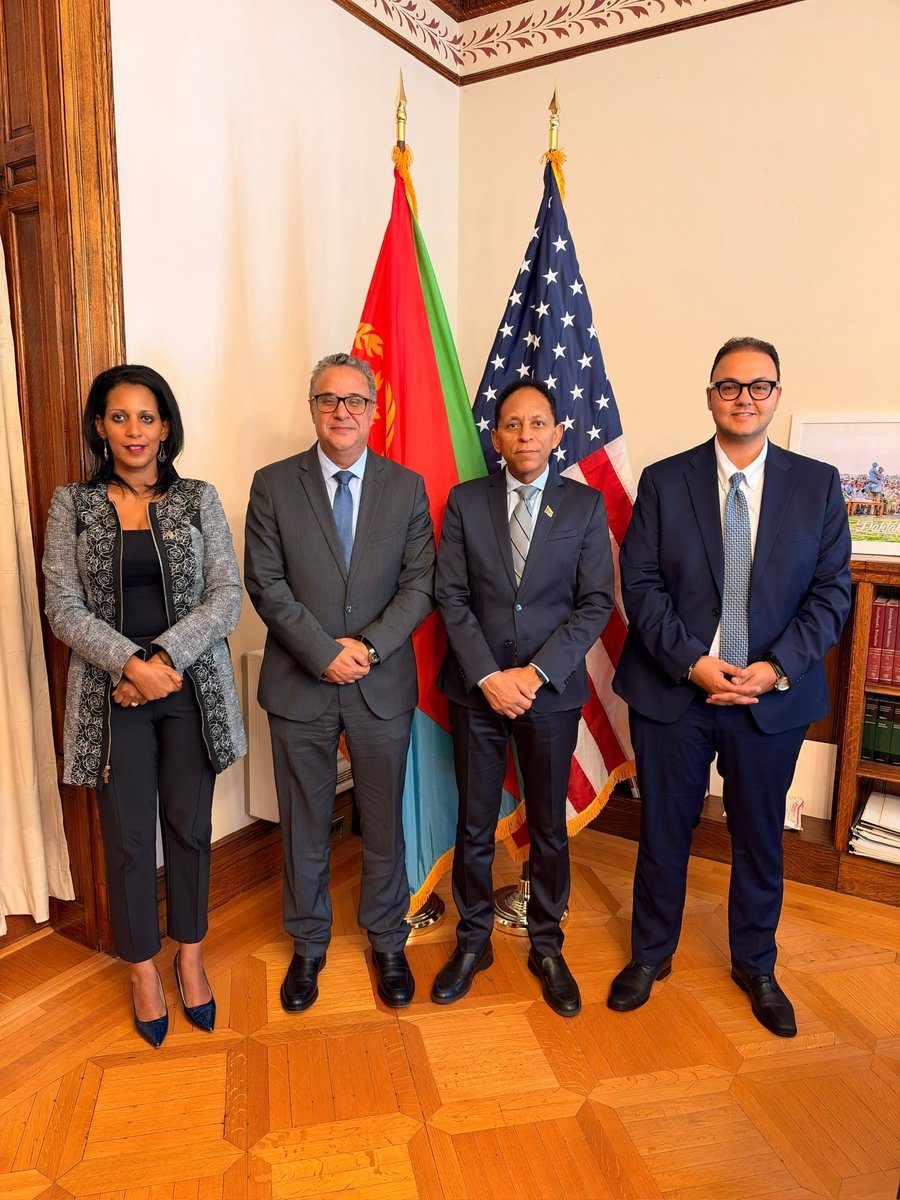
It was an honor to receive H.E. Mohamed Hamdy El-Molla, Ambassador of the Arab Republic of Egypt to the #UnitedStates.
We had a productive discussion on the excellent bilateral relations between #Eritrea and #Egypt, as well as developments across the #RedSea Basin and the #HornOfAfrica, with a focus on advancing bilateral and multilateral cooperation to achieve our shared goals.
We also agreed to strengthen our coordination and joint efforts to deepen understanding among relevant #US government officials, lawmakers, and other stakeholders, encouraging constructive engagement and a positive role in promoting #peace and #stability in our region.
#EritreaPrevails
Held discussions with H.E. Mr. Jamal Fares Alrowaiei, PR of Bahrain to the @UN, and briefed him on #Eritrea’s assessment of the situation in the #Horn of #Africa. Explained the #Ethiopia|n leadership’s three-year-long campaign over access to the Red Sea, including increasingly explicit statements by Prime Minister Abiy Ahmed and senior military commanders challenging #Eritrea’s sovereignty and territorial integrity and threatening the use of force.
Underscored that, in the face of persistent threats of force and explicit declarations of war by #Ethiopia|n leaders, #Eritrea has exercised maximum restraint and avoided being drawn into an escalation fuelled by provocative rhetoric and threats.
Emphasized the importance of ensuring that all member states are fully apprised of the underlying context, the implications of #Ethiopia’s posture for regional peace and security, and the imperative of unequivocal respect for #Eritrea’s sovereignty, territorial integrity, political independence and unity.
The meeting also provided an opportunity to exchange views on the situation in the Middle East, including its broader implications for regional peace and security and the importance of sustained diplomatic efforts to prevent further escalation. Agreed to remain engaged...
#Eritrea categorically dismisses claims its troops are operating inside #Ethiopia. EDF armies are entirely within their borders. Invasion reports are fabricated the photos prove location, not date or identity,& the BBC admitted it couldn’t verify.
👇👇👉
https://t.co/3hHUhu1MwX
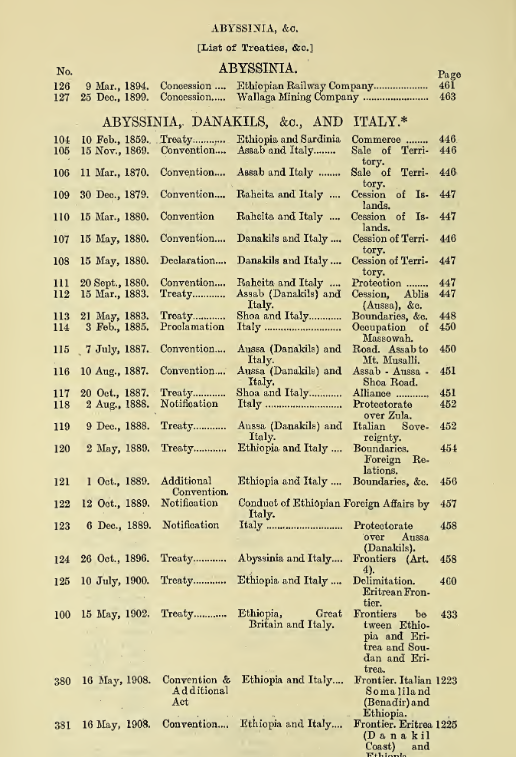
More than 40 treaties were signed by Great Britain, #France and #Italy with Abyssinian rulers and authorities, principally Menelik (King of Shoa), as well as various Sultans in the Danakil region. These treaties dealt in considerable detail with the boundaries of the territories that make up modern-day #Ethiopia and its neighbours, including #Eritrea, #Sudan, #SouthSudan, #Kenya, #Somalia/#Somaliland and #Djibouti.
I am attaching some relevant pages from a substantial historical work entitled "Map of #Africa by Treaty". This book compiles treaties concluded between #European powers and #African rulers from the mid-19th century to the beginning of the 20th century (the 1850s–1900s), documenting the agreements that shaped the borders of modern African states, including #Abyssina /#Ethiopia.
The level of detail in these treaties is remarkable. They specify geographical features such as rivers and railways and document territorial disputes, including those between Yohannes IV and the Khedive of #Egypt.
Interestingly, the 1900 treaty establishing the boundary between #Eritrea and #Ethiopia contains a particularly significant passage in Article II. It reads:
“His Majesty Menelek II, King of Kings of Ethiopia, in his own name, for himself and for his successors and Captain Federico Ciccodiacola, in the name of His majesty Humbert I, king of Italy, for himself and his successors, in mutual agreement, have written this convention, in the Italian and Amharic languages, both to be considered official save that in case of error in writing, Emperor Menelek will rely on the Amharic version, and in witness of their approval have sealed it with seals. [Seal of Emperor Menelek]”
These treaties demonstrate that the borders of #African territories were not casually drawn or settled overnight. They were negotiated over decades with different kings, chiefs, Sultans and other authorities. I can now better understand why African leaders, when establishing the Organisation of African Unity in 1963, agreed to respect the borders inherited at independence. Without that principle, the continent could have been trapped in an endless cycle of territorial claims, counterclaims and wars for generations.
This brings us to the question Eritreans have every right to ask: Why does Abiy Ahmed believe he can disregard one treaty and claim territory that never belonged to #Ethiopia, while continuing to recognise the other treaties signed by his predecessors?
Why should the Eritrea–Ethiopia border treaty be treated as an exception to the very principle of territorial integrity that underpins the borders of African states?
And why is Abiy pursuing a territorial expansionist agenda against Eritrea that echoes Haile Selassie's historical campaign against Eritrea's sovereignty?
International treaties cannot be respected selectively. You cannot invoke the treaties that serve your interests while dismissing the one that stands in the way of your territorial ambitions.
@_AfricanUnion@TheVillaSomalia@SudanTribune_EN@aftaburhan@khaledmahmoued1@umutcagrisariii@ymahmoudali@antonioguterres
On October 19, Abiy Ahmed warned Eritrea in a Tigrinya-language interview that ignoring Ethiopia’s demands would bring “very, very, very severe consequences.” At a time of rising regional tensions, such language raises serious concerns about the risk of another devastating war. Meanwhile, Ethiopian civilians continue to face deadly violence, including reported drone strikes in Amhara and Tigray. Innocent children and other civilians must not become casualties of political and military ambitions.Where are the African Union, United Nations Security Council, and international community? Ethiopians deserve peace. Eritreans deserve peace. The people of the Horn of Africa deserve peace. How many more lives must be lost before the world acts decisively? Silence and delayed diplomacy risk allowing this crisis to escalate. The African Union, United Nations Security Council, and international community must act immediately to prevent war, protect civilians, and ensure that threats of force do not go unanswered.
@StateDept@WhiteHouse@EUSR_Weber@antonioguterres@BBCWorld@CNN@AJEnglish@dwnews@Chinamission2un@franceonu@RussiaUN@UKUN_NewYork@USUN@BahrainMsnNY@ColombiaONU@RDCongoONU@Denmark_UN@GRUN_NY@LatviaUN_NY@LibMissionUN@PakistanUN_NY@panamaonuny@SomaliaatUN@_AfricanUnion@UN@UNSC_Reports
Ethiopia already has full commercial access to major Red Sea and Indian Ocean ports—including Djibouti, Assab, and Berbera. The issue isn't access; it's sovereignty. Demanding permanent ownership or military footholds over another sovereign nation's coast isn't trade negotiation, it's annexation.