An #original#melody is mathematically unique, like a #musical ID tag. Perfect use case for an #NFT as a personal ringtone or content theme.
Hit me up with questions, collabs, or commissions.
#NFTCommunity#crypTones 0005 "Crypto Funk"
👂🔊🎵🔥
remains weird that the left does not like public blockchains
the alternative is 'corporate databases' which. well, is not very lefty
public blockchains are public commons, the public goods of the digital age
🔥🔥🔥
@CryptoChronicX does it again!
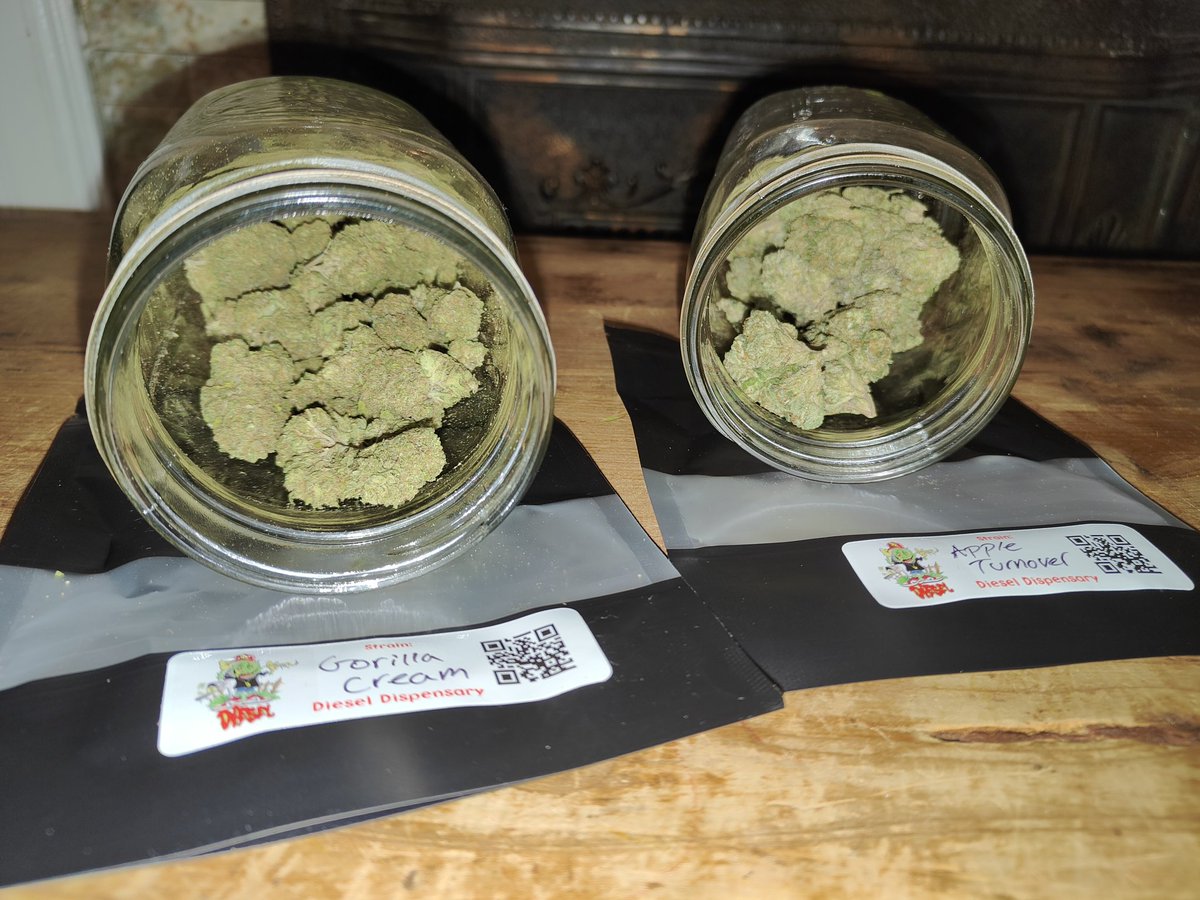
Great communication, easy to do business with, super fast shipping, and banger buds... What more could you want?
#CannabisCommunity
I waited a few days to post this out of respect, but I have a different take on the legacy of Charlie Munger.
His passing has inspired a lot of coverage on his partnership with Warren Buffet, much of it fawning, painting the duo not just as great investors, but also good people, and thus great capitalists. I push back on the latter claim, at least in the Emmersonian sense of capitalism, where meritocracy and fair play lead to “those who do good doing well.”
Munger and Buffet would have lost most of their wealth in 2008. Most people remember their role in the Great Financial Crisis as the rescuers of Goldman Sachs, making a timely investment that would net billions.
But Berkshire Hathaway went into that crisis heavily exposed to imperlied companies. Names like Wells Fargo and Amex made up 40% of its portfolio, and additional exposure came from its insurance holdings. The market knew all of this and responded by cutting the value of Berkshire’s own stock in half.
Things could have really spiraled for the duo—Buffet himself predicted the crash could have been worse than 1929—and that, as the saying goes, is how a capitalist cookie crumbles. In my definition of capitalism, those who live by the speculative sword can also die by it. Buffett and Munger made a lot of money on the way up but stood to lose badly on the way down.
But that’s not how things work, at least not for the kind of people who have the Treasury Secretary on speed dial.
The kinder interpretation of Buffett and Munger’s role in the subsequent intervention goes like this:
Concerned about the impact of the deepening crisis on everyone, they reached out to their contacts in government and convinced them to “do the right thing.” There’s even a famous anecdote of a late night phone call from Warren Buffet to Hank Paulson. The powers that be responded, and the economy was saved.
Here’s a different interpretation: a politically connected billionaire on the verge of losing his shirt called a government official—one who used to be the CEO of the company he now owned a chunk of—and convinced him to use taxpayer funds to prop up the stock market, particularly his stocks.
The facts of what happened aren’t in dispute, Secretary Paulson rallied other policymakers into investing hundreds of billions of dollars into companies like Goldman, Wells Fargo, and American Express. Small businesses and individuals who were also in distress got nothing.
History now views the bailouts as the correct course of action, but history is written by the winners. As if to remind everyone of this, Munger would later go on an epic rant, telling ordinary people that they should be grateful for the bailouts, but also against government handouts. Handouts are for the losers.
Campaigning directly for policymakers to intervene wasn’t Warren Buffett’s only contribution to the government response. He also went on CNBC after making the Goldman deal—but before congress decided to bail out the banks—and said “If I didn't think the government was going to act, I would not be doing anything this week. I might be trying to undo things this week.”
Buffett and Munger are two of the most studied investors in history. Book stores used to have entire sections dedicated to them. When people like that threaten to start “undoing things” politicians listen.
A skeptic might argue that everyone would have suffered if the invisible hand of capitalism had not been checked by Washington. I agree.
But there are different kinds of rescues, some meant for shareholders and executives, others for savers and homeowners. Two years after the crisis, unemployment still hovered around 10% and America suffered a record number of foreclosures. Wall Street enjoyed record revenues and paid out record compensation.
Part of my frustration over all of this is personal. I knew people who had fallen on hard times back then and were struggling to keep up with their mortgage payments. Exhausted by endless harassment from collection agents, they decided to call a government hotline for struggling homeowners. To their dismay, the agent who picked up was an employee of their bank. The reconciliation offer that she made barely moved the needle.
Their bank? Wells Fargo, the beloved Berkshire holding that got $25b in direct bailout money and another $25b in special tax break the year before. The same bank that would soon be caught laundering money for Mexican drug cartels, then be embroiled in a historic fake account scandal.
Buffett and Munger were among its biggest shareholders the entire time.
Fifteen years later, the legacy of that period lives on in our politics. Both the progressive Occupy Wall Street movement and the conservative Tea Party movement began as a response to the bailouts, and perhaps the only thing the populist right and woke left agree on is the fact that the economy is rigged. The two most distrusted institutions in America are Congress and banking.
Charlie Munger was a vocal critic of crypto, a different kind of financial system that people like me believe will someday replace the legacy financial system and all its baggage.
He paid Bitcoin a surprising amount of attention and used a lot of four-letter words to describe it—sometimes in the same interview where he boasted about his beloved Wells Fargo. The more generous interpretation of his disdain is that he didn’t understand crypto or its disruptive potential.
Here’s a different interpretation: he understood it all too well.
After seeing the screenshot, @CoinbaseSupport proceeds to tell me “this isn't your fault, but if you think it's our fault you need to contact a law officer"
Anyone know a good #crypto#lawyer
👀👀👀
lol
@coinbase app: "Only send #USDC and Bridged USDC on #Arbitrum "
...tx confirmed, account NOT credited...
@CoinbaseSupport : "We do not support Bridged USDC, your funds are lost"
what a joke
It's been just over 30 days since staking went live on @wolf_ventures, and I'm pleased to report that over $10,000 in rewards from treasury yield have been distributed to holders so far. The art for the NFT matures each month, which allows positions to earn greater rewards. I have to say, this is the cleanest and easiest staking process I've ever used.
$WV is a more mature project than most on $FTM, with a treasury 2x the MC, and a continued focus on innovation and development. Despite these impressive credentials, it seems to be a project that's often overlooked. While I'm happy with the community and holders we have now, I can't help but feel compelled to invite more folks to find a home with $WV. It's an easy hold that I keep compounding my $USDC rewards into more $WV, and I think others could benefit from this approach too. I'll keep promoting it as best I can!