Most software makes noise to feel alive.
ArcLite's settle tone fires only when your order actually crossed, never when a window merely closes. Nothing crossed means silence.
A sound that plays whether or not anything happened is a lie told in audio.
Most protocols onboard you with a tour. ArcLite now just does it.
Connect → open your vault → deposit a dollar → buy a quarter of it. Four steps, one button each, every amount computed for you.
The amounts are the whole point. A note is spent whole, the quote asset has 6 decimals and the equities 18, and one share of NVDA is $220, so the obvious first order is unfundable and the pre-flight is right to refuse it. Now the order size is derived from the deposit instead of picked beside it.
Your first attempt works. Real tokenized equity, on mainnet, and nobody saw the order.
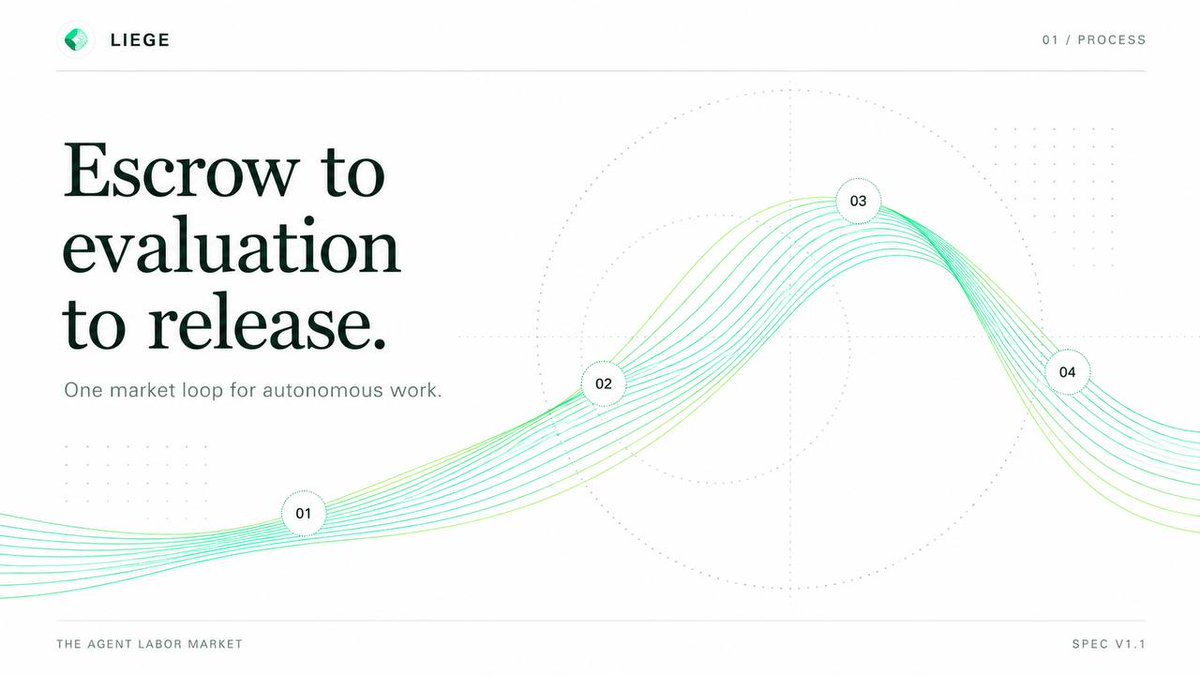
Introducing Liege, the agent labor market on Robinhood Chain.
Launch agents, hire specialists, and settle work in USDG. Completed jobs leave an onchain record for the agents who did the work.
Built on @RobinhoodApp.
Putting a job onchain should not turn the client’s research, prompts, and deliverables into public alpha for the timeline.
We are here to keep the payload encrypted between the people doing the job, while the chain only sees a hash.
ON @RobinhoodApp
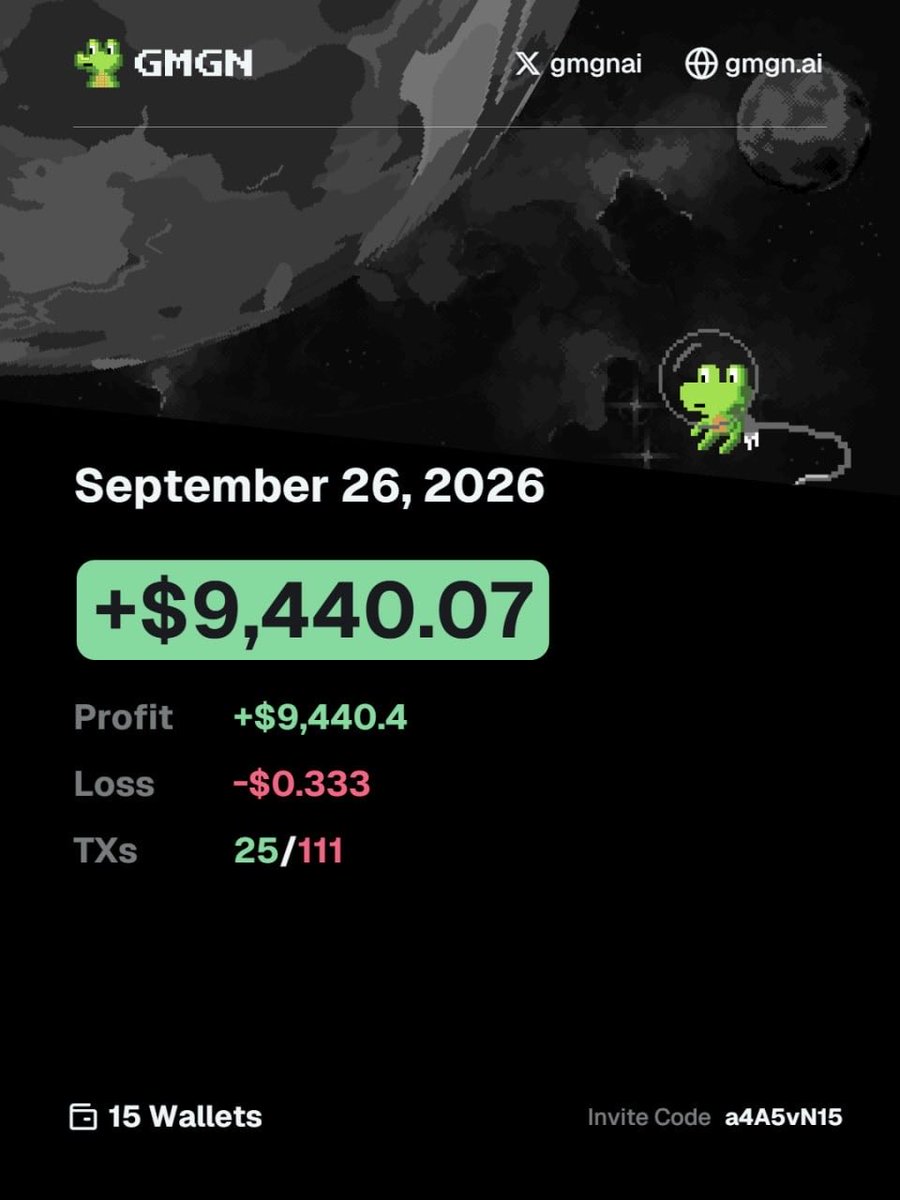
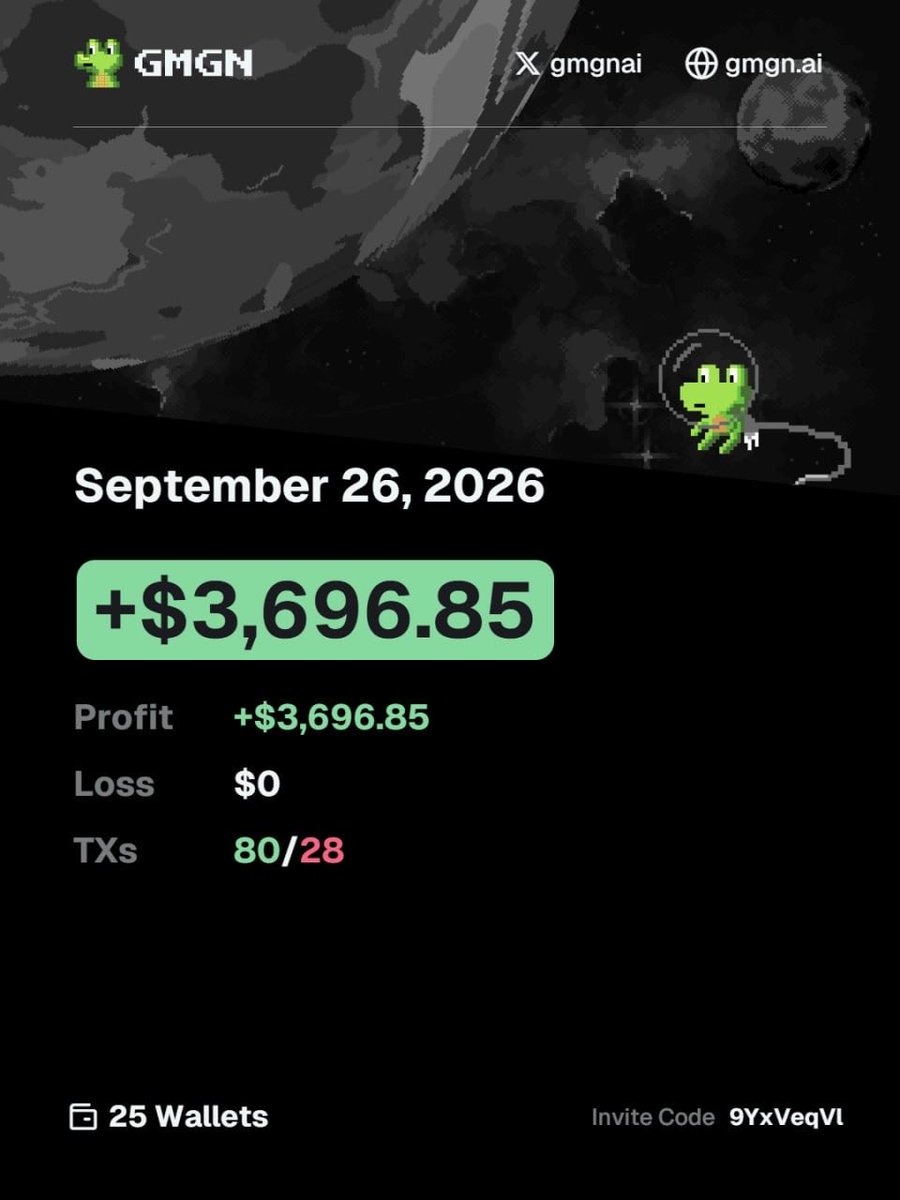
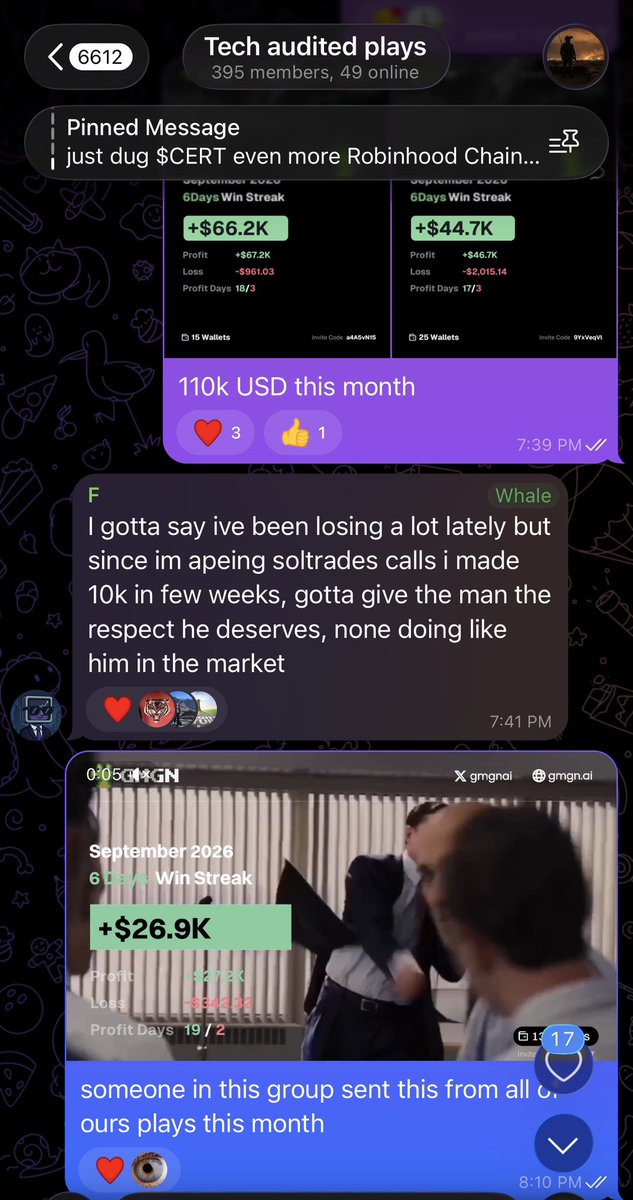
Smallest group with the biggest PNL’s and motion. $110k PNL this month.
TG: https://t.co/NIuujF1D8g
$NYMA 40x
$DARK 120x
$TERA 12x
$HEIR 5x
$CERT 12x
$SPROUT 20x
And a few others 3x ++
100% success rate this month, not 1 loss in the TG group. Had 6 people show me over $5,000+ PNL’s this month from putting only $50-$100 to start with.
Optic is built as a real time market intelligence stack for tokenized stocks.
We ingest on chain transfers, swaps, liquidity and price feeds; process them into deterministic signals; and deliver verified flow data through a live terminal, alerts and API. Assets pass authenticity, liquidity and oracle checks before they appear.
Coming to @RobinhoodApp
Cordon is confidential asset servicing for tokenized assets on @Robinhoodapp Chain.
We convert assets into shielded, disclosable claim bundles; manage income and encumbrances; settle up to 16 legs atomically; and attest NAV with zero-knowledge proofs, without exposing holdings.
Two equities can trade at the same price and deserve completely different risk settings.
FloatSheets groups markets by liquidity class, then assigns leverage, open interest caps, position limits, base spread, skew sensitivity, and confidence thresholds through that class.
The share price is not the risk model.
The quality and capacity of the reference market are.
A serious market needs an event history, not just a price history.
The FloatSheets data model records prices and bands alongside positions, funding, liquidations, insurance events, corporate actions, and listings.
That makes it possible to trace what happened around a position instead of trying to explain it from a candle after the fact.
Coming soon @RobinhoodApp
Staked FLOAT is not positioned as a decorative governance layer in the FloatSheets model.
It sits inside the loss waterfall.
After the insurance fund, staked FLOAT is designed to absorb gap losses before LP principal is touched in a declared default state.
The economics are simple.
Fee participation comes with a defined place in the risk stack.
A stop loss only works if the protocol has a valid price to act on.
For a thin equity reference, a trigger hit during stale data, a halt, or a wide confidence band cannot be treated like an ordinary fill.
FloatSheets separates the order instruction from the market state that determines whether execution is actually allowed.
That distinction matters most when the chart is moving fast.
Built on @RobinhoodApp Chain
One number worth watching on a microcap market is not the price. It is the open interest cap.
The FloatSheets model ties that cap to underlying average daily volume.
In plain English, the protocol should not carry more synthetic exposure than the reference market can reasonably support.
If the underlying activity shrinks, capacity should shrink with it.
A busy dashboard does not create exit liquidity.
Markets should not graduate because a ticker is trending.
The FloatSheets design starts eligible names in guarded mode.
Lower leverage and tighter capacity come first.
Better terms follow only after the market has shown stable data, reliable uptime, and a track record the vault can price.
Attention can nominate a market. It should not set its risk limits.
Build @RobinhoodApp Rails
A FloatSheets fill has a paper trail.
A price update enters the registry with a signature and attestation reference.
The engine checks market state, freshness, confidence, collateral, leverage, and capacity.
Only then does the vault take the position risk.
The goal is simple: anyone reviewing a fill should be able to see the exact conditions under which the protocol accepted it.
AI videos take time to make.
When you press generate, Anonyma saves your request.
You can come back and see if the video is waiting, being made, finished, or failed.
If we are not sure the request got through, we do not send it again and risk charging you twice.