Anthropic and Andrew Ng built an agent that uses 90% fewer tokens from scratch:
they dropped the entire book of Frankenstein into a prompt - 108,000 tokens asked one question
the input dropped from 108,000 tokens to 11
here's how:
step 1 → put everything that never changes at the top - tools, then system, then docs
step 2 → mark where the static part ends. everything above it gets cached
step 3 → one stray space breaks it - and you pay full price again
step 4 → the cache dies in 5 min - every read resets the clock
step 5 → cached tokens don't count against your rate limits. free headroom
most people never touch this - it pays for itself on day one
watch & bookmark - this 1-hour brilliant course ↓
Anthropic just released a 4-hour course to getting a $500k AI engineering job:
00:15 - The right way to prompt Claude
33:21 - What makes Claude act dumber on your code
01:33:39 - How Anthropic use Claude every day
02:50:56 - The fix that makes Claude way smarter This
4-hour Anthropic free course replaces about 10 paid engineering courses.
Watch it today, then read the step-by-step guide on building loops below.
10 repositorios de GitHub para scrapear todo internet
Guárdalos todos. Cada uno extrae datos limpios de cualquier web. Ese nivel de acceso normalmente exige llamadas de ventas y contratos.
La gente sigue pagando mensualmente por VPNs...
Mientras tanto, este pequeño proyecto de código abierto los reemplaza silenciosamente.
DSVPN tiene solo 25KB, está bajo licencia MIT y es completamente gratuito.
Despliégalo una vez en un VPS de $5 y obtienes tu propia VPN privada:
✓ Sin suscripciones
✓ Sin anuncios
✓ Sin seguimiento
✓ Sin dependencia del proveedor
✓ Tú controlas todo
El mejor software no siempre es el más caro.
A veces es el proyecto que cabe en unos pocos kilobytes y resuelve el problema para siempre.
Anthropic Managed Agents Lead:
"At Anthropic, >90% of our engineers are building with self-improving loops. In 4-6 months, it will be 100%.
my agentic loops can run for hours without spending hundreds of dollars."
in this 40-minute podcast, an Anthropic team lead reveals how to build effective agents from scratch.
Agent → harness → loops → memory = modern agent
This one video will replace 10 paid courses on vibe-coding.
Watch it today, then explore the same setup in the article below.
🚨 Anthropic just showed a 27-minute workshop on how to actually do prompts for Claude.
Taught by the people who built it.
Free. No registration. No paywall.
I've seen $300 courses that don't cover what they teach in the first 8 minutes.
Watch it and bookmark it now.
Wow.
Alibaba just quietly released one of the most useful AI products of all time.
It's an AI agent that you can install instantly in any browser to do tasks for you using Qwen 3.5.
No setup, no token costs, 100% free and open source.
Try it now: https://t.co/VXZqKicvgn
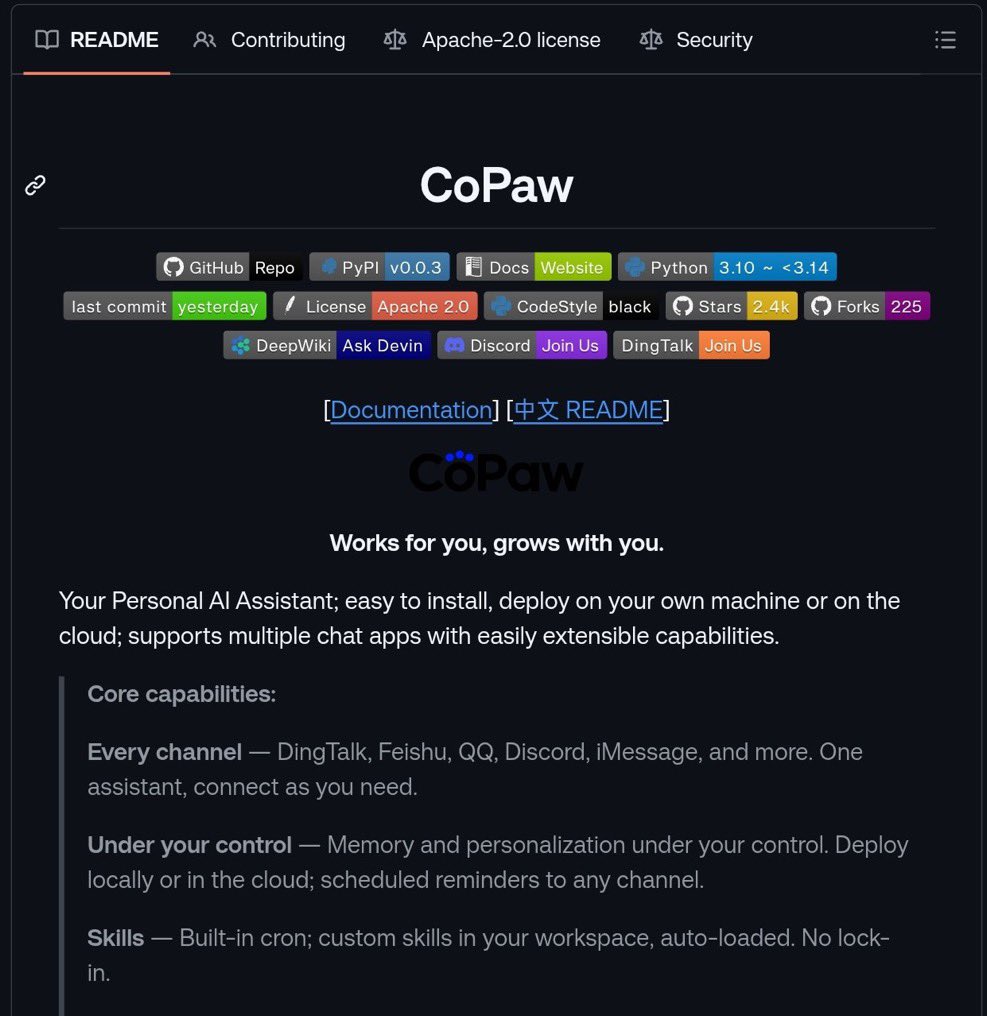
Alibaba has released an open source framework that's like a mix of OpenClaw + Claude Cowork 🤯
• Long-term memory
• Runs locally with Ollama
• Works with free models like Qwen 3.5
• Self-hosting, skills, and more
Link: https://t.co/DhuUiCdhWm
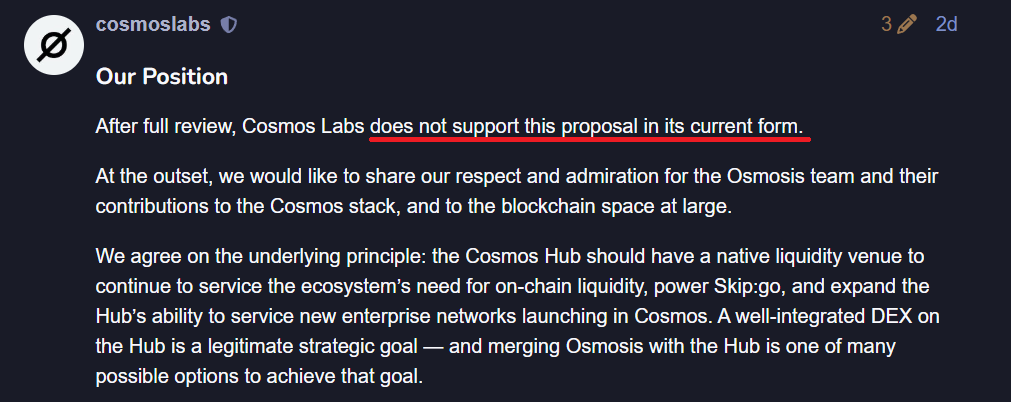
Cosmos Labs says NO to the Osmosis merger in its current form. 🛑
While they like the idea of a native DEX, the current proposal is seen as a bad deal for $ATOM.
Why the rejection?
🔹 Overpriced: They think a fair price is closer to $5M, not $23M.
🔹 Declining Revenue: Osmosis revenue has dropped significantly in recent months.
🔹 Risk of Liquidity: There’s no guarantee that liquidity will actually move to the Hub.
🔹 Bad Structure: A 30-day TWAP swap is too risky.
Let's see!
I just swapped with @squidrouter 💜🤝
Tokens flow like comets,
Squid makes the cosmos shrink,
My assets change planets
Through Squid's interstellar link.
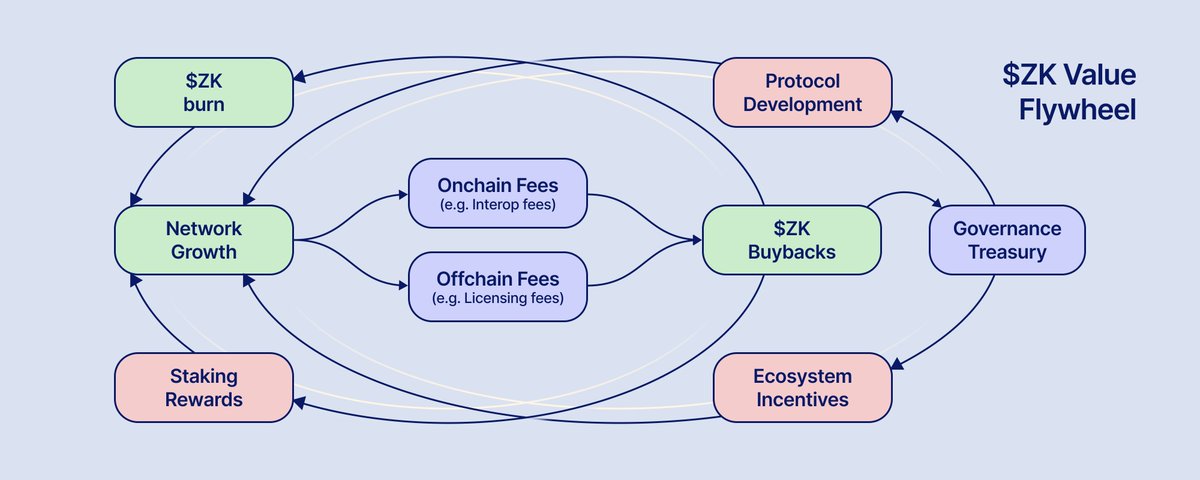
If @cosmos can mirror the same clear "usage ->revenue -> token buybacks” loop as @zksync, with concrete revenue routing and updated tokenomics, $ATOM and $ATOM holders can benefit from enterprise-stack adoption in a similarly programmatic way.
What @zksync is doing:
🔸Fees from native interoperability + enterprise licensing would flow into a governance-controlled mechanism that buys $ZK, then allocates to burns, staking rewards, and ecosystem funding (proposal; needs approval).
How this maps to $ATOM:
🔸Cosmos Stack revenue (e.g., IBC/bridge/routing fees, shared modules, support/SLAs) could be directed to $ATOM via buybacks or fee-shares, similar to ZK’s model.
Big Prereqs though:
🔸Formal governance to route off-/on-chain revenues to $ATOM, and tokenomics reform so issuance doesn’t dilute the impact.
Source: https://t.co/Rsa7Ty8gw8
$ATOM ⚛️
🫡
I believed I was managing my stablecoin risks effectively before this week.
Losses are the best teacher.
Here's my updated stablecoin due diligence checklist ↓
@Cito_Zone We can only hope for Cosmos Labs to make money by consulting and helping those institutions to use Cosmos tech, and Cosmos labs use small portions of the revenue to buy back and burn $ATOM. No doubt we still have to play Cosmos Lab fat salaries.
@Cito_Zone The idea exists 7-8 years ago or even longer, many failed. It's all about execution, not the tech stack. Do those institutions need to buy $ATOM? This type of execution require to pay a lot of salaries. Hopefully can pull through, now still all talks.