However counter-intuitive it may sound, there are three good grounds – ethical ones, at that – for refusing to join in the chorus of condemnation of Hamas' actions on October 7.
That isn't the same as condoning what Hamas did. It is clear the group carried out war crimes that day – not least by attacking civilians and taking them as hostages.
But there is an important distinction to be made between recognising that crimes were committed, and colluding in an act of condemnation that has been openly politicised, and continues to be politicised, to justify harming Palestinian civilians.
How so?
1. Those demanding condemnation are chiefly interested in imposing a consensus, a dangerous one, that insists the atrocity clock started on Oct 7.
Such people want to wipe from the score card decades of atrocities by Israel towards Palestinians: ethnic cleansing, massacres, colonisation, siege, violent dispossession.
And they can achieve their goal because of a stark narrative power imbalance on Israel-Palestine. In western societies, pro-Israel sentiment is baked in, articulated constantly by our politicians and media. Anyone who condemns Hamas has no control whatsoever over the ends to which their condemnation will be put.
In short, condemnation of the kind demanded of everyone about Oct 7 is not cost-free. It has been weaponised to drive out context, to erase Palestinian suffering and Israeli oppression, and to simplify and distort history.
2. Those demanding condemnation want the condemnation not so the world can be made a better, safer place, but so their rationalisations for the continuing bombing campaign against Palestinian civilians in Gaza sounds more plausible.
If Hamas' actions need to be singled out for special condemnation (while Israel's decades of crimes do not), then Hamas' actions must be an order of magnitude worse than anything Israel has ever done.
Hamas can then be considered a special kind of depraved, inhuman, barbarous enemy. Which means, in turn, that there is both an especial urgency to eradicating Hamas and special conditions that justify Israel using especial cruelty to achieve that end.
In these circumstances, colluding in what amounts to a politicised act of condemnation is beyond unwise. It is not an act of solidarity with Israelis. It is not an expression of shared humanity. It is a tool for fanning the flames of hatred, for justifying ethnic cleansing and genocide against Palestinians.
3. Implicit in the demand for condemnation is an intention to strip Palestinians of the right to any kind of resistance to brutal military occupation by Israel.
International law is clear on this point, even if western politicians and the media are not. Palestinians have a right to resist.
There are plenty of things Hamas did on Oct 7 that were legitimate under international law, such as attacking Israeli military bases that have been enforcing the siege of Gaza for 16 years. That is the main reason why such large numbers of Israeli soldiers died that day.
But the demand for condemnation intentionally seeks to blur the distinction between what Hamas had every legal right to do – attack the Israeli army – and what it did not have a right to do, which is kill civilians and take them hostage. Instead, all of the day's events are painted as illegitimate, all of those events are blended into one giant atrocity.
If that isn't clear, watch the BBC's highly sympathetic report of a soldier, injured in Hamas' attack, who chooses to avenge his dead comrades by taking part in the invasion of Gaza.
The BBC report accords the soldier near-hero status. But the truth is that he and his comrades were enforcing the collective punishment of Palestinians in Gaza through a 16-year siege – a war crime. That made him and his comrades entirely legitimate targets for Hamas' attack. But to point that out, to support international law, has been made taboo by western politicians and media.
In all these ways, the demand for condemnation is designed to implant the idea that Palestinians must accept their fate: to be permanently enslaved by Israel's settler-colonial project, to be permanently subjected to Israel's apartheid rule, to be under a permanent siege that counts the minimum calories needed for survival, and to be bombed whenever the mood takes Israel.
Condemnation of October 7 is what the West's war machine wants from you. It is what ensures Palestinian children keep being killed, and that Palestinians never get their freedom or dignity.
Condemn if you wish, but understand that Palestinians will pay a heavy price for your words.
Datu Blah Sinsuat in Maguindanao is one of the hardest hit areas by Typhoon Paeng.
Yesterday, MSSD-BARMM delivered 12 truckloads of relief goods in the area.
Since 29 Oct 2022, BARMM has been delivering life-saving relief assistance to families affected by the typhoon.
@flyPAL
what is the status of PR 2953 for sept 26? flight is supposed to depart at 5am but there is still no update yet while other flights leaving at around the same time have been cancelled.
reference number is
UDGODO
The arrest of Laban ng Masa chair and Vice Presidential candidate @WaldenBello on charges of cyberlibel is political persecution and a frontal assault on free speech in the Philippines!
Hands off Walden Bello!
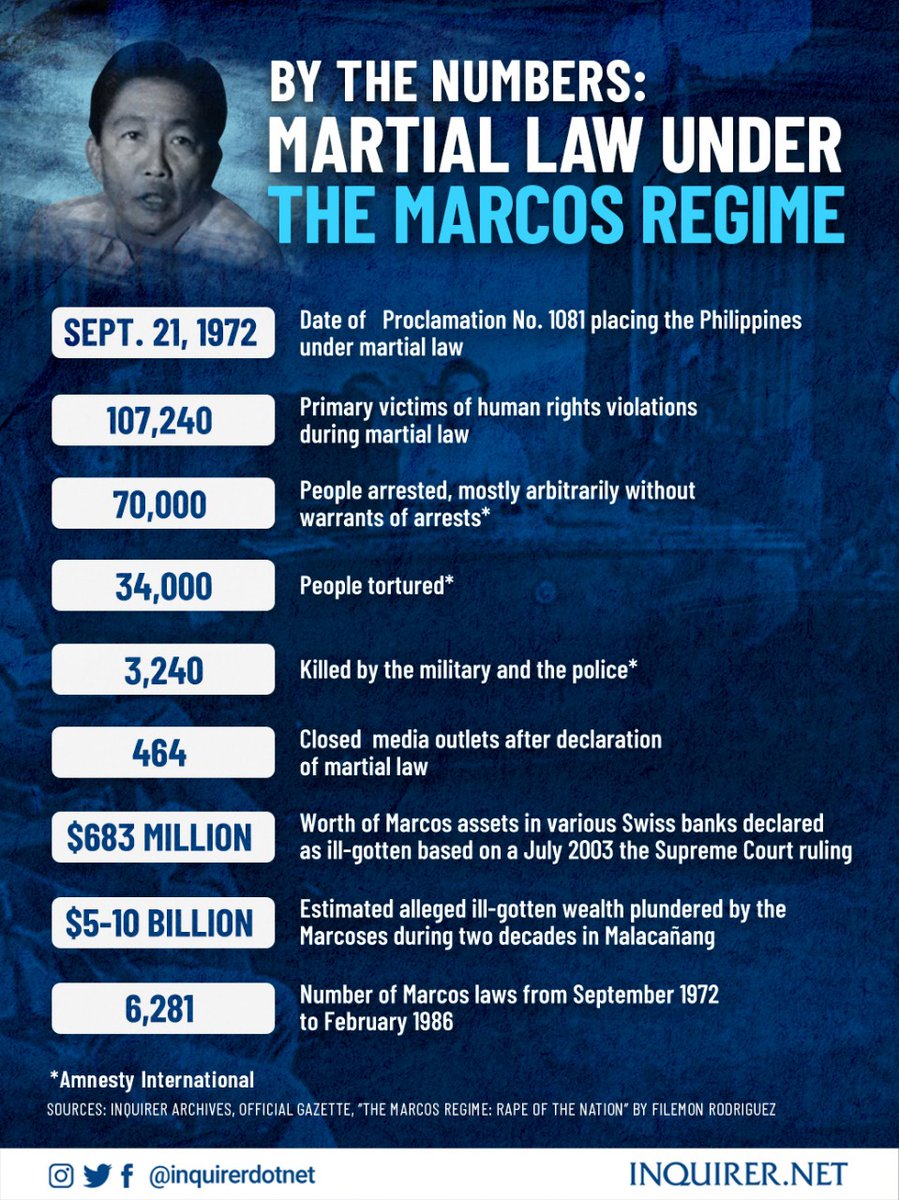
MARTIAL LAW IN NUMBERS
On this day 49 years ago, dictator Ferdinand Marcos placed the entire country under martial law — remembered by many Filipinos as one of the darkest chapters in Philippine history.
Here's a look back at the martial law: https://t.co/2kZYdHISxR
Ang tunay na #SONA: Red-tagged in 2019, disrupted by COVID in 2020, nakatindig at wagi sa 2021. Mabuhay ang Pilipinas!
Salamat sa halimbawa at patotoo, Hidilyn!
Deforestation has a negative impact on poor households and women like Maguing and Zoraya who lost their access to forest goods and services when their trees were cut down.
Sisters Maguing and Zoraya Maluag are among the thousands of workers who lost their jobs in Buldon, Maguindanao when Unifrutti/Al-Sahar Agri-Ventures Inc. (ASAVI) abruptly shut down their operations on September 2019.
The sisters have also lost access to their traditional livelihoods when their customary farms and forests were converted to industrial-scale plantations.
There are now 10,322 families or 51,050 individuals staying in 45 evacuation centers in 8 municipalities in Maguindanao due to the armed conflict between the AFP and the BIFF.
#Maguindanao Displacement March 2021
https://t.co/ft0DbFJ5ld
One year old Yamani Abad is one of the thousands of displaced individuals who have been forced to flee their homes in Barangay Kitango in Datu Saudi Ampatuan in Maguindanao after the armed clashes between the military and the BIFF started at early dawn on 18 March 2020.