New Research Highlight | Perinatal Substance Use Treatment
Substance use disorders during pregnancy and the postpartum period require comprehensive, evidence-informed approaches to care.
A newly published review by Jones and Ramage (2026) examines pharmacological and behavioral treatment approaches for substance use disorders involving alcohol, cannabis, tobacco, opioids, and stimulants during pregnancy and the first year postpartum.
One important takeaway: treatment and research have historically focused heavily on opioid use disorder, leaving other substance use disorders comparatively underaddressed during the perinatal period.
The review highlights the importance of individualized, shared decision-making that considers the risks of untreated substance use disorders alongside the potential benefits and risks of treatment.
Expanding access to compassionate, evidence-based care is essential to supporting the health and well-being of pregnant and postpartum individuals and their families.
📖 Read the full research review: https://t.co/LjpZBYAfm6
#PerinatalHealth #SubstanceUseDisorders #SUDTreatment #MaternalHealth #BehavioralHealth #EvidenceBasedPractice
Every family deserves compassionate, informed support.
Peer recovery workers can play an important role in helping pregnant and parenting individuals impacted by substance use access resources, navigate complex systems, and engage in recovery without stigma.
The new, free training Pregnancy, Postpartum, and Early Parenting: Peer Support for Families Impacted by Substance Use equips peer recovery workers with practical tools to support families through pregnancy, birth, postpartum, and early parenting.
Developed by ORAU in partnership with Faces & Voices of Recovery, this self-paced program offers 10.5 NAADAC continuing education credits.
Learn more and access the training: https://t.co/Rw2PDYqyZG
#RecoveryIsPossible #PeerRecovery #StigmaReduction #MaternalHealth #FamilySupport
💙 Happy Medical Assistant Recognition Week!
This week, we celebrate the medical assistants who play an essential role in supporting patients, strengthening healthcare teams, and improving health outcomes in communities nationwide. From patient education and care coordination to supporting families throughout pregnancy and beyond, medical assistants make a meaningful difference every day.
Thank you for your dedication, compassion, and commitment to quality care. Your work matters! 👏
#MedicalAssistantRecognitionWeek #FASDNPN #HealthcareHeroes #MaternalHealth #MAP
🩺 Medical assistants and healthcare partners: Share your work at FASD 2027!
The 20th International Conference on Fetal Alcohol Spectrum Disorders invites abstracts exploring prenatal alcohol exposure and FASD, including community-based prevention, culturally responsive care, service coordination, workforce education, and translating evidence into practice.
Taking place March 12–15, 2027, in Albuquerque, New Mexico, FASD 2027 will connect research, policy, clinical practice, and lived experience to strengthen prevention efforts and supports across the lifespan.
📣 The call for abstracts is open through November 24, 2026. @fasdunited
Have a project, program, or perspective to share? Explore the guidelines and submit your work: https://t.co/ZkU8hfP8i7
#FASD2027 #MedicalAssistants #FASDPrevention #Healthcare #PublicHealth
📣 Spanish Fact Sheet Now Available! @fasdunited
The Spanish-language version of “What Everyone Should Know About FASD” is now available on the FASD United website.
This fact sheet provides accessible information about Fetal Alcohol Spectrum Disorders (FASD) and is now available to Spanish-speaking individuals, families, and professionals.
The Spanish translation was completed by Aaron Barrera-Alvarez, MD, and reviewed by Dr. Eric Flake and Rosa Arvizu.
👉 Access the Spanish fact sheet: https://t.co/m4dlhOvq1e
🧠 New FASD United resource! @fasdunited
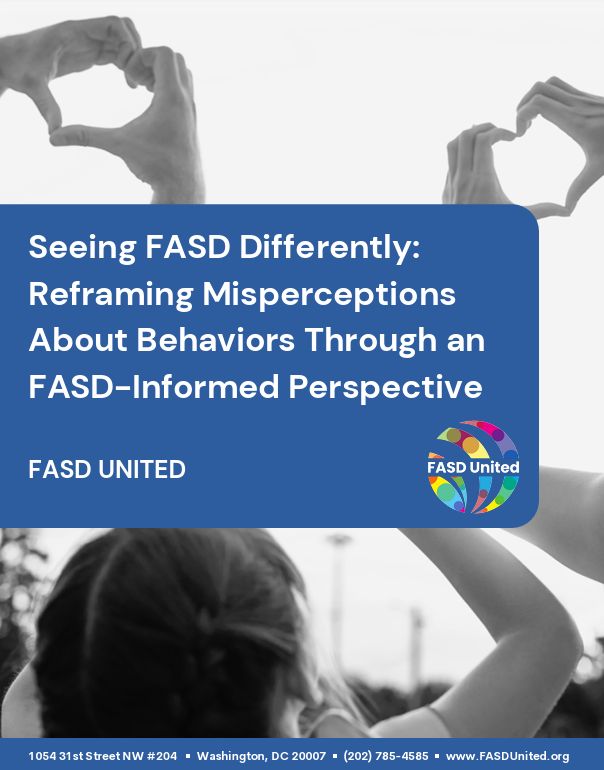
Seeing FASD Differently: Reframing Misperceptions About Behaviors Through an FASD-Informed Perspective offers a new way to understand and respond to behaviors through an FASD-informed lens.
The guide explores how challenges with executive functioning, memory, emotional regulation, and social interactions can impact individuals with FASD—and provides practical tips and strategies to help navigate common challenges and support overall well-being. 💙
📖 Explore the resource and learn more: https://t.co/FcZRWBzL2L
#FASD #FASDUnited #FASDAwareness #FASDInformed #Neurodiversity #FASDSupport #FASDResources
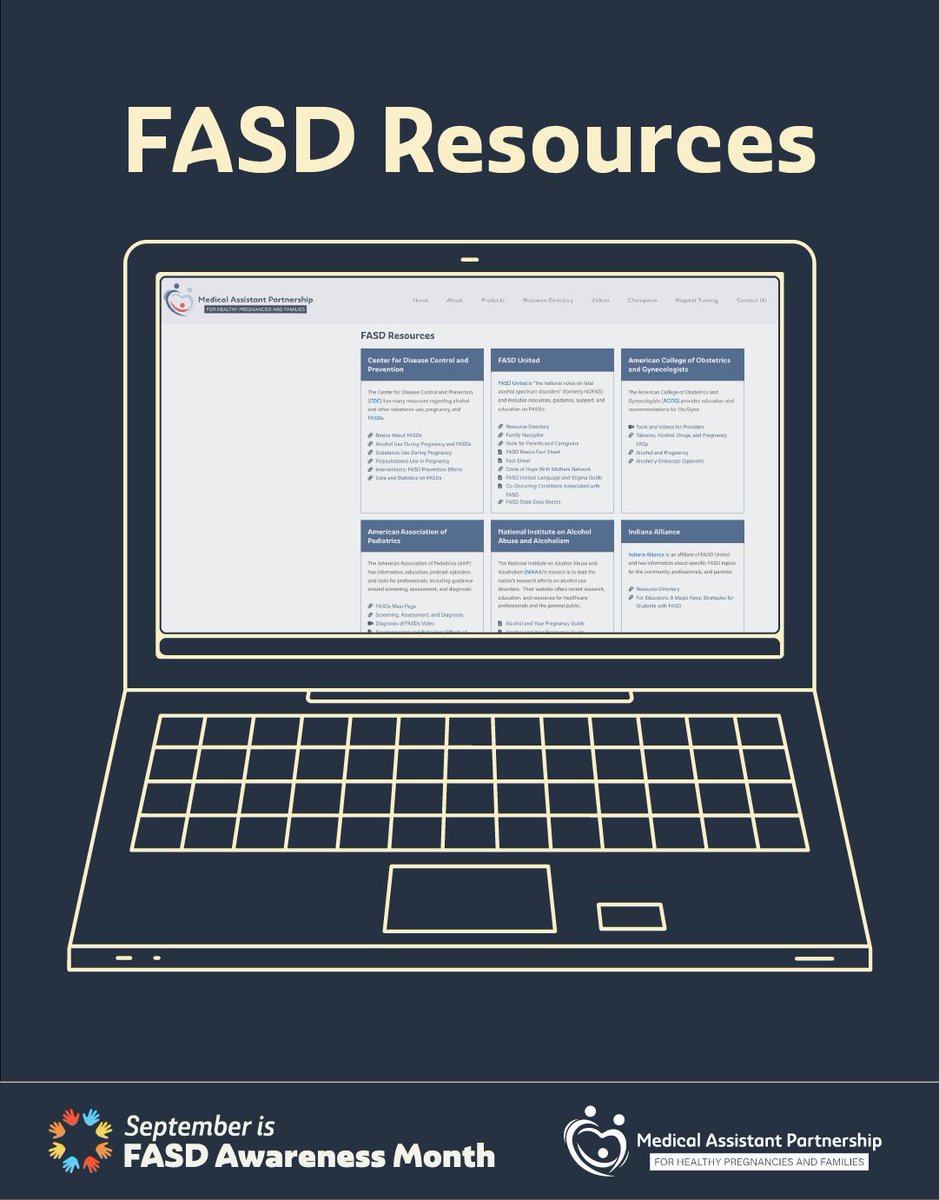
Looking for FASD resources? 💻
Check out our resource directory on our website at https://t.co/KsZEKekksU! Information, support, and educational tools are available to help individuals, families, caregivers, and professionals better understand and navigate FASDs. Explore trusted resources and share them with someone who may benefit. Together, we can increase awareness and connection to support.
You can also explore FASD United's website at https://t.co/MyjKELREqe and the CDC website at https://t.co/xQObAPy3xN
#FASD #FASDAwarenessMonth #FASDNPN
📚 New FASD learning resource available!
The American Academy of Pediatrics (AAP) has updated its FASD PediaLink course, designed for pediatricians and other healthcare professionals.
The course provides practical guidance on:
🩺 Screening for prenatal alcohol exposure (PAE)
🔎 Recognizing signs and symptoms of FASDs
💙 Supporting children and families within the pediatric medical home
The course also offers CME and MOC Part 2 credit.
👉 Learn more and access the updated course: https://t.co/cS5oibiOMp
#FASD #FASDAwareness #FASDTraining #Pediatrics #HealthcareProfessionals #CME #AAP #MedicalEducation #FASDNPN
Every person affected by FASDs deserves to be surrounded by understanding, support, and hope. 💛 A strong circle of family, friends, professionals, and community can help individuals and families feel seen, supported, and empowered. #FASD#FASDAwarenessMonth#FASDNPN
You don’t have to navigate FASDs alone. 💛
Support is available for individuals, families, caregivers, and communities. Connection with knowledgeable providers, advocates, and resources can make the journey feel less overwhelming. Reaching out for support is a strength. #FASD #FASDAwarenessMonth #FASDNPN
Understanding starts with our words.
The language we use matters. Stigma and judgment can create barriers to support, while respectful, person-centered language can promote understanding and connection. Let’s choose words that educate, support, and uplift. #FASD #FASDAwarenessMonth #FASDNPN
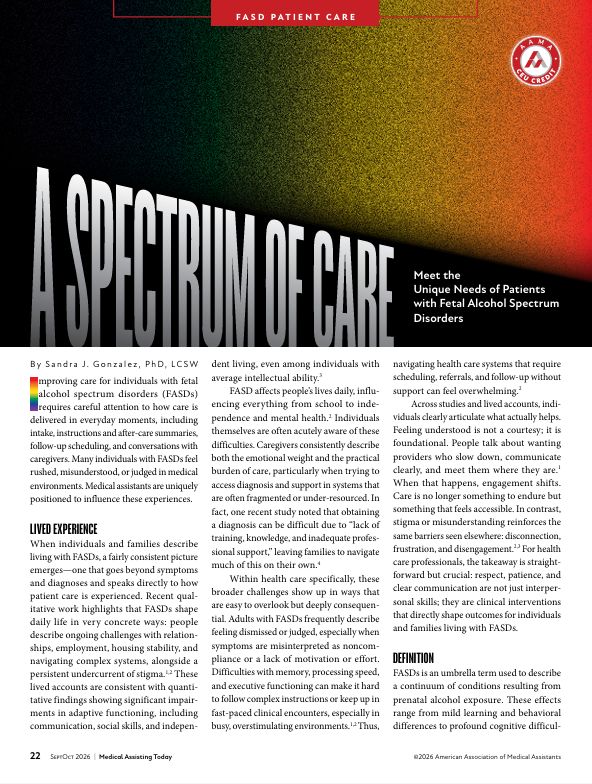
New publication! 🩺💙 @AAMAOfficial
A Spectrum of Care: Meet the Unique Needs of Patients with Fetal Alcohol Spectrum Disorders is featured in the September 2026 issue of Medical Assisting Today.
Written by Sandra J. Gonzalez, PhD, LCSW, this article highlights the importance of compassionate, informed, and person-centered care for individuals with Fetal Alcohol Spectrum Disorders (FASDs) and their families.
📖 AAMA members: Check out the full article in the most recent issue of Medical Assisting Today!
#FASD #MedicalAssistants #HealthcareProfessionals #AAMA #FASDNPN
💙 What do people with FASDs and their families want healthcare professionals to know? @FasdUnited
Based on current research and feedback from FASD United Family Navigators, this new poster offers practical guidance for healthcare professionals to provide compassionate, person-centered care that recognizes the unique needs, strengths, and experiences of individuals with FASDs and their families.
Healthcare professionals can play an important role in:
✨ Helping patients navigate healthcare systems
✨ Connecting families with appropriate services and supports
✨ Communicating with compassion and understanding
✨ Recognizing individual strengths and needs
📚Download the poster and learn more: https://t.co/yDI3AF2fc0
#FASD #FASDawareness #FASDUnited #HealthcareProfessionals #PersonCenteredCare #FASDsupport #MedicalProfessionals #FASDNPN
No one should have to navigate FASDs alone. 🤝
Families, caregivers, healthcare providers, educators, advocates, and communities all play a role in creating supportive environments. Connection and understanding can make a difference. #FASD#FASDAwarenessMonth#FASDNPN
Navigating adulthood can come with unique challenges for individuals with FASDs. Support with daily living, employment, education, relationships, transportation, and other life skills can help promote greater independence and stability. Every step forward matters. 💙 #FASD #FASDAwarenessMonth #FASDNPN
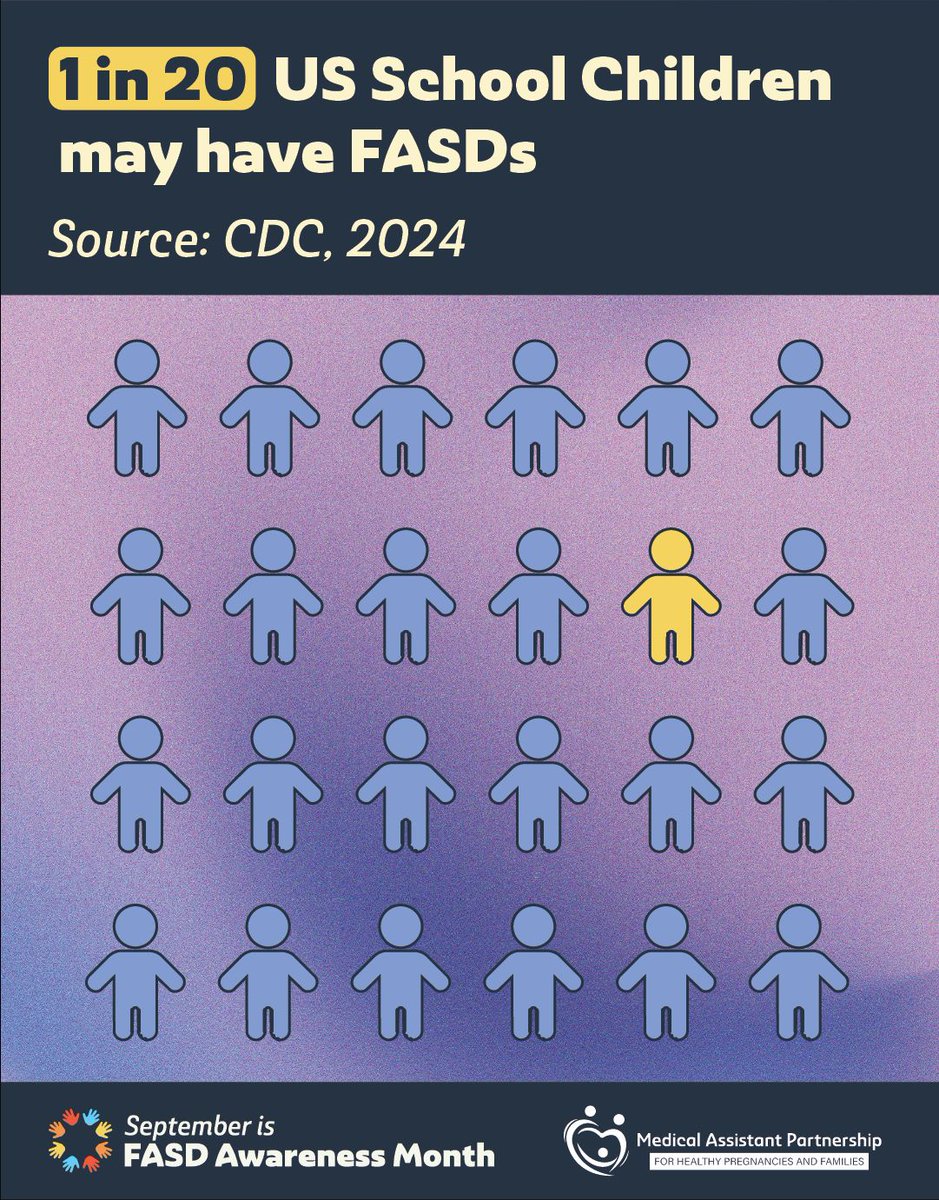
Did you know? Approximately 1 in 20 U.S. school children may have an FASD. Awareness is essential. Understanding FASDs can help educators, healthcare professionals, families, and communities recognize the need for appropriate support and accommodations. Knowledge can lead to earlier understanding and better support. #FASD #FASDAwarenessMonth #FASDNPN
FASDs can affect individuals across the lifespan.
Support needs may change from childhood to adolescence and adulthood. Access to understanding, services, accommodations, and supportive communities can make a meaningful difference at every stage. Support should grow with the person. 💙 #FASD #FASDAwarenessMonth #FASDNPN
FASD awareness means seeing the whole person. 💛
A diagnosis does not define someone. Individuals with FASDs have unique personalities, strengths, talents, and abilities. Some common traits include creativity, humor, kindness, determination, and resilience. Let’s move beyond labels and recognize the strengths in every person. #FASD #FASDAwarenessMonth #FASDNPN
September 9 is International FASD Awareness Day. 🌍
Today is an opportunity to raise awareness, share knowledge, and stand alongside individuals and families affected by FASDs. Join the conversation and help spread awareness in your community. #FASD#FASDAwarenessMonth#FASDNPN
Looking beyond behaviors means asking: What might this person need? Behavior is communication. Challenges with regulation, attention, memory, or understanding may be connected to underlying needs and differences. Shifting from judgment to curiosity can help create more supportive environments. #FASD #FASDAwarenessMonth #FASDNPN