ARŞİV (2013) | Suriyeli bir çocuk kendi hazırladığı yardım kartıyla kışlık kıyafet almaya çalışıyor.
Çocuğun çaresizliğini gören görevliler, durumu anlamamış gibi yaparak istediğini veriyor.
al-Haytham said: A man proposed marriage to a woman from a certain family. They asked him about his occupation or trade, and he told them: “I sell Dawābb” —a term generally understood to refer to horses, mules, donkeys,or camels used for riding. Based on this,They
Read more....
🚨 Google lost power in London this morning and Revolut, a bank with 80 million customers, went down with it.
I've spent the morning reading what Revolut users went through. It's wild.
People stranded at petrol stations, unable to pay for fuel or a taxi to the airport.
One traveller couldn't get out of a train station in Japan.
A 71-year-old woman stood at a supermarket till for an hour. Her kid had to drive 30km to bring her cash.
Card payments, transfers, ATM withdrawals, currency exchange, share trading. All down.
Revolut's statement said "all our customers' money and data are safe."
Safe. You just can't touch it.
Google's explanation so far is a "power event" in one zone of its London cloud region. Its advice to affected customers was to move their workloads to another zone or region "if feasible."
Must be nice. Revolut customers couldn't even move £10.
In July the UK government put Google Cloud, AWS, Microsoft and Oracle under direct Bank of England oversight, because one outage at any of them could shake the entire financial system.
12 days ago the Bank of England ran a drill with the UK's 38 biggest banks and market operators. The scenario they practised was a global cloud outage.
And exactly one year ago today, AWS went down and took Lloyds and Halifax with it.
Same date. Different cloud. Lloyds was having problems again this morning.
Revolut spent five years earning a UK banking licence.
Bitcoin has been running for almost 18 years. It doesn't have a London region.
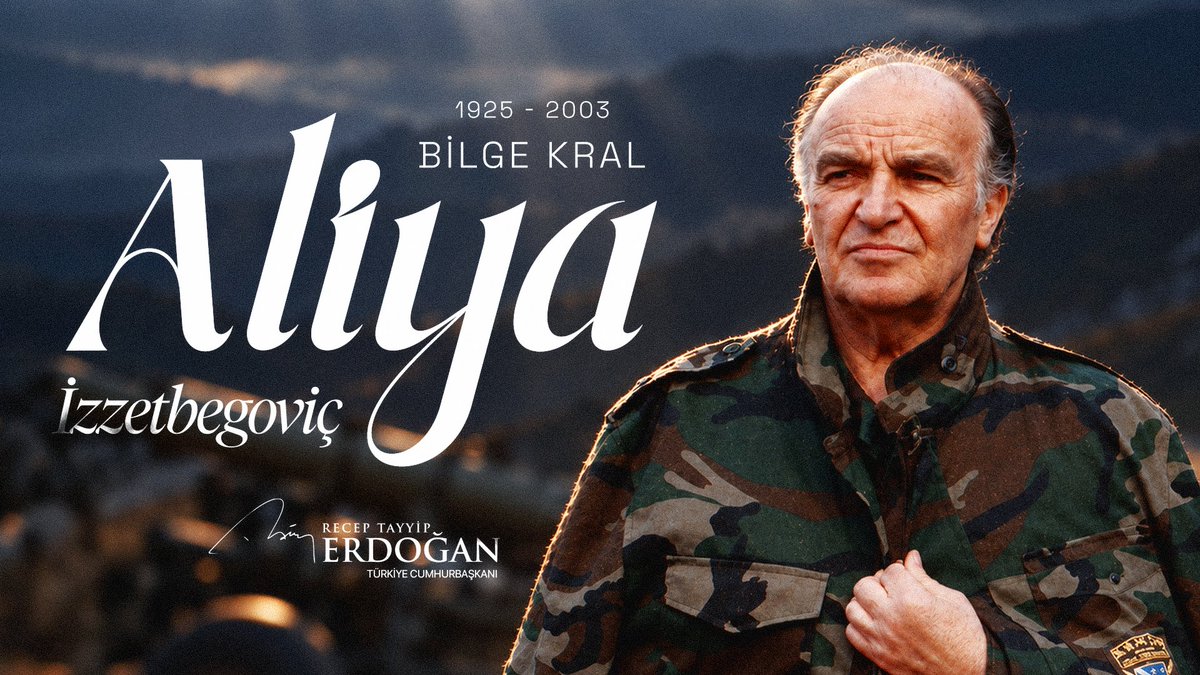
Dost ve kardeş Bosna-Hersek’in İlk Cumhurbaşkanı, Bilge Lider Aliya İzzetbegoviç’i ebedî âleme irtihalinin 23’üncü yılında rahmetle, hasretle, saygıyla yâd ediyorum. Rabb’im mekânını cennet eylesin.
My theory is that when Italian merchants first traded with Muslims, they tried to copy the Islamic profit-and-loss sharing model for their own deals and shipping expeditions. They saw how uncertain it was compared to the interest-based financing they were used to, and therefore named it after the Arabic word rizq, which became our word “risk”
تلاوة نادرة للشيخ سليم الحمامي
الشيخ سليم الحمامي من علماء الميدان الأفاضل، وهو من تلامذة الشيخ حسن حبنكة الميداني، ولحق الشيخ بدر الدين الحسني الذي دعى له بصغره، وقرأ القرآن على شيخ القراء محمد سليم الحلواني
توفي رحمه الله عن عمر يناهز ال١٠٥ سنوات سنة ٢٠١٣، وله من الأبناء والأحفاد والأسباط قرابة ال٢٠٠، منهم ابنه الشيخ المقرئ عبد الرحمن الحمامي الذي يشبه أباه خلقةً وصوتاً وتلاوةً، وابنه الشيخ أحمد الحمامي، وغيرهم من أهل العلم والفضل
Koyun her seferinde bir bir doğurur, köpek ise her seferinde 5-10 doğurur. Yine koyun kurban edilir, ziyafeti çekilir. Buna rağmen koyun daha fazladır. Çünkü "koyun berekettir, cennet hayvanı" der Hadis-i Şerif. Bu ifadeleri Abdullah ibn Ömer de der. [El-Edebü’l-Müfred]
Modern linguists largely agree that the Arabic word ṣirāṭ (meaning “path”) is a loanword ultimately from Latin strāta, borrowed early on into the Arabic language.
The linguist Abū Ḥātim (d. 322) writes that it is narrated from a multitude of early authorities such as Ibn ʿAbbās, Mujāhid, Saʿīd b. Jubayr, ʿIkrimah, and ʿAṭāʾ that ṣirāṭ is of the Roman language (i.e. Latin).
This etymology reportedly being pointed out by Ibn ʿAbbās et al. is especially interesting given how early they were, and given that strāta did not enter Arabic directly, but rather through Classical Syriac ܐܣܛܪܛܐ (esṭraṭā).
Cognates of this root also passed into Germanic languages, giving us the English word street.
What’s the relevance?
In Latin itself, strāta is an ellipsis of the phrase via strāta (“paved/stretched road”). This is relevant because it tells us that strāta (and by extension, ṣirāṭ) is not just any path—it is a clear, paved, unmistakable road engineered for travel (such as the Strata Diocletiana). Thus, in Qurānic usage, ṣirāṭ perfectly describes “the straight path” (al-ṣirāṭ al-mustaqīm)—meaning the course of guidance clearly ordained by God for humans to follow.
Other words for “way” or “path” in the Qurān, such as ṭarīq and sabīl, do not necessarily carry this connotation of being clearly paved and identified. For example, the word ṭarīq specifically comes from the root ṭaraqa (“to strike”) and refers to oft-trodden paths frequently struck by human feet. By contrast, a ṣirāṭ is established by its structure rather than its traffic. This is why the Qurān asserts that the majority of people are often not on the path of guidance (Q 6:116, Q 12:103).
Like ṭarīq, the word sabīl also has a connotation of an oft-traversed path. Lexicons mention that asbala—a verb from the same root—means that the number of travelers on a route has increased (وأسْبَلَتِ الطَّرِيقُ: كَثُرت سابِلَتُها). The word sābilah also shares the same root and refers to temporary passersby (مارّة). In contrast to this, the believer does not simply pass by the straight path; rather, it is a long-term path intended for his lifelong spiritual journey.
Hence, the Qurān accurately uses ṣirāṭ as the ideal word to describe the straight path, because it denotes a permanent, divinely engineered path whose validity does not depend on the volume of traffic or the varying movements of the passersby.
وبالله التوفيق
Japanese father demands murder charge for suicide jumper who crushed his daughter to death
The 29-year-old jumped from an 11th-floor balcony, landing directly on Tomoki Inaba, 23, and survived
45,000 people have signed father's petition for a murder charge
Just witnessed a socio professor reprimanding a girl because she said she doesn't want to win the nobel peace prize.
He was furious, says why do you put yourself down? She replies:
"Actually it's that colonial imperial incentive that is beneath me. I don't want my name on a list with Kissinger and Obama. I'm good."