Immunocompromised Canadians are still at high risk from COVID-19.
A proven treatment, Pemgarda from @Invivyd, remains unavailable in Canada—and lives are on the line. It’s time for action.
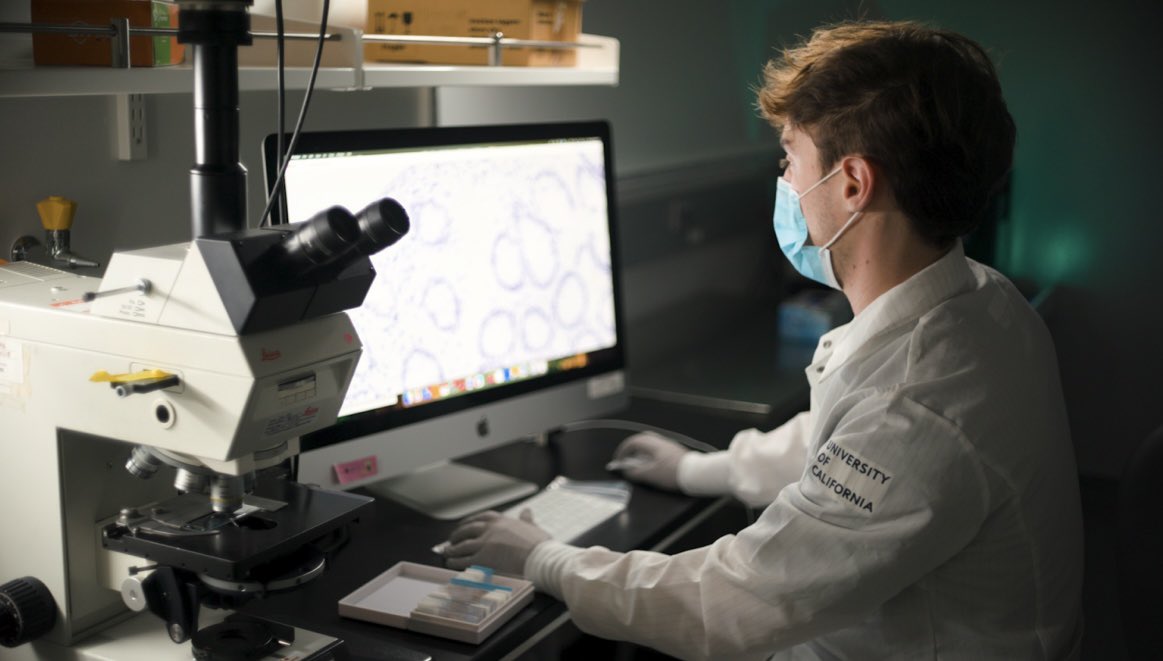
Dr. Henry Van Brocklin and his UCSF team are investigating the novel radiotracer [18F]F-AraG as a biomarker of long-term immune dysregulation in Long COVID. When paired with PET imaging, the tracer has shown persistent T cell activation in tissues such as the brain, lungs, gut, spinal cord & bone marrow.
“Even in cases where the Long COVID symptoms were not associated with the [organ] phenotype, we actually saw elevation there,” said Van Brocklin. The method is actively being tested in a clinical trial of Ensitrelvir for Long COVID to determine measurable changes in immune activation following treatment versus placebo.
⚠️ One of the biggest misconceptions in Long COVID is thinking that viral persistence and autoimmunity are competing theories.
They are not.
In fact, one of the main drivers of autoimmunity is persistent antigenic stimulation.
And one of the most common sources of persistent antigenic stimulation is infection.
Let’s break it down.
A persistent pathogen continuously presents antigens to the immune system.
In genetically susceptible individuals, that chronic stimulation increases the risk of breaking immune tolerance through mechanisms such as molecular mimicry, bystander activation and epitope spreading.
Once autoimmunity develops, the autoimmune process itself becomes another source of chronic immune activation.
Now you have both mechanisms operating simultaneously.
Persistent infection → chronic antigenic stimulation → autoimmunity → even more immune activation.
They are not mutually exclusive.
They reinforce each other.
This is not a new concept.
EBV is one of the clearest examples.
After primary infection, EBV is not eliminated. It persists for life in B cells, and it is now strongly linked to autoimmune diseases such as multiple sclerosis, systemic lupus erythematosus and rheumatoid arthritis.
In these diseases, evidence of EBV reactivation has also been repeatedly reported, supporting the idea that persistent infection and autoimmunity can coexist within the same patient.
The same immunological logic may apply to a subgroup of Long COVID and ME/CFS patients.
So perhaps the wrong question is:
“Is it viral persistence or autoimmunity?”
A better question is:
“How much does persistent antigenic stimulation contribute to the development and maintenance of autoimmunity in each biological subgroup?”
Changing that question changes the entire therapeutic strategy.
⚠️💊 Long COVID and ME/CFS: a layered strategy, not a single treatment for everyone
One of the mistakes when talking about Long COVID and ME/CFS is looking for “the treatment”, as if all patients had exactly the same mechanism.
They do not.
But that does not mean there is no common logic.
The model I propose is to think of these diseases as post-infectious processes maintained by layers:
A persistent pathogen or a sustained antigenic source.
Chronic immune hyperactivation.
Immune exhaustion and poorer control of latent pathogens.
Secondary reactivations that add more antigenic load.
Systemic consequences: inflammation, mast cells/histamine, oxidative stress, barrier dysfunction, autoimmunity, dysautonomia, neuroinflammation, endocrine alterations or vascular involvement.
Baseline treatments and then treatments directed according to the dominant mechanism.
The key is not to place all layers at the same level.
Not everything is a primary cause.
Some things are consequences.
And some consequences, once they appear, can become amplifiers that maintain the vicious cycle.
Long COVID and ME/CFS: same model, different degree of classification
For me, Long COVID and ME/CFS are not opposite processes.
They may follow the same post-infectious model.
The main difference is that Long COVID is better classified by its initial pathogen: SARS-CoV-2.
By contrast, ME/CFS is a more heterogeneous label where post-infectious patients initiated or maintained by different pathogens may be grouped together: EBV, HHV-6, CMV, enteroviruses, parvovirus B19, Borrelia, Toxoplasma or other persistent, latent or intracellular pathogens.
In other words:
Long COVID would be a post-infectious disease defined by SARS-CoV-2.
ME/CFS could include several similar post-infectious subtypes, but initiated by different pathogens.
The underlying logic would be the same:
persistent pathogen or antigenic reservoir
→ continuous immune stimulation
→ chronic immune hyperactivation
→ sustained inflammation
→ T/NK cell exhaustion
→ poorer control of latent pathogens
→ new reactivations
→ more antigenic load
→ more inflammation.
Therefore, the problem would not be that Long COVID and ME/CFS have nothing to do with each other.
The problem is that ME/CFS probably mixes post-infectious patients of different origins under the same clinical label.
▪️Long COVID: SARS-CoV-2 as the initial persistent source
In Long COVID, the initial axis would be the persistence of SARS-CoV-2 in tissue or cellular reservoirs, with sustained or intermittent production of viral antigens.
There does not necessarily have to be detectable viremia in blood.
But if the immune system keeps seeing viral antigens months or years later, those antigens are not well explained as simple passive “remnants” from the initial infection.
The body degrades proteins and RNA through proteases, nucleases, autophagy, the proteasome, cellular turnover and immune clearance.
For this reason, prolonged presence of viral antigen points to a sustained source:
tissue reservoirs;
infected cells;
low-level persistent infection;
abortive or incomplete infection;
intermittent production of viral material;
local reactivation;
or cellular persistence in tissues where the immune system does not properly eliminate the stimulus.
In other words:
if there is persistent antigen for months or years, we need to think of some type of reservoir or biological source that renews it.
That stimulus keeps the immune system chronically activated.
And that chronic activation can lead to persistent inflammation, immune exhaustion and poorer control of other latent pathogens.
🚨💊HUGE news: @US_FDA has finally granted approval to @ShionogiUS’s Xocova (Ensitrelvir), a 2nd-generation antiviral targeting SARS-CoV-2.
The approval is for the indication of “post-exposure prophylaxis of COVID-19 following contact with an individual who has COVID-19”. However, just like with any drug, it can obviously also be used off-label (e.g. treatment of both acute COVID or Long COVID).
In Japan, Xocova received Emergency Use Authorization for the treatment of acute COVID all the way back in November 2022, received full approval in March 2024, and an expansion to include post-exposure prophylaxis in March 2026.
The post-exposure prophylaxis indications are based on the SCORPIO-PEP trial (https://t.co/Dxv0lhS2CM), where Xocova reduced the incidence of COVID-19 after household exposure by 67%, from 9.0% down to 2.9%.
Mechanically, Xocova is the same class of drug as Paxlovid - a 3C-like protease inhibitor that inhibits viral replication. From our best understanding, Xocova is probably slightly more potent than Paxlovid, but the more definitive advantage is that it comes with less side effects and less drug interactions (which are caused by the Ritonavir component of Paxlovid, added to boost the concentration of the actual antiviral, Nirmatrelvir).
Xocova should be useful for lowering viral load during an acute infection, especially if taken within a couple or days of symptom onset, which may help shorten the duration of acute symptoms. Will it do anything to prevent long-term damage or the development of Long COVID? Almost certainly not, just like Paxlovid, but I’d be more inclined to tell people that it’s worth trying if we’re no longer dealing with the side effect profile of Paxlovid.
Where it makes the most sense to use Xocova, just like with Paxlovid, is as a component of polytherapy for Long COVID driven by viral persistence. The big issue there, however, is that you need a longer course of these antivirals than most physicians are willing to prescribe and/or most insurance companies are willing to cover. And they’re generally not very effective as a monotherapy, you need to pair these oral antivirals with other therapies for better coverage and tissue penetration (eg. monoclonal antibodies and Nuvaxovid, and potentially even a 2nd antiviral like Remdesivir).
All in all, this is a very important and long overdue approval. It’s not a game-changing silver bullet, and notably, nobody should really be expecting to use or rely on Xocova in a way that they wouldn’t be open to using or relying on Paxlovid in the present. But there are plenty of applications for it, and Xocova should absolutely be seen as another Swiss cheese layer / tool in the toolbox for COVID conscious community members and any allied medical providers.
Oh, chronic absenteeism after the pandemic has risen to over 60% for high school students in Ontario?
That’s because IT’S NOT AFTER THE PANDEMIC
Kids are missing school because they are sick, and this is happening on a global scale.
@globalnews
https://t.co/JOVb0TGBNA
The first step to making this a better world is refusing to participate in spreading the virus that’s taking us out. If you haven’t taken that first step, everything else you do, no matter how great, is ultimately undermined by you spreading a brain damaging pathogen.
Wear a mask
If you knew what I know. If you’d read what I’ve read - then you too would wear a respirator in enclosed public spaces.
You’d also encourage your family and friends to do the same.
Lazzaro Spallanzani IRCCS, 1 patient, high dose IVIG was linked to rapid relief of long COVID fatigue and brain fog, with recovery over a year and signs of calmer immune activity.
https://t.co/f3pwhxLNXo
Breaking: PolyBio Research Foundation today announced the launch of VIPER, the first large-scale program designed to rigorously validate diagnostic tests that measure SARS-CoV-2 persistence and other biological drivers of Long COVID:
https://t.co/HNxf7MDdHZ
You have to be persistently stupid and willfully ignorant at this point to believe SARS-CoV-2 doesn’t persist in the human body somewhere for an extended period in many (or most, or all) people—driving the uptick in bacterial, fungal, and viral infections.
It can do that and still damage your body in the acute phase of infection (whether you feel it or not).
And you have to be a chronic numpty to forgo airborne precautions in the COVID and disinformation era, where people aren’t reading, and what they do read is filtered through ignoramuses and anti-science voices. They’re socializing while symptomatic, rejecting vaccinations, and acting as walking incubation vessels for pathogenic mutations.
On March 15, as a member and event co-coordinator with @CanCovSoc , I was interviewed at our Long COVID Awareness Day event Queen's Park in Toronto — covered by @CBCNews.
Six years sick. Formerly a teacher. Largely housebound. This is what Long COVID looks like. 2 million Canadians are living this. We need research, funding, and a cure immediately.
🩵 #ILCAD2026 #LongCOVIDAwareness
Correct: a constantly-circulating virus that can cause cognitive issues and significant long-term health problems, combined with a pervasive institutional denial of the problem, combined with collective and unresolved trauma, has led to profound societal changes - many dangerous.
🇨🇦 Canadians: Please sign House of Commons e-Petition e-7076 calling for stronger federal action on #LongCOVID — including national standards for care, research, and meaningful disability support.
Share with friends & family.
🔗 https://t.co/eySRiENGq4
@GovCanHealth
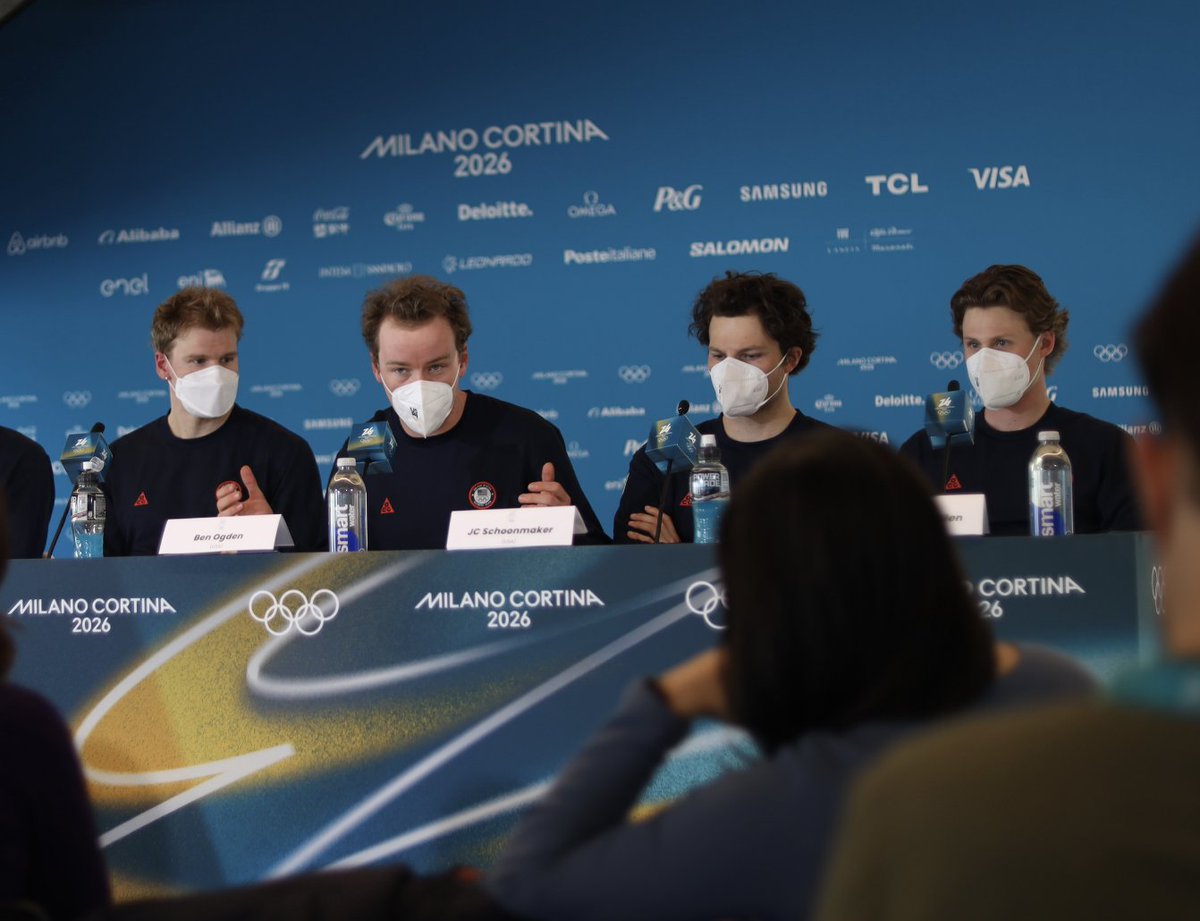
Way more masks at this Olympics than there was at the last. Olympians can’t afford to be in as bad denial as everyone else. What else would be the explanation for this other than the pandemic still being around and people being in denial of it for years on end?
Yeah. A mask cult.
Sure. Call it that.
You know what else was a “cult”?
Hand-washing.
Seatbelts.
Clean drinking water.
Surgery without sawdust and whiskey.
Every time humans figured out how not to die stupidly, someone yelled cult.
So yeah—if a “cult” means noticing that breathing shared air spreads airborne disease, then congrats, you cracked the case.
If it means using a simple tool that reduces viral dose, protects your brain, your heart, your kids, your coworkers—then hail Satan, pass the respirators.
Here’s the part you don’t want to hear:
Masks aren’t about fear.
They’re about pattern recognition.
They’re about looking at six years of data and saying, “Huh. That keeps wrecking people’s bodies. Maybe raw-dogging the air in a pandemic isn’t the flex we thought.”
You don’t call it a cult when firefighters wear gear in a burning building.
You don’t call it a cult when surgeons glove up.
You don’t call it a cult when athletes tape ankles or wear helmets.
You only call it a cult when the protection reminds you that you were lied to—
that “mild,” “over,” “everyone gets it,” and “back to normal” were sales pitches, not science.
This isn’t religion.
It’s physics.
Aerosols don’t give a shit about your vibes, your politics, or how tired you are of hearing about it.
And here’s the uncomfortable truth that really pisses people off:
Some of us never stopped paying attention.
We watched cognitive decline get normalized.
We watched “brain fog” get rebranded as quirky.
We watched kids get sick over and over and were told it’s “good for their immune system” like this is 1820.
So yeah—call us a cult if you need a word that lets you stop thinking.
But don’t confuse discipline with delusion.
Don’t confuse adaptation with weakness.
And don’t confuse people who protect themselves and others with sheep—especially when the herd is walking straight into the slaughterhouse smiling.
This isn’t faith.
It’s survival with receipts.