October 2026: Mild, wet & sunny
👉6th consecutive October & 9th consecutive month with above average national temperatures
👉Rainfall was 120% of the 1991-2020 LTA
👉Storm force winds during storm Boelo, strong gales during storm Austen
More here - https://t.co/vmeNfqSD0n
In 2015, the projected date for reaching 1.5°C above pre-industrial levels was 2042, based on ERA5 data. Today, our C3S global temperature-trend-monitor anticipates the threshold breach within this decade.
Read the article: https://t.co/O3lbdos3GZ
#CopernicusClimate
2026 is on track to be one of 4 warmest years on record, marked by exceptional global temperatures, melting ice, rising sea levels, and a very strong El Niño that will unleash more heat & extreme weather into 2027.
New WMO #StateOfClimate#COP31 Update
↪️ https://t.co/KCbuZ6IYmg
🌡 The latest C3S Climate Bulletin reports that 2026 is virtually certain (>99%) to exceed 1.5°C above pre-industrial levels. Global and sea surface temperature were both record high for the month.
⬇️
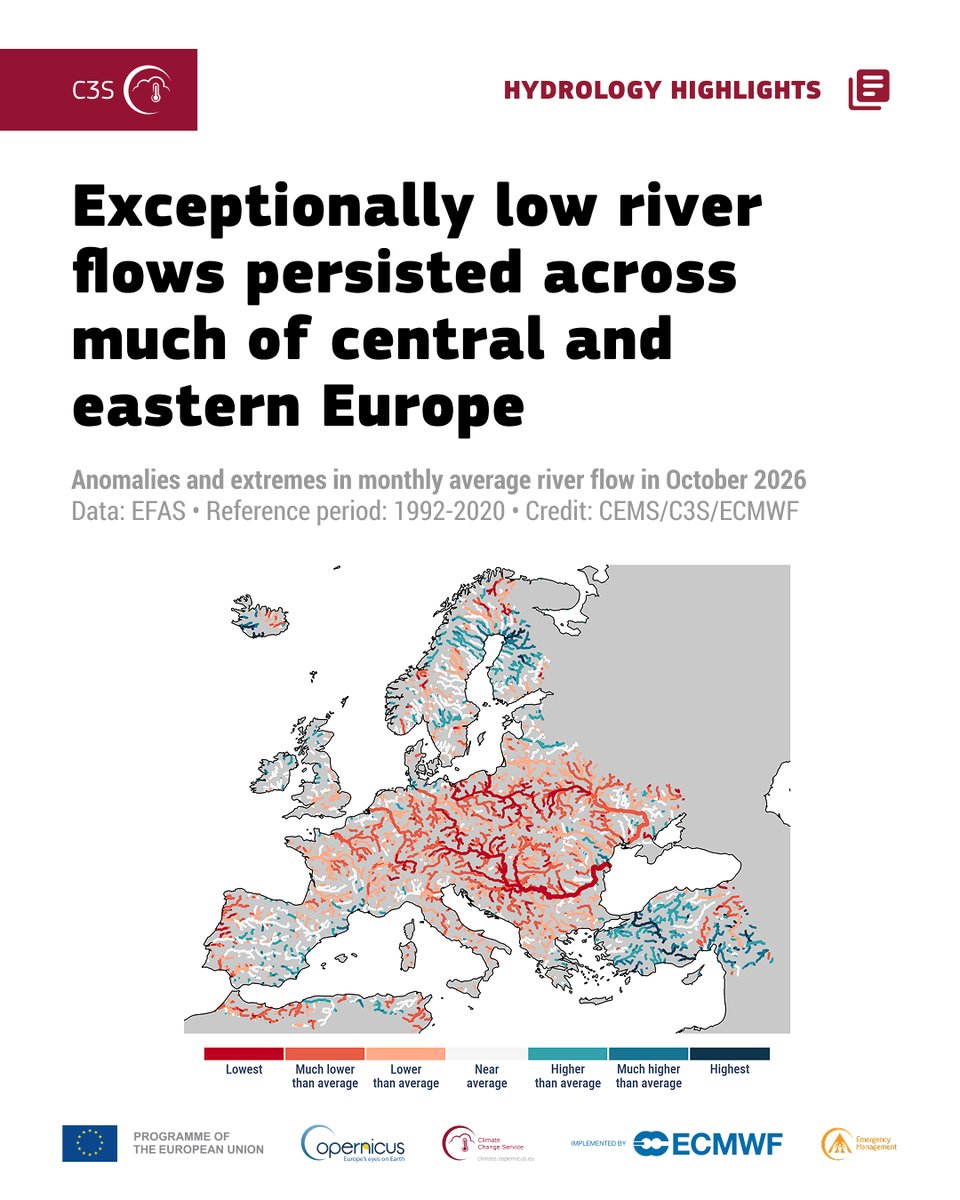
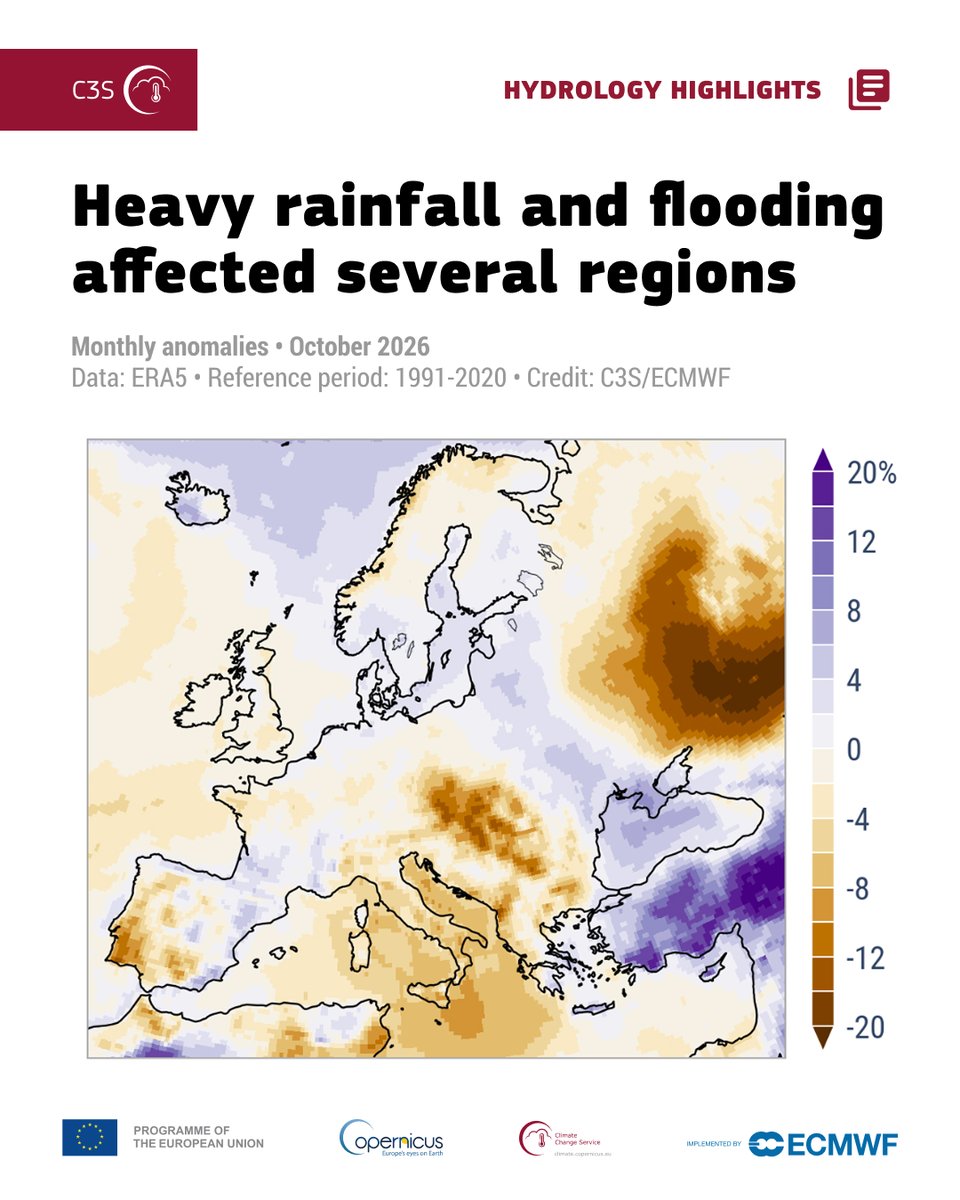
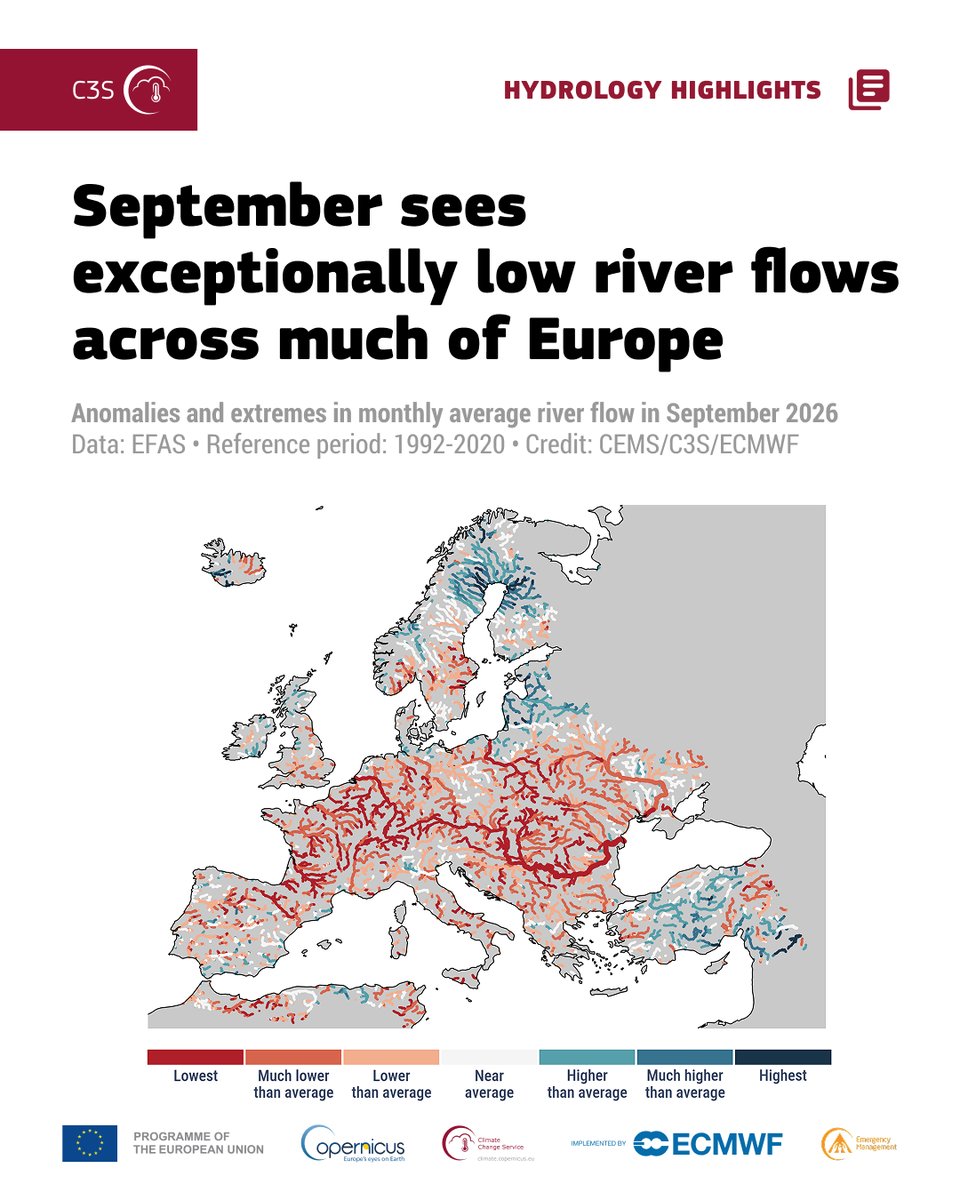
💧 C3S Climate Bulletin reports dry conditions and exceptionally low river flows across much of central and eastern Europe. Low flows affected major rivers including the Danube, Vistula & Rhine. Wetter-than-average conditions and heavy rainfall affected several other regions.
⬇️
WMO Deputy Secretary-General Ko Barrett will brief the media on the state of greenhouse gases in the atmosphere in 2025.
Tuesday, 27 October 2026
1000 CEST | 0800 GMT
🔴 LIVE on @UNWebTV: https://t.co/YMluKVewDf
Greenhouse gas levels hit new record highs, locking in more long-term temperature increase.
The intensifying El Niño may lead to a further surge.
New WMO Greenhouse Gas Bulletin provides authoritative scientific information on the state of our climate. 👉 https://t.co/UMDJkTewTU
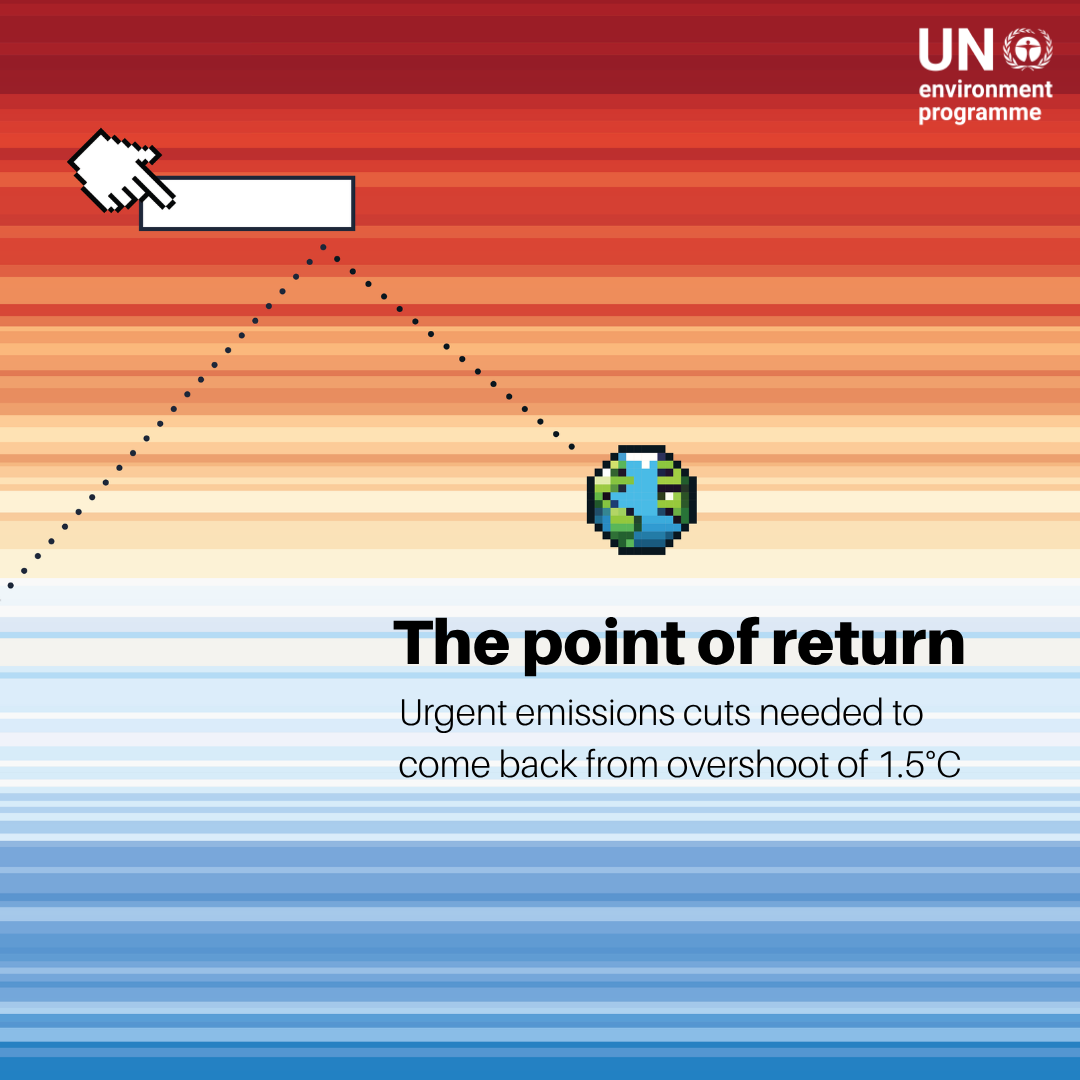
The chance to keep global warming below 1.5°C with no overshoot is gone.
But urgent action can still limit the overshoot and bring warming back to 1.5°C by 2100.
Current policies, however, put the 🌎 on course for up to 2.8°C this century.
New #EmissionsGap Report: https://t.co/rGd9ce8tTv
The latest #EmissionsGap Report from @UNEP warns current climate plans fall dangerously short, putting the world on track for worsening impacts.
@antonioguterres calls for urgent #ClimateAction to cut emissions & accelerate clean energy.
https://t.co/TC3TlKqFCD
🌡 The latest C3S Climate Bulletin reports September was the 2nd-warmest on record, at 1.63°C above the estimated pre-industrial level. The average sea surface temperature across the extra-polar ocean reached a September record of 21.05°C. https://t.co/hPLo0JxSjT
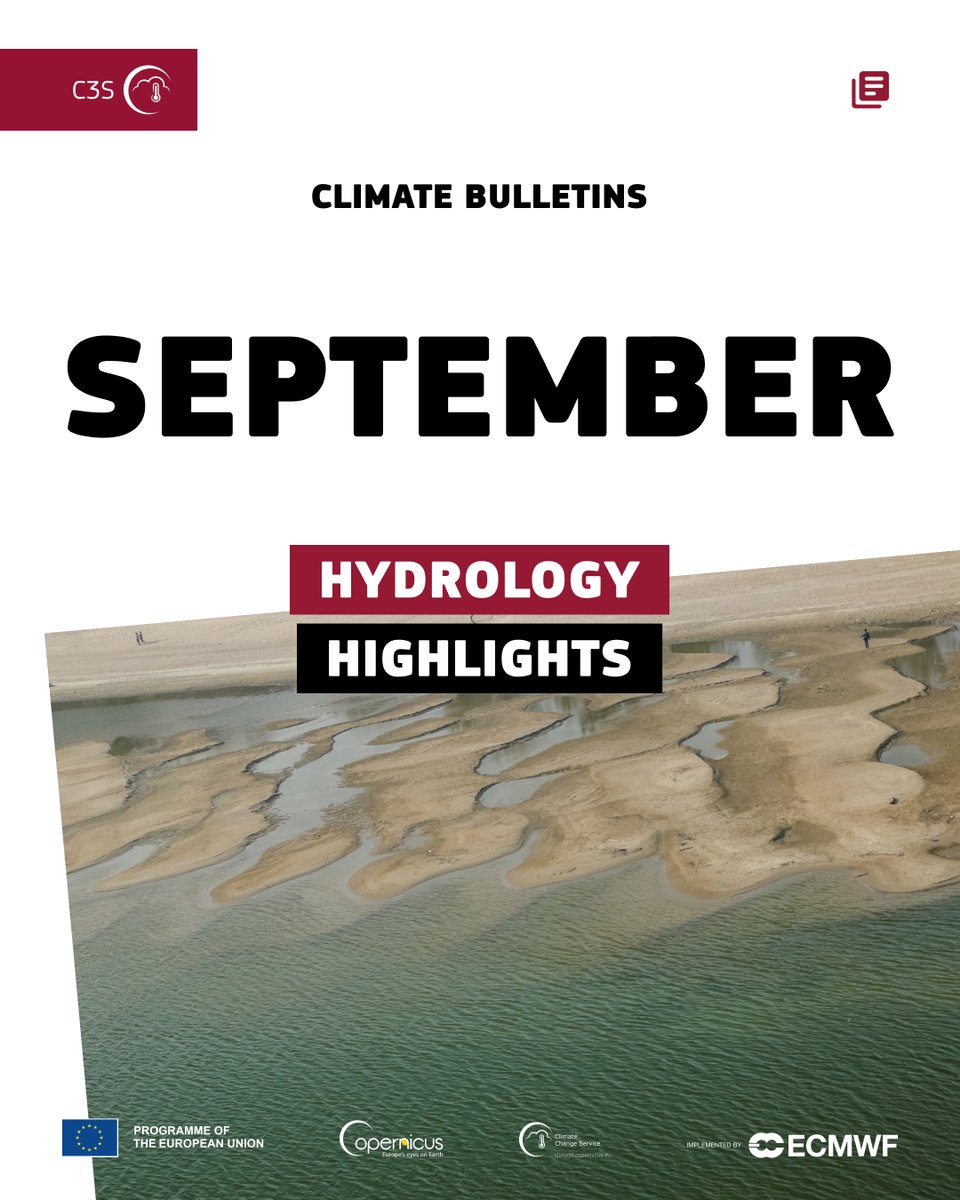
💧 The September C3S Climate Bulletin reports widespread dry conditions across western, central & eastern Europe. Record-low river flows for the month affected the Rhine, Danube, Vistula and Garonne-Dordogne. Late-month rainfall caused flooding in parts of France and Spain.
🌡️ September 2026 was the 2nd warmest globally & 3rd warmest in Europe on record.
🇪🇺 Western Europe saw exceptional heat, with parts of France, Portugal, Spain & Italy 4–6°C above average.
🛰️ #CopernicusEU tracks climate extremes.
🔗 https://t.co/uMOM5xYwWm
#ImageOfTheDay
Climate change is making Ireland increasingly vulnerable to summer drought as higher temperatures draw more moisture from soils and vegetation, new research has found
https://t.co/u51MAEq6mO
The global #Ocean experienced its hottest summer on record, with average sea surface temperatures hitting 21.01-degrees Celsius.
This surpasses the 2023 record of 20.93-degrees, resulting in 18% of the global ocean experiencing intense #MarineHeatwaves for over 20 days, with 85% of the Equatorial #Pacific seeing above-average temperatures.
🔗 More insights: https://t.co/89Kkn9uzsH
#CopernicusMarine
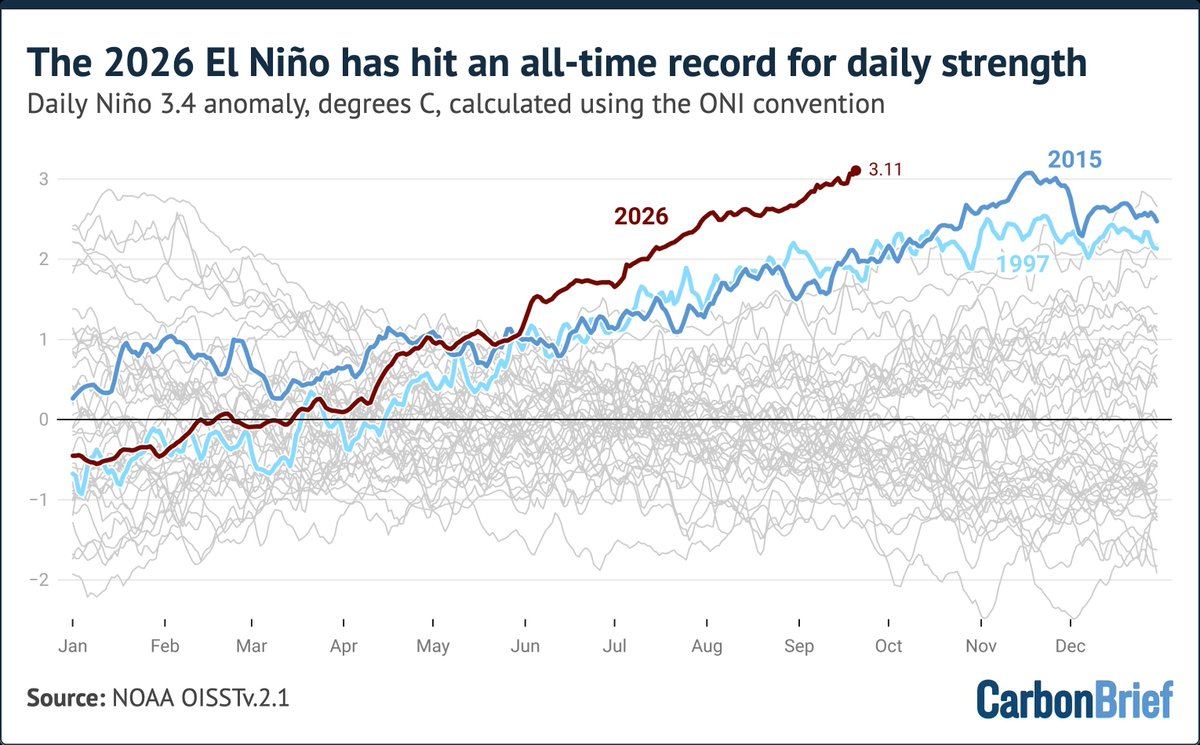
🌊 Sea surface temperatures across the central-eastern equatorial Pacific (Niño 3.4 region) are already well above average & are continuing to rise.
As El Niño intensifies, temperature anomalies are expected to reach about +3.6°C in the next 3 months.
🔗 https://t.co/KUPq04jjkT