Risk management 101—every exposure should have a limit, even when you’re sure nothing could go wrong. After all, the Titanic sank and AAA mortgage bonds went to zero. I worry about the market’s (and the economy’s) unlimited appetite for exposure to the positive AI revenue story.
Underrated life advice: Spend less time consuming other people’s lives and more time building your own. Pick up a hobby that makes you forget your phone exists. A full life is one of the best cures for an envious mind.
At Private Credit firms, there are two common structures that relate to originations, underwriting, and portfolio management.
Some firms will separate each function, where some people originate the loans, another team will work on the underwriting, and another team will manage the deal post close.
This is a problem because you often see the originators (who are paid based on the volume of closed deals) bring in bad deals and push for them to get approved.
Other firms don't separate it, and you'll have some senior member of the deal team originate a loan, put together a deal team to underwrite it, and that same deal team will monitor the investment post close.
The problem here is that since the person who originated the deal is leading the deal team, they may mislead IC about potential risks of the deal to get it pushed through.
Pick your poison.
Can we pedestrianise Dean Street next please? Literally no reason to drive down it and it’s full of restaurants that could make excellent use of the road for outside dining
This is a very textbook phenomenon in the market called “rotation out of all the names you specifically own and into names you don’t”. This happens when all the market participants have a meeting you aren’t invited to and decide they hate you.
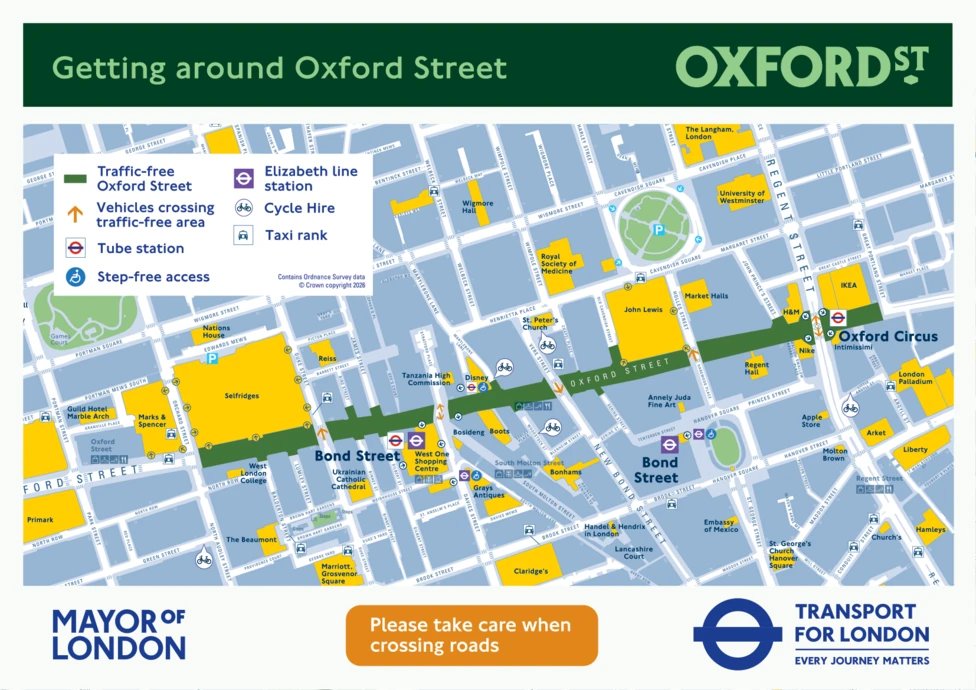
From tomorrow Oxford Street is going to be car-free, bus free and it is set to be pedestrianisation only.
The stretch between Orchard Street, near Selfridges, and Great Portland Street, just east of Oxford Circus, will be closed to vehicles.
Buses, taxis, private hire vehicles, bicycles, scooters and pedicabs will all be diverted.
During the pandemic, Peloton could not keep up with demand for its bikes. At one point it was spending $100 million just on air freight to get bikes to customers faster, and it committed $400 million to build its own factory.
At the height of demand, management was forced to make many suboptimal decisions to satisfy customers. Today the customers are gone, but the suboptimal decisions (including the debt) remain.
The same will happen in the AI space. Today you have insatiable demand. Nobody knows how long it will last.
Dmitry Balyasny explains what separates a great analyst from a great PM
“Yeah, good question. So what makes a great analyst, and I think this is similar to a great PM, is you have to be able to think differently, right? You have to come up with unique, you know, variant ideas, differing views on things that lots of other people are constantly looking at, right?"
"And you might not have a differing view necessarily for the next five years, but you should be able to come up with a consistent flow of differing views for the next few months, maybe the next year, maybe the next couple of years in some cases."
"So that takes a particular type of wiring where you’re kind of constantly looking at like the other side of the coin and what might cause people to come around to your view and then digging on that.”
“So the balance of creativity and investment process discipline is common for both analysts and you need that for PMs as well. So a lot of times people that are really creative and come up with brilliant ideas don’t have process discipline. And they might fall in love with one particular idea. They have a hard time kind of running models on 100 different companies, right? Like you need kind of both things. So that is in common.”
“I think the thing that’s different is at a PM level, you certainly need more risk tolerance, right, where you’re comfortable with volatility. And some of that is innate and some of it can be learned. Right. You need the ability to juggle lots of different balls, right?”
“As an analyst, the great thing about being an analyst is you can go super deep on a particular thing and not worry about anything else for some period of time."
"If it’s a big enough idea you can raise your hand, talk to your PM and say listen, I think we should spend whatever, the next week, I’m just going to work on this. Right? And if you agree that this is like a big potential thing, like, I’m going to spend 90% of my time digging on this until we either prove or disprove this thesis, because I think this could be a really big bet, right?"
"As a PM, like, you don’t have that luxury, right? Like every day, there’s something blowing up in your book, hopefully, there’s something going well. You know, there’s a macro problem, somebody tweeted something, you know, there’s constantly 50 different things that you’re juggling."
"And so the ability to do deep work and dig in on something but also to zoom out and look at the overall portfolio and constantly, you know, balance those things, that’s like a unique, you know, PM skill.”
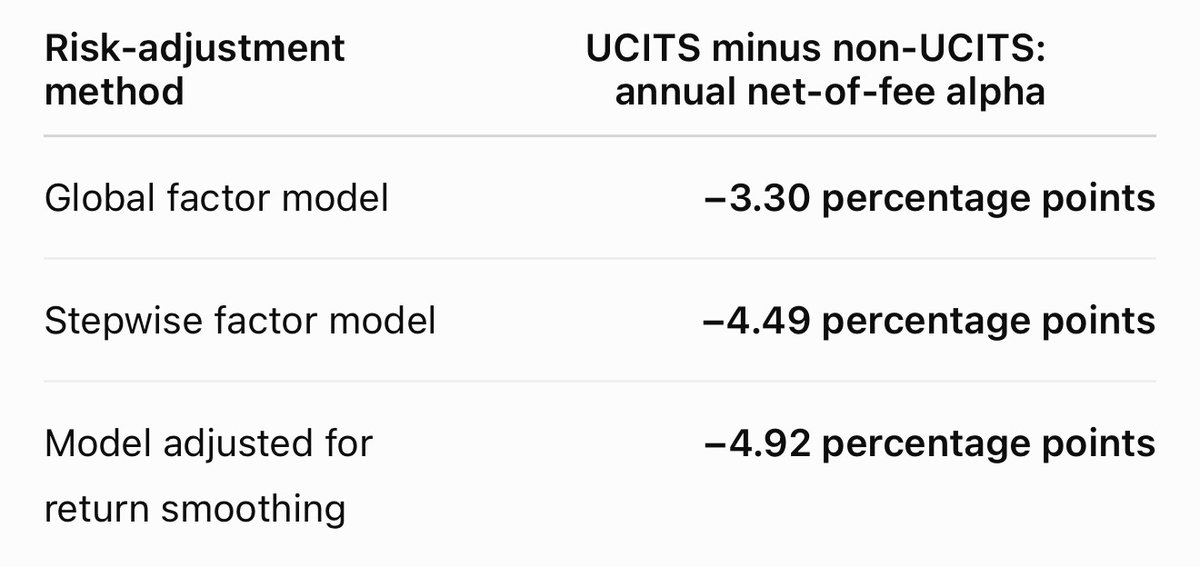
UCITS IS POISON FOR YOUR PORTFOLIO
“The Effect of Regulatory Constraints on Fund Performance: New Evidence from UCITS Hedge Funds”
Juha Joenväärä, Robert Kosowski
Review of Finance, Volume 25, Issue 1, February 2021, Pages 189 – 233, https://t.co/wLE55jyZvS
you can either look at a mortgage as a bank letting you long real estate against a perpetual devaluing dollar for a carry cost slightly above the risk free rate of return, or you can choose to be ignorant of how money works, if you spiritually have the mind of a medieval peasant
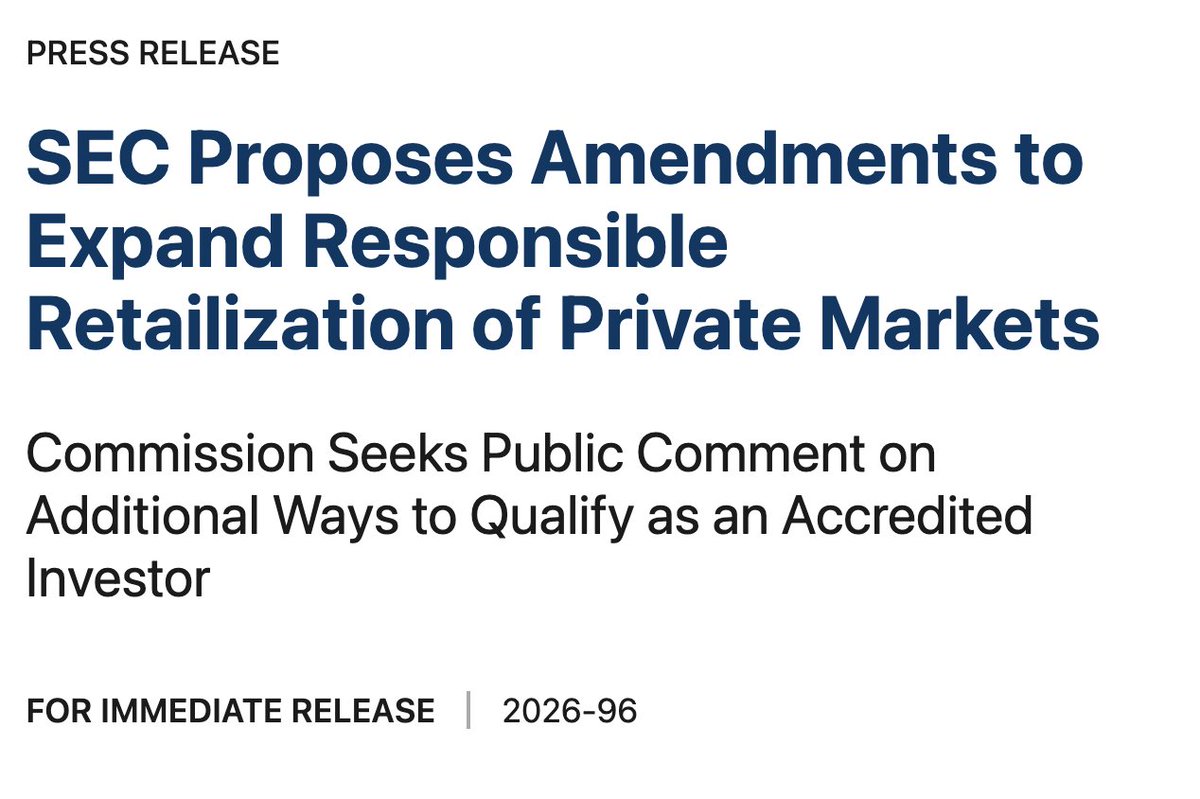
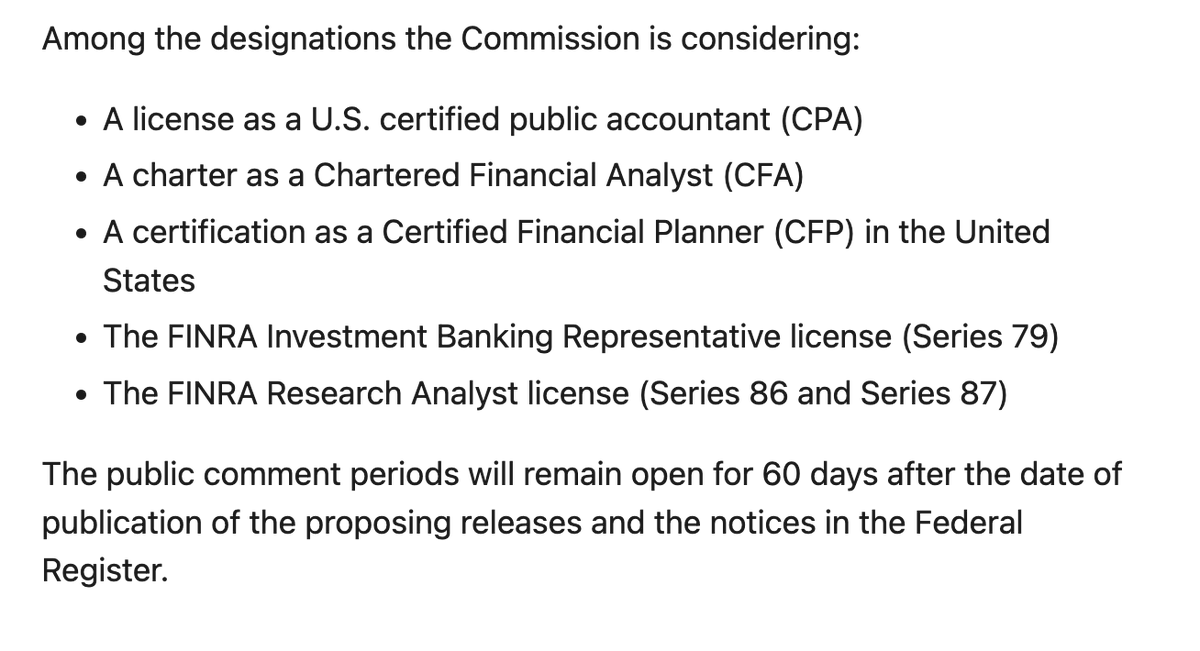
SEC "considers providing individual investors with additional ways to qualify as an accredited investor by holding in good standing certain professional certifications, designations, or credentials."
This is supply-driven, just FYI
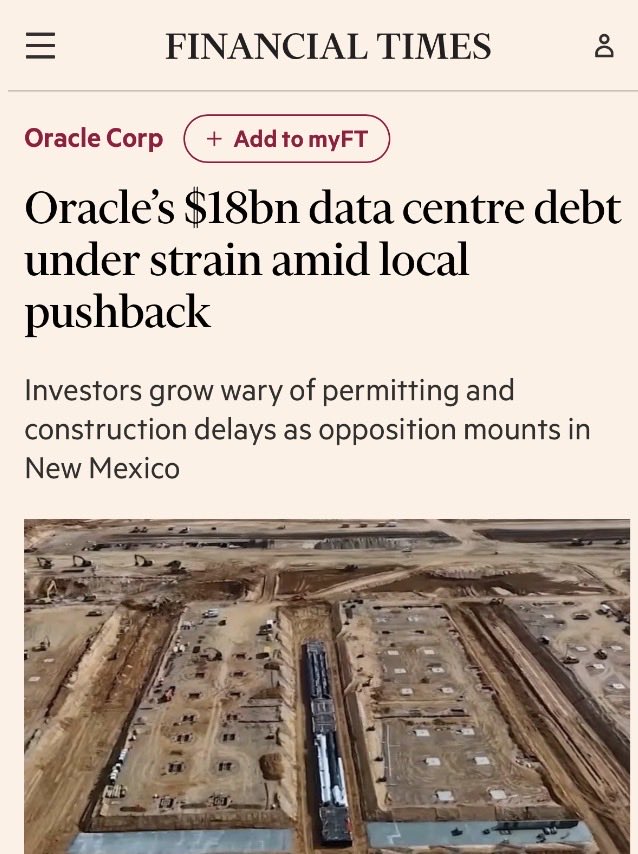
(FT) - About $18bn of loans tied to a data centre leased to Oracle in New Mexico slid into stressed territory on Friday, highlighting investors’ fear that increasing local backlash will derail the tech group’s massive AI infrastructure build-out.
$ORCL
https://t.co/1EIezznc7P
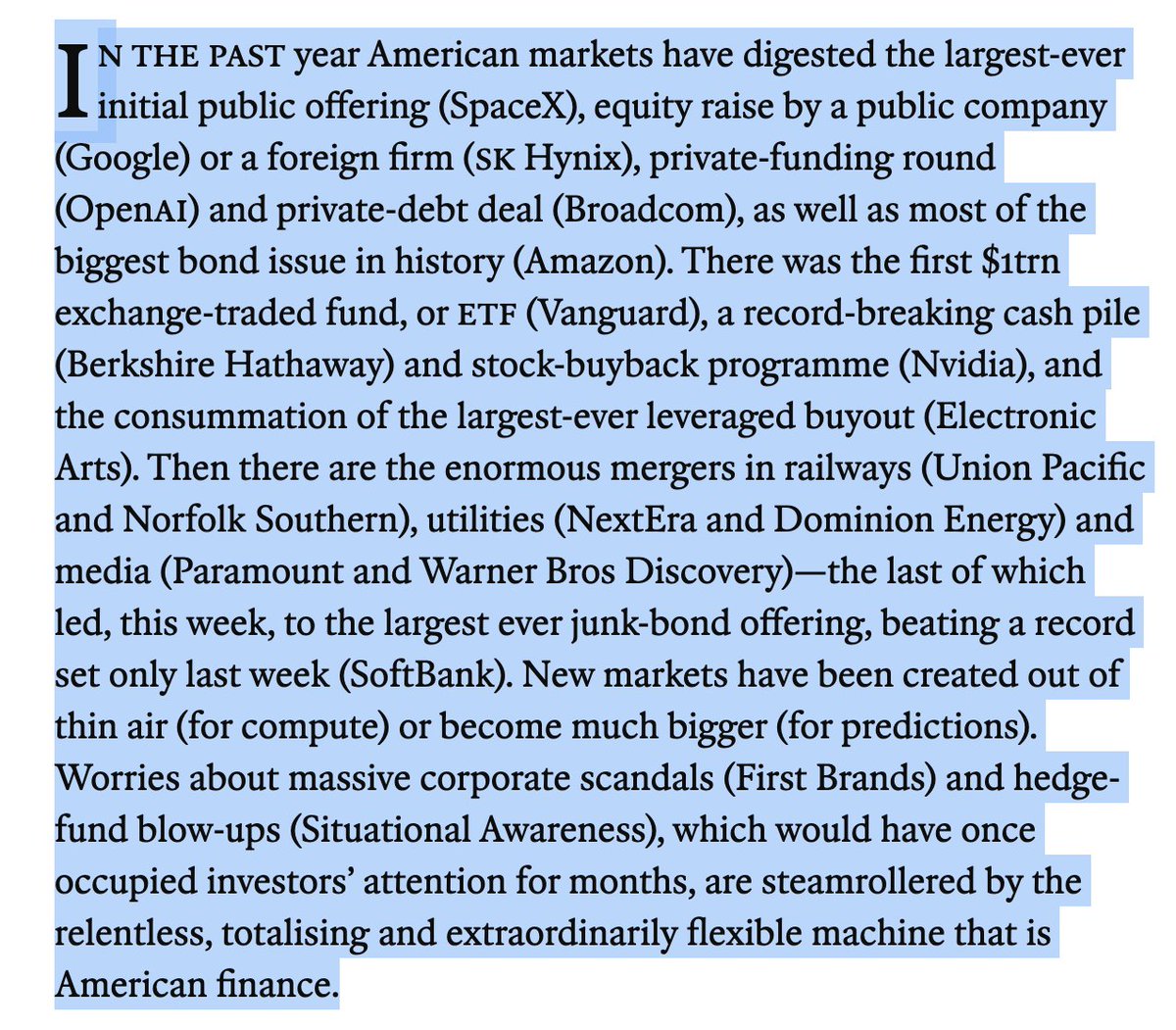
its still so underrated the degree to which our intelligence supercycle was as much reliant on innovations in capital formation as it was innovations in the technology itself.
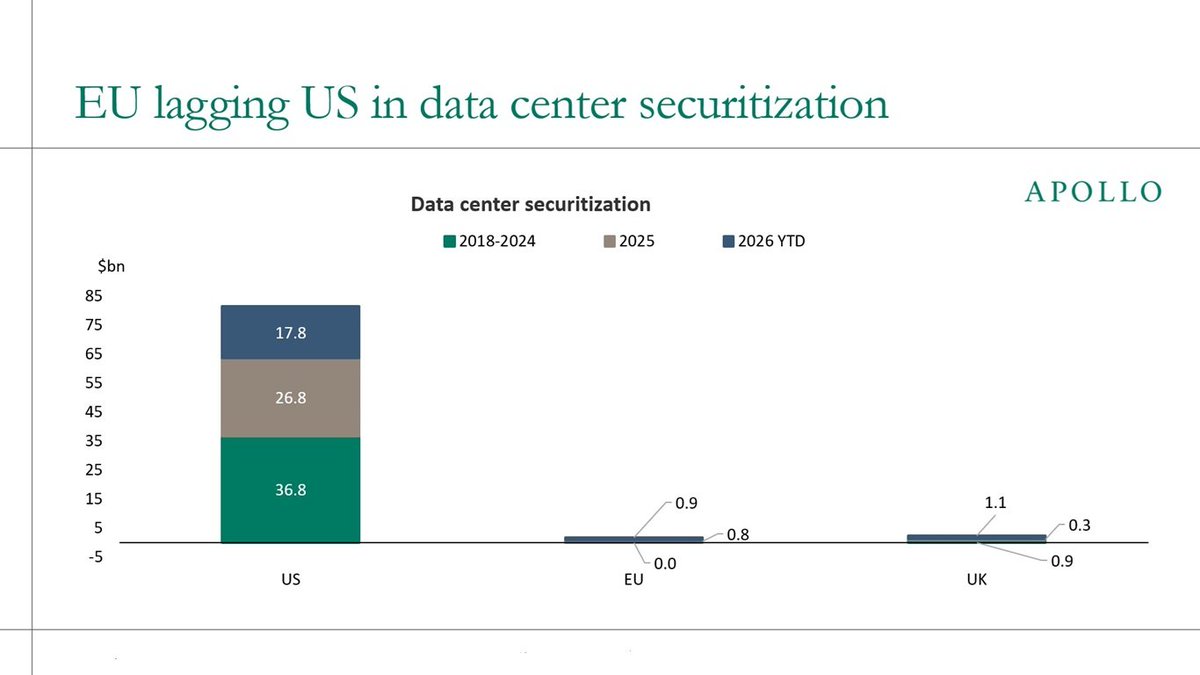
europe is losing not only because they can't built it, but primarily because they can't finance it