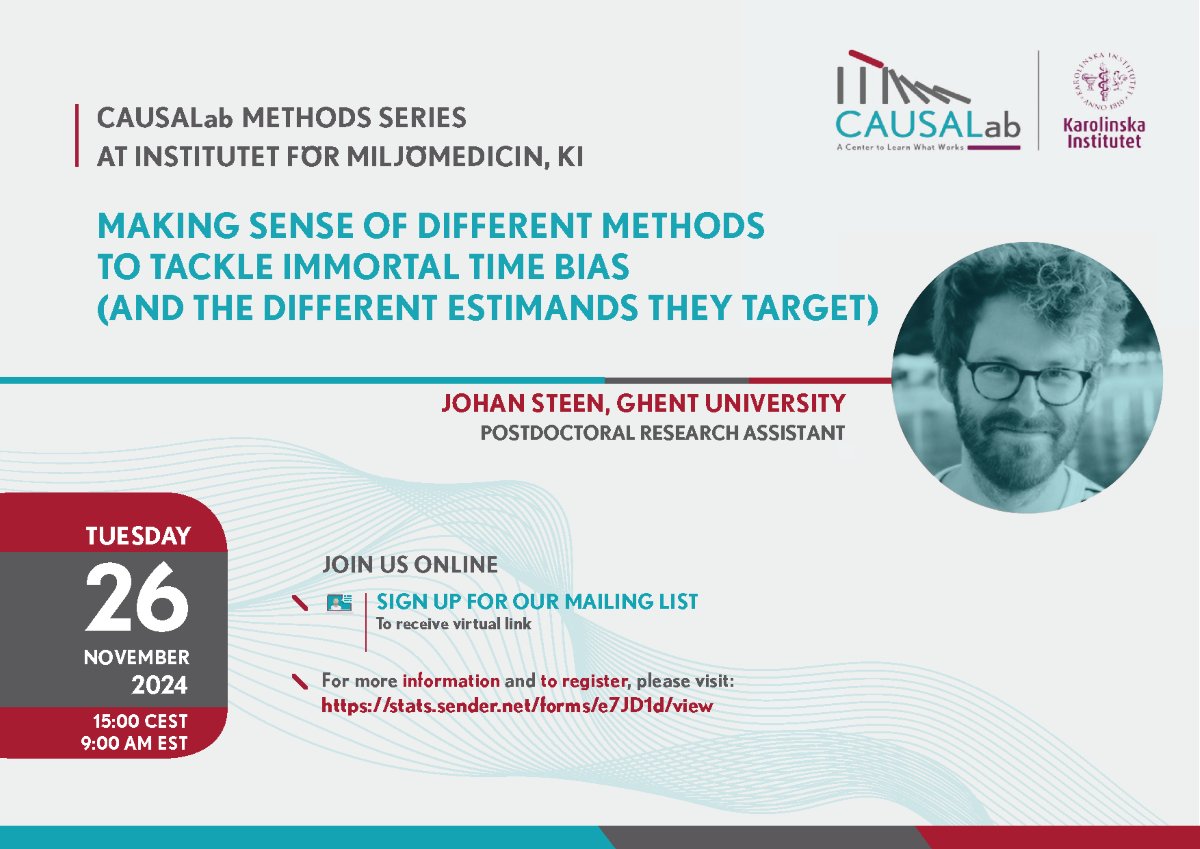
The 2024-2025 CAUSALAb Methods Series @karolinskainst continues w/ Johan Steen's presentation on immortal time bias.
📆 Nov 26, 2024
⏰ 15.00 CEST/9.00 ET
📍 All Methods Series talks virtual
Register to attend 👇
https://t.co/P2iIQMc6fA
#causalinference#healthdata
”Detta måste få ett slut” - i dag publicerar vi ett upprop där 74 journalister och forskare vittnar om hat, hot och trakasserier. Läs och dela - för ja, detta måste faktiskt få ett slut. https://t.co/5DLFnKcd7Z
Can Mendelian randomization be reclaimed from the deluge of papers and misleading findings? asks editorial by @stefanstender Helene Gellert-Kristensen https://t.co/MVMP84jUEj In "Lipids in Health & Disease", which gets 60+ MR submissions a month. How should journals respond?
📢New Open🔓 Access Paper
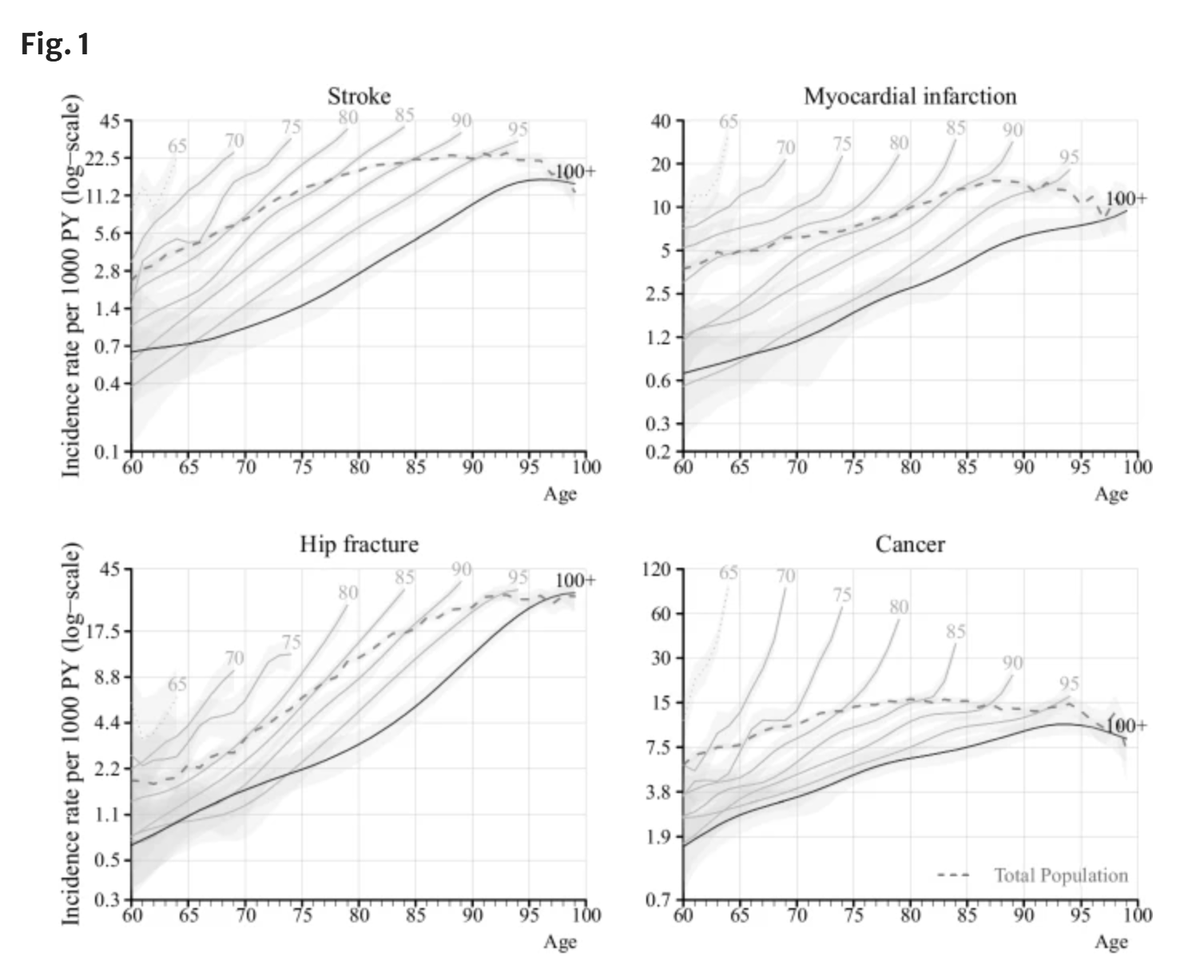
Do people reach 100 by surviving, delaying, or avoiding diseases? A life course comparison of centenarians and non-centenarians from the same birth cohorts by Yuge Zhang & Karin Modig (@karin_modig) et al.
https://t.co/DpiTdcpSrc
#centenarian #lifetimerisk #agespecificincidence #birthcohort #longevity
@dave_ehs This is a systematic review published in a scientific journal, using the appropriate language for this methodology. The results will feed into a health risk assessment together with other lines of research.
September is #ChildhoodCancerAwarenessMonth!
Study in Japan shows rising childhood cancer prevalence despite a declining birth rate. More long-term survivors highlight the need for better #survivorship planning and support
🔓OPEN ACCESS
➡️https://t.co/aV2PigXdiT
@uicc
Dr @MaryBerigan, Head of the Monographs Programme at the International Agency for Research on Cancer (IARC) explains the difference between a hazard identification and a risk assessment.
#CancerResearch
IARC Monographs Vol. 136
https://t.co/ySfKZgxdMo
https://t.co/vOifpEHMF6
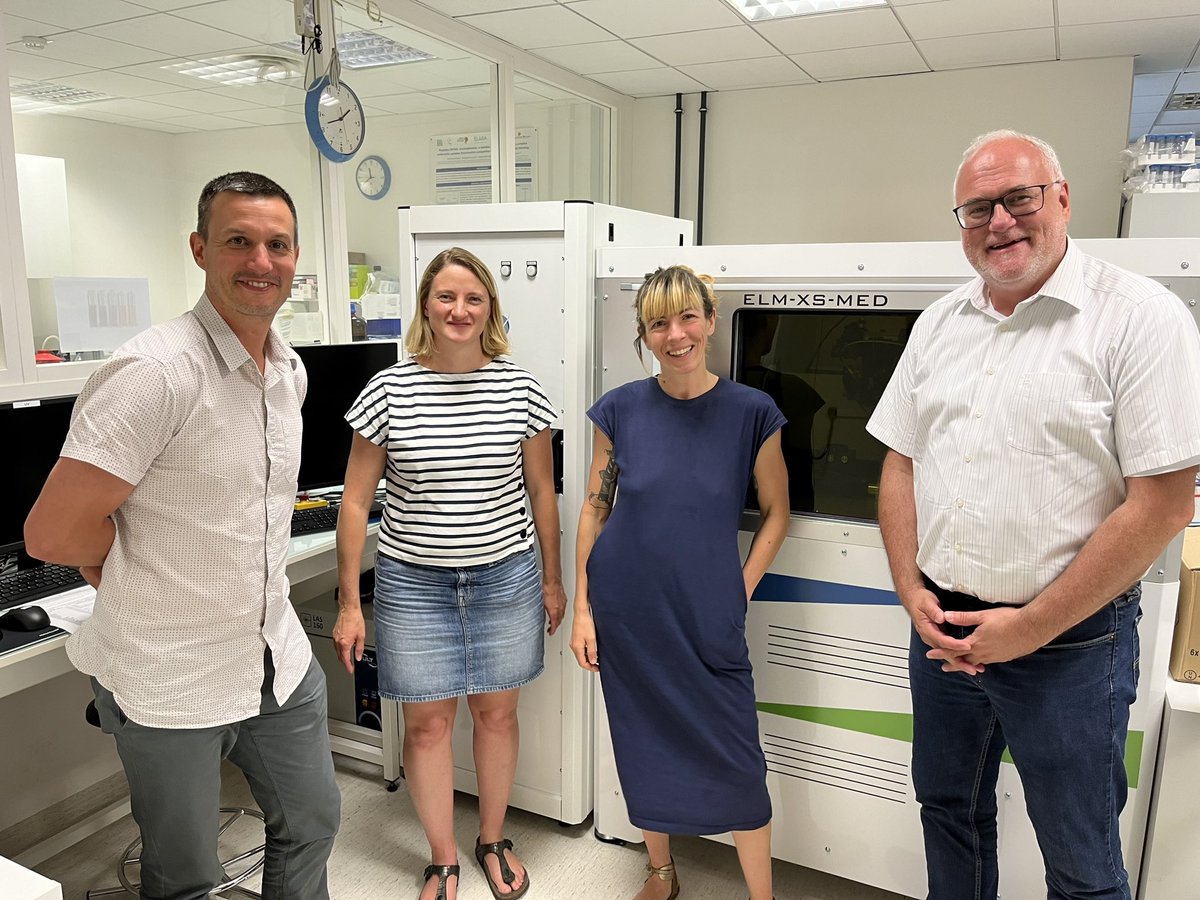
Researchers from @IARCWHO & @IAB_Officiel start project on identifying metals in lymph nodes of #tattooed using Laser Induced Breakdown Spectroscopy (#LIBS) - excited to see first results
It's well known that lower income people tend to suffer much worse health. Is poverty at the heart of this disparity, and, if so, could a large cash transfer help close this gap? We examine an RCT that provided 1000 low income participants $1000/month for 3 years. We find…