@AppleSupport Mio filgio ha dimenticato la password dell'account Apple, nel gruppo famiglia, per accedere al suo iPhone. Dopo 24 h di fermo ci è stato indicato di farlo attraverso la vostra app Support. Risultato: 6 altri giorni di attesa per il recupero password. Inaccettabile!
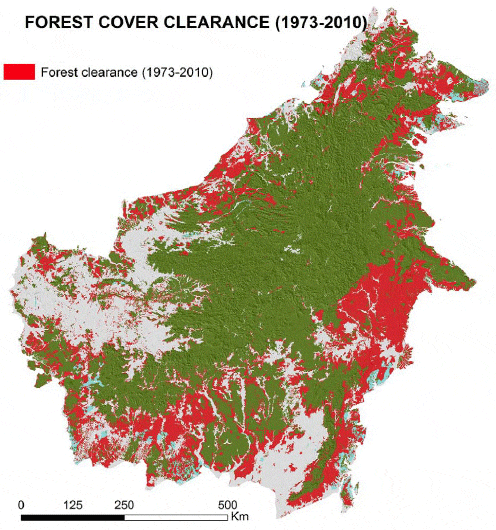
Indonesia is razing its ancient forests
In West Papua now - over 5 million acres to be destroyed
Sumatra lost 4.4 million hectares of forest since 2001.
Borneo Jungle over 33,000 hectares of rainforest, an area nearly half size of Singapore, obliterated in last 3 years alone
"MOST EXTREME EVENT EVER SEEN IN WORLD CLIMATIC HISTORY"
The planet we think we're living on no longer exists.
Stop this Extinction Economy now before it's already gone too far.
Never forget: At breakneck speed we are leaving the stable Holocene climate in which human society developed and thrived. Weather extremes are outside historical experience. Sea-level rise is accelerating. Dangerous tipping points are ahead.
Graph: https://t.co/UNaqGEKMQc
Greenland losing 30m tonnes of ice an hour,
20% more than previously thought
This is weakening critical ocean current AMOC which is at its weakest in 1,600 years
A weakening and inevitable collapse of AMOC will hugely impact climate in Europe and beyond
https://t.co/ledFYCcFGN
📑 Chi si è messo di traverso per far sì che l’Accordo di Parigi, siglato nel 2015 per contrastare la crisi climatica, venisse ostacolato? I soliti "giganti fossili", tra cui gli 🇮🇹 #Eni e #Snam, come spiega il nuovo rapporto di ReCommon “Dieci anni perduti". #COP30
👇
https://t.co/EaQOqu0ij3
📅 Oggi sul canale YouTube del @fattoquotidiano il documentario prodotto da ReCommon e @Greenpeace_ITA "Il prezzo che paghiamo".
Seguirà la diretta con la regista, Sara Manisera, Simona Abbate di Greenpeace ed Eva Pastorelli di ReCommon.
👇
https://t.co/VYODM3R8Lx
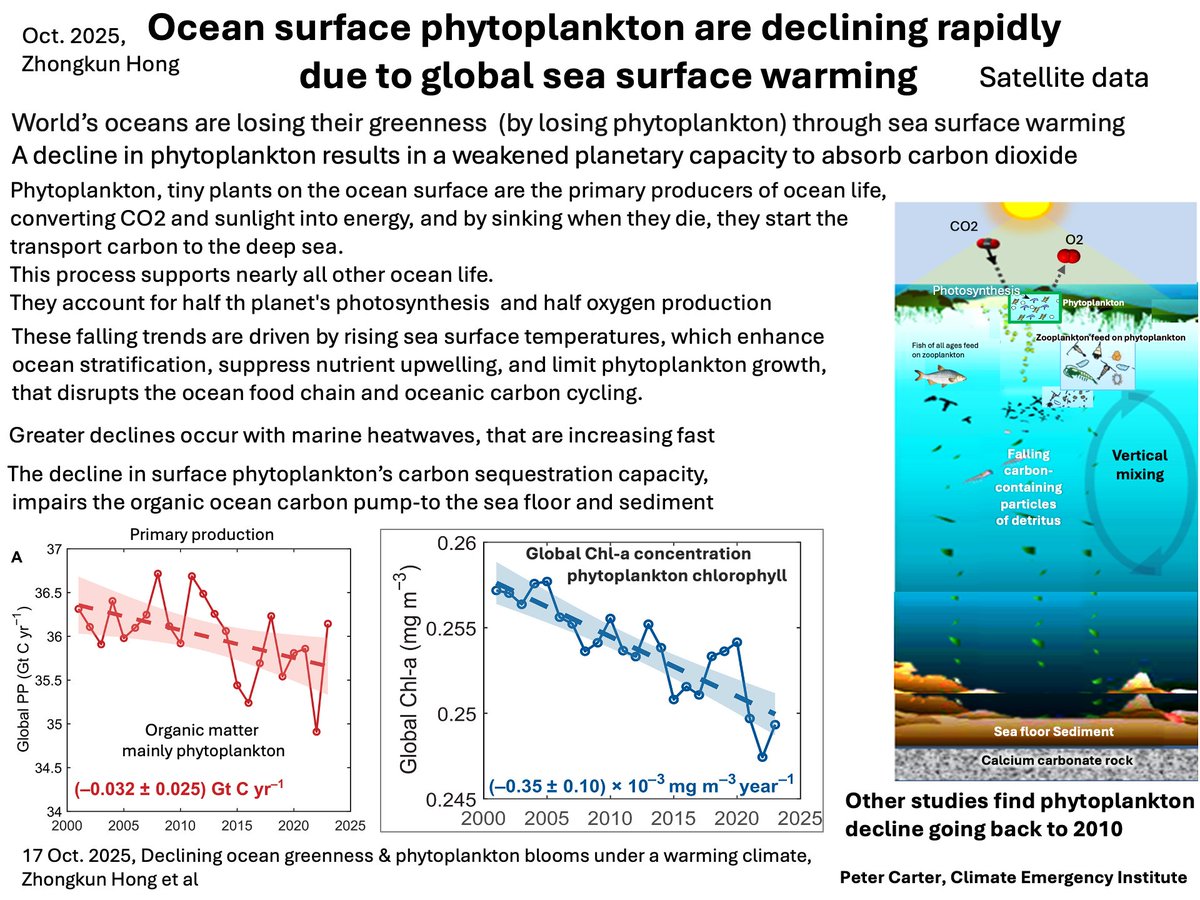
WORST NEWS YET: OCEAN PHYTOPLANKTON DECLINE
Satellite data shows a steady and rapid decline in global ocean surface phytoplankton, due to rapid ocean surface warming.
Confirms the same findings going back to 2010. Phytoplankton are the basis of ocean life and so life on Earth. They contribute half of Earth's photosynthesis and produce half of the oxygen.
They start the ocean food chain and the ocean carbon pump that sinks carbon to the seabed. MOST DIRE EARTH EMERGENCY
https://t.co/HuKTH7678t #ocean #ClimateChange #phytoplankton #globalwarming
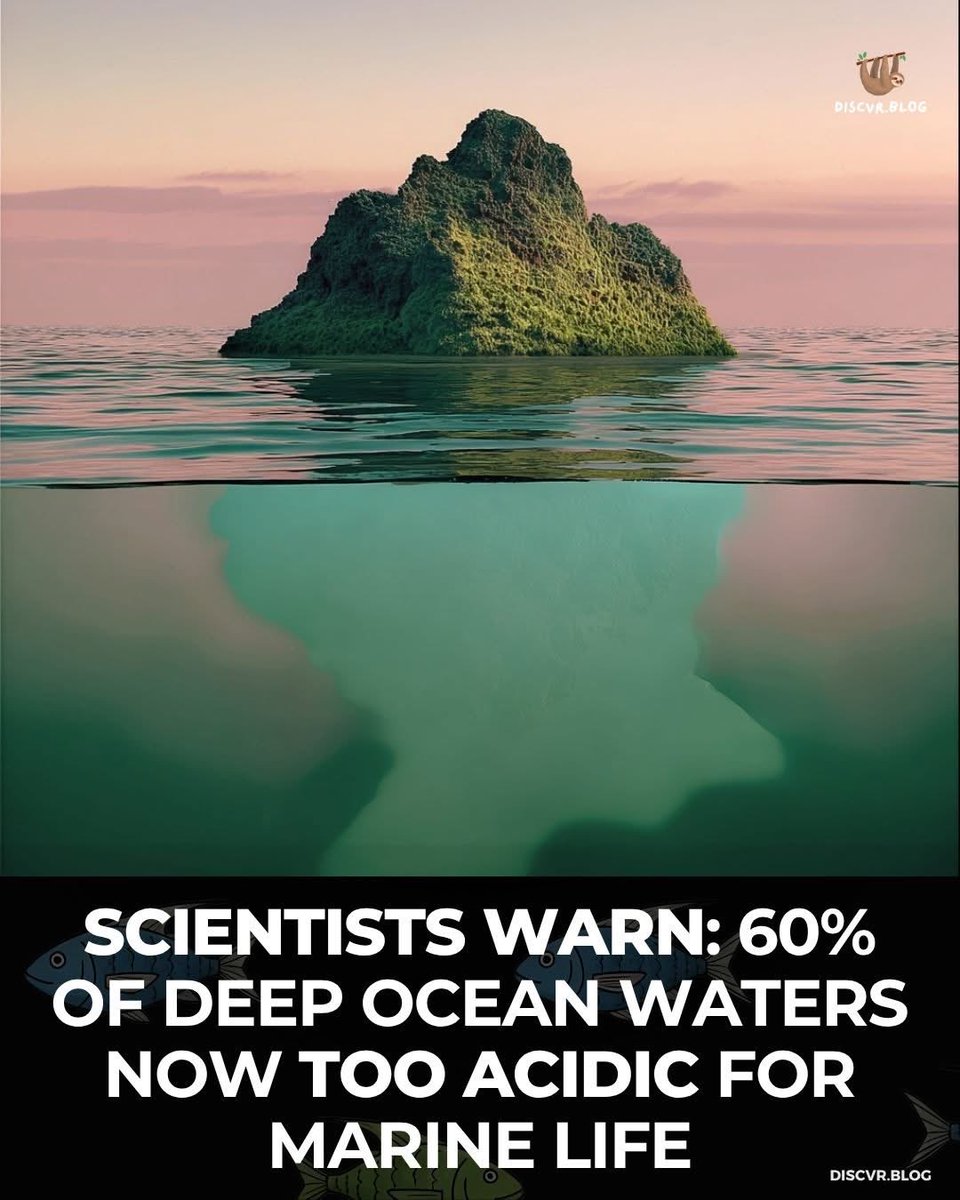
Earth’s oceans have quietly crossed a chemical tipping point. A new global study reveals that 40% of surface waters and 60% of the deep sea have become too acidic for many shell-forming species to survive. This shift—driven by rising carbon dioxide absorbed from the atmosphere—is dissolving the calcium foundations of life itself.
Corals, mollusks, and plankton are struggling to build shells. Fisheries face instability. Entire ecosystems that once buffered our climate are now destabilizing beneath the waves. The damage is especially severe in polar regions and deep nutrient-rich zones where life has always flourished.
Scientists warn we may be underestimating the scale of change. Ocean acidification is no longer a distant concern—it’s a planetary boundary crossed. The chemistry that sustained marine life for millions of years is changing in mere decades, and its ripple effects reach every coastline on Earth. Via discvr blog
Planet-heating methane is escaping from cracks in the Antarctic seabed as the region warms, with new seeps being discovered at an “astonishing rate,” scientists have found, raising fears that future global warming predictions may have been underestimated. https://t.co/N367IBbmvc
This is an extremely disturbing study.
According to new research reported here, the probability of the Atlantic Meridional Overturning Circulation (AMOC) collapsing due to climate change is much higher than previously believed.
One author said: "We found that (on our current policy trajectory) the tipping point where the shutdown becomes inevitable is probably in the next 10 to 20 years or so." AMOC collapse would then follow by 50-100 years.
The AMOC is what brings warm water from the equator up to the west coast of Europe, keeping that region warm and wet, and circulates cold water from the Arctic down south.
AMOC collapse would cause dramatic cooling in Europe, particularly in Britain and Ireland, France and the Nordic countries, with average temperatures dropping by up to 8C. Icy.
Studies have found this would have a dramatic negative impact on agriculture in Britain. In the USA, it would cause higher sea level rise on the east coast.
The research on this is striking because so far the negative impacts of climate breakdown have affected the global South more than the global North. This may be one reason that Northern governments have been slow to respond. But AMOC collapse changes this calculus.
We can still avoid this risk, but it requires rapid emissions reductions, much faster than governments are presently planning to achieve. It will require strong public finance mechanisms and public works, to overcome the inertia of capital, and will require degrowing unnecessary forms of production.
https://t.co/tJS4ujqFBX
If the likelihood of a catastrophic event is > 10% then the Risks are unacceptable high. This is the point we have reached on scientific evidence for AMOC shutdown. This is the "Don't look up moment" for risks of liveability on Earth https://t.co/ay2w2YKsKu
New Report by @Ember_energy shows that > 90 % wind and solar projects commissioned worldwide in 2024 produced power more cheaply than the cheapest available fossil-fuel alternative. Bad for planet and Bad for economy to bet on oil, coal & gas https://t.co/7MOSkFJTTq
Shale growth is collapsing.
Output growth is down 90% in just 2 years.
Every basin except the Permian has already peaked.
Now the Permian is flashing the same warning signs.
(Thread)