Proud to be a Trading Analyst at CONNECT 🚀🚀🚀
✅Community of #Crypto traders developing & growing our skills.
✅TRADES, SIGNALS, EDUCATION with great VIBE, FREE to Join
🔗https://t.co/prW62unrbb
📣📣@YUBIT_Exchange - campaign exclusively for our @CNCTDiscord community... MASSIVE opportunity
🚨 $5,000 WEEKLY GIVEAWAY 🚨
Trade on YUBIT and win 500 USDT Futures Bonus EVERY week 🔥
Sign up 👉🏻 https://t.co/Tjzd4E9zk7
✅ Sign up using my link
✅ Net Deposit ≥ 500 USDT
✅ Weekly Futures Volume ≥ 500k USDT
⚡️ 10 WINNERS DRAWN WEEKLY
**HUGE CHANCE OF WINNING - ONLY FOR CONNECT**
⏰ ends 28th July
#GiveawAlerts #Crypto
The humanoid robot market is projected to reach $7.5 trillion by 2050 and most investors are looking at the wrong companies (Save this).
Everyone is focused on the robots themselves but a humanoid robot is just a collection of precision components and right now, a handful of industrial suppliers quietly control the bottlenecks that every single robot company on earth depends on.
That component diagram above is your investment map.
The most critical component in any humanoid robot is the reducer, the precision gearbox that converts motor speed into torque for each joint.
Every shoulder housing, knee joint, hip actuator runs through one and right now, one Japanese company controls 85% of the global market for the dominant type, strain-wave harmonic reducers.
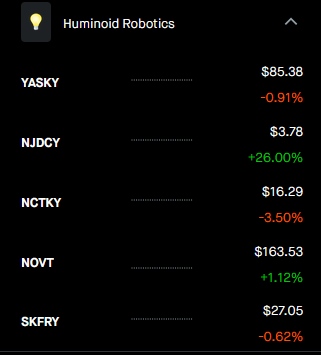
That company is Harmonic Drive Systems (6324.T / HSCDF).
Harmonic Drive is a confirmed supplier to multiple major humanoid programs and the entire global industry depends on its output.
Revenue was ¥55.6 billion in FY2025 and order books are accelerating as OEM production ramps and it is the closest thing to a monopoly in the entire humanoid supply chain.
The second reducer type, cycloidal RV reducers, which dominate heavier joints like hips and shoulders is controlled by Nabtesco (6268.T / NCTKY), also Japanese, with roughly 60% global share.
FY2025 revenue hit ¥307.9 billion, up 9.8% year over year, with operating profit up 60% in the same period.
Both companies are so embedded in the supply chain that even the Chinese robot manufacturers racing to commoditize components still rely on Japanese reducers for precision critical applications.
Together, actuators and reducers represent 30 to 51% of the entire hardware bill of materials for a humanoid robot.
When you're talking about a billion robots by 2050, the companies that supply those components are not riding a theme, they are the theme.
The next layer is bearings and precision transmission. SKF (https://t.co/m5gvlP4X1U), the Swedish industrial bearing giant, announced a joint venture on July 2, 2026 with Chinese precision component maker Leaderdrive specifically to supply high precision transmission components for humanoid robot joints.
SKF is taking a 60% majority stake, targeting both the Chinese market, the world's largest and fastest growing humanoid robotics market and international expansion through its global sales network.
SKF has the manufacturing scale, the quality systems, and the global distribution and it is now directly positioned inside the humanoid supply chain at the joint level.
The force and torque sensor market is the next critical bottleneck because every foot, wrist and ankle in a humanoid robot needs a sensor that tells it exactly how much force it is applying, the thing that lets a robot grip a fragile object without crushing it.
The global humanoid force/torque sensor market was $700 million in 2025 and is forecast to reach $6.4 billion by 2032, growing at 37.1% annually.
Novanta (NOVT) is the publicly traded play here because its ATI Industrial Automation subsidiary, acquired specifically for its robotics sensing capabilities launched the Varo force/torque sensor in early 2026, purpose-built for humanoid platforms.
Novanta also owns Celera Motion, which supplies advanced motion control components to robot joints and it is one of the few US-listed companies with real, shipping revenue from humanoid component supply.l
The broader motors and drives layer belongs to Nidec (6594.T / NJDCY), a Japanese company with ¥2.61 trillion in annual revenue that revealed a full six-axis humanoid drive solution at IREX 2025 meaning it can supply the complete motor stack for an entire robot from a single vendor.
And Yaskawa Electric (6506.T / YASKY), which just acquired Tokyo Robotics and posted FY2026 operating profit up 70% year over year, is moving aggressively from industrial arms into humanoid platforms.
The pattern across all of these companies is identical, decades of precision manufacturing expertise built for industrial automation and automotive, now being redirected into a market that is about to be orders of magnitude larger.
Bullish on the supply chain because every humanoid robot needs the same critical components and make sure to follow me @MelvinInvests for more overlooked opportunities.
💥 Quick Reminder: Double Stream this afternoon 💥
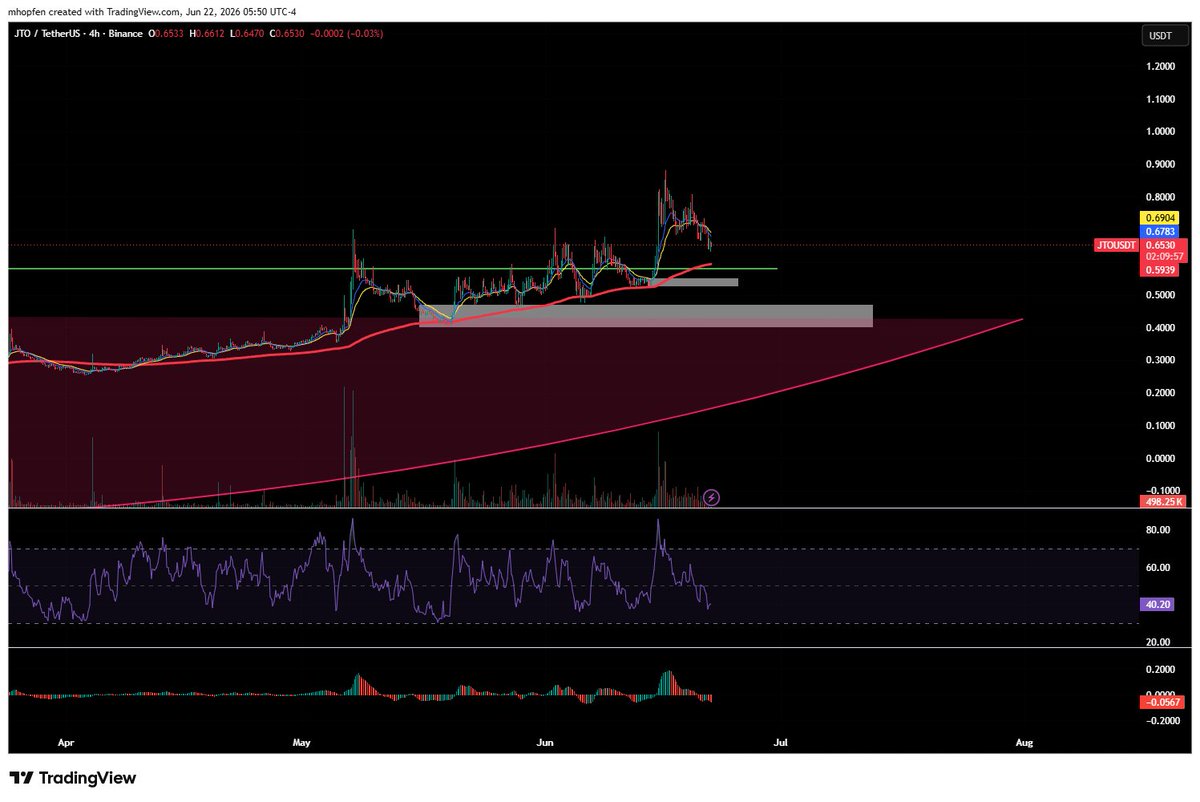
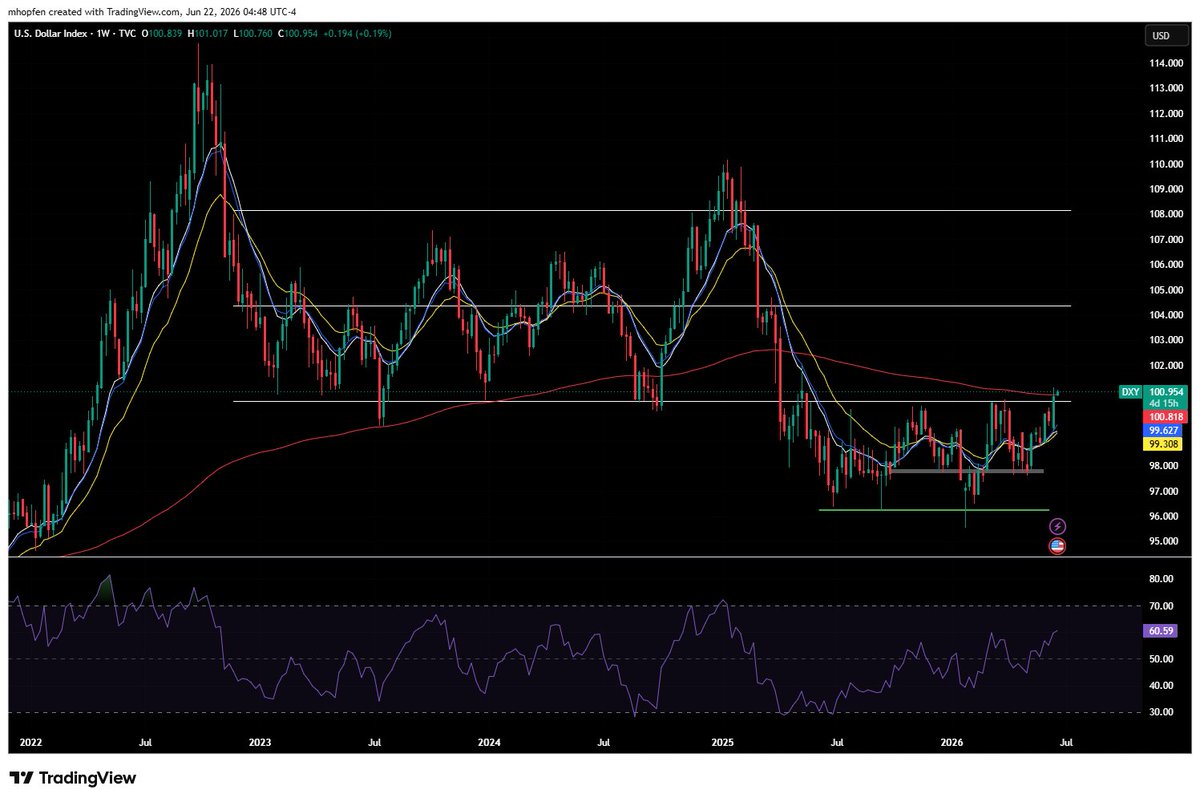
🫡 Let's see what this PA gives us in way of opportunity
@_shahahaharyar Just Pure Charting
@casper_XBT Live Trades on Twitch
https://t.co/Qyg1o2kIUd
Set reminders – don’t miss any part! 🚀
#CryptoAlpha#FX
@CNCTDiscord crossed 9,000 members 🔥
Honestly, it's pretty wild considering the server is completely FREE.
What started as a small group of traders has grown into thousands of people sharing charts, discussing the markets, using our tools, joining streams, and helping each other navigate crypto every day.
We're grateful for every single person who's contributed along the way.
9,000 is a great milestone.
But we're far more excited about what's coming next.
Road to 10K 🤝