Unleash your inner athlete with intense agility drills and explosive track sprints. Push your limits, conquer the track, and achieve peak performance. #AthleteLife#Training
Most young athletes are loaded before they are taught.
At Power and Pride, we start with weightless dowels so middle school athletes learn bench press technique before we add real weight.
https://t.co/hKkmg8rBTF #PowerAndPrideCamp#MiddleSchoolAthletes#YouthStrengthTraining
Proper bench press form starts with setting your feet, keeping shoulders back, and a slight arch in your lower back. Focus on controlled movement for maximum gains. #GymTips#Weightlifting
Middle school athlete foundations only!
Power & Pride Strength & Speed Camp July 6 to July 17 9 AM to 12 PM
https://t.co/hKkmg8rBTF Link in bio
My biggest coaching pet peeve:
Parents and players are always looking for the next best. The latest training tool, the newest innovative drill, or lesson lesson lesson.
When 95% of kids need calories and a gym membership.
Big and strong = Confidence
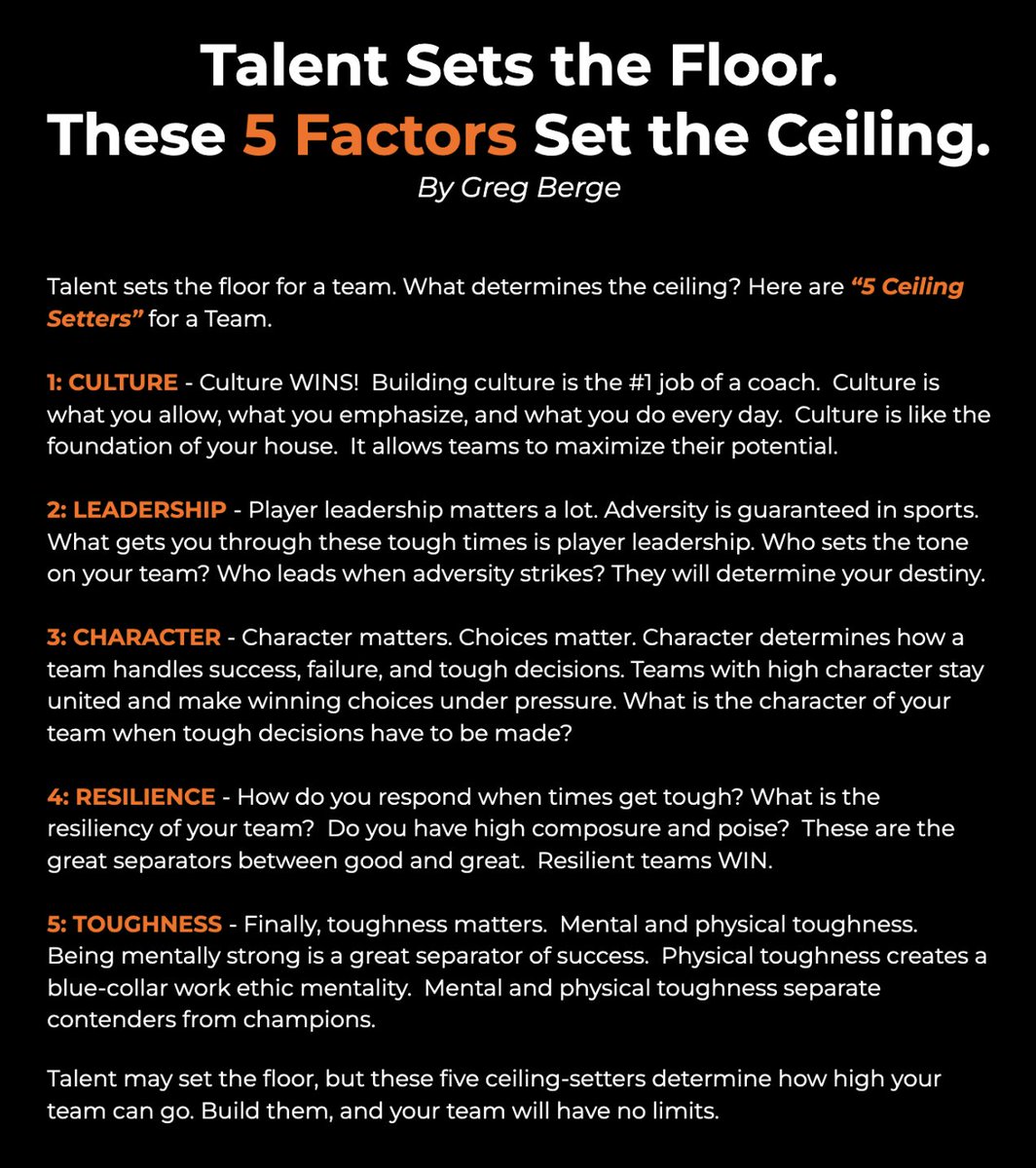
Every coach knows: talent matters.
But what separates champions isn’t talent.
It’s culture, leadership, character, resilience, and toughness.
These 5 factors determine your ceiling.
The "skill-hungry years" are a period of optimal motor skill development, roughly between the ages of 8 and 12, when children are most receptive to learning new movement patterns and fundamental athletic skills. During this time, the body and brain are primed for developing coordination, balance, and speed, making it the ideal time to build foundational athleticism in sports and other activities. #LTAD
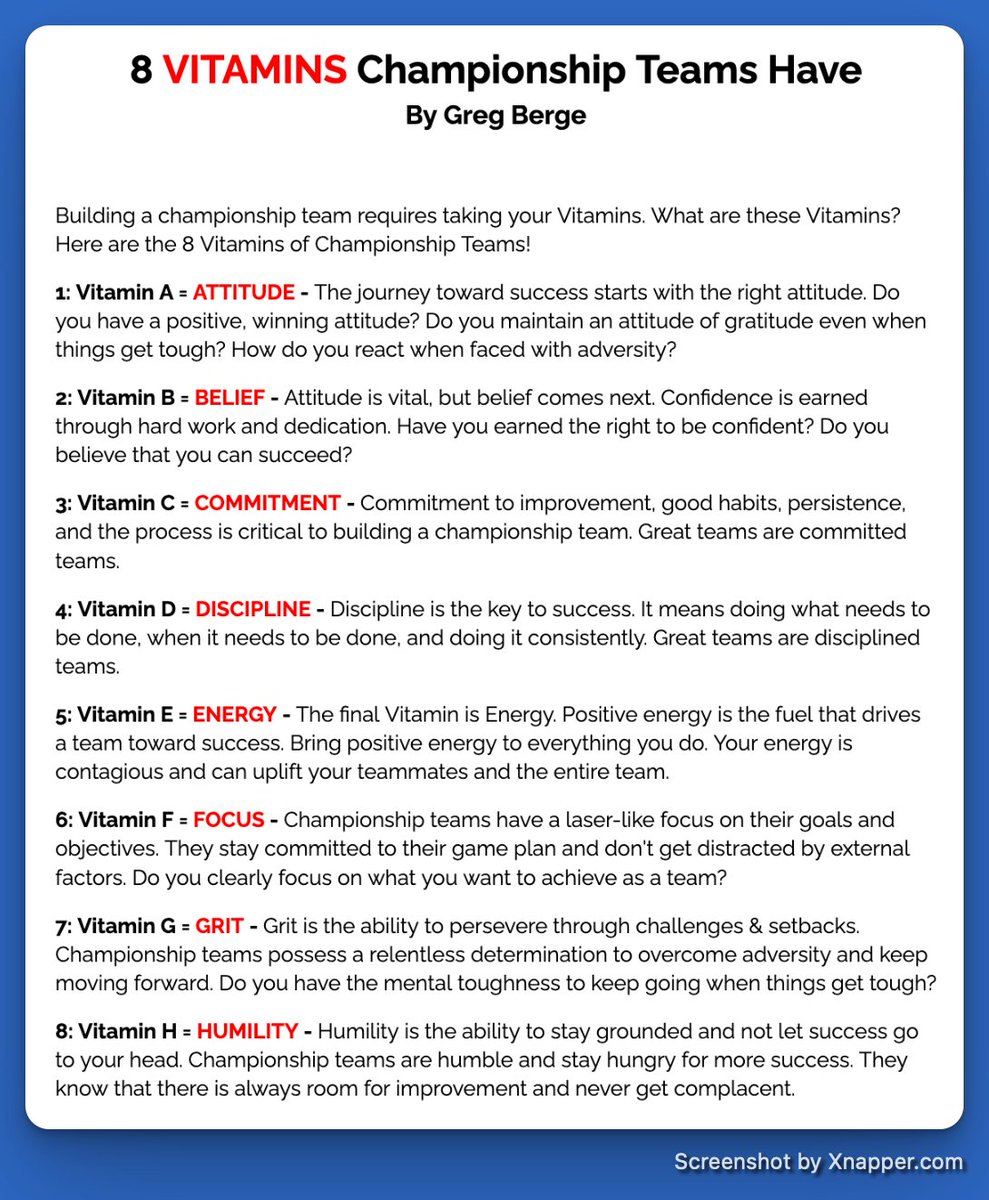
Championship teams take their vitamins:
A = Attitude
B = Belief
C = Commitment
D = Discipline
E = Energy
F = Focus
G = Grit
H = Humility
Strong in all 8 = Champions 🏆
"Should we be doing static or dynamic stretching before practice?"
Neither one reduces injuries the way you think they do.
Here's what really matters..
Understanding Injury Causes
Injuries in occur for two main reasons:
1. The volume demand exceeds the capacity of the tissue
2. An extreme force is applied to a single joint or body part
Reducing Soft Tissue Injuries
Here's how we can reduce injury risk in training:
1. Gradually build capacity through proper conditioning that prepares the body to handle the workload and demands of the sport.
2. Replicate high-intensity sporting actions in training like sprinting, agility work, and change of direction drills.
Stretching doesn’t directly address either of the primary injury mechanisms.
It doesn’t significantly contribute to building capacity or replicating high-intensity demands.
It may provide a sense of relief and can be helpful for chronically tight muscles with consistent, long-term practice.
But a brief pre-practice stretch alone won’t significantly lower injury risks, especially without proper offseason conditioning and sport-specific preparation.
The Key Takeaway
The type of stretching you choose before practice isn’t the critical factor.
What will actually keep your athletes healthy is a smart and properly progressed conditioning program during the off-season and maintaining it with proper practice dosage and planning.