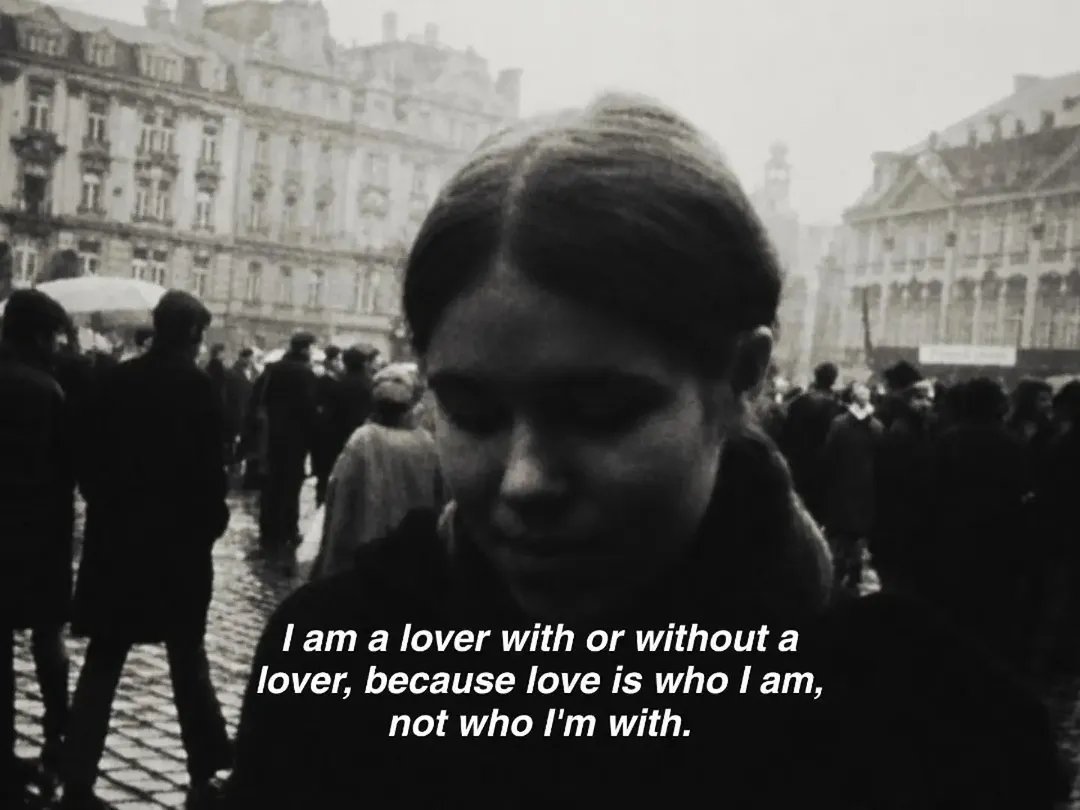
The other day my students were giving presentations, and one of them chose to talk about music. Somewhere in the middle of it, she casually said, "I listen to The Night We Met, not because I'm in love with someone. I just like listening to it for myself. It reminds me of the Moon or anything that's beautiful" and then she moved on to the next slide. I didn't, however! For some reason, that sentence stayed with me. We treat love as if it only becomes real when another person is involved. We hear a love song and immediately think of a beloved. We forget that sometimes love has nowhere to go except back to ourselves. Maybe that's something we've slowly lost, the ability to enjoy something beautiful without needing another person attached to it. To feel deeply without making someone else the centre of the feeling. Maybe the longest relationship you'll ever have is the one with yourself. It deserves a love song too.
Khalil Gibran was one of the most celebrated poets, writers, and artists of the modern era, whose words have continued to resonate with readers across cultures and generations. Born in the mountains of Lebanon and later settling in the United States, Gibran drew from both Eastern spirituality and Western thought, creating a body of work that explored the deepest questions of love, freedom, faith, sorrow, and the human condition. His most famous work, The Prophet, became a timeless meditation on the many experiences that shape a human life, from love and marriage to joy, grief, work, and freedom. More than a poet, Gibran was a seeker of truth and a student of the human heart, reminding us that life's deepest wisdom often comes through love, self-knowledge, compassion, and the courage to embrace both its beauty and its pain.
“Practice any art, music, singing, dancing, acting, drawing, painting, sculpting, poetry, fiction, essays, reportage, no matter how well or badly, not to get money and fame, but to experience becoming, to find out what’s inside you, to make your soul grow.”
— Kurt Vonnegut
Books were supposed to be killed by:
• Newspapers
• Radios
• Television
• Internet
• Smartphones
• Social media
• Streaming
• Artificial Intelligence
But they have survived and will continue to endure.