Media Institute of Southern Africa defends and promotes media freedom, freedom of expression & information access as envisaged in the 1991 Windhoek Declaration.
@MISARegional new strategy, #Voice, #Growth & #Influence 2026–2030, is included in our 2025 Annual Report. Our response: legal defence, newsroom viability, digital rights & AI. #MediaFreedom#SADC
https://t.co/6YoHJ69siO
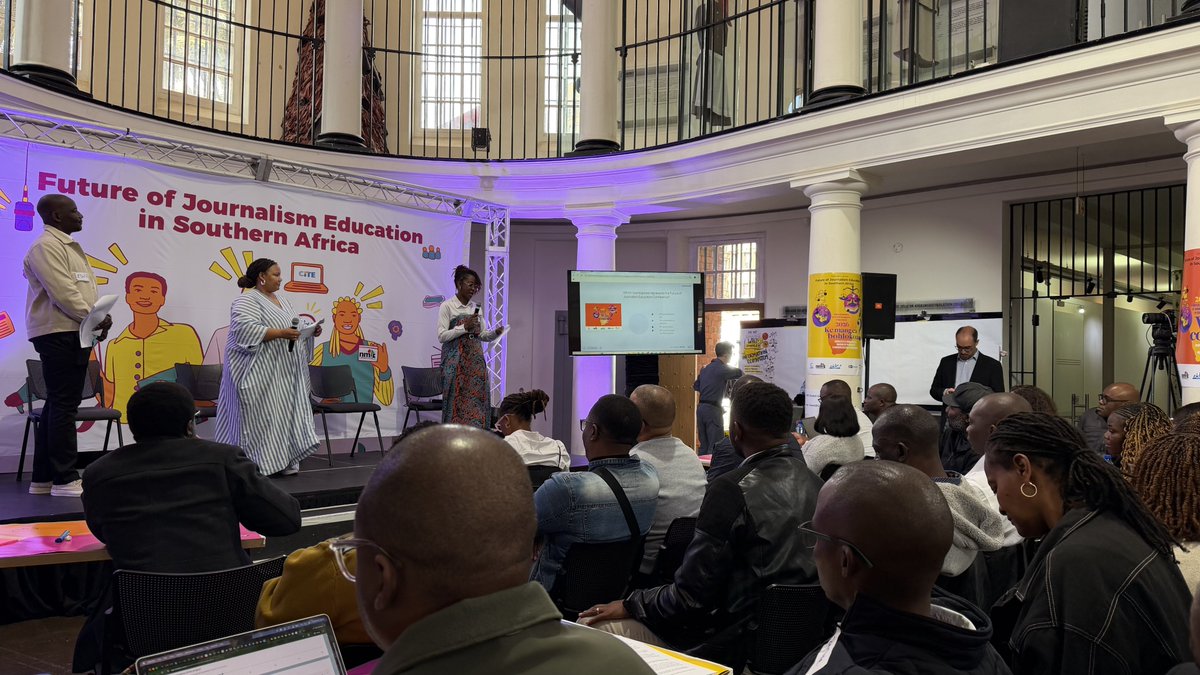
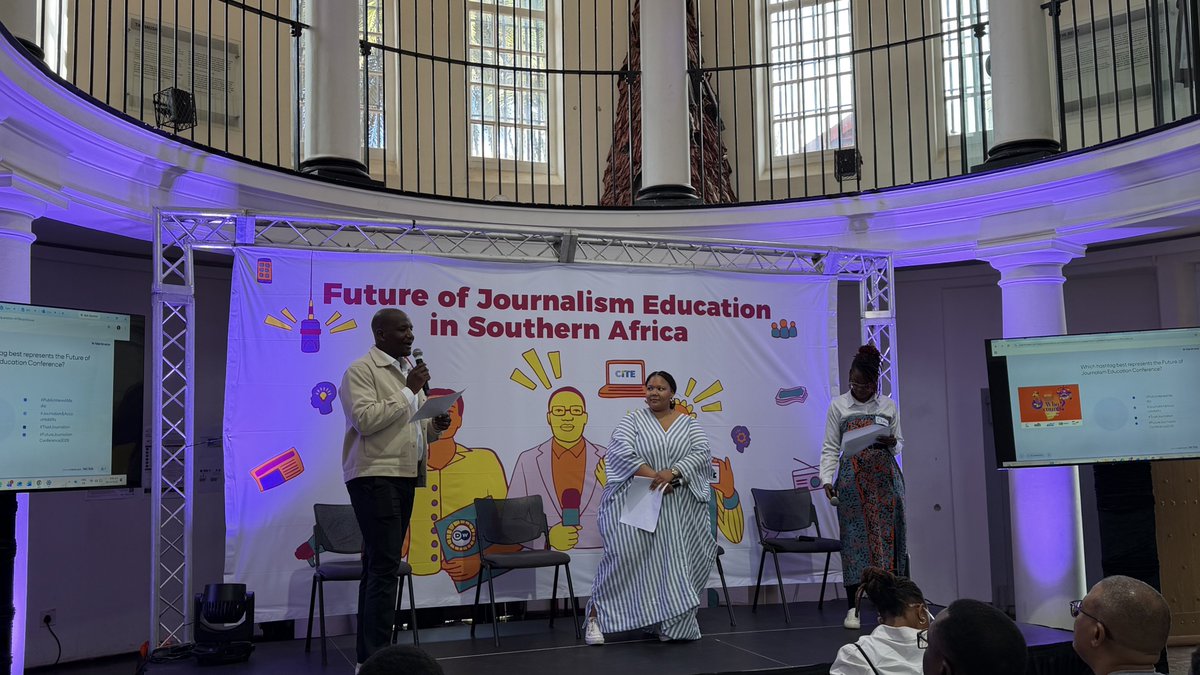
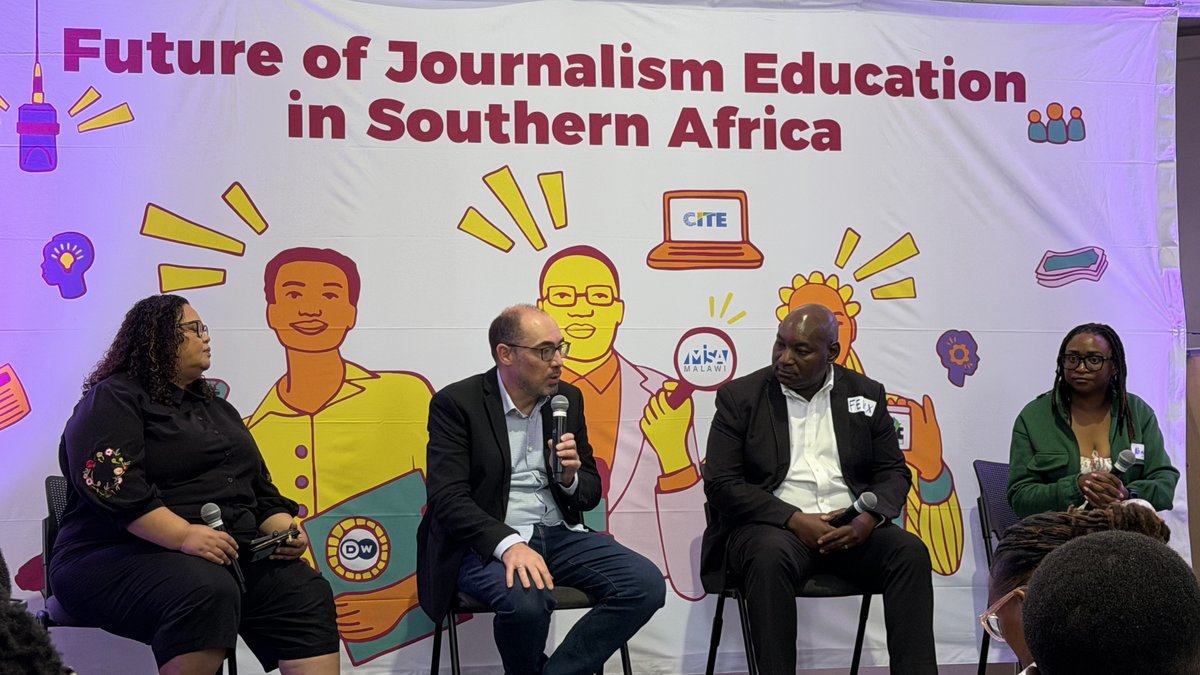
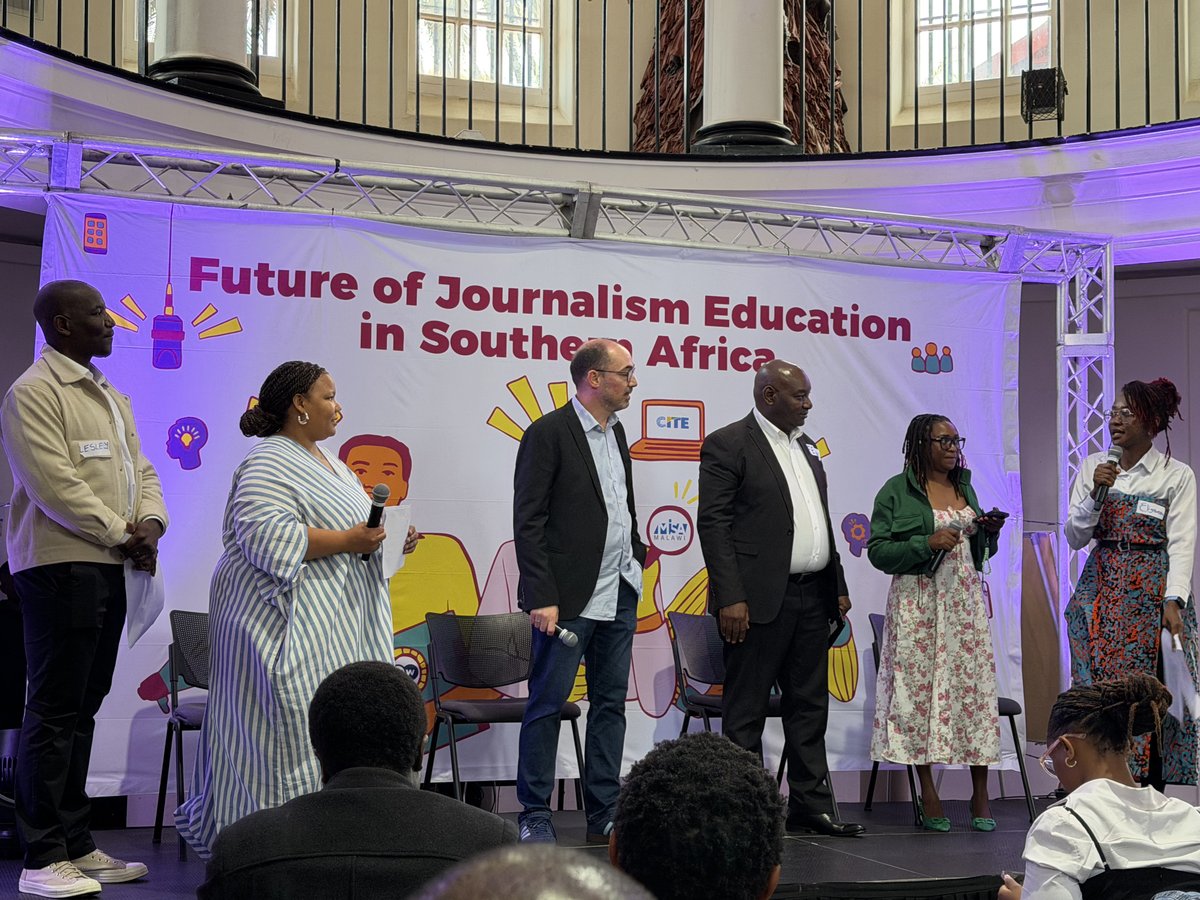
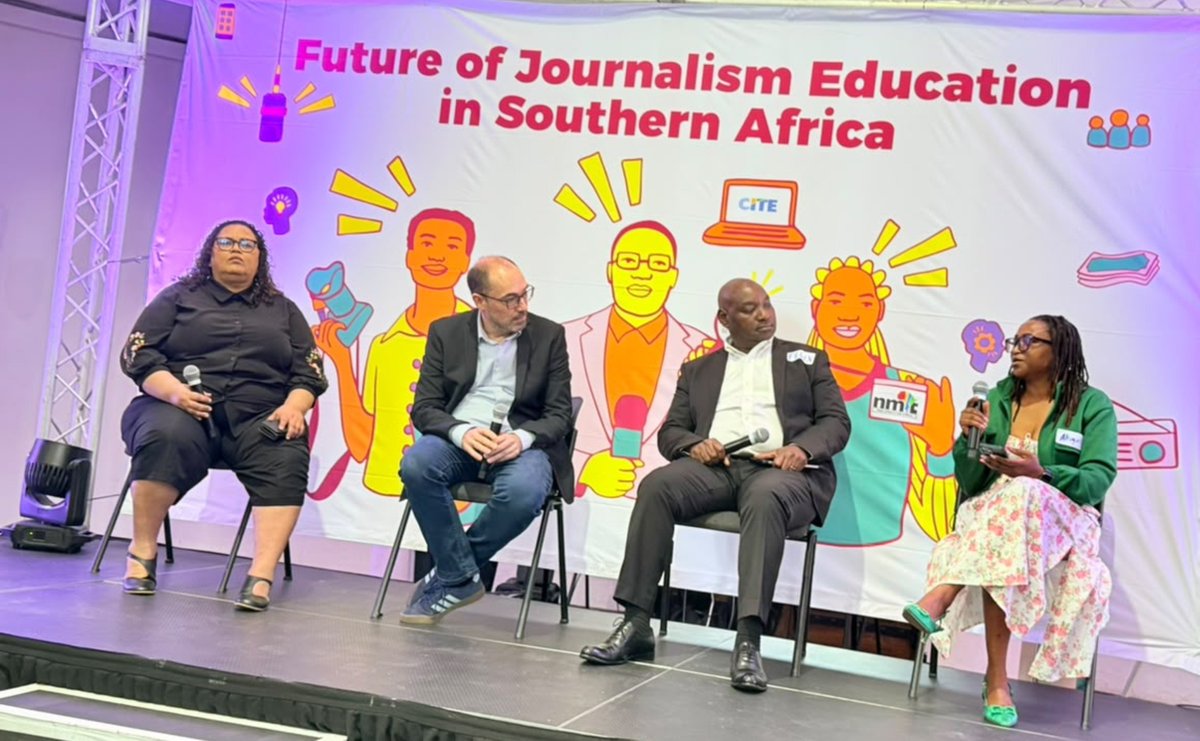
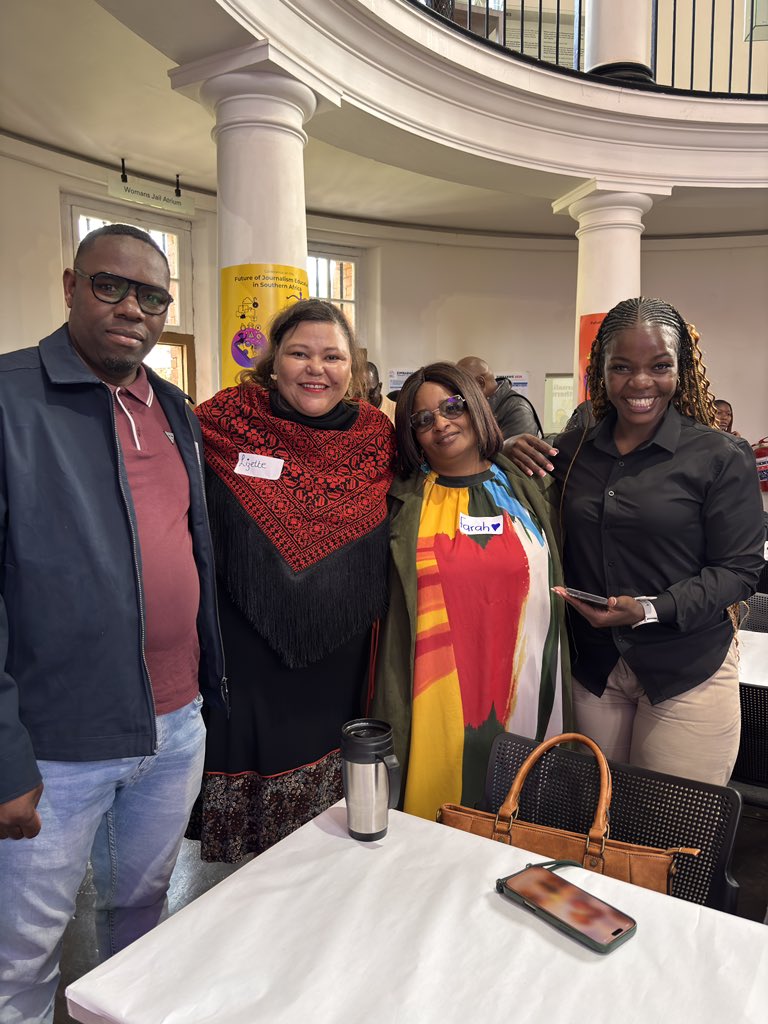
Day Two of the Future of Journalism Education in Southern Africa Conference examines an increasingly important question for the media industry: Who counts as a journalist in the age of artificial intelligence?
Discussions are exploring the growing role of social media creators and the ways in which digital platforms are transforming how journalism is produced, distributed and consumed.
As technological change continues to reshape the media landscape, the conference provides an important platform for reflecting on the evolving boundaries, responsibilities and professional identity of journalism in Southern Africa.
Can African media councils self-regulate AI? At #FIFAfrica2026 in Mauritius, hosted by @cipesaug , I joined a panel that engaged on the topic.
@MISARegional
Innovation for Viability | #SpacesOfSolidarity Forum 🌍
Today, civil society & media across Southern Africa move from evidence to coordinated action on #FreedomOfExpression: survey findings, threat mapping & advocacy built on the AMB and State of #PressFreedom Report ✊🏾
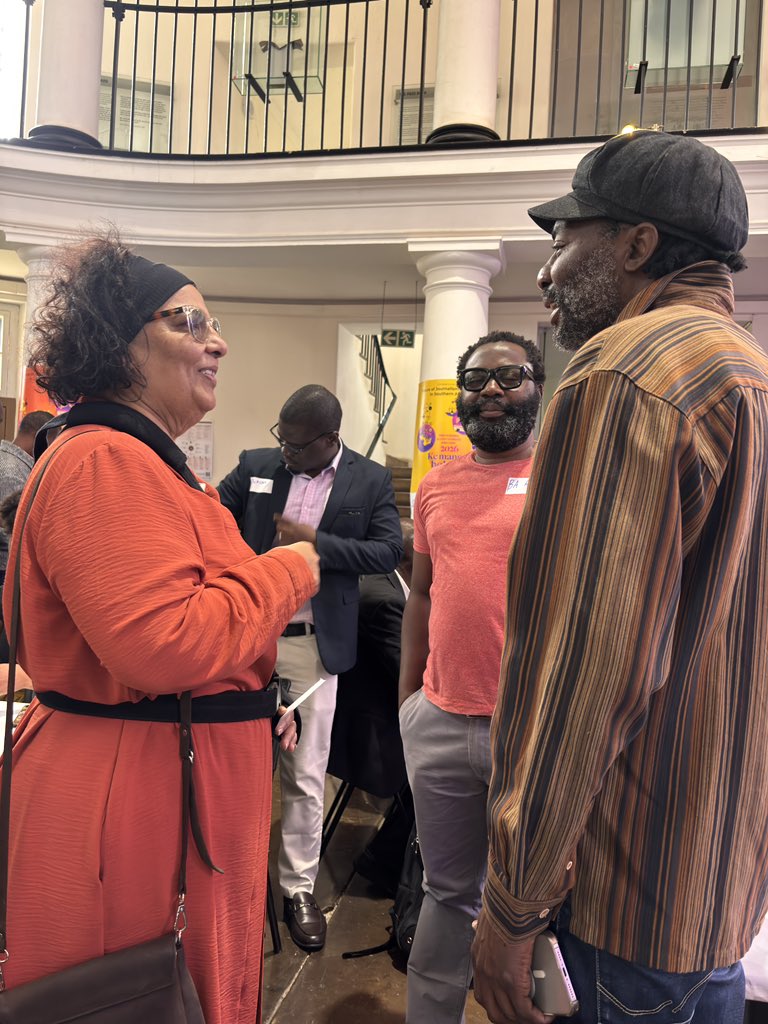
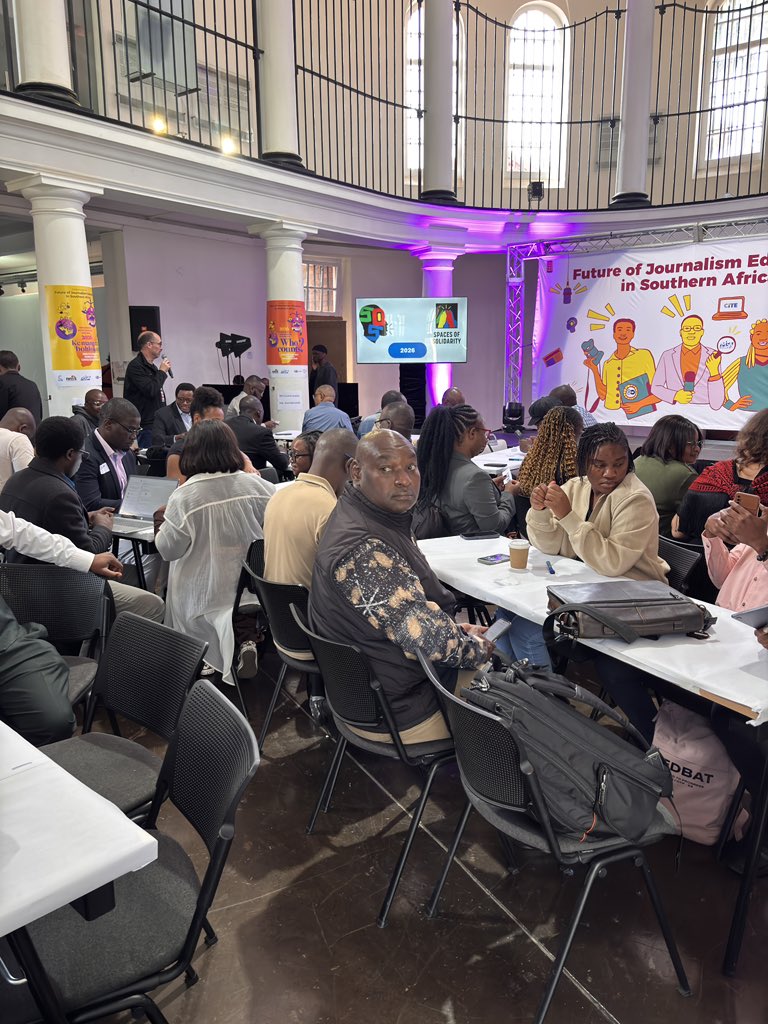
Today, media practitioners and partners gather for the Spaces of Solidarity Conference, ahead of the Future of Journalism Education in Southern Africa Conference on Tuesday and Wednesday. The annual gathering, hosted by @MISARegional, @misamalawi, @NamMediaTrust , @dw_akademie, and CITEZW, brings together journalists, media organisations, and journalism educators to confront some of the biggest questions facing the sector.
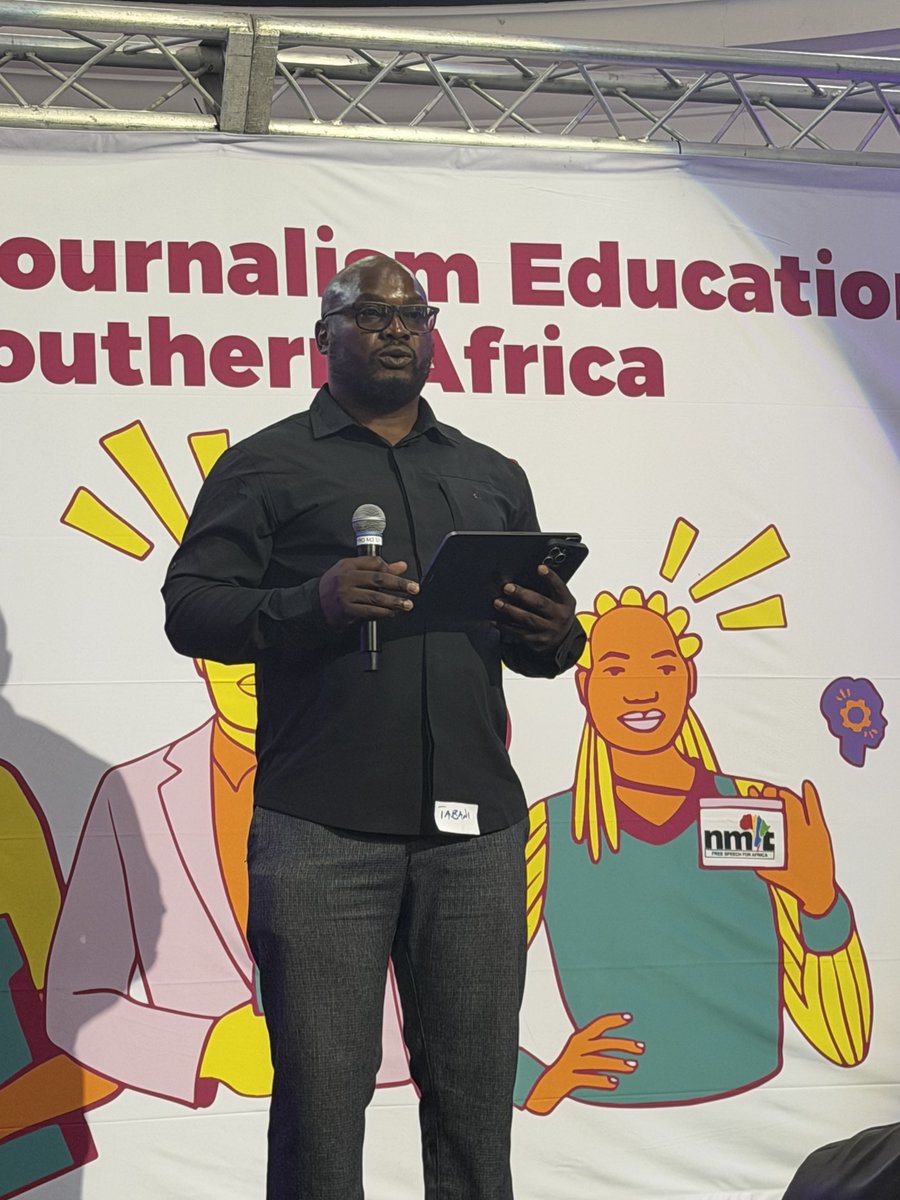
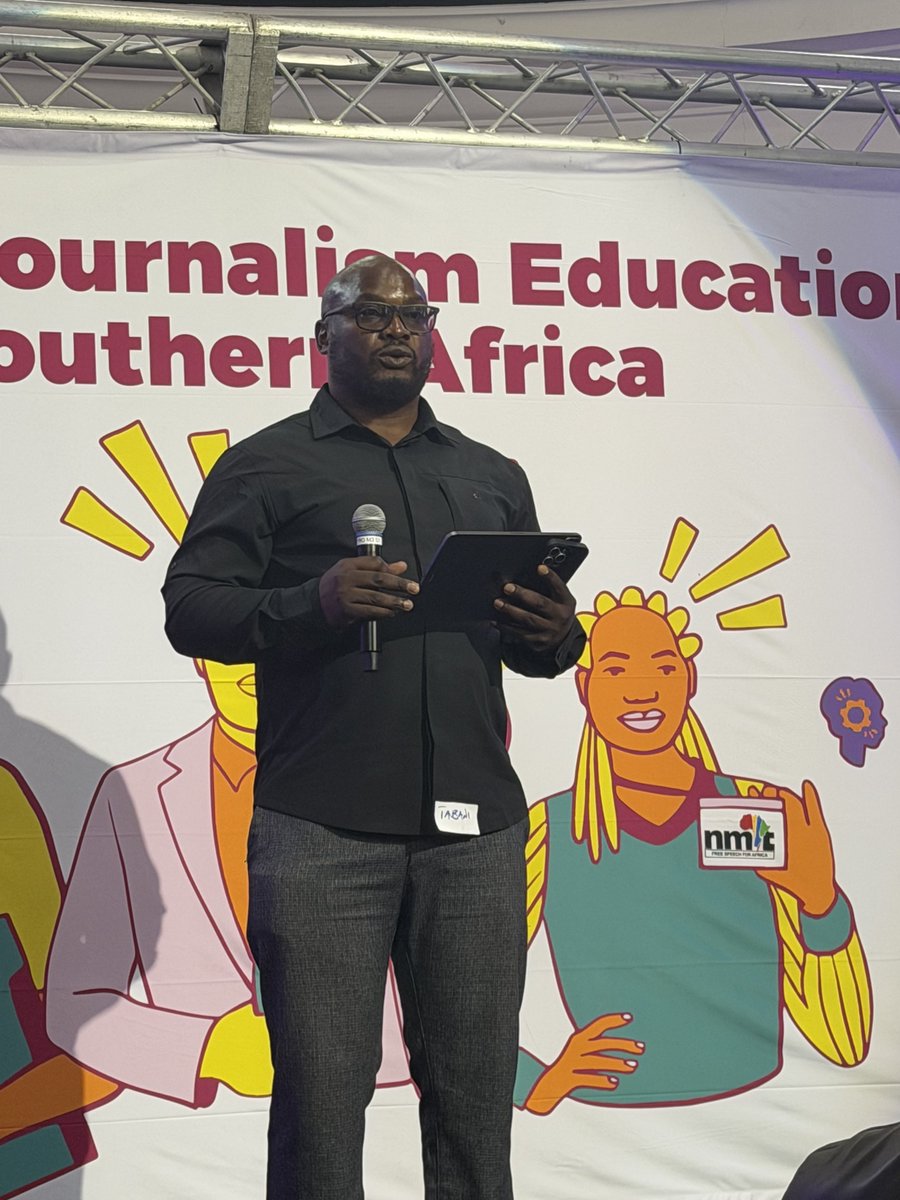
Opening the conference, MISA Regional Director Tabani Moyo highlighted challenges that continue to shape journalism across the region, the worsening media funding crisis and an increasingly difficult operating environment for journalists and media organisations.
Over the next three days, conversations will focus on how journalism can remain sustainable and relevant while navigating shrinking revenues, changing technology and the pressures confronting newsrooms across Southern Africa.
Ahead of the 2026 Future of Journalism Education Conference, we will be joining the Spaces of Solidarity (SoS) 2026.
The SoS platform, hosted by MISA Regional and DW Akademie, brings together minds and experiences of media freedom experts, researchers, academics and journalists to explore builds frameworks for information integrity, media freedom, and democratic resilience.
This year’s theme is Bridging media freedom, digital rights and regional policy action.
DW Akademie will unveil stark findings of the 2026 Spaces of Solidarity Freedom of Expression Survey while MISA Regional’s Director Tabani Moyo will set the scene with his keynote address.
#mediafreedom #expression #africanmediabarometer #journalism #ATI
DW Akademie Program Director Namibia and Southern Africa Peter Deselaers presented the stark findings of the 2026 Spaces of Solidarity Freedom of Expression Survey.
These results are from eight Southern African countries: Botswana, Eswatini, Lesotho, Malawi, Mozambique, Namibia…
MISA Director Tabani Moyo reflected on five years of collective activism and solidarity, while acknowledging the difficult landscape the media ecosystem has faced.
He stressed the urgent need to uphold a rights-based framework in the digital age and to strengthen the circulation of verified information as a counter to information-related harms.
#mediafreedom #freedomofexpression #sadc #journalism
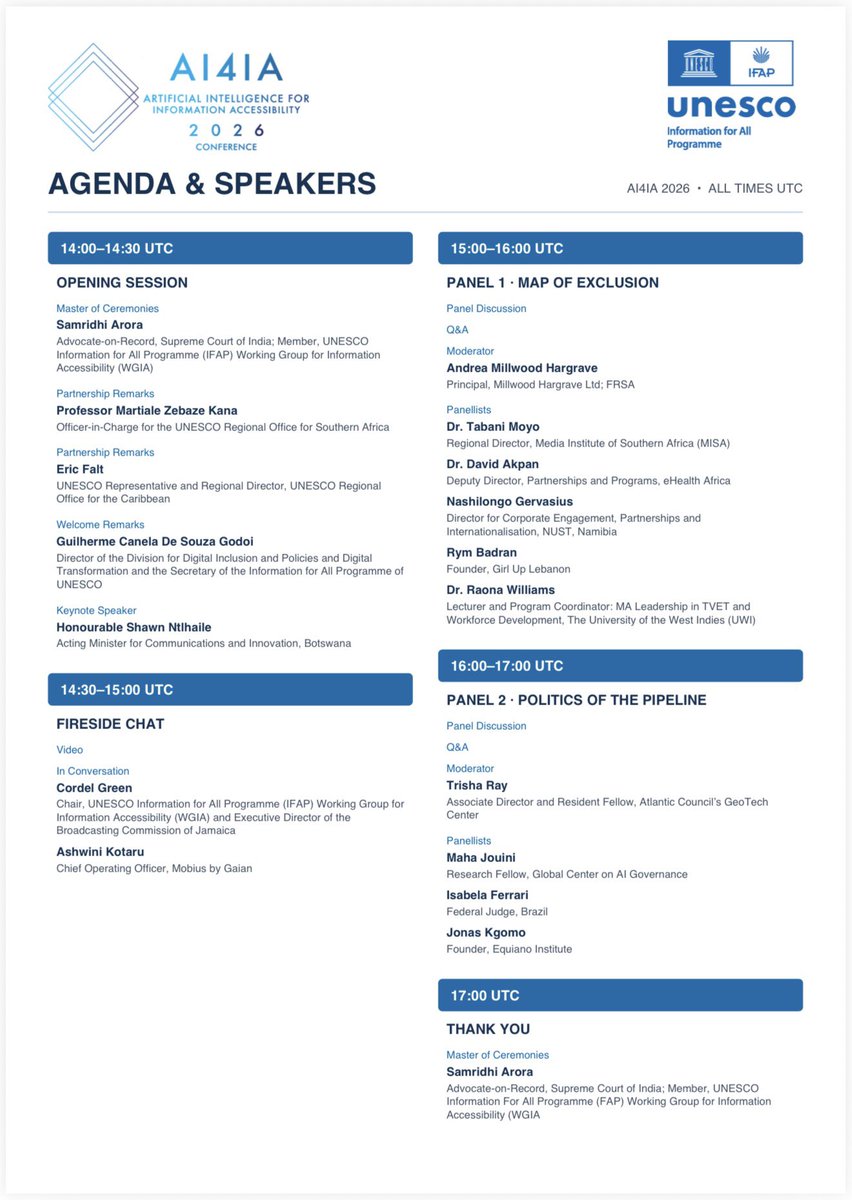
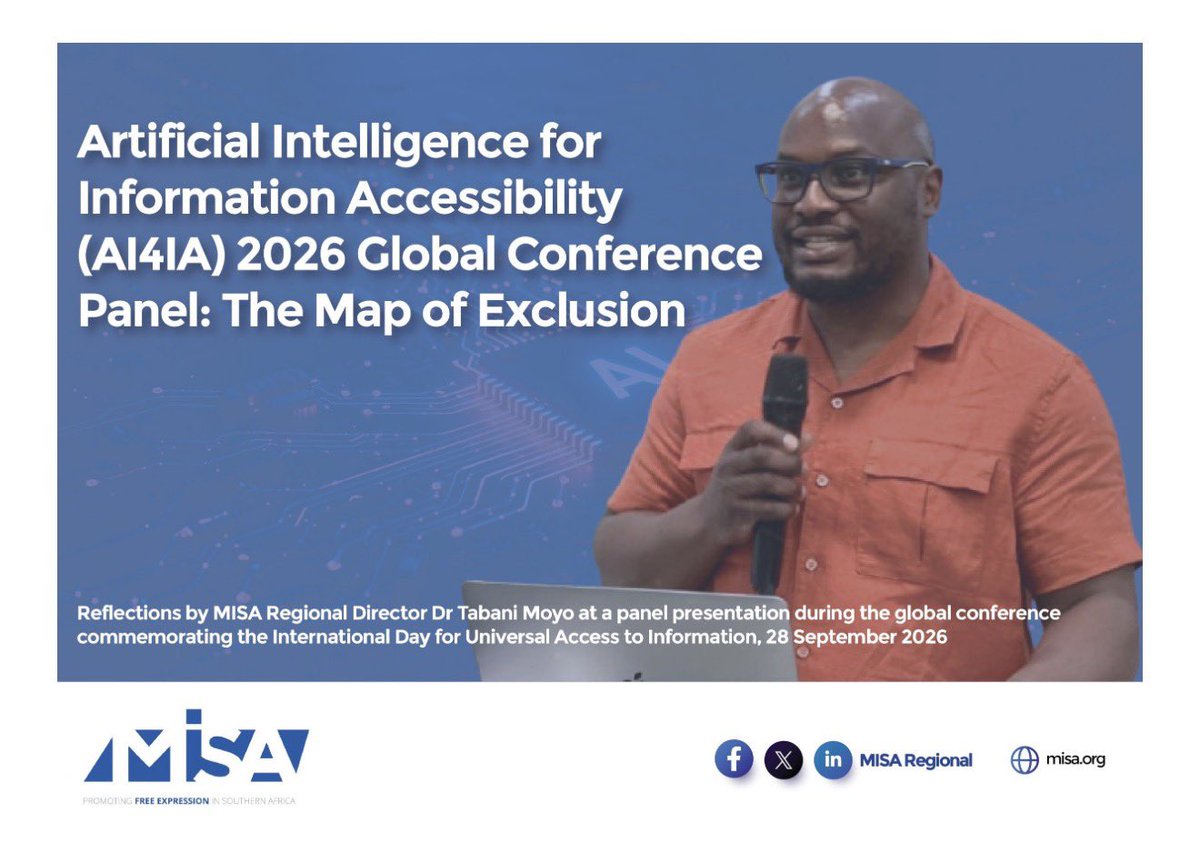
On behalf @MISARegional It was a pleasure joining the panel for #AI4IA 2026 Global Conference: The Map of Exclusion @UNESCO
Key point: connected ≠ active. AI trained on narrow data risks automating exclusion, not fixing it.
Full remarks: https://t.co/SYMO4YjssT