Working paper out: Commuting, children and the gender wage gap with @IsmirMulalic and Jos van Ommeren
https://t.co/McVkHs2j2n
For a short presentation tune in at the #UrbanEcon2021 tomorrow at 2 pm ET.
Sidenote: always strange when bosses say they have worker shortages...
If raising wages doesn't help, then bosses have a LOT of monopsony power and so are really exploiting workers.
And if it does help... the "labour shortage" is likely just the boss paying badly!
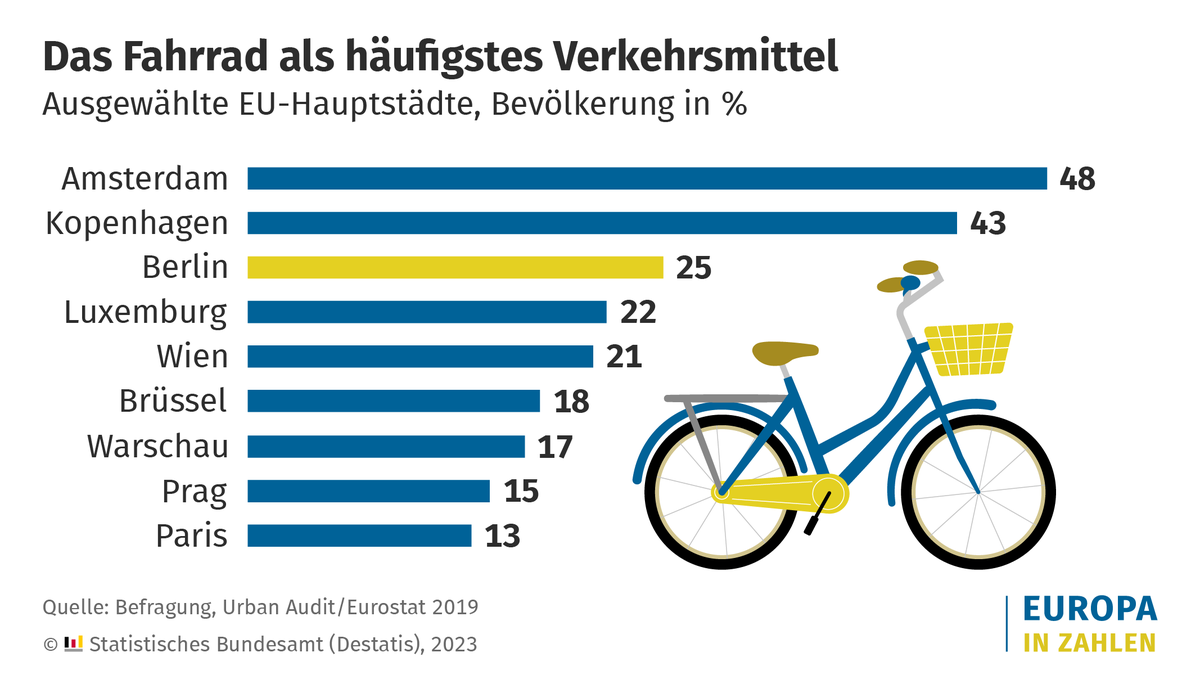
#MobilohneAuto? In Amsterdam kein Problem. Fast die Hälfte (48 %) der Bevölkerung Amsterdams nutzt ohnehin das #Fahrrad als Hauptverkehrsmittel. In Berlin gilt das für 25 % der Bevölkerung. Mehr zur Fahrradnutzung im EU-Vergleich: https://t.co/dzAD2BRSLj #MobilohneAutoTag
🚨 I am hiring a PhD (@Economics_UCPH) to work on my project "Labor Supply and Inequality within Families": https://t.co/JKEAV4XhPc
If you have any questions please feel free to contact me!
Every October, all professors and PhD students of the Research Training Group "RTG 2484 - Regional Disparities & Economic Policy" come together for a research retreat. Here are some impressions of this year's retreat in Hattingen. For further information: https://t.co/PbXuYj0MCU
Check out our new discussion paper; joint with Marie Paul! Using German administrative data, we study the career effects of long-distance moves for both partners of married couple and present evidence for strong gender asymmetries.
One of my research projects @IsmirMulalic with @MJBorghorst and Jos van Ommeren shows that gender differences regarding commuting play an important role in explaining gender wage gap. We offer 3 pieces of evidence, see below #GenderPayGap 1/5
https://t.co/AG4v7w6vPJ
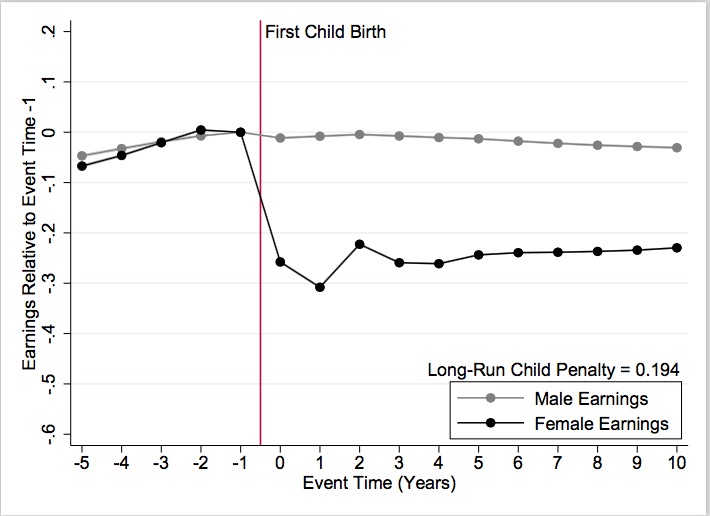
This is the graphic that inspired me to look into gender commuting differentials as a transmission mechanism of an unequally shared household burden into the labor market.
Turns out only women are affected:
https://t.co/mISx9mRsbk
One of my research projects @IsmirMulalic with @MJBorghorst and Jos van Ommeren shows that gender differences regarding commuting play an important role in explaining gender wage gap. We offer 3 pieces of evidence, see below #GenderPayGap 1/5
https://t.co/AG4v7w6vPJ
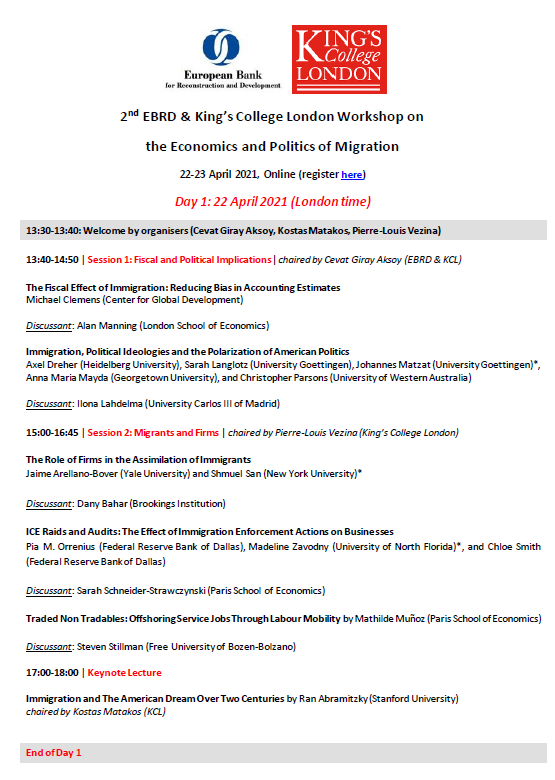
w/@kostasmatakos & @pl_vezina, we are excited to announce the program for 2nd @EBRD & KCL 𝗪𝗼𝗿𝗸𝘀𝗵𝗼𝗽 𝗼𝗻 𝘁𝗵𝗲 𝗘𝗰𝗼𝗻𝗼𝗺𝗶𝗰𝘀 𝗮𝗻𝗱 𝗣𝗼𝗹𝗶𝘁𝗶𝗰𝘀 𝗼𝗳 𝗠𝗶𝗴𝗿𝗮𝘁𝗶𝗼𝗻 to be held on 22-23 April.
To join us please register: https://t.co/UQna2mCCrE
Join us today and tomorrow to learn about new research on the gender pay gap! Organized by the awesome @SoniaBhalotra. Registration here: https://t.co/JpqD1XXLIy
Women commute less than men. Using French admin search data, @tlebarbanchon, @rolandrathelot & @alexandraroulet show in @QJEHarvard women accept lower wages than men to work closeby. Worker, not employer, driven. Accounts for 14% of residualised gender gap https://t.co/Ut7mHopHsC
Was ist relevant ist für das Verständnis der #GenderPayGap und was ist „weg-erklären“:
Viele Entscheidungen im Arbeitsleben (z.B. TZ, Branche, Führungsanspruch,...) sind Teil der strukturellen Ungleichheit im Arbeitsmarkt und sollten daher nicht als Erklärung für die GPG gelten.
#GenderPayGap: Frauen haben im Jahr 2019 in Deutschland durchschnittlich 19 % weniger verdient als Männer. Der Verdienstunterschied lag damit erstmals unter 20 %. Mehr dazu: https://t.co/b7egvhGAnr #GPG
1990’s: one more lane will fix it
🚘🚘🚘
2000's: one more lane will fix it
🚘🚘🚘🚘
2010’s: one more lane will fix it
🚘🚘🚘🚘🚘
2020's: new types of cars will fix it
🚘🚘🚘🚘🚘🚖
#Utrecht: "Hold my @Heineken!"
🌳🚣🌳🏞🌲🛶🌼
(gif by @qrs)
When your colleague concludes his PhD defense in urban economics with: “Maybe housing production is quite efficient in Billund” #Lego#dkpol
Congrats @hybel_jesper 🧑🎓🥳
Abstract: https://t.co/SrdPntrSC5
Here's a creative urban policy idea:
Berlin officials are considering parking fees that scale with automobile size. An owner of an SUV could pay €500/year, 10x as much as a smart car.
https://t.co/45zRS1X52g