Following our work establishing HFpEF’s energetic gradient correlates with its disease severity and assessing SGLT-2i’s potential to correct the energetic deficit in HF, ninerafaxstat appears to be able to positively modulate the heart’s energetic state in cardiometabolic HFpEF
In a phase 2 study, Ninerafaxstat (trimethazidine analogue) is well-tolerated and improved mycoardial energetics in participants with obesity and diabetes https://t.co/fDk2gt8xuL
In a phase 2 study, Ninerafaxstat (trimethazidine analogue) is well-tolerated and improved mycoardial energetics in participants with obesity and diabetes https://t.co/fDk2gt8xuL
@pnatarajanmd@CircAHA We’re certainly very happy with the results. We’ve assessed the energetic deficit in HFpEF previously (https://t.co/eqdSuoxpRG) and have also tested whether Empagliflozin would correct it in a RCT in HF patients (https://t.co/9x83xgyHd7)
Ninerafaxstat, which promotes myocardial glucose oxidation via partial fatty acid oxidation inhibition & enhances cellular NAD+ pool, ↑ imaging-assessed myocardial energetics & ↑6MWD vs placebo in N=42 with T2D & obesity with & without HFpEF https://t.co/2ll5eUrwYb @CircAHA
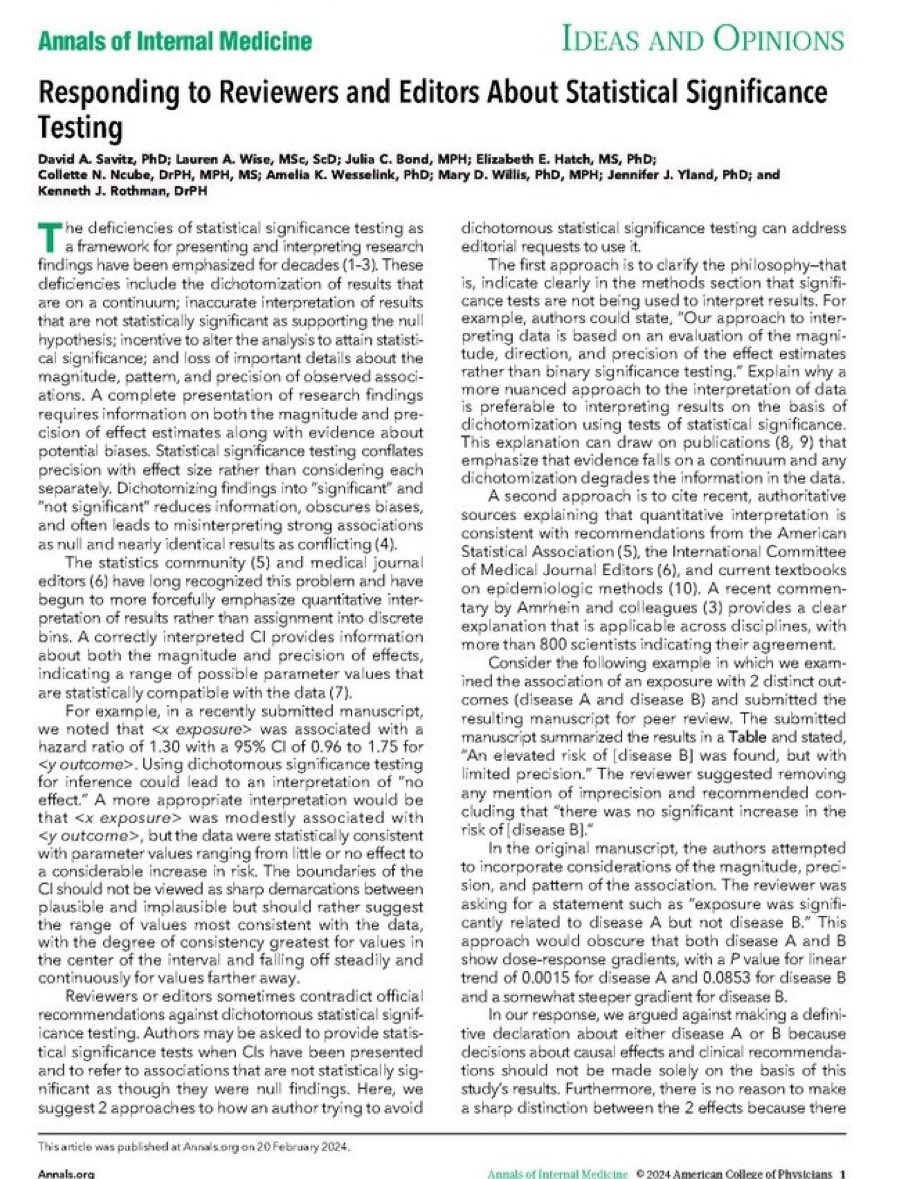
Reviewers often request inappropriate #statistical testing
This📄 discusses how to respond when reviewers ask you to add p-values to CIs & to dichotomize all your inferences
Consider
- size of Tx effects
- directionality
- precision
- consistency
#stats
https://t.co/MEYpOZbkRL
Let’s change the world together 🤲🏻
If you want to make a difference 🙌collaborate.
I collaborated with these wonderful people to inspire #WomenInSTEM
Many more missing on the 📸
🐥Re-tweet if you agree .. let’s challenge that algorithm of old thinking 🧐
Excellent publication. Not seen this expressed so starkly before (and correlation of course isn’t causation) but increasing privatisation worsens patient outcomes.