"Hemos de llevar a la universidad obrera a nuestros muchachos pobres, porque entre ellos, estoy pensando hay más inteligencia y más corazón".
Juan Domingo Perón
This is a country whose every inch carries history, sacrifice and the price of Armenian blood.
A country of priceless heritage, resilience and dignity.
Happy Independence Day, Armenia.
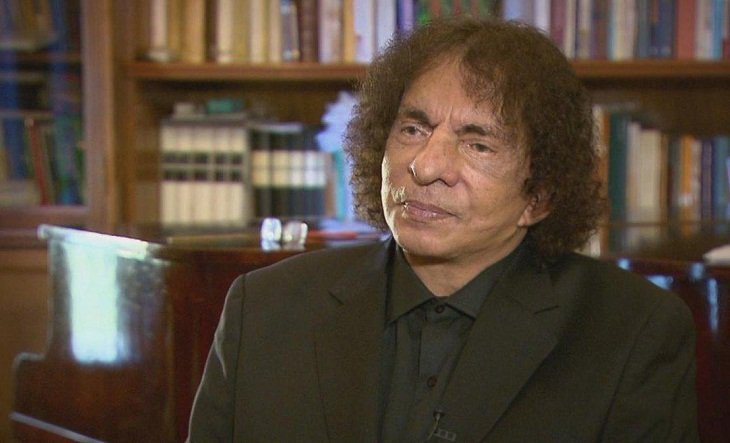
"Soy peronista mas que nada, porque somos gente a las que les cuesta ser dichosa cuando, a su alrededor, ven el sufrimiento ajeno”
✍🏻 Alejandro Dolina 🇦🇷
El enorme legado del General Perón no sólo sigue vigente sino que en el tiempo se resignifica y agiganta. Nuestras tres banderas: Independencia Económica, Soberanía Política y Justicia Social leídas a la luz del Siglo XXI, están más vigentes que nunca.
#PerónVive
Today, Armenia Marks the Day of State Symbols. 🇦🇲
The Yerakuyn, Armenia’s tricolor flag, was first raised by the First Republic in 1918, hidden through seven decades of Soviet rule, and raised again when independence was reclaimed in 1990.
Red represents the Armenian Highland and the people’s struggle for survival.
Blue stands for the will of the Armenian nation to live beneath peaceful skies.
Orange honors the creative talent and hard-working nature of the Armenian people.
A Nation That Reclaims Its Own
The story of Armenia’s state symbols is the story of Armenia itself: lost, preserved, and reclaimed. The flag that flew over the First Republic from 1918 to 1920 was hidden through 70 years of Soviet rule and raised again in 1990. The coat of arms designed by Tamanyan and Kojoyan was redrawn and restored. The anthem sung in Yerevan in 1918 is the anthem sung in Yerevan today.
Each is a piece of a sovereignty that did not survive by accident.
The Armenian word for "alphabet" is "այբուբեն" ("aybouben"), named after the first two letters of the Armenian alphabet: ⟨Ա⟩ Armenian: 'այբ' (ayb) and ⟨Բ⟩ Armenian: 'բեն' (ben). Armenian is written horizontally, left-to-right.
The great Armenian linguist, ecclesiastical leader and saint Mesrop Mashtots, did not invent his proper alphabet in 405 AD, rather, he created a modified version of the Armenian pagan characters, thereby giving ancient Armenian heritage and culture its unique national modern Christian identity. One of the greatest marks of the Armenian identity is the Armenian language.
In the same way, the pagan rock art as seen scattered across Armenia, later developed into the Christian Xatchkar / khachkar (cross-stones). Armenia's ancient pagan set of characters (language) were transformed into the “Christian” Armenian Alphabet. Actually the whole of Armenian culture, as well as the alphabet was Christianized, and was drawn into the Western fold.
Due to concerted efforts to eradicate Armenia's "pagan tradition", only a handful of fragments have survived from the most ancient Armenian literary tradition preceding the Christianization of Armenia in the early 4th century. Christian Armenian literature begins about 406 A.D. with the introduction of the Armenian alphabet by Mashtots for the purpose of translating Biblical and other sacred books into Armenian. Mesrop Mashtots – who has since been venerated as a saint, as the patron of teaching and learning for Armenians – accomplished the task in the year 405 AD, thus setting the stage for a rich trove of works of religion and history, science and philosophy, illuminated manuscripts, and many published books in the millennium and a half that followed, continuing on to the present. A major road in the capital of Armenia, Yerevan, is named for Mashtots, and one end of it, is the apt location for the famous Matenadaran, the national repository of manuscripts which also functions as a research institute and museum.
The Armenian Alphabet is a Modified Swastika.
The Armenian alphabet is a modified swastika. Swastika in Armenian is called, “Գերխաչ” ("Gerxach") / ("Gerkhach") - ("Super cross"), and also ("աղավաղված խաչ") / ("aghavaghvats xach / (khach") - ("distorted cross").
The Armenian alphabet contains secret information, and sacred, scientific and sacerdotal knowledge of the stars (constellations, longitude and latitude) and galaxies (the model of galaxy creation). It is proven by the fact that one (with 36 signs-letters) can express the numbers from 1 to 10,000, without using any other signs. That is the ideal comparison of the system of 6 (which was common to the Armenian Highland) – another words 60 minutes, 360° and the system of 10, the division of the sky into 3*12….
— Research by Sumerologist Armen Davtyan
Originally the Armenian Alphabet had 36 letters. Now it has 38. The two letters were added in later centuries to accommodate foreign words).
The Sacred Letter Է is represented as a Divine Essence.
The most important letter in the Armenian alphabet is the letter Է (é). This sacred letter as a character standing for divine essence, was used by ancient Armenians before Christianity and continued to be inscribed upon the altars of Armenian churches after Armenia's conversion to Christianity in 301 A.D.
Symbolically, 7 is known as the number of perfection, or completion. Throughout the Astvatsashunch ("Աստվածաշունչ") (The Bible is translated as the "Breath of God"). Astvatsashunch ("Աստվածաշունչ") means 'The Breath of God' in Armenian. The number 7 is attributed to several acts of God, and to God Himself, so the letter ‘Է (é) takes on an even further significance. Thus, for the Armenian Church, the letter Է (é) and its meaning is considered to be Holy. It is not only symbolic, but Է (é) is the name of God.
In Armenian, the letter/word "Է" (é) literally means ‘is’ or ‘he is’, ('I am'), which, to those familiar with the Old Testament, is clearly a reference to God Himself. In Exodus chapter 3, we are told that Moses encountered God in the burning bush, where God told him to tell the people His name is “I am” and Moses should call Him “is/ he is”. In Armenian, it is the letter/word "Է" (é) that serves as the name for ‘I am’ or ‘he is’.
I am the Alpha and the Omega, the Beginning and the End, the First and the Last. The Eternal, the "I Am"! In Armenian, "Է" (Ē).
Furthermore, Է (é), when pronounced, makes the sound of a breath, and so the idea of God being the 'breath of life' is attached to this letter. The Armenian word for Bible also corresponds to this meaning and reads : Astvatsashunch ("Աստվածաշունչ"), meaning “Lords-breath”.
The Armenian letter Է (é) is found on almost every religious altar. This letter from earliest recordings was adopted into the Christian iconography and became synonymous to Creation, the divine breath of the Lord and even HIS name. Some altars only include the letter Է (é), others read : 'Asdvadz Ser E' ('Աստված Սեր Է') – meaning ‘God Is Love’. In this case the letter ‘E’ (Է) is still directly above the altar. In the phrase 'Asdvadz Ser E' (‘God is Love’), the literal translation is, ‘God Love Is’.
A noteworthy aspect with regards to this letter and its sound is the fact that in Armenian only certain words may be added with the prefix or suffix to form new words. However, grammatically, only the letter Է (é) may be added as a prefix or suffix and form a new Armenian word. Therefore, the letter Է (é) is not only a simple letter or a character, but is also a word in and of itself. It is the essential root word which stands for the primary essence of all.
It is difficult to find a culture on the planet that venerates its way of writing as much as the Armenians venerate their alphabet. Many Armenian homes around the world display a framed representation of the Armenian alphabet, and not just in the nursery for the children, but right in a respected spot in their living room. The frames and the letters are decorated in gold. There are also jeweled representations adorned with semi-precious stones and gold, or those of the beloved "Trchnagir" tradition ("Թռչնագիր" / Trchnagir - Armenian letters drawn in shapes of birds in beautiful and colorful calligraphy.
*******
Earliest depictions of the “Գերխաչ” ("Gerxach") ("Super cross") - Swastika found in Armenia, date back to the Neolithic Period of human cultural evolution (approx. 7000-5000 B.C.E.). Very often, the swastika is symbolized in the form of the solar disk, commonly found in the stone carvings of the Armenian Plateau, the Iranian Plateau and ancient civilizations of Anatolia and Mesoamerica.
Solar Discs found in Armenia date back to approximately 10000 B.C.E. They are found in Geghama Mountains, Ughtasar, Urtsadzor, Aragats Mountains, Shengovit and are also found engraved on the walls of many monasteries and buildings, after Armenia declared Christianity as its state religion in 301 A.D.
Examination of the Sanskrit roots for the word "swastika" show two archaic meanings: ‘svar’ meaning brilliant/shinning and ‘asti’ meaning powerful/god. Thus we can discern that the meaning of the word "swastika" in Sanskrit is: The All powerful/shining God.
Astvats ("Աստված"), means God in Armenian.
*******
"One of the Classical accounts about the existence of an Armenian alphabet comes from Philo of Alexandria (20 BCE – 50 CE), who in his writings notes that the work of the renowned Greek philosopher and historian Metrodorus of Scepsis (ca.145 BCE – 70 BCE), on Animals, was also translated into Armenian. Metrodorus was a close friend and a court historian of the Armenian Emperor Tigranes the Great. Amongst his great works, Metrodorus also wrote the biography of the King of Kings, Tigranes the Great. Another Third Century Roman History and Church theologian, Hyppolytus of Rome (170-235 CE), in his Chronicle, while writing about the history of the reign of his contemporary, Emperor Alexander Severus (reigned 208-235 CE), mentions that the Armenians are amongst those nations who have their own distinct alphabet."
"The internal reconstruction of the Armenian alphabet and also of the Armenian phonetic system permits us to revise the figure of the external relations of the Armenian language. Of course, it cannot be denied that some of the Armenian characters are quite similar to “semitic” (in particular to Phoenicia) characters, from which Greek and Iranian alphabets have generated. The origin of the Aramaic alphabet, which is the base of most wildly spread alphabets of the world, is not known, nor has it been deciphered yet by the method of internal reconstruction. The similarities found between the Aramaic letters and certain Armenian characters must be observed as a result of their formation in the same cultural sphere."
THE ORIGIN OF THE ARMENIAN ALPHABET
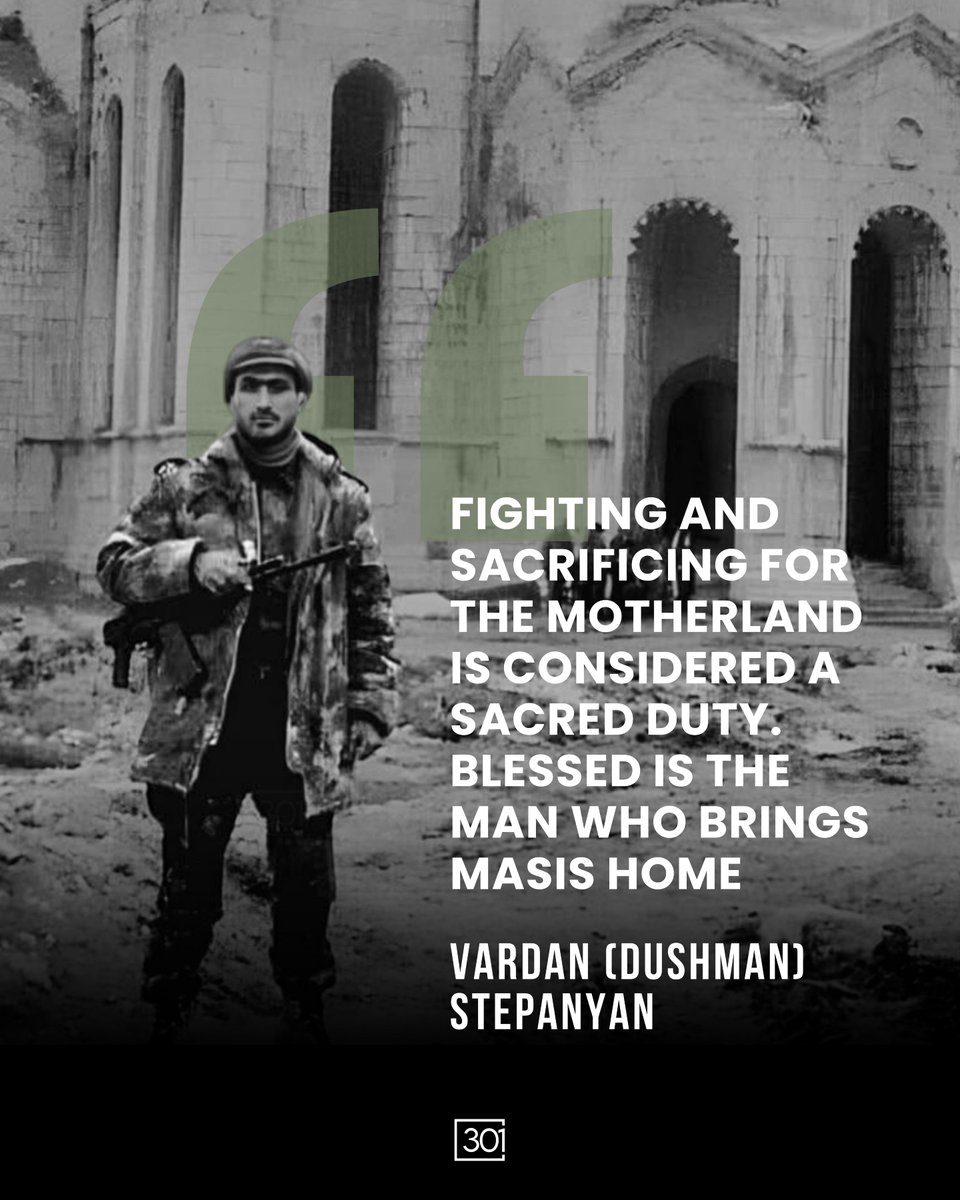
Today we honor the birth of Vardan Stepanyan, forever remembered as Dushman Vardan, a fedayi and legendary fighter of the Artsakh Liberation War, born in Yerevan on this day in 1966.
His path as a warrior was forged in the Soviet-Afghan War. Mujahideen fighters themselves gave him the name “Dushman,” meaning “the enemy,” a name that stayed with him and became a symbol of his fearlessness.
From the first sparks of the Artsakh movement in 1988, Vardan stood at the forefront. He fought in decisive battles of the war, including the historic liberation of Shushi, where courage and strategy turned what many believed impossible into victory.
In 1989, when the defenders of Artsakh faced severe shortages of weapons and ammunition, Vardan undertook a high risk mission to Moscow. Through determination and daring, he secured and delivered vital arms and supplies that helped sustain the resistance during those critical early days.
Together with Armen Yeritsyan, he founded the “Knight” military school, where volunteers preparing for the front received training in discipline, combat skills, and the spirit required to defend the homeland.
Only six weeks after the liberation of Berdzor, on July 3, 1992, Vardan’s life was cut short at the age of 26. On the road to Martuni, near Myurishen, the vehicle he was traveling in struck a landmine.
His sacrifice remains etched in the memory of the Armenian people. Dushman Vardan stands as a symbol of courage, sacrifice, and unwavering devotion to the homeland. His name continues to inspire those who believe that the defense of the nation is a sacred duty.
Parecería que matar niños es el nuevo objetivo de la élite imperial cleptocorporatocratica. Aborto, sacrificios rituales, bombardeo de escuelas, genocidio, pobreza infantil.
Puesto de los países según la antigüedad:
1° 🇮🇷 Irán
4° 🇦🇲 Armenia
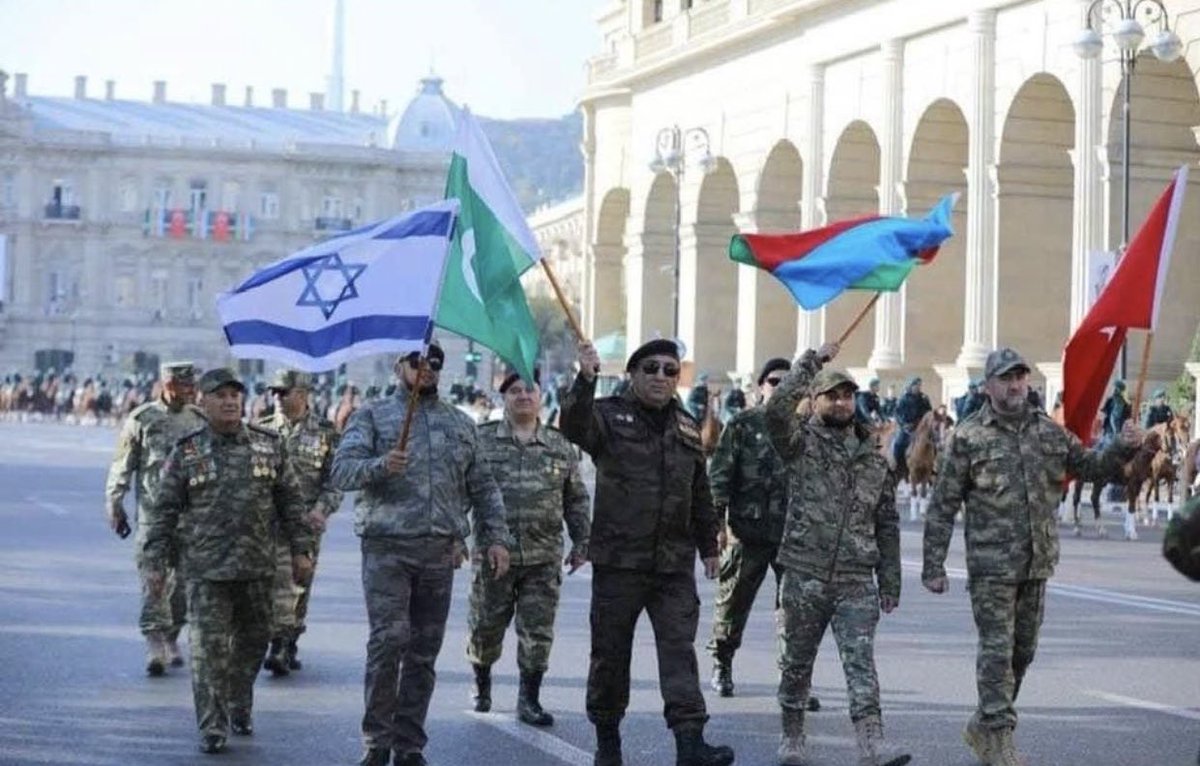
Ahora los países que desfilan en Bakú celebrando nuestra derrota:
🇮🇱 1948
🇵🇰 1947
🇦🇿 1918
🇹🇷 1923 (Si computamos el Imperio Otamano, unos siglos antes).
La mente matrizada de algunos piensa que oponerse a la guerra es defender la aborrecible teocracia islamica iraní.
No; es oponerse a la estrategia de los pedófilos y criminales amos del mundo.