Muhoozi treats the Ugandan army he sends to Somalia as a card to play for leverage and respect from the US/West but I think that is also coming to an end
@DaudiKabanda Due to your lack of education, you don’t even understand the script your boss is following—which is exactly why you say such things. But of course, you don’t care, as long as you’re comfortably seated in the chairman’s office.
Even Muhoozi’s own family members like Salim Saleh and Rwabwogo are speaking out against the bad things happening. Yet @AndrewMwenda , @kasujja, @Thomas_Tayebwa and defend him with more zeal than his relatives. That’s not love,you’re just lying to him.
In 1996,I told @KagutaMuseveni not contest,I told him that if you don’t stop,you will never be the political reference point of Ugandan politics @sejudav
Uganda is distancing itself from the Ebola outbreak in the DRC, pointing out that the 2 confirmed cases are both Congolese nationals.
Why are there so many Ebola outbreaks in Congo? Some people eat fruit bats, experts say
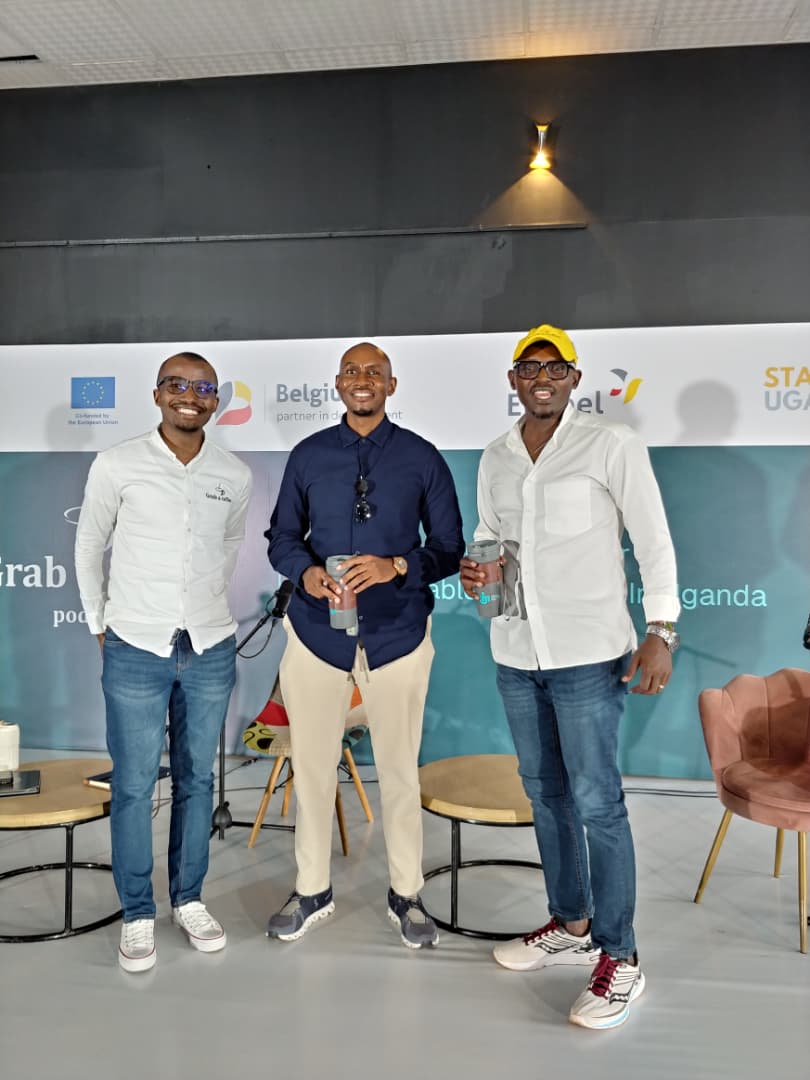
I was a guest on a podcast with @GrabACoffeePod as part of Uganda Innovation Week, and the conversation went exactly where it needed to go.
The session, hosted by @qataharraymond and @kasyate , was built around a sharp question, what does it actually take for innovation to contribute to national development, not just in theory, but in practice, at scale?
Uganda has innovators. That is not the problem. The gap is structural. Promising products never reach the market because the people behind them cannot access finance, cannot navigate the path from prototype to mass production, and have no framework for protecting what they have created. Intellectual property is not a footnote in that story. It is the missing foundation.
Not just a legal technicality, IP is an economic instrument. A registered innovation is a bankable asset. A protected product is a scalable one. Without that layer, Uganda's most inventive minds remain vulnerable to being copied, undercut, or simply left behind.
The Uganda Registration Services Bureau has a critical role here, and so does government more broadly. The question is whether national development planning, including the instruments under the National Development Plan, treats IP infrastructure as a growth enabler rather than an administrative function. That distinction matters enormously.
For young practitioners in IP and technology law, this is the work. Not just advising clients on registration, but building the connective tissue between legal protection, innovation finance, and industrial policy. The sector needs lawyers who understand what it means to take an idea from a workshop in Kampala to a market in Nairobi.
Uganda's innovation ecosystem will not scale on talent alone. It will scale when the regulatory environment, the financing architecture, and the IP system operate as a coherent whole. The conversation was a reminder that we are still building that whole, and the urgency is real.
@kta_law
VIDEO | Israeli National Security Minister Ben Gvir, outside the Knesset chamber, celebrates the passing of the death penalty law for Palestinian detainees, describing it as historic and saying, “Soon we will count them one by one.”
In an era where Washington is redefining its African engagement through the language of deals rather than aid, #Ethiopia emerges not as a peripheral partner but as a state structurally aligned with this new logic—positioned to convert reform momentum, resource potential, and regional weight into strategic advantage within a more transactional global order.
Read details here: https://t.co/AR25SEuWTo
HISTORY MADE AT THE UNITED NATIONS
The United Nations General Assembly has adopted resolution A/80/L.48, declaring the Trafficking of Enslaved Africans and Racialized Chattel Enslavement as the Gravest Crime against Humanity.
Standing on the Right Side of History
The absence of permanent African seats on the Security Council is indefensible.
The Security Council must reflect today’s world. This is 2026 — not 1946.
Whenever decisions about Africa and the world are on the table, Africa must be at the table.
Muhoozi Kainerugaba, a senior Ugandan military officer and political figure, has ignited regional debate on the future of urban transformation in East Africa.
Praising H.E. Prime Minister Abiy Ahmed for the sweeping modernization of Addis Ababa, he signaled ambition to replicate a similar overhaul in Kampala. His remarks elevate Ethiopia’s capital as a contemporary case study in corridor-based, socially inclusive infrastructure reform.
As Addis Ababa’s transformation accelerates, the question now confronting the region is whether Kampala can marshal the political will and coordinated planning to follow suit.
Read the full article here: https://t.co/WLb6QVcuQq