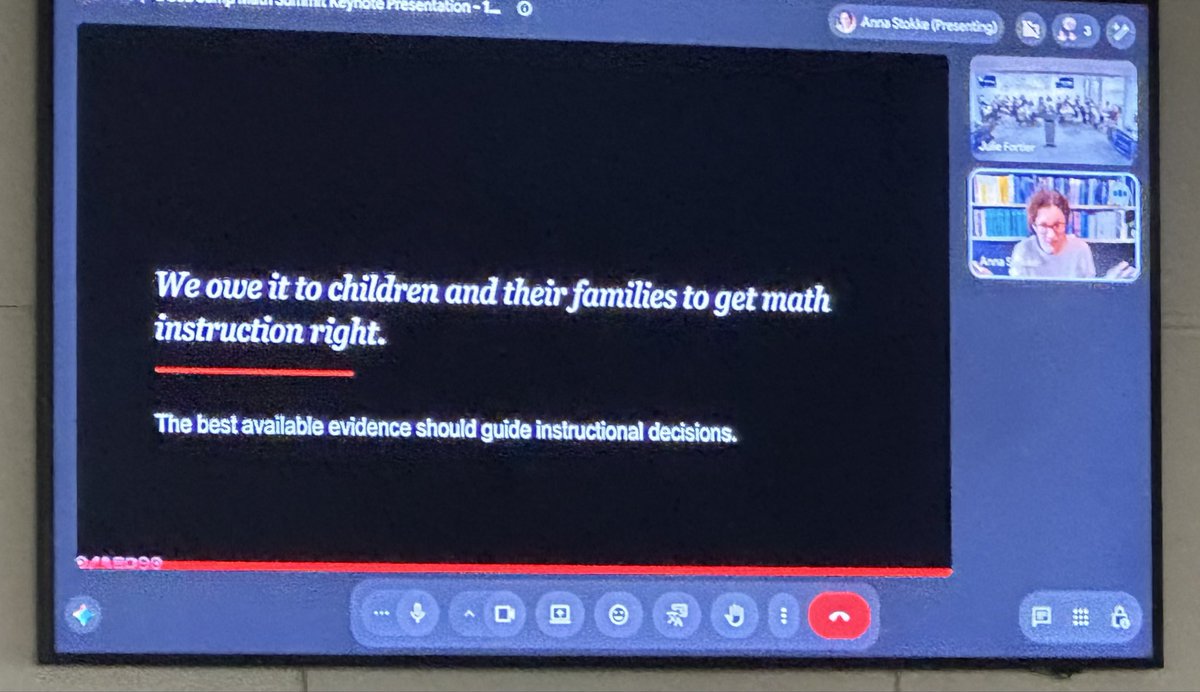
Thank you so much @rastokke for your profound impact on math education, exemplifying unwavering leadership, and for inspiring champions in our board and across our country to keep striving for meaningful change.
What a privilege to present @researchEDCan! Systemic change often begins with a few people willing to do things differently and the vision and commitment to help others see what is possible. Working to shift the culture of mathED to improve outcomes for students @nsachdeva2019
The one thing I’d want everyone to know about Direct Instruction is that the methods, materials and routines are far less important than the underlying drive behind it: the unswerving belief that EVERY child can achieve, regardless of circumstance.
DI is based on a deeply held conviction that if a child didn’t learn, it was because the teacher (or curriculum) didn’t teach them properly. In that sense, it is a movement rooted in social justice but one which takes responsibility for outcomes.
In the 60s and 70s, there was a view in the education academic establishment that formal academic work was premature for 4-year-olds, and doubly so for poor ones; so what they needed was enrichment and play.
Worse still, in the early 70s, some academics described DI as a racist enterprise*. Engelmann's own memoir notes that he and Bereiter were called “Nazis” and “kid-haters.”
Despite this, Engelmann taught disadvantaged 4 year olds to factor and to solve simultaneous equations, and filmed it. Bereiter and Engelmann’s argument, set out in ‘Teaching Disadvantaged Children in the Preschool’, was that the disadvantaged child was not “behind” in some general developmental sense but behind in specific, teachable things, that all kids could learn with the right scope and sequence.
The preschool they opened in the mid 60s ran for two hours a day, with three twenty-minute lessons in language, arithmetic and reading, taught to small groups by a teacher following a specific DI sequence. Those kids made huge gains which faded when they went to normal public schools.
DI has its limitations like everything but the drive behind it is sincere. As #SoldAStory season 2 will show, it has been portrayed as something very different to what it actually is and the animating principles behind it.
*Baratz and Baratz, ‘Early childhood intervention: the social science base of institutional racism.’
Direct or explicit instruction seems to be widely misunderstood. It's often characterised as boring lectures with little interaction and not catering to the needs of all students. Nothing could be further from the truth. A short thread 🧵⬇️
@nsachdeva2019@MmeLockhartLDS@rastokke@PaulCalandra I love when Anna said “Education belongs to kids, right?…It's the children that are in there every day, and it's their future that we have to look out for.”
In this clip, Paul Kirschner explains why teaching carries an obligation to help every student reach their full potential.
Check out my latest episode with Nidhi and Paul!
#ChalkandTalk#Teaching#Education
Excited to be part of the FREE Global Math Intervention Summit (Aug. 6–8, 2026). My session, “Math Facts & Incremental Rehearsal,” discusses an easy EBI for students w/ difficulties retaining math facts. Register here:
https://t.co/xpVlo5XzPb
@TheNCII@CECMembership@nasponline
Join us at this FREE event for math educators. The speaker line-up is incredible.
I unpack Rosenshine's principles and how we integrate them in practice for math instruction.
#onted@ms_katywalsh
https://t.co/1N4PvZVuOM
#rEDTO2026
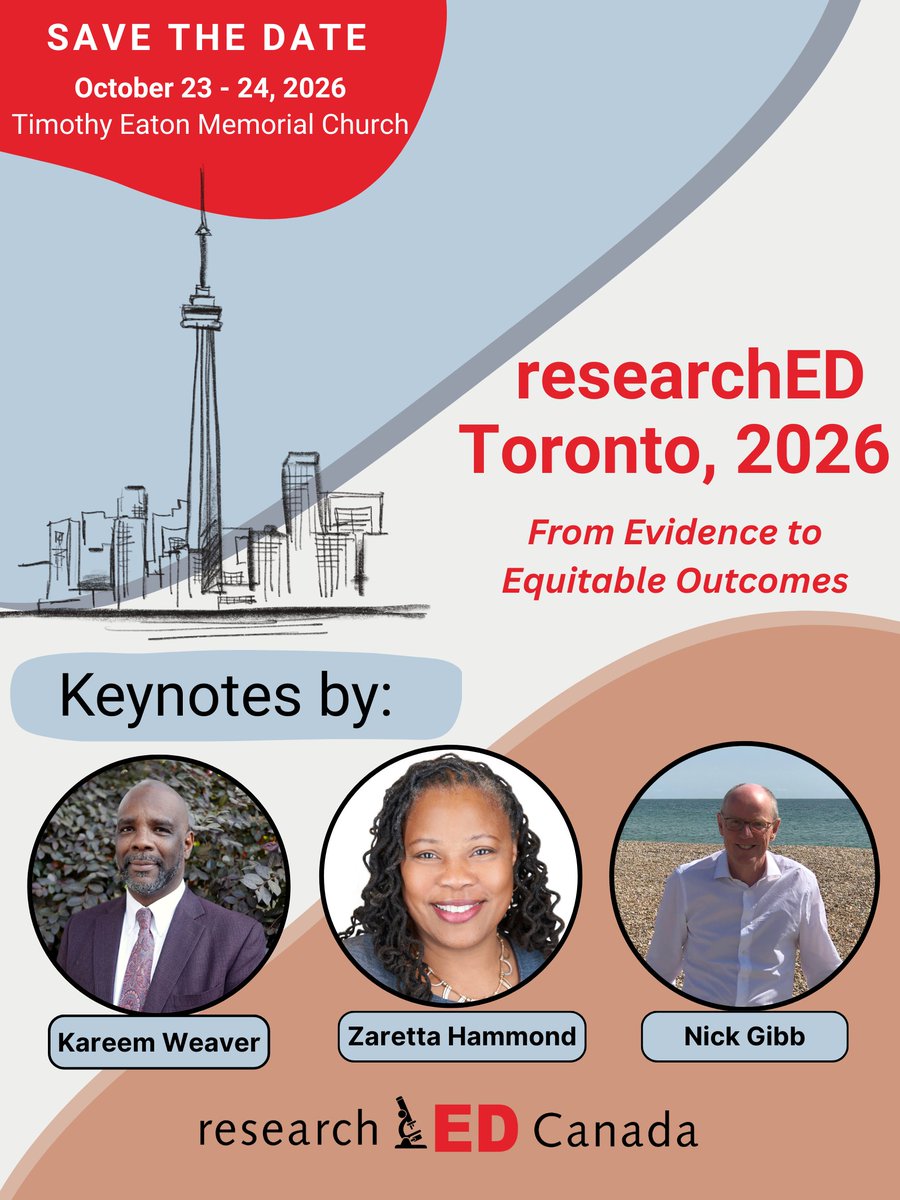
So thrilled to share an exciting announcement about researchEd Toronto 2026.
This year, we’re honoured to welcome not one, not two—but THREE OUTSTANDING KEYNOTE SPEAKERS:
📍 Timothy Eaton Memorial Church, Toronto
🗓 October 23–24, 2026
Stay tuned for more details!