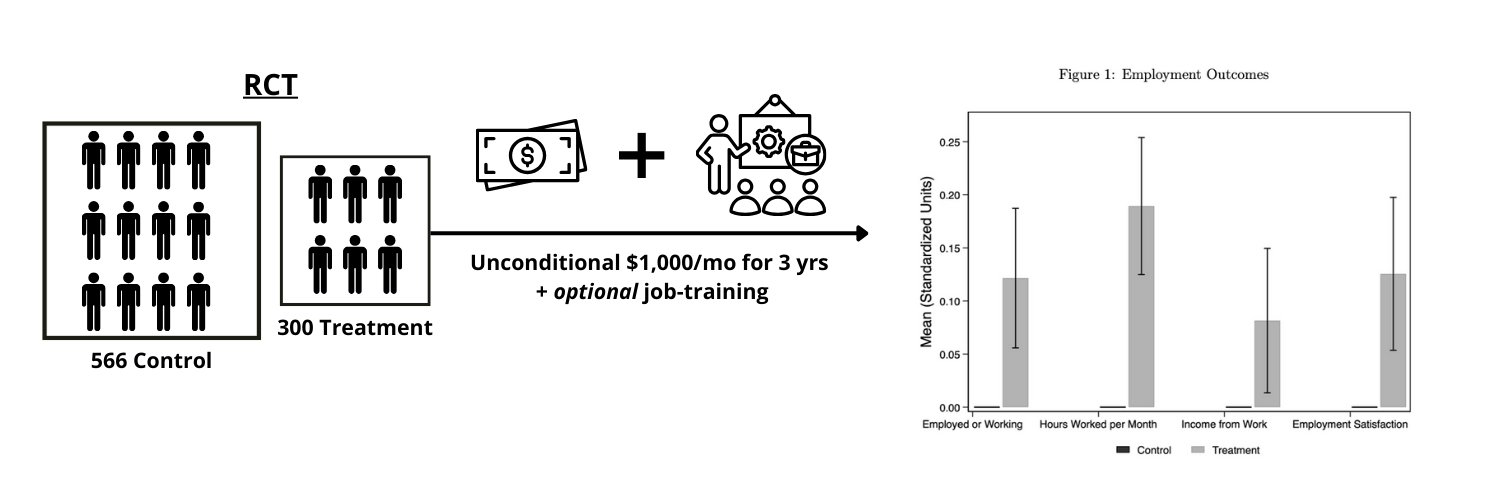
Exciting news on @malengo, the NGO that helps East African students move to Europe for education: Our research team has given us a glimpse of their early findings!
Here is the full writeup, joint with @richardnerland:
https://t.co/onwOkKRV1U
Thread follows!
One of my professors used the term “he’s the epsilon man” a few days ago to describe a friend who is even-keeled because “he is not easily perturbed”. I have been looking for a way to use it ever since.
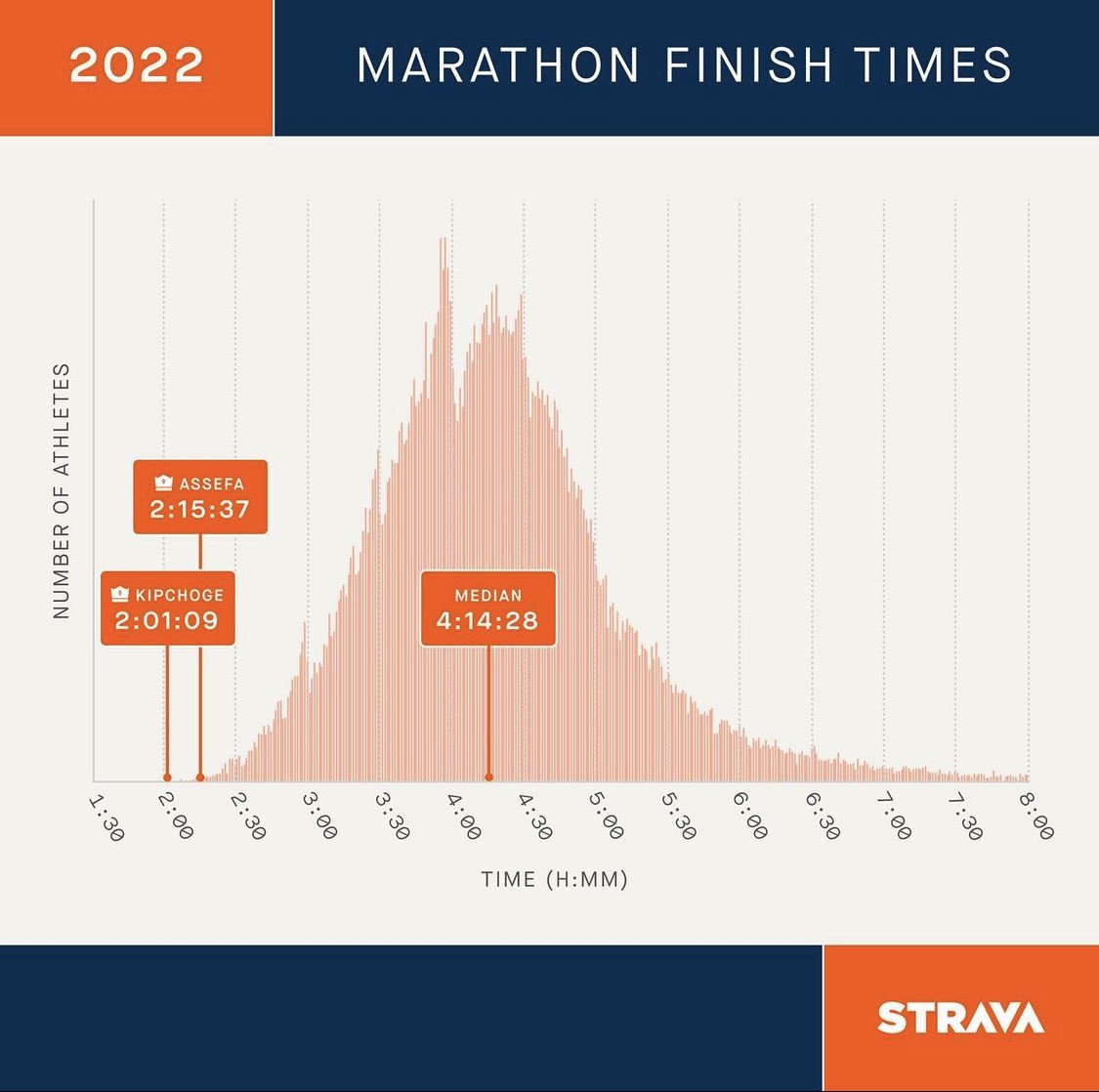
There is definitely selection in posting on @Strava, but still surprised how normally distributed this is!! Putting this in my list of why it’s okay to just assume everything is normal 😇
Also impressed that the median pace of a marathoner is just over 9.5 mins per mile!
Applied Microeconomists Prayer (apocryphal)
God, grant me the theory to model the things I cannot estimate,
the data to estimate the things I can,
and the identification argument to know the difference 🙏🏼
@danascoot (another ~2 mins can be shaved off there). Definitely not 21 mins worth of holdups, but still seems like there is low-hanging fruit for getting closer to that barrier.
@danascoot Great thread and nice way to think about this! I’m still hopeful the 7 min barrier is closer than we think — the cycling course had a lot of rain (increased roll resistance and decreased road visibility for things like potholes), and there was a bathroom stop during the run
If your money don't jiggle jiggle, it folds, then your money is part of the M1 measure of money supply that also includes other liquid assets that can be quickly converted to cash.
🚨 APPLY NOW! 🚨
It was a wonderful pre-doc experience — I had the most supportive and enjoyable learning environment, I learned a TON from @Sidhya26 (JFI’s director of research), and I had the opportunity to help work with some of the best (and kindest) academics in the game.
We are now hiring for two positions, a full-time Research Manager and a part-time Quantitative Social Science Research Fellow.
Work with Director of Research @Sidhya26 on empirical research in guaranteed income and higher education.
Find out more:
https://t.co/i1NZdTAFIt
The elasticity of labor supply w.r.t. gas prices is even worse for drivers in food delivery (e.g. DoorDash or Grubhub). At least surge pricing for Uber can sort of compensate drivers for working despite high gas prices, but fixed food delivery fees makes gas extra costly.
Economists at uber, why aren't Uber rates tied to gas prices? This would seem like a super easy and obvious thing to do and would serve drivers and customers better? What am I missing? #EconTwitter