The Incredible Story of Sergeant Major Stanley Hollis VC – The Only Victoria Cross Awarded on D-Day 🏅
On 6 June 1944, as Allied forces stormed Normandy’s beaches, one man stood out for extraordinary bravery. Company Sergeant Major Stanley Elton Hollis of the 6th Battalion, Green Howards, landed on Gold Beach (King Sector) and earned the only VC of D-Day through two acts of selfless courage. Here’s his story.
Hollis, a 31-year-old veteran from Middlesbrough, had already seen heavy fighting: Dunkirk, North Africa, and Sicily. He was a battle-hardened leader, acting as CSM for D Company. His unit hit the beach around 7:32 AM, pushing inland toward the Mont Fleury Battery.
First Act of Gallantry
Soon after landing, two German pillboxes were bypassed. Hollis and his Company Commander went to clear them. A machine gun opened fire from 20 yards away. Without hesitation, Hollis charged straight at it, firing his Sten gun into the slit.
He jumped on top of the pillbox, reloaded, dropped a grenade inside, and fired again — killing two Germans and forcing the rest to surrender. He then cleared a nearby trench. In total, he captured around 30 prisoners single-handedly, protecting his company’s rear and opening the beach exit.
Tonight, as I do every year at this time, I’ll be raising a glass to a scared young man, who 82 years ago was preparing to go ashore on the beaches of Normandy as part of an event code-named Operation Overlord.
D-Day.
I can’t imagine what was going through his mind. I’d be scared to death and I’m sure he was too. But in that first wave was a 21-year-old Private First Class from Henry County, VA by the name of Allen Homer Sink.
Fortunately, he would survive that initial wave, participate in battle until it ended in August, then come home to marry and raise a family of four, including two daughters after the war ended.
He would also become my father-in-law until his death in 2006.
His nickname for some reason was “Hank” and when I asked him how he got it, he said some guy in the Army said he “looked like a Hank.” From the time I first met him, he was a salt-of-the-earth man who was never afraid of anything. He was a carpenter by trade, and he’d stand up on the tallest roofs, grab bumblebees with his bare hands when they tried to persuade him to move elsewhere, and never be bothered by anything.
His hands were tough and leathery, but he was a softie. He spoiled his children, complained when my mother-in-law would gripe about something involving one of his alleged misdeeds, and always thought he was fooling everybody when he snuck around the back of the house and lit a cigarette, a habit everyone opposed but he could never part himself from.
He could talk your ear off for hours at a time, and I always suggested he become a greeter at Wal-Mart when he retired because then he could talk all day to strangers and none of them would – like his wife and daughters often did – tell him to be quiet for a few moments. Yet for all his love of talking, there was one subject he just wouldn’t discuss.
June 6, 1944. Omaha Beach.
In 1998, when he was 76 years old, the subject came up again. The movie “Saving Private Ryan” came out and the beginning was gruesome. Reviews said it was incredibly realistic to what really happened that day. I asked Hank if he wanted to go see it.
“No,” he shook his head. “I don’t ever want to see any of that again.”
He did offer that he remembered the night before when troops were loaded into the boats for the amphibious assault. He said it was raining and that once everyone was in place, they gave everybody ice cream and told them to try to get some sleep. Then the next thing he knew, they were waking everybody up telling them to stay low and head for the beach.
No, that doesn’t sound like somebody drugged the ice cream. Not at all.
That’s all he would say about the subject, and he never said another word about it until the final months of his life. Alzheimer’s would gradually rob him of his mind, and as his condition deteriorated, memories of the past would briefly spill out. One evening he thought I was his commanding officer and he was back at Normandy. It is the only time I ever saw him where he appeared to be scared. Ever.
It reminds me every day of something I had unknowingly taken for granted. The greatest generation did fight in and win World War II, then did incredible things over the next 50 to 60 years after the war. But many carried unspeakable memories from the War, ones they would never talk about and carry inside them to their graves. Those veterans lost a piece of themselves in battle they would never, ever, get back.
I mean, how can you at the tender age of 21 storm a beach, see friends die only a few feet from you, wonder each night if you will wake up alive the next morning and then return home a year later and try to pick up on the same normal life you had before you left? I told him once that after seeing “Saving Private Ryan”, I understood why he was never afraid of anything; after you’ve made it through something like that, everything else pales in comparison.
So tonight, I raise a glass to Hank and the 150,000-plus men, who like my father-in-law, were very young, very scared, and still charged that beach, paying a price that even for the survivors would last the rest of their days.
Rest In Peace...
A municipality near Copenhagen, Denmark, is testing an unusual solution to a growing environmental concern: light pollution.
In Gladsaxe, sections of road and a busy cycle path have been fitted with red-spectrum LED streetlights instead of conventional white lighting. The aim is to maintain safe visibility for people while reducing the impact of artificial light on local wildlife.
Research has shown that bright white lighting can interfere with the natural behaviour of many nocturnal species. Bats, in particular, can be affected, with some avoiding lit areas and others changing their feeding habits.
The red lighting used in the Danish trial is designed to be less disruptive to bats. The scheme also incorporates dark gaps between illuminated sections, creating wildlife corridors that allow light-sensitive animals to move more freely through the area.
Despite the change in colour, the lighting still complies with safety requirements for pedestrians and cyclists. Project leaders believe the initiative demonstrates that urban safety and nature conservation can coexist.
As cities continue to grow, light pollution is increasingly recognised as an environmental issue, influencing insects, birds, mammals, and even plant life. Researchers are now monitoring the project to assess its long-term effectiveness.
If the results are positive, the approach could offer a practical template for other cities seeking to reduce their ecological footprint. Sometimes a simple adjustment, such as changing the type of street lighting used, can make a meaningful difference.
This is awful. The last ever Denby Pottery going to the kiln. Why is there not uproar? Where’s the government in this?? We all have Denby in our homes, in family heirlooms, as our history and now it’s closing through lack of support, such a sad sad day. #SaveDenby@denbypottery
The Somerset Farmhouse of 1 North Street, Williton were approached by a "food influencer" that wanted to charge them £2,000 for a review.
They put out a video of Sally eating a sausage roll instead 😆.
Lets make Sally and the Somerset Farmhouse famous for free.
In a corner of parliament at the far end of the Royal gallery a box lies permantly open containing sand from all five Normandy beaches -a reminder to both houses of the sacrifice & the cause of freedom fought for by brave service people on DDay June 6 th 1944. #DDay
A bricklayer in East Yorkshire has spent 35 years putting up barn owl nest boxes on weekends. This year, the region saw 308 owlets hatch.
His name is Robert Salter. He's 56 and does bricklaying full time. In 1990, he saw a piece on the news about a man in Lincolnshire installing barn owl boxes, and decided he'd do the same. He started with five.
He now has more than 350 boxes scattered across fields, farms, outbuildings, and trees in East Yorkshire. Every June, he takes four weeks off from bricklaying and visits them with his wife Sue. Scrambling up ladders, ringing chicks, cleaning boxes, repairing the ones the weather got to. He's a licensed bird ringer for the British Trust for Ornithology.
In 2024, the region ringed 95 owlets. In 2025, the count was 308. The Barn Owl Trust says that nationally, this year was "pretty poor" for barn owl breeding, but east Yorkshire is the exception, and it's the exception because of one man with a ladder.
The barn owl population in the UK was estimated at 4,000 pairs in the mid-2000s and crashed to roughly 1,000 by the early 2010s. The species is still recovering.
Most of conservation is one person who refuses to give up.
Oh great, you've thought of a sentence that uses every letter of the alphabet. Too bad it perpetuates harmful stereotypes about dogs and foxes. I hope it was worth it
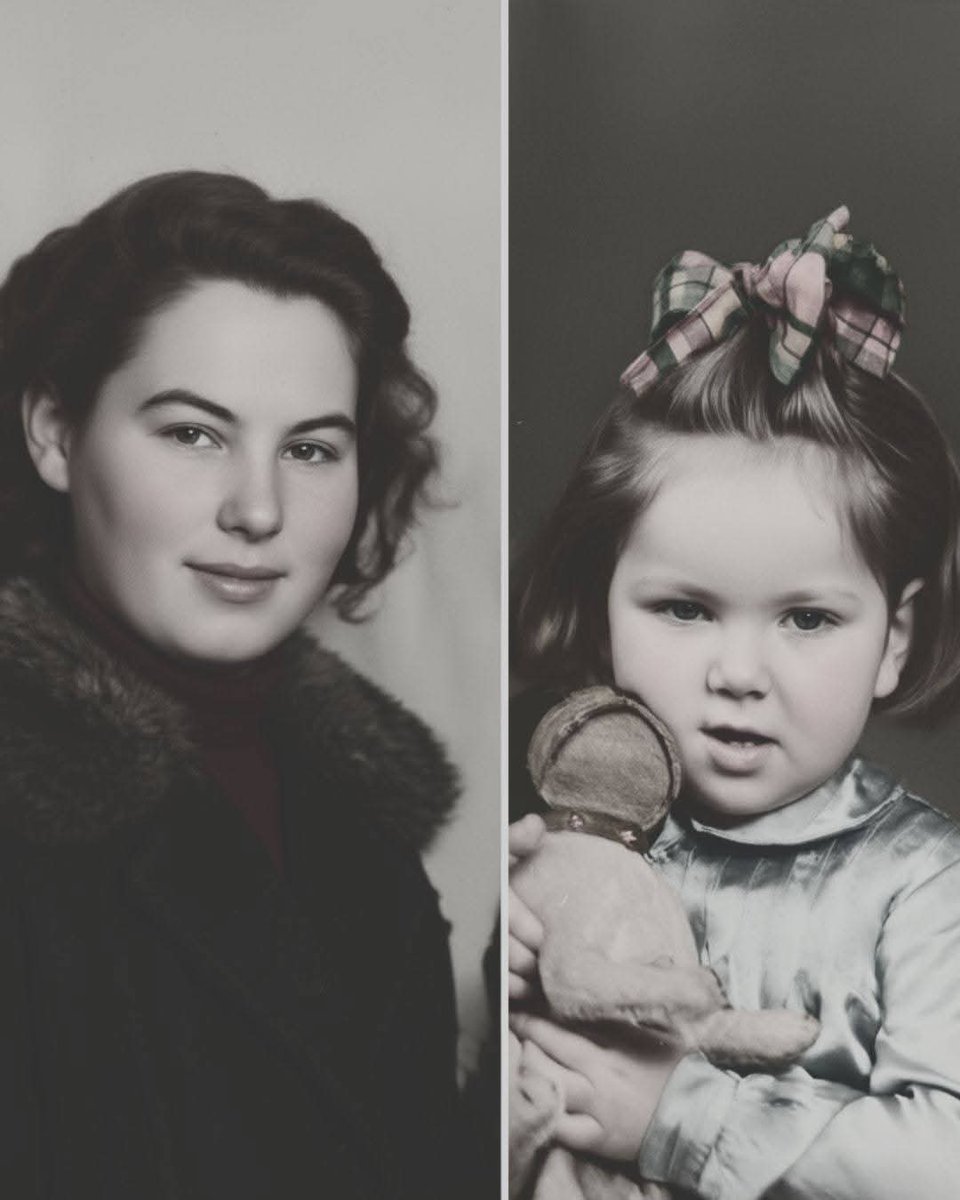
She gave her three-year-old daughter a sedative, wrapped her in a blanket, and placed her in a large leather suitcase. With her heart pounding, she waited in line to leave the Nazi ghetto, watched closely by armed guards. If the little girl made a sound, or if a guard decided to open the heavy bag, they would both be executed on the spot.
When she finally made it outside the gates and her child was safe, she did something completely unthinkable. She went back inside.
And then she saved another child. And another. She did this dozens of times, risking her life with every single step she took.
For most of her life, that little girl, Henia Lewin, believed her mother, Gita Wisgardisky, had performed a single, desperate miracle just for her. It was not until her mother’s funeral many years later that the shattering truth finally emerged.
An elderly survivor approached Henia at the cemetery, looked into her eyes, and revealed a secret kept for decades.
"Your mother saved so many," the survivor told her. "No one knows how many. Maybe she didn’t even know herself. She didn’t count them."
Gita had smuggled countless children out of the Kovno Ghetto in Lithuania, hidden deep inside suitcases or carried through secret passages, right under the noses of the oppressors.
Henia was born in 1940 into a normal, loving Jewish family. That normalcy completely vanished when the Nazis invaded and forced the Jewish population into a cramped, disease-ridden ghetto. Hunger and sudden deportations became the daily reality.
Gita saw through the lies early on. While some people hoped for the best, she understood the dark truth. She knew that when the Nazis spoke of relocating children, they actually meant killing them. Gita refused to wait for the end.
Working secretly with a brave Lithuanian Catholic priest, she found kind families willing to hide Jewish children in the countryside. But getting the children out of the heavily guarded gates was a suicide mission.
The children had to be perfectly still and silent. This was why Gita used sedatives. She put her own daughter into a deep, heavy sleep, placed her in that suitcase, and walked toward the guards.
When a soldier stopped her, Gita did not panic. She calmly offered her watch and her best pair of leather boots as a bribe. The guard took them, looked away, and she passed through the gates.
Little Henia was taken in by a Christian family. She was taught to call strangers mom and dad, and she learned to never mention her real name. Though she was only three, she understood the danger and kept the secret for two long years.
Meanwhile, Gita went right back into the nightmare. She returned to the ghetto to find more children. Each trip involved a new suitcase, more sedatives, and a fresh set of bribes. She never asked for recognition. She simply acted.
Miraculously, Gita, her husband Jonas, and Henia all survived the war. They eventually moved to the United States, where Henia grew up to become a school teacher and a passionate voice for Holocaust education.
Today, Henia shares this story because memory is a torch that must be passed from hand to hand. It reminds us that even in the darkest corners of human history, love can conquer the greatest fears.
Gita went to her grave without ever boasting about her heroism, but her legacy lives on in the generations of children who got to grow up, laugh, and have families of their own because one mother refused to leave anyone behind.
Some stories are not meant to be closed—they are meant to be carried forward.
Some nursing homes struggle to attract visitors. One in the Netherlands chose to invite roommates instead.
In the Dutch city of Deventer, a retirement home called Humanitas introduced an idea that would eventually gain attention around the world.
Rather than accepting loneliness as a normal part of aging, they approached it as something that could actually be solved.
For over ten years, Humanitas has allowed university students to live inside the nursing home rent free.
In return, the students spend about thirty hours each month connecting with residents. Sometimes that means sharing meals, having conversations, helping with technology, joining activities, or simply keeping someone company during a quiet afternoon.
They are not nurses or employees. They are simply part of the community.
At first, the idea sounded like a smart response to expensive student housing.
But the real impact appeared in the lives of the residents. Reports from outlets such as PBS NewsHour and AARP described seniors becoming more social, more active, and less isolated once younger people became part of everyday life.
What makes the story even more meaningful is that many students chose to spend far more time there than the agreement required.
Some even stayed connected after graduating. Over time, casual interactions turned into genuine friendships.
Humanitas didn’t really create something new. It brought back something many societies once had naturally: different generations living side by side instead of separately.
Maybe the issue was never aging itself. Maybe it was the distance we created between generations.
Sometimes the most powerful ideas are simply old human connections rediscovered.
That water clarity is an engineering decision, and the math behind it is wilder than the video.
Roman aqueducts ran on gravity alone. No pumps, no pressure systems. Engineers carved channels with a gradient so shallow it borders on absurd. The Pont du Gard in southern France drops 2.5 centimeters over 275 meters. That's roughly the thickness of a coin over the length of three football fields. They surveyed that accuracy with plumb lines and wooden leveling instruments.
The clarity you're seeing is a direct product of flow velocity. Too steep and the water erodes the channel walls, picks up sediment, turns brown. Too flat and it stagnates. Roman engineers targeted a slope of about 20 centimeters per kilometer, which kept the water moving fast enough to stay fresh but slow enough to stay clear. Before the water reached the city, it passed through multi-chamber settling tanks where velocity dropped near zero. Suspended particles sank. Clean water flowed out the top into the next chamber. Repeat three or four times.
Pliny specified the minimum slope in writing. Vitruvius published the exact mortar ratio for hydraulic cement: one part lime to two parts volcanic ash for underwater work. The pozzolana from Pozzuoli reacted with water to form a calcium-aluminum-silicate compound that actually gets stronger the longer it sits submerged. Modern concrete degrades in water. Roman concrete bonds with it.
Scale the whole system and it gets harder to process. Eleven aqueducts fed Rome at its peak. Combined output: roughly 1 million cubic meters of water per day. That works out to about 250 gallons per person for a city of one million. Modern New York delivers about 125 gallons per person per day. Ancient Rome had access to double the per capita water supply of the largest city in the United States, running entirely on slope and stone.
The Trevi Fountain in Rome is still fed by one of them. Two thousand years, same source, same gravity, same water.
“In a free society, people can believe whatever they want. If you want to believe men can be women or you’re a man who wants to call himself a woman, that is your business. What you cannot do in a free society is force anyone else to accept it. What is at stake here is the ability to lawfully acknowledge reality.
If you care so much about “trans rights” you can work out a way to get them without destroying the category of women in law, female spaces, sport, services, the entire reality of lesbianism, and punishing citizens for acknowledging reality. The fact that you haven’t even tried makes it appear that destroying the rights of women is the goal.
Any politician who will look an Australian citizen in the eye and tell them that a man can be a woman is admitting that they will lie about anything and everything because the most obvious lie has already been told.
If no one in this room can acknowledge reality and fix an obvious problem you are either malicious or incompetent. The days of dismissing this issue are over. This is not a culture war. It’s reality.”
- my words, read by Alison Penfold MP, in parliament today.
Contact politicians are tell them to BACK THE BILL - “Sex Discrimination Amendment- sex based rights bill 2026”
In a single afternoon on May 22, 1941, the Royal Navy lost two cruisers and a destroyer off the coast of Crete to German dive bombers. The fleet commander was urged to withdraw what was left.
His reply has been quoted ever since, but the situation that produced it is less well known. By the morning of the 22nd, the German airborne invasion of Crete was four days old and on the brink of failure. Of the seven thousand paratroopers Kurt Student had dropped on the first day, roughly half were already dead. The Germans had taken huge losses trying to capture Maleme airfield in the west of the island. Without an airfield, no reinforcements could land. Without reinforcements, the invasion would collapse.
What the Germans needed was a seaborne convoy of mountain troops, heavy weapons, and ammunition. Two such convoys were assembled in Greek ports and put to sea under Italian destroyer escort, hoping to slip across the Aegean to Crete.
The Royal Navy intercepted the first convoy on the night of May 21. In a confused action in the dark, British cruisers and destroyers tore through a fleet of small Greek caïques crammed with German soldiers. Roughly three hundred Germans drowned. The convoy was destroyed.
But by morning the Royal Navy was south of Crete in clear daylight, within range of the Luftwaffe's Fliegerkorps VIII, the most experienced and lethal dive-bomber force in the world. And the British ships were running low on anti-aircraft ammunition because they had spent most of it sinking the convoy.
The Stukas came in waves. The cruiser Gloucester took two direct hits and capsized, taking 722 men with her. The cruiser Fiji was hit by a single bomb that ruptured her hull. She sank slowly, with most of her crew getting off, but 241 men were lost. The destroyer Greyhound was bombed and went down in fifteen minutes. The battleships Warspite and Valiant were both damaged, Warspite badly enough that she had to go to the United States for repairs.
By nightfall on May 22, Admiral Andrew Cunningham, commanding the Mediterranean Fleet from Alexandria, was looking at a casualty list that included two cruisers, a destroyer, two damaged battleships, and roughly fifteen hundred dead British sailors. The army on Crete was asking for naval evacuation. The army on Crete also had thirty two thousand troops on it.
Cunningham's staff, looking at what the Luftwaffe had done in a single afternoon, urged him not to commit the rest of the fleet. He could not protect transports from Stukas in daylight. Anything he sent into the waters north of Crete would be sunk. The navy had taken enough.
Cunningham listened, and then he gave the order that is still quoted at Dartmouth Naval College.
"It takes the Navy three years to build a ship," he said. "It would take three hundred years to build a tradition. The evacuation will continue."
The fleet went back. Between May 28 and June 1, the Royal Navy evacuated 16,500 men from the south coast of Crete under continuous air attack. They lost three more cruisers and six more destroyers doing it. Thousands of British soldiers were left behind and became prisoners. But the navy did not abandon the army.
The German victory at Crete was so expensive that Hitler never authorized another major airborne operation for the rest of the war. The paratroopers had taken the island, but the airborne arm as a strategic weapon was effectively destroyed in the process.
Cunningham's decision was not a calculation about morale. It was a statement about what kind of institution the Royal Navy was, made in the moment when the institution was being tested. He was sixty years old. He had spent forty four years at sea. He understood, in a way that staff officers in London did not, that an institution that abandoned its soldiers in 1941 would still be remembered for it in 2041.
Three hundred years to build a tradition. Eighty five years ago today, the bill came due, and Cunningham paid it.
Woman of the Day prison reformer and philanthropist Elizabeth Fry, born OTD in 1780 in Norwich, the first woman to give evidence to a Select Committee. It was instrumental in the passing of the Gaols Act 1823, which separated the sexes.
Caring responsibilities came early to her. Her mother died when she was 12 — she had twelve siblings — and as a Quaker, she took an interest in the impoverished, the sick and prisoners. A “plain Friend”, she dressed plainly, did not dance or sing, and took philanthropy very seriously.
In 1813 and at the suggestion of another Friend, Elizabeth visited Newgate Prison and found women and children in small overcrowded cells where they had to manage washing, cooking, toilet functions, and sleep on straw. Some hadn’t even been tried at court. She was horrified.
“All I tell thee is a faint picture of reality; the filth, the closeness of the rooms, the furious manner and expressions of the women towards each other, and the abandoned wickedness, which everything bespoke are really indescribable".
She returned the following day with food and clothing, but family finances prevented her from doing more until 1816. At first, she concentrated on the children by funding a school inside the prison for them, but she found it impossible to ignore the plight of the women. They were at the mercy of male inmates who raped and sexually exploited them. On release, the few occupations available to women were beyond their reach. Life was without hope.
Elizabeth founded the Association for the Reformation of the Female Prisoners in Newgate and encouraged other affluent women to set up classes for women prisoners, providing them with materials so they could learn to sew and knit. It calmed them — “Already, from being like wild beasts, they appear harmless and kind" — and meant they had employable skills on release.
When she gave evidence to a Select Committee on 27 February 1818, she pulled no punches. She told them in graphic terms of the rapes and sexual exploitation suffered by the women. Her powerful evidence helped to secure the Gaols Act 1823 which required prisons to separate the sexes.
Other provisions of the Act included paying gaolers (to combat corruption), requiring doctors and chaplains to visit prisoners (still an important statutory requirement today), and greater emphasis on reform and rehabilitation.
The Gaols Act was far-seeing and genuinely progressive, but other than separation of the sexes, toothless. Town gaols and debtors prisons were excluded and there was no means of checking that its provisions were being met.
Elizabeth returned once more to give evidence to a Select Committee of the House of Lords in 1835, pointing out that "in many instances their condition is melancholy...they may truly be called schools for crime", that some still had "no instruction, no employment, no classification [of inmates]...and they get into a most low and deplorable state of morals...I would not say that all are in that condition, but I fear many are".
In those days, many prisoners faced transportation to New South Wales even for the most minor of crimes (for more serious offences, hanging was the go-to sanction). They faced eight months in vermin-infested cramped holds, often flooded with bilge-water, and strictly rationed fresh water. The women transported by the First Fleet had only the clothing they were standing up in and when this became infected with lice and had to be burnt, they were given rice sacks to wear. Elizabeth campaigned for better care and provision for them too.
In 1825, she published "Observations of the Siting, Superintendence and Government of Female Prisoners", an influential book that laid out in clear detail how penal regimes should be run.
Somewhere along the way, Elizabeth established a "nightly shelter" for the homeless in London after seeing the body of a boy who had frozen in winter and set up a system of volunteers to visit the poor and homeless and provide help and comfort to them. She campaigned against the slave trade, and in 1840, opened a training school for nurses. Florence Nightingale took a team of Fry nurses to the Crimea.
Her abiding principles of kindness and fairness sprang from her Quaker faith and she was the first woman — other than the late Queen, of course — to be depicted on a British banknote.
Elizabeth Fry died in 1845 at the age of 65. I cannot tell you how much I admire this woman.
Less than a century later, Westminster and Holyrood subsequently ditched Elizabeth’s truly progressive approach to prison as a place for rehabilitation, not punishment, and decided that it would be even more “kind and inclusive” to hold men in women’s prisons, as long as they claimed to be women too.
In wartime and in war zones, that would be regarded as a war crime under the Geneva Convention, and those officials who allowed it would be classed as war criminals.
It’s peacetime, allegedly, but I’d still call it a human rights violation, and I have a few choice words for all of those politicians and civil servants who nodded along with it. I hope their complicity haunts them.
I just had the craziest experience at the airport.
We are about to board a flight to Atlanta when the pilot from the incoming plane walks out of the jetway. Guy is probably late 50s, salt and pepper hair, military look. The kind of pilot you instantly feel good about seeing on your flight.
Pilot walks over to the counter, gets on the PA system, and starts addressing everyone. “Folks, I’ve been doing this a long time. Flying one of these jets is easy. The hard part is looking at 130 people and telling them their flight is going to be delayed.”
Audible groans throughout the boarding gate. Most people here are flying to Atlanta as a layover before another flight. 130 people just had their day become a complete mess.
The pilot goes on. “I get it, trust me. But here’s the deal: During our landing, we had a small mechanical issue. I’m not your pilot for the next leg, but I don’t feel confident the jet’s safe to fly until we have a mechanical team look it over, and I don’t feel comfortable asking the next pilots to fly you guys until we get confirmation.”
He points at the agents next to him behind the counter: “Now, none of this is the agents’ fault. Please be kind to them. I’m the one who made this decision, not them, so any inconvenience you experience is my fault. Just please know that I don’t do this lightly, and I’m only doing it because I believe it’s in the best interests of everyone’s safety.”
Now this is where the story gets crazy. The pilot puts the microphone down, grabs his suitcase, and all the people in the gate…
Start clapping.
I’m not joking, everyone starts clapping for the guy. 130 people who just had their travel plans ruined give an ovation to the guy who made the decision and delivered the message.
All because he addressed them with decency and transparency, took ownership of the decision, made it clear that it was necessary, and explained why it was in everyone’s best interest.
It’s honestly one of the best examples of strong communication—of strong leadership, for that matter—that I’ve seen in a long time.
@Delta, whoever your Atlanta to Wichita pilot was this morning, he’s one of the good ones. Please tell him the delayed passengers of flight 1637 appreciate what he did.









![TheAttagirls's tweet photo. Woman of the Day prison reformer and philanthropist Elizabeth Fry, born OTD in 1780 in Norwich, the first woman to give evidence to a Select Committee. It was instrumental in the passing of the Gaols Act 1823, which separated the sexes.
Caring responsibilities came early to her. Her mother died when she was 12 — she had twelve siblings — and as a Quaker, she took an interest in the impoverished, the sick and prisoners. A “plain Friend”, she dressed plainly, did not dance or sing, and took philanthropy very seriously.
In 1813 and at the suggestion of another Friend, Elizabeth visited Newgate Prison and found women and children in small overcrowded cells where they had to manage washing, cooking, toilet functions, and sleep on straw. Some hadn’t even been tried at court. She was horrified.
“All I tell thee is a faint picture of reality; the filth, the closeness of the rooms, the furious manner and expressions of the women towards each other, and the abandoned wickedness, which everything bespoke are really indescribable".
She returned the following day with food and clothing, but family finances prevented her from doing more until 1816. At first, she concentrated on the children by funding a school inside the prison for them, but she found it impossible to ignore the plight of the women. They were at the mercy of male inmates who raped and sexually exploited them. On release, the few occupations available to women were beyond their reach. Life was without hope.
Elizabeth founded the Association for the Reformation of the Female Prisoners in Newgate and encouraged other affluent women to set up classes for women prisoners, providing them with materials so they could learn to sew and knit. It calmed them — “Already, from being like wild beasts, they appear harmless and kind" — and meant they had employable skills on release.
When she gave evidence to a Select Committee on 27 February 1818, she pulled no punches. She told them in graphic terms of the rapes and sexual exploitation suffered by the women. Her powerful evidence helped to secure the Gaols Act 1823 which required prisons to separate the sexes.
Other provisions of the Act included paying gaolers (to combat corruption), requiring doctors and chaplains to visit prisoners (still an important statutory requirement today), and greater emphasis on reform and rehabilitation.
The Gaols Act was far-seeing and genuinely progressive, but other than separation of the sexes, toothless. Town gaols and debtors prisons were excluded and there was no means of checking that its provisions were being met.
Elizabeth returned once more to give evidence to a Select Committee of the House of Lords in 1835, pointing out that "in many instances their condition is melancholy...they may truly be called schools for crime", that some still had "no instruction, no employment, no classification [of inmates]...and they get into a most low and deplorable state of morals...I would not say that all are in that condition, but I fear many are".
In those days, many prisoners faced transportation to New South Wales even for the most minor of crimes (for more serious offences, hanging was the go-to sanction). They faced eight months in vermin-infested cramped holds, often flooded with bilge-water, and strictly rationed fresh water. The women transported by the First Fleet had only the clothing they were standing up in and when this became infected with lice and had to be burnt, they were given rice sacks to wear. Elizabeth campaigned for better care and provision for them too.
In 1825, she published "Observations of the Siting, Superintendence and Government of Female Prisoners", an influential book that laid out in clear detail how penal regimes should be run.
Somewhere along the way, Elizabeth established a "nightly shelter" for the homeless in London after seeing the body of a boy who had frozen in winter and set up a system of volunteers to visit the poor and homeless and provide help and comfort to them. She campaigned against the slave trade, and in 1840, opened a training school for nurses. Florence Nightingale took a team of Fry nurses to the Crimea.
Her abiding principles of kindness and fairness sprang from her Quaker faith and she was the first woman — other than the late Queen, of course — to be depicted on a British banknote.
Elizabeth Fry died in 1845 at the age of 65. I cannot tell you how much I admire this woman.
Less than a century later, Westminster and Holyrood subsequently ditched Elizabeth’s truly progressive approach to prison as a place for rehabilitation, not punishment, and decided that it would be even more “kind and inclusive” to hold men in women’s prisons, as long as they claimed to be women too.
In wartime and in war zones, that would be regarded as a war crime under the Geneva Convention, and those officials who allowed it would be classed as war criminals.
It’s peacetime, allegedly, but I’d still call it a human rights violation, and I have a few choice words for all of those politicians and civil servants who nodded along with it. I hope their complicity haunts them.](https://pbs.twimg.com/media/HI0fqw5WYAAMbp4.jpg)