A zero-shot video-language reward model.
Trained on over 1M trajectories from 21 robot embodiments.
It predicts:
Frame-level task progress and generalizes zero-shot to unseen tasks, scenes, and robots, yielding 2.4–4.5x better success rates in:
Online/offline RL, data filtering, failure detection, and imitation learning.
Now available in Hugging Face's @LeRobotHF robotics library.
The video shows a robot gripper performing a pick-and-place task with a red object into a bowl, overlaid with a real-time rising progress graph generated by ROBOMETER.
📌 Project: https://t.co/mkhMvmbG55
Paper: https://t.co/HYn1PXhZ7V
——-
Weekly robotics and AI insights.
Subscribe free: https://t.co/9Nm01QUcw3
Le llaman 'Eden' y piensan comercializarlos de forma masiva como RaaS (Robots-as-a-Service), cobrando por hora de uso en lugar de venta del hardware
¿tú lo ves?
ChatGPT hit 1 million users in 5 days.
Everyone saw the same thing: the toy just became a threat. What they missed: who was selling that story.
Late 2022. The narrative was set within weeks.
"Programmers are finished."
Discord servers full of engineering students asking if they should drop out.
Junior devs posting layoff content they didn't need to post.
The panic was real. The analysis behind it — wasn't.
2026 Stanford AI Index: 1.3 million new jobs created by the AI wave.
Not fewer engineers. More.
AI agents flooded servers with generated code. Immense mess. More engineers needed to clean it up.
The machines created more work for the humans.
"AI will replace your team" justified trillion-dollar valuations.
"Junior devs are obsolete" gave corporations cover for hiring freezes they were planning anyway.
The doomsday narrative was not a technical forecast.
It was a Wall Street marketing masterclass.
While that narrative ran for three years — some people just didn't believe it.
Pieter Levels. $1.6M a year. No team. No investors.
Matt Wolfe. 800K subscribers. No studio.
They built the infrastructure everyone else is still trying to understand.
1.3 million new jobs opened while you were waiting for permission to use AI.
The question is: who filled them.
Wow! Motion capture studios not gonna love this!
Just check this insane video.
For years, capturing human motion meant markers, skin-tight suits, and hours of cleanup.
MAMMA just asks for a few synced cameras pointed at the scene.
Out comes a full 3D body for every person, every frame.
No suits. No markers.
The clever bit: instead of tracking a handful of joints, it reads hundreds of points.
And it actually understands contact.
It knows when a foot touches the ground, when two people are holding each other.
So feet stop sliding and bodies stop passing through each other, even when dancers are tangled up close.
When @Michael_J_Black calls this maybe the biggest day in 3D capture history, you pay attention.
The kicker? It's basically as accurate as the gold-standard Vicon systems studios pay a fortune for.
A multi-day pipeline drops to a single day. It even works with 4 iPhones.
Here's why roboticists should care: clean, realistic human motion at scale, without the expensive rig.
The thing holding humanoids back was never really the algorithm. It was the data.
Keep up good work the @Hanzcun, @soyong_shin, @AYiannakidis and the rest of the MAMMA team!
People are often surprised how many hard-tech companies YC funds, and for how long we've been doing it. It's been about 10% of the batch since 2014 when Sam became CEO.
🚀 What if physical AI policies could interact with generated worlds in real time?
Introducing OmniDreams, a generative world model for closed-loop autonomous vehicle simulation.
Tech report, code, models, and data samples are available now.
Project: https://t.co/BOTWdSJKMx
Code: https://t.co/hPH3KbE6Uy
Model: https://t.co/G4g9TWFD2W
Join the #omnidreams discord channel: https://t.co/AIwYQvc0bv
> the kling mistake that warps every video:
> dropping your model photo in and hitting generate
> kling pulls pose + background from your photo
> not from the reference so the motion breaks
> fix: build a first frame in nano banana first
> your character + a screenshot of reference frame 1
> prompt: keep my face, take pose + background from frame 2
> now the start frame already matches the motion
NVIDIA just changed the game for Windows laptops.
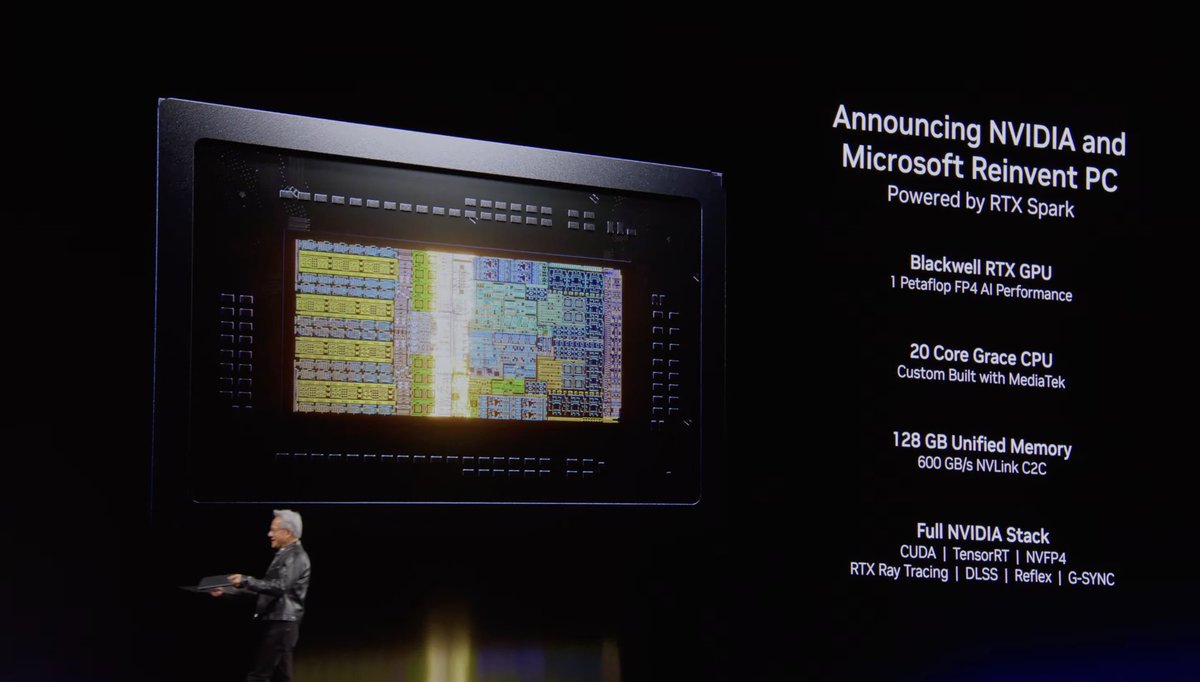
Jensen Huang took the stage at Computex and unveiled the RTX Spark Superchip
It packs a 20-core Grace CPU, a full Blackwell RTX GPU with 6,144 CUDA cores, up to 128GB of unified memory, and hits 1 petaflop of FP4 AI performance.
All in a single package that fits into chassis as slim as 14mm and sips 45-80W.
The claims are wild:
100+ FPS at 1440p in Forza Horizon 6… on battery. Local 120B-parameter AI models. Full RTX and CUDA support.
And it’s designed from the ground up for personal AI agents that actually feel like smart teammates instead of clunky tools.
#Opinión | "México merece una defensa real de su soberanía electoral. Y esa defensa, para ser creíble, tiene que mirar en todas direcciones. No solo hacia el norte", considera Alberto Guerrero Baena.
https://t.co/xzwYf2YuGM
Maor Shlomo built Base44 alone. no team. no funding. severe ADHD. two wars happening in his country.
$1,000,000 ARR in 3 weeks. $80,000,000 acquisition by Wix in 6 months.
Lenny Rachitsky just did a full breakdown of how he did it:
> he didn't mass-hire engineers. he wrote code with AI.
> he didn't raise a round. he launched and let revenue fund everything.
> he didn't spend 18 months on an MVP. he shipped in weeks.
> 400,000 users before a single dollar of outside capital.
the pattern is the same every time now. one person. AI handling the output layer. margins that weren't possible 2 years ago.
the article below is the technical playbook for building exactly this type of product. the stack, the cost, the weekend timeline.
full breakdown below
ESTE TIPO COMPRÓ UN DRON DE JUGUETE DE $31 Y CONvirtió A CLAUDE OPUS 4.8 EN SU INGENIERO
lo conectó a una laptop, explicó la lógica de control en inglés simple y dejó que Claude construyera la interfaz de vuelo
al final de la sesión tenía calibración, controles en vivo y una cabina en el navegador que movía el dron en tiempo real
la mayoría de la gente usará Opus 4.8 para ahorrar 12 minutos en correos electrónicos. él lo usó para convertir plástico barato en una demo funcional
la parte loca no es el dron. es que el cuello de botella pasó de escribir código a describir exactamente lo que quieres que se construya
mientras todos debaten sobre benchmarks, alguien con un gadget de $31 y una tarde ya está enviando demos de hardware
Thats great!
AGIBOT's humanoid robot Lingxi X2 can now dodge thrown balls, climb stairs, and navigate uneven terrain using a new Al system called AGILE.
Instead of relying on pre-programmed actions, this robot combines vision and movement in real time to react almost instantly to unexpected situations.
X2 features up to 30° of freedom, LiDAR, depth cameras, multiple vision systems and onboard AI computing for real-time environmental perception and adaptive movement control.
This is important because handling unpredictable real-world environments has been one of the biggest challenges in robotics.
🏢A new technical article examines how energy performance and occupant experience are still too often managed separately, despite the direct relationship between heating, cooling, ventilation and indoor conditions.
Read the full article: https://t.co/PatJ74RSf2
#EnergyEfficiency
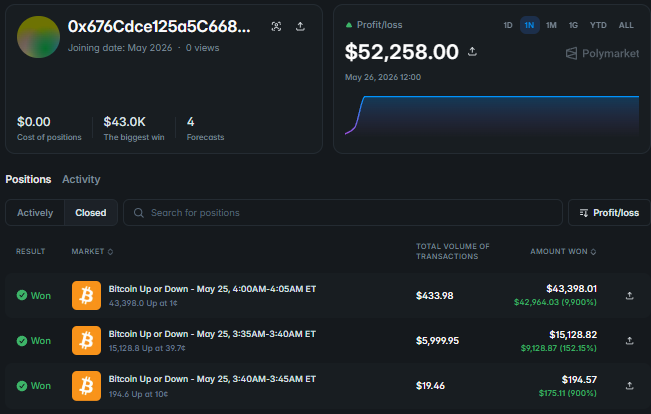
In May 2026, a trader from Sweden opened a Polymarket account with zero institutional trading experience and nothing but Claude at his disposal. In just one day and 4 predictions, his account generated a net profit of over $52,258.
While legacy hedge fund specialists spend weeks peer-reviewing a single thesis, this guy was running dozens of tests a day directly through an AI agent.
The institutional moat built on massive funds has been completely shattered.
Their historical advantage lay in million-dollar budgets for developer teams,today, that moat is worth exactly $0.
What used to take an entire department months to build and backtest is now created by an autonomous AI workflow in 90 seconds.
The "Hypothesis → Code → Backtest → Deployment" pipeline has been compressed into a single English sentence.
> Backtesting time: weeks → 90 seconds.
> Cost per hypothesis: thousands of dollars → $0.
> Iterations per month: a few at most → unlimited.
During a 5-minute micro-market scan for Bitcoin, his AI model spotted a massive mispricing. The market was pricing the probability of a specific move at just 1 cent (an implied probability of 1%). His model demonstrated a massive mathematical edge. He sized into the position with a total transaction of $433.98 and won $43,398.01 in a single click. That’s a net return of 9,900%.
The window of opportunity at the intersection of AI and prediction markets is wide open right now, while major institutional capital hesitates over compliance and regulatory risks.
Save this post to keep pace with this massive technological shift.